 Save
Save I discovered this salad on a sweltering afternoon when my kitchen thermometer felt like a betrayal and I couldn't face turning on the stove. A friend mentioned how her mom made something similar in Bangkok, and I became obsessed with recreating it with what I had on hand. The first time I spiralized those carrots, they looked almost too delicate to eat, but one bite of that tangy, ginger-forward dressing changed everything. Now I make it constantly, especially when the weather turns hot and I need something that tastes exciting but requires zero cooking.
My neighbor brought over a small bottle of toasted sesame oil she'd found at an Asian market, and I'll never forget how the smell of it hit me when I opened the jar. She stayed while I made this salad for the first time, and we ate it straight from the bowl while sitting on my back porch, talking about nothing in particular. That moment is why I always buy good sesame oil now, even when the regular stuff would do.
Ingredients
- Carrots: Use the largest ones you can find because thin carrots don't ribbon as satisfyingly, and the act of spiralizing them is half the joy of making this.
- Soy sauce: The backbone of this dressing, and tamari is genuinely worth buying if you care about gluten-free cooking.
- Rice vinegar: Don't skip this or substitute casually—it gives the dressing its characteristic brightness that soy sauce alone can't achieve.
- Toasted sesame oil: Buy it from a store where it actually moves off the shelves, because old sesame oil tastes musty and defeats the entire purpose.
- Lime juice: Fresh lime is non-negotiable here; bottled tastes tinny and wrong against the sesame.
- Ginger and garlic: These aren't shy supporting players; they're the ones who actually wake up your palate.
- Sesame seeds: Toast them yourself if you have 3 minutes—they transform from forgettable to absolutely essential.
- Cilantro: If you're one of those people who thinks it tastes like soap, use parsley instead and never apologize for it.
Tired of Takeout? 🥡
Get 10 meals you can make faster than delivery arrives. Seriously.
One email. No spam. Unsubscribe anytime.
Instructions
- Prep your carrots:
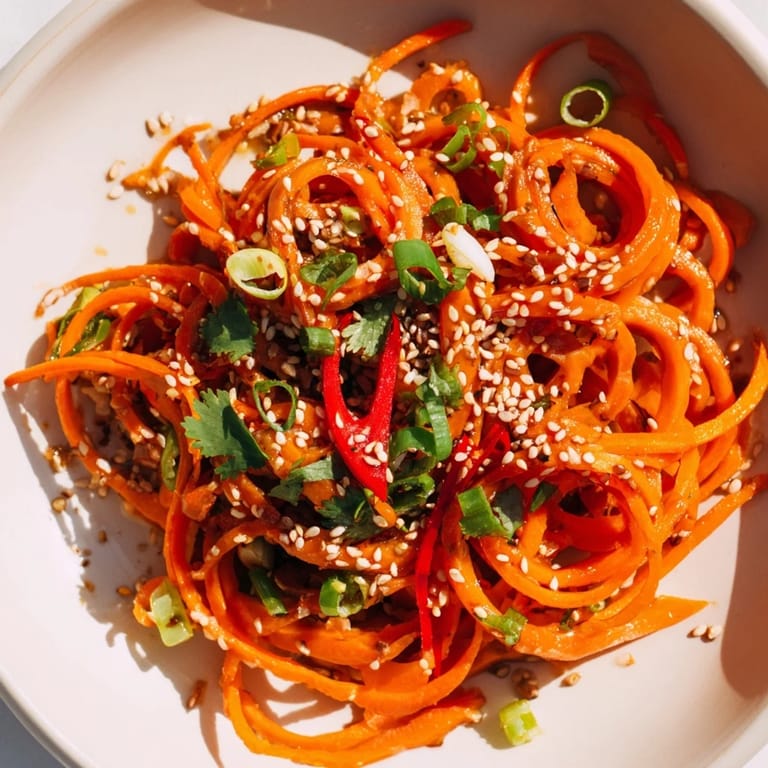
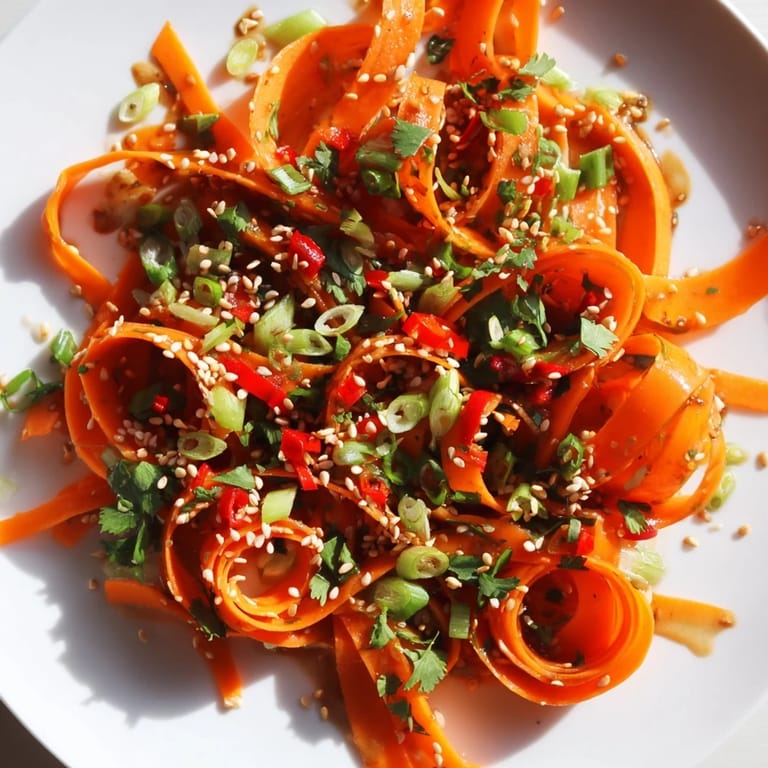
- Spiralize or peel them into ribbons and place them in a large bowl with the green onions and chili. Take a moment to admire how vibrant they look—this is what you're cooking for.
- Build the dressing:
- Whisk the soy sauce, rice vinegar, sesame oil, lime juice, and honey together until the honey dissolves completely. Add the minced garlic and grated ginger, and taste it on your finger—it should make you close your eyes a little.
- Marry the flavors:
- Pour the dressing over the carrots and toss gently but thoroughly, coating every ribbon. This is worth doing slowly because rushed tossing bruises the delicate carrots.
- Let it rest:
- Give it 5 to 10 minutes to marinate, which sounds like a long time but actually flies by when you're cleaning up or setting the table. The carrots soften slightly and the flavors deepen.
- Finish and serve:
- Transfer to a serving platter and shower the whole thing with toasted sesame seeds and fresh cilantro. Serve right away while there's still a little crunch, or chill it for up to an hour if you prefer it cold.
 Save
Save I brought this to a potluck once, nervous because everyone else had made warm, hearty casseroles, but three people asked for the recipe before I'd even finished setting down the plate. That's when I realized a good salad isn't about being humble or boring—it's about showing up with something bright and confident.
Why Spiralized Carrots Matter
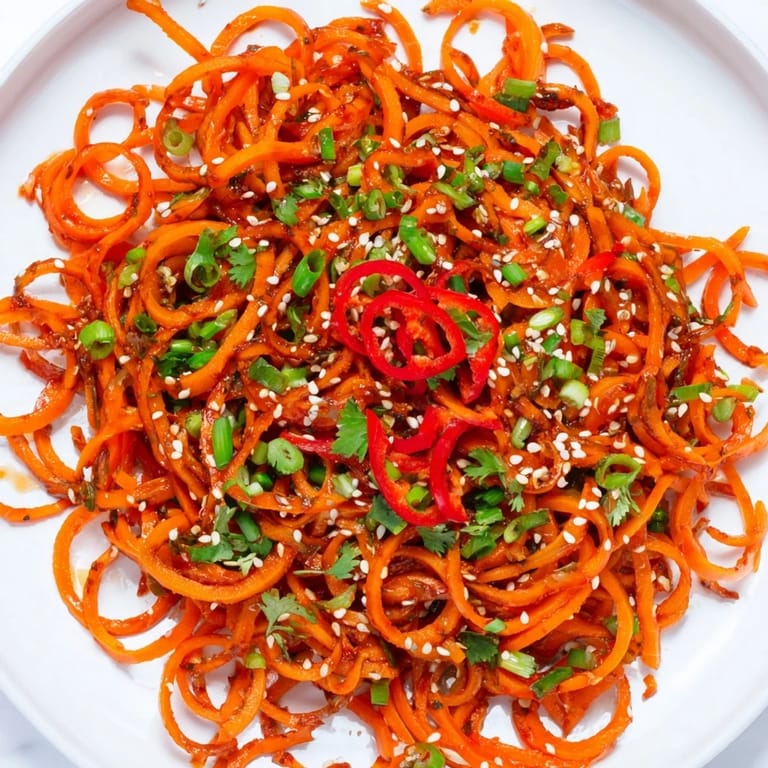
The shape isn't just for looks, though they do look stunning. Thin ribbons or spirals mean the dressing clings to them immediately and the texture stays delicate instead of becoming dense. If you don't have a spiralizer, a vegetable peeler works beautifully—just accept that it'll take longer and embrace it as meditation time. I've made this salad both ways, and while the spiralizer is faster, there's something grounding about peeling carrots by hand.
Making It Your Own
This salad is forgiving in the way that the best recipes are. I've added shredded cucumber, sliced bell peppers, and even shredded daikon radish depending on what looked good at the market that day. Each addition changes the texture and flavor just enough to keep things interesting. The dressing is sturdy enough to carry whatever vegetables you add without losing its identity.
Serving and Pairing Ideas
This salad stands completely alone as a light lunch, but it also plays beautifully with grilled protein—tofu, chicken, or fish all make sense here. It even holds up as a cold side dish at a summer picnic, which is where I've learned most of my favorite salad moments happen. The longer it sits, the flavors deepen, which is unusual and wonderful.
- Serve it immediately for maximum crunch, or chill it for a softer, more melded flavor.
- Add a cooked protein right before serving to prevent it from absorbing too much dressing and becoming heavy.
- Double the dressing recipe and save it as a vinaigrette for other vegetables or grains throughout the week.
 Save
Save This salad taught me that some of the most memorable meals come from the simplest recipes, the ones that celebrate a few good ingredients instead of trying to do too much. Make it once and it becomes a regular part of your rotation.
Recipe FAQ
- → What is the best way to create carrot ribbons?
Use a spiralizer or vegetable peeler to create thin, uniform ribbons that absorb the dressing evenly and offer a pleasing texture.
- → Can the dressing be adjusted for dietary preferences?
Yes, swap honey for maple syrup to keep the dressing vegan, and use tamari instead of soy sauce for gluten-free needs.
- → How long should the salad marinate before serving?
Allow the salad to marinate for 5–10 minutes to let the flavors meld and enhance the overall taste.
- → What garnishes add extra crunch and flavor?
Toasted sesame seeds add nutty crunch, while chopped fresh cilantro brings bright herbal flavor to the dish.
- → What other vegetables can be added for variety?
Thinly sliced cucumbers or bell peppers can be included for additional color, texture, and freshness.