 Save
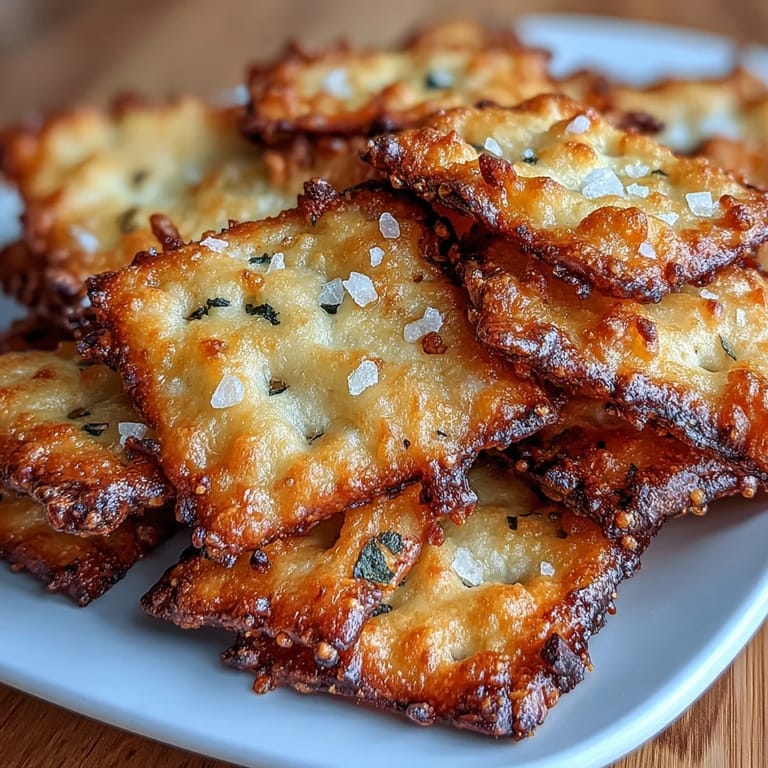
Save My sourdough starter had been sitting in the fridge for weeks, neglected and looking frankly sad, when my neighbor texted asking if I wanted to contribute snacks to a casual wine night. I panicked a little—store-bought crackers felt lazy—and then it hit me: what if I turned that forgotten discard into something crispy and golden? The smell of garlic and Parmesan filling my kitchen that afternoon was the kind of accident that becomes intentional, and by the time I pulled those tiny squares from the oven, I had created something better than any box could offer.
That wine night turned into three people asking for the recipe, which surprised me because honestly, I wasn't expecting much—I was just solving a problem and using what I had on hand. One friend took a handful and disappeared into the kitchen to hide them from her kids, and somehow that felt like the highest compliment. Now whenever I make a batch, I double it automatically, because these crackers have this sneaky quality of being impossible to eat just one or two of.
Ingredients
- All-purpose flour (1 cup / 120 g): The structure of everything—measure by weight if you can, because it keeps the dough forgiving and less likely to turn dense.
- Sharp cheddar cheese, finely grated (1 cup / 100 g): This is where the flavor backbone comes from, so don't skimp on quality or skip the grating step; pre-shredded cheese has cellulose that makes things grainy.
- Parmesan cheese, finely grated (1/3 cup / 35 g): The salty, nutty punch that makes people wonder what your secret is—fresh grating matters here too.
- Unsalted butter, cold and cubed (1/3 cup / 80 g): Cold butter is non-negotiable if you want that shatter-crisp texture; warm butter makes greasy crackers.
- Sourdough discard, unfed (1/2 cup / 120 g): This is the tangy soul of the cracker, adding depth and that signature sourdough flavor without requiring a long fermentation.
- Garlic powder (1/2 tsp): Fresh garlic would make the dough wet, so powder is the move here for consistent, punchy flavor.
- Onion powder (1/4 tsp): A quiet background note that rounds out the savory profile without announcing itself.
- Fine sea salt (1/4–1/2 tsp, plus more for topping): Adjust to taste depending on how salty your cheeses already are and your personal preference.
- Freshly ground black pepper (1/4 tsp): Grind it fresh if you can; pre-ground tastes hollow by comparison.
- Parmesan cheese for topping, finely grated (1 tbsp): A second layer of umami that catches the light and looks intentional on the finished crackers.
- Flaky sea salt for sprinkling: The finishing touch that adds texture and emphasizes that handmade, rustic quality.
Tired of Takeout? 🥡
Get 10 meals you can make faster than delivery arrives. Seriously.
One email. No spam. Unsubscribe anytime.
Instructions
- Build your dough base:
- Pulse flour, both cheeses, cold butter cubes, garlic powder, onion powder, salt, and pepper in a food processor until the mixture looks like breadcrumbs with some pea-sized butter pieces still visible. This texture is exactly what you want—if it's too fine, your crackers will be dense instead of crispy.
- Bring it together:
- Add sourdough discard and pulse just until the dough barely comes together, then turn it onto a lightly floured surface and knead gently a few times until smooth. This shouldn't take more than a minute; overworking develops gluten and makes things tough.
- Chill for success (optional but recommended):
- Shape dough into a rectangle, wrap it in plastic, and refrigerate for 30–60 minutes—this rest gives the gluten a chance to relax and makes rolling infinitely easier. If you're impatient, even 15 minutes helps.
- Prepare your workspace:
- Preheat oven to 350°F (175°C) and line two baking sheets with parchment paper while your dough chills. This means you're not scrambling when you're ready to roll.
- Roll thin and even:
- Working on a lightly floured surface, roll dough to 1/8 inch (about 3 mm) thickness—thinner than you think, honestly, because as they bake they'll puff ever so slightly. Use a pastry wheel or very sharp knife to cut 1-inch squares, which gives you that nostalgic Cheez-It shape.
- Create the signature hole:
- Transfer squares to your prepared baking sheets with a tiny bit of space between each one, then use a skewer or toothpick to poke a hole in the center of every square. This isn't just for looks; it helps them bake evenly and prevents puffing up like little pillows.
- Season before baking:
- Mix the topping Parmesan and garlic powder, then lightly brush each cracker with water and sprinkle generously with the cheese mixture and flaky sea salt. The water acts as glue and ensures toppings stay put.
- Bake until golden:
- Bake for 16–18 minutes, rotating pans halfway through, until the crackers are golden and crispy at the edges. They'll firm up as they cool, so don't overbake or they become bitter.
- Cool completely:
- Transfer to wire racks and let them cool completely before storing or eating, which takes about 15 minutes and allows the remaining residual heat to finish the crisping process.
 Save
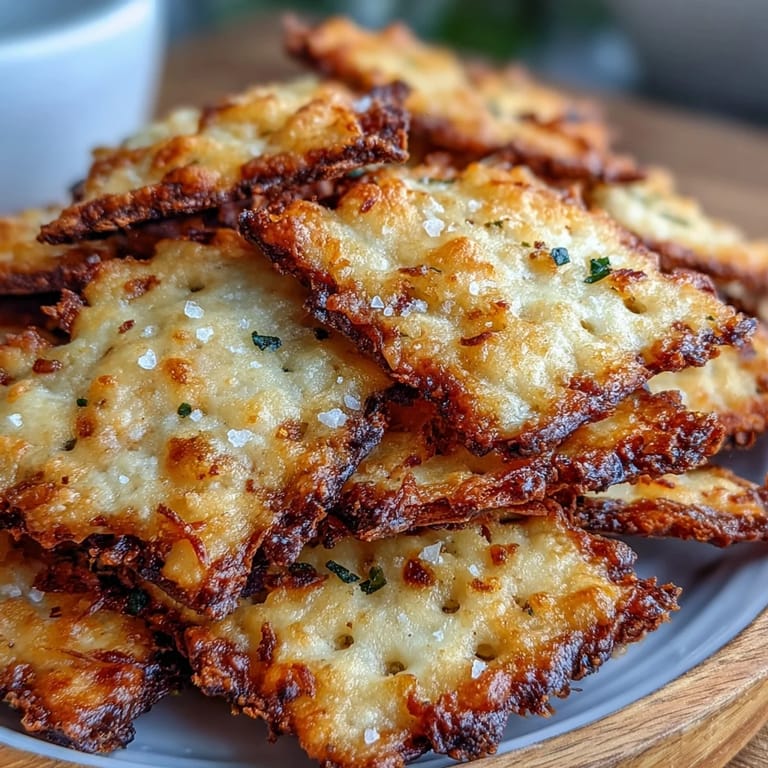
Save What stuck with me most was the texture—that first bite where they shatter between your teeth in a way that feels almost impossible from a homemade recipe. My partner, who usually dismisses anything I make as 'nice but store-bought is fine,' ate nearly half the first batch standing at the counter and didn't even realize it. That's when I knew these were something special.
Flavor Variations to Explore
The beauty of this base recipe is how flexible it is once you understand the ratios and technique. I've added everything from crispy sage and thyme to sriracha powder and even everything-bagel seasoning, and they all worked beautifully. The key is respecting the salt balance—if you're adding something punchy, dial back the fine sea salt slightly to keep things in proportion. One night I mixed in a teaspoon of dried Italian herbs instead of the standard powders, and the rosemary note made people pause and ask what was different.
Storage and Longevity
These crackers stay crispy in an airtight container for up to five days, though I've never had any last beyond three because they're too easy to snack on mindlessly. I store mine in a glass jar with a tight lid rather than a plastic container, because glass doesn't hold onto moisture the way plastic can. If they do somehow soften—which happens in humid weather or if your seal wasn't quite tight—a quick 5-minute refresh in a 275°F oven brings back the crunch beautifully.
Building Your Perfect Snack Board
These crackers are designed to shine alongside cured meats, aged cheeses, and briny olives, but I've also paired them with soft spreads like whipped goat cheese mixed with herbs and even smoked salmon for something fancier. The tanginess from the sourdough actually makes them sophisticated enough for wine pairings—they'd be wonderful with a crisp white or light rosé. A few quick final thoughts to make your snack board legendary: arrange the crackers in small piles rather than overlapping, so guests can grab handfuls; toast them one more time if you're making the board more than an hour ahead; and always, always make extra because they disappear.
- Make two batches if you're entertaining, because there's never leftover crackers, only an empty jar.
- Pair with things that have contrasting textures—creamy spreads, crunchy nuts, and soft cheese all play off the cracker's sharpness.
- Warm crackers are even better than room temperature ones, so consider timing your bake to finish just as guests arrive.
 Save
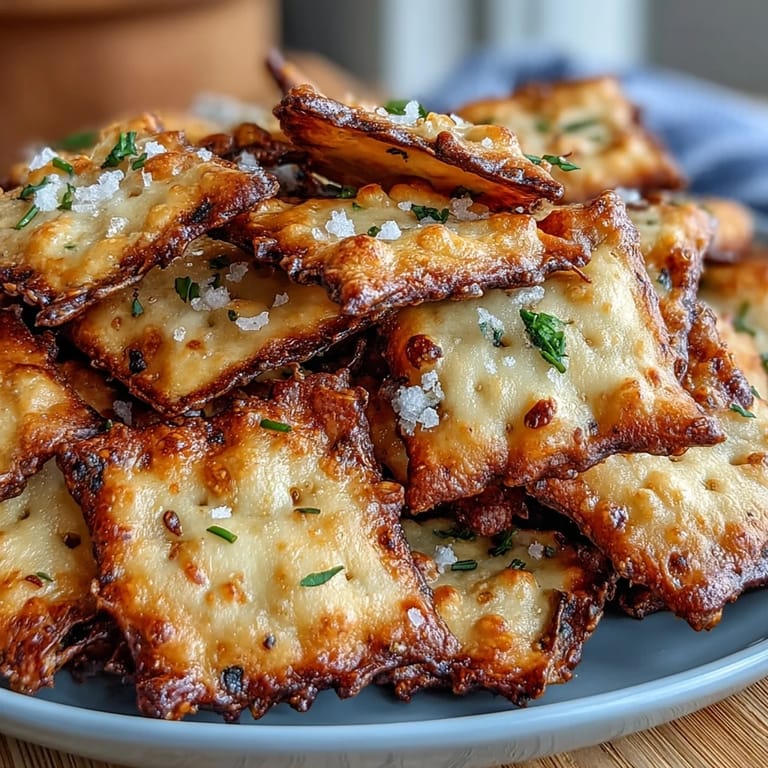
Save These crackers have become my answer to 'what can I bring,' and honestly, they've ruined me for store-bought versions forever. There's something deeply satisfying about turning what would've been wasted sourdough starter into something people actually crave.
Recipe FAQ
- → What type of cheese is used in these crackers?
Sharp cheddar and finely grated Parmesan cheeses provide robust flavor and richness.
- → Can I use gluten-free flour for the dough?
Yes, a cup-for-cup gluten-free flour blend can substitute all-purpose flour for a gluten-free version.
- → How do I achieve the right cracker texture?
Chilling the dough before rolling helps improve texture and makes cutting easier, resulting in crisp crackers.
- → What is the purpose of poking holes in each square?
Holes prevent puffing and ensure even baking for thin, crisp crackers.
- → How should I store these crackers for best freshness?
Keep crackers in an airtight container at room temperature to maintain crispness for up to five days.
- → Can I add herbs for extra flavor?
Yes, adding dried Italian herbs to the dough enhances the savory profile without overpowering the garlic and cheese.