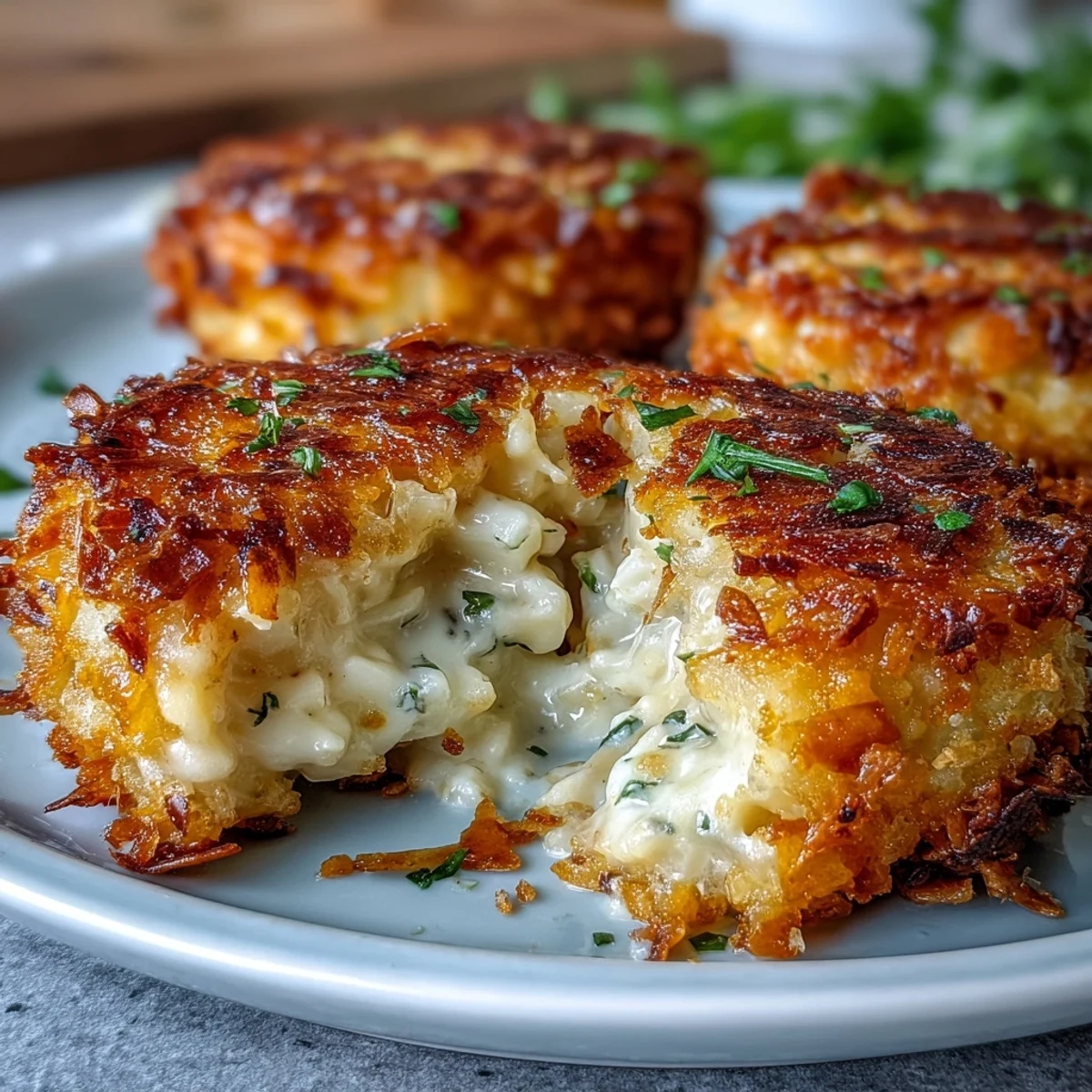
 Save
Save I'll never forget the first time I discovered the magic of pickled vegetables at a tiny market in Istanbul. A vendor was arranging jars of vibrant, glistening pickles with such care that I stopped mid-stride. I bought a small jar and found myself eating them straight with my hands, the crunch and tang awakening something in me that day. Years later, when friends started asking what made my appetizer boards so special, I realized it was time to recreate that feeling at home, one colorful vegetable at a time.
I remember the first time I served these at a dinner party with no real plan—just a board of pickled vegetables I'd made the day before. My sister took one bite, then another, and finally asked if I was starting a business. We ended up serving nothing else that night except bread and wine. That's when I knew this recipe was special enough to share.
Ingredients
- Carrots, julienned (1 cup): Their natural sweetness balances the vinegar perfectly, and thin cuts mean they soften just enough while keeping that satisfying snap.
- Cucumber, sliced (1 cup): These are the crowd-pleasers—familiar, refreshing, and they absorb the brine quickly for faster flavor.
- Radishes, thinly sliced (1 cup): I learned these are the secret to brightness; they stay almost aggressive in their crunch and peppery bite.
- Red cabbage, shredded (1 cup): Not only does it create those stunning magenta hues, but it also holds its structure beautifully through pickling.
- Cauliflower florets (1 cup): Small florets are your friend here—they pickle evenly and become little flavor bombs with texture you can actually feel.
- Green beans, trimmed (1 cup): These add a grassy, fresh element and stay crisp longer than almost any other vegetable.
- White vinegar (2 cups): This is your backbone. It's clean, neutral, and lets the vegetables sing without overpowering them.
- Water (2 cups): The ratio matters here—too much vinegar burns your mouth, too little and you lose that sharp edge.
- Sugar (2 tbsp): This quiets the harshness and brings out natural vegetable sweetness in the most subtle way.
- Kosher salt (2 tbsp): The coarser crystals dissolve properly and season evenly without bitterness.
- Garlic cloves, sliced (2): Fresh garlic mellows as it pickles, becoming almost sweet and perfuming everything around it.
- Mustard seeds (1 tbsp): These pop slightly during pickling, releasing their spicy warmth throughout the brine.
- Coriander seeds (1 tbsp): A hint of floral warmth that makes people ask, 'what is that flavor I can't quite place?'
- Black peppercorns (1 tsp): Don't skip these—they add a gentle heat that creeps up at the end of each bite.
- Bay leaves (2): These are your grounding element, adding earthiness and depth without shouting.
- Fresh dill (3 sprigs): Dill whispers herbs rather than announces them, keeping the focus on the vegetables themselves.
- Red chili, sliced (1 small, optional): If you want heat, this adds a living edge without overpowering those careful flavor layers.
- Kimchi (1 cup, optional): For a fermented element that brings funky, umami richness to your spread.
- Sauerkraut (1 cup, optional): Tangy and earthy, these add complexity and prove fermentation isn't just a trend.
Tired of Takeout? 🥡
Get 10 meals you can make faster than delivery arrives. Seriously.
One email. No spam. Unsubscribe anytime.
Instructions
- Gather and prep your vegetables:
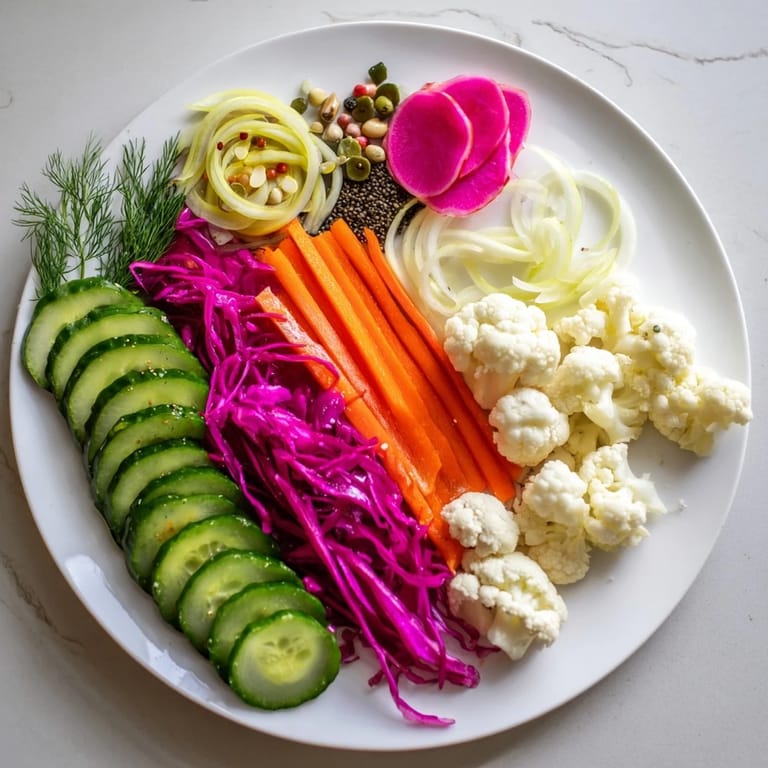
- Wash everything under cool water and pat dry—moisture on the outside can dilute your brine. Now comes the satisfying part: slice your carrots into matchsticks, cut cucumbers into rounds (I like half-moons personally), shave radishes thin enough to see light through them, shred the red cabbage into ribbons that catch the light, break cauliflower into small florets about the size of a grape, and trim the green beans. As you cut, imagine how they'll look on the serving board—colors matter, arrangement matters.
- Build your pickling brine:
- Pour vinegar and water into a saucepan and bring to a gentle boil. Add sugar and salt, stirring until they dissolve completely—you want no grittiness at the bottom, just a clear, purposeful liquid. This takes about 3-4 minutes. The brine should smell sharp and clean, almost like sniffing a fresh-cut lemon. Remove from heat and let it cool for a few minutes while you move to the next step.
- Pack your jars with intention:
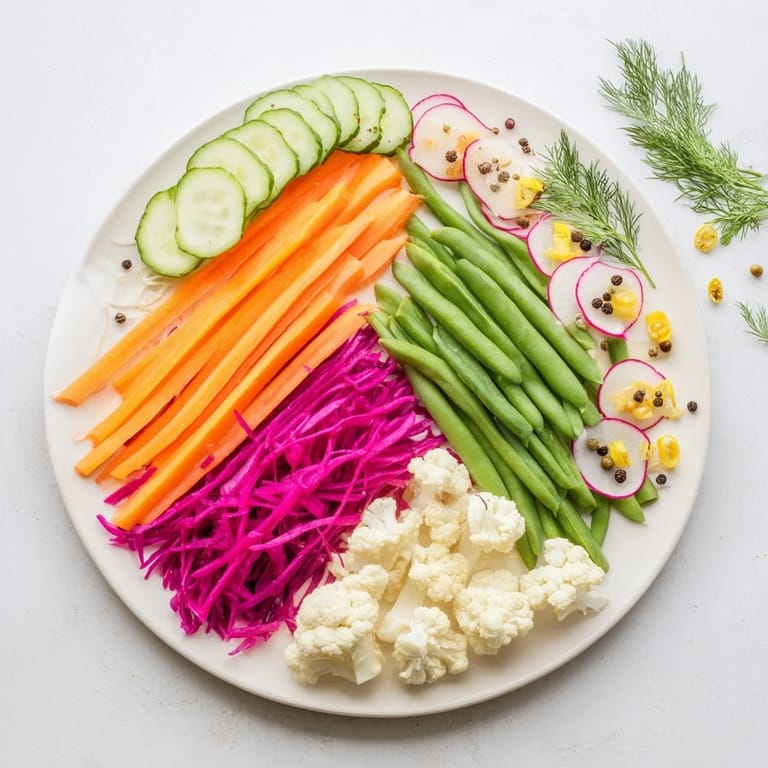
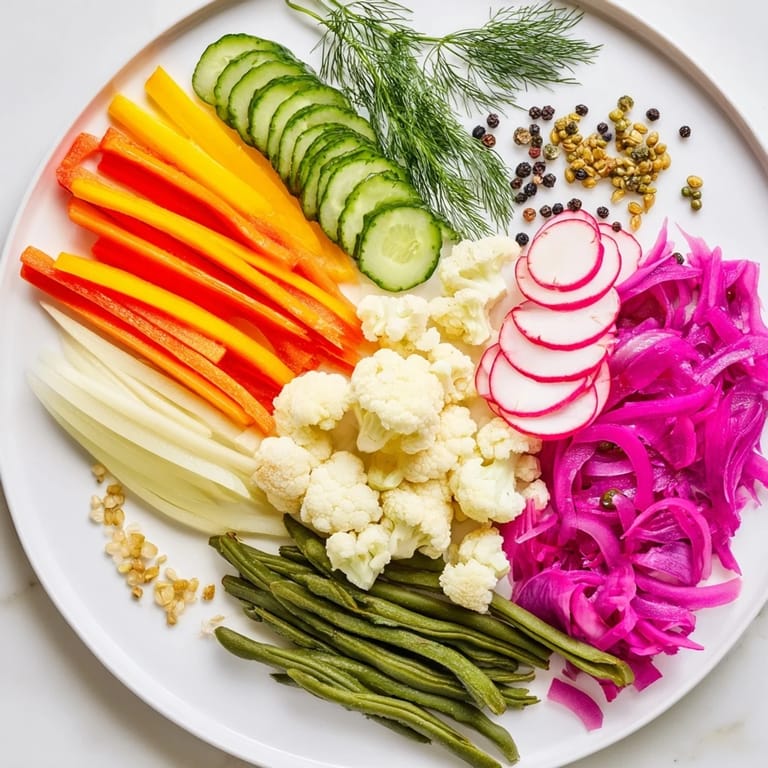
- You're not just filling jars, you're creating a visual story. Take clean glass jars or small bowls and begin layering: one color, then another, grouping by hue. Carrots together, cucumbers together, radishes creating a contrasting line. This isn't just prettier—it makes serving easier and helps guests understand what they're tasting. Pack tightly enough that vegetables don't float freely, but not so tight you're crushing them.
- Layer in the flavor makers:
- Distribute garlic slices, mustard seeds, coriander seeds, peppercorns, bay leaves, dill sprigs, and chili if using across the jars evenly. Tuck them in among the vegetables so they're suspended throughout, not just sitting on top. This is where the magic begins—these aromatics will slowly infuse into everything around them.
- Pour and submerge:
- Carefully pour the slightly cooled brine over everything, listening to it settle and fill in the gaps. Make sure every vegetable is completely submerged—anything above the brine line can spoil or soften unevenly. You might need to press down gently with a clean spoon to keep everything below the surface.
- Seal and cool:
- Put lids on your jars and let them sit on the counter until completely cool. This gentle cooling helps the vegetables begin their transformation. Then transfer to the refrigerator. This is the hard part—waiting. Quick pickles need at least 12 hours, but 24-48 hours is when they truly sing.
- True fermentation option:
- If you want to go deeper, make a 2% salt brine instead (20 grams salt per 1 liter of water—much saltier than quick pickling). Pack your vegetables the same way, pour this stronger brine over, and keep jars at room temperature. Check daily that everything stays submerged, pressing down if needed. In 5-7 days you'll see bubbles forming—this is the living fermentation happening. You'll taste tanginess deepen, complexity build. It's patience rewarded.
- The arrangement and serve:
- Transfer your pickled treasures to the serving board or tray, creating patterns—lines of color, or a grid of different varieties. Pour some of that brine over as you go; it makes everything glisten and keeps the presentation looking alive. The goal is stunning enough that guests reach for these before the bread.
 Save
Save I think about my grandmother's kitchen, where a crock of fermenting vegetables always sat on a shelf, covered loosely with cloth. She never measured anything precisely—just vegetables, salt, and time. The day she finally let me taste what she'd been cultivating, I understood that some of the best things in cooking require you to get out of the way and let transformation happen naturally.
The Magic of Vinegar Varieties
Once you master the basic white vinegar brine, you'll start experimenting. Apple cider vinegar brings a gentle fruitiness and warmth that's wonderful for sweeter vegetables like carrots and beets. Rice vinegar makes everything taste almost delicate, almost Japanese—perfect if you're serving these alongside Asian dishes. Red wine vinegar adds a complexity that feels almost sophisticated, making your pickles taste like they came from a European market. I keep at least two varieties in my kitchen now because the choice changes everything about how these vegetables taste and what I want to serve them with.
Building Your Arrangement
The presentation of pickled vegetables transforms them from a condiment into a statement. When you arrange them by color—the orange carrots making a line, the magenta radishes creating contrast, the pale green beans standing like little soldiers—you're inviting people to slow down and actually look at what they're eating. I've learned that when food looks intentional, people taste it differently. They notice the snap of the radish, the sweetness of the carrot, the earthiness of the cauliflower. They ask questions and want to know how to make them. And suddenly you're not just serving an appetizer, you're sharing something you care about.
- Use odd numbers when possible—three types of vegetables look more intentional than two or four.
- Place your most vibrant vegetables where the eye naturally lands first, usually the center or a corner of your board.
- Leave some negative space so the board doesn't feel cramped; these vegetables are beautiful and deserve room to breathe.
The Fermentation Journey
There's something almost spiritual about fermentation. Unlike quick pickling, which is just a preservation technique, fermentation is alive. If you choose to ferment instead of quick-pickle, you're creating an environment where beneficial bacteria do the work. The vegetables won't soften quite as quickly, the flavors develop more gradually, and you'll taste a complexity that vinegar alone can't create. On day three you'll see bubbles. On day five the smell shifts into something funkier, more alive. By day seven you have something that tastes like it came from a thousand years of tradition, not from your kitchen counter. This is the path if you have patience and curiosity.
 Save
Save These pickled vegetables have taught me that sometimes the most memorable dishes are the simplest ones. All it takes is attention, intention, and the willingness to wait a little while for something beautiful to develop.
Recipe FAQ
- → What vegetables work best for pickling and fermenting?
Crunchy vegetables like carrots, cucumbers, radishes, cabbage, cauliflower, and green beans hold up well, offering crisp texture and absorbing brine flavors beautifully.
- → How long should the pickling process take for optimal flavor?
Quick pickling requires at least 12 hours in the refrigerator for a bright tang, while fermentation typically takes 5–7 days at room temperature for deeper, complex flavors.
- → Can I adjust the spice and herb mix in the brine?
Absolutely. Mustard seeds, coriander, black peppercorns, garlic, dill, bay leaves, and chili can be customized to taste, providing a personalized aromatic profile.
- → What are some tips for arranging the vegetables attractively?
Group vegetables by color and shape in glass jars or bowls. Arrange in linear or grid patterns on serving boards for a visually striking presentation.
- → Are there alternatives to white vinegar in the brine?
Yes, rice vinegar or apple cider vinegar can be used to offer different flavor nuances, from mild sweetness to fruity tartness.