 Save
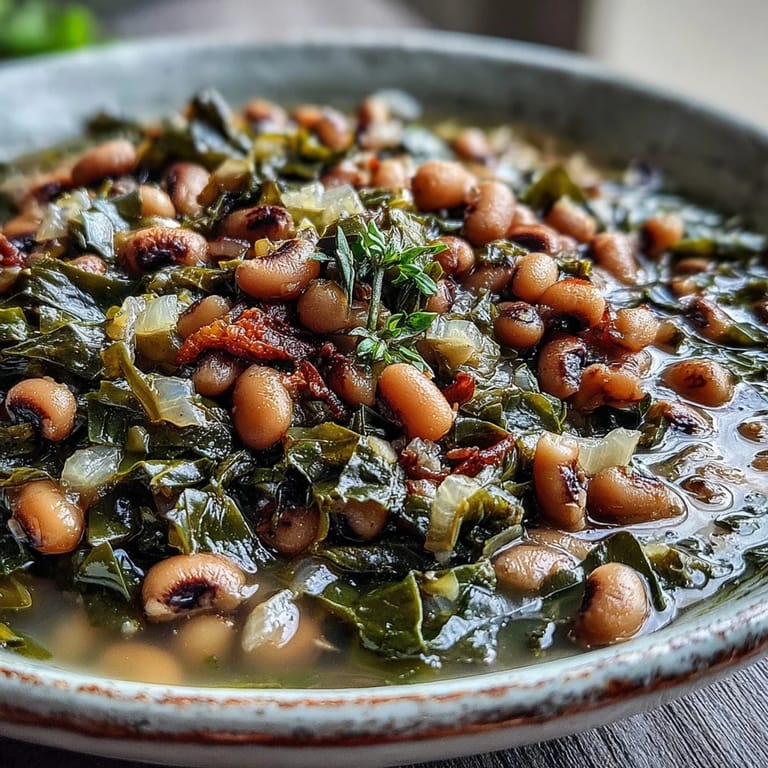
Save My grandmother used to say that black-eyed peas and collard greens weren't just food—they were insurance against a year of bad luck. I didn't understand it as a kid, but the first time I made this dish on New Year's Eve, standing in my kitchen at midnight with a pot bubbling away, something clicked. The smell of smoked paprika mixing with the earthiness of the greens felt like tradition itself, and I realized she wasn't being superstitious—she was teaching me that some meals carry weight beyond the table.
I made this for my friend Marcus on a cold January afternoon when he was going through a rough patch. He sat at my kitchen counter and we didn't talk much, just listened to the pot simmer and the radio play softly. By the time it was ready, something had shifted—not because of magic, but because food prepared with intention has a way of reminding people they're not alone.
Ingredients
- Black-eyed peas (2 cups dried or 3 cans): The heart of this dish—dried ones need overnight soaking but reward you with better texture and flavor, though canned work beautifully when you're short on time.
- Collard greens (1 large bunch, about 1 lb): Remove those tough stems with a quick knife stroke and chop the leaves roughly; they'll melt into the broth and become silky rather than tough.
- Onion (1 large, finely chopped): This is your flavor foundation, so don't rush it—give it time to soften and caramelize slightly.
- Garlic (3 cloves, minced): Fresh garlic makes a noticeable difference here; add it after the softer vegetables so it doesn't burn and turn bitter.
- Celery and carrot (2 stalks and 1 medium): The holy trinity of Southern cooking—diced and sweated together, they create the aromatic base that everything else builds on.
- Smoked paprika (1 teaspoon): This is the secret that makes people ask what you did differently; it adds depth without making the dish taste smoky.
- Bay leaf, thyme, and red pepper flakes: Bay leaf is a classic anchor, thyme adds herbaceous warmth, and red pepper flakes give you just a whisper of heat you can adjust to taste.
- Vegetable or chicken broth (6 cups): Use good broth if you have it—it's not an ingredient you can hide, and it carries the entire pot.
- Apple cider vinegar (1 tablespoon): Just enough to brighten everything at the end and cut through the richness without announcing itself.
- Smoked ham hock or turkey (4 oz, optional): Adds a savory depth that's hard to replicate; if you skip it, add an extra teaspoon of smoked paprika for vegetarians.
Tired of Takeout? 🥡
Get 10 meals you can make faster than delivery arrives. Seriously.
One email. No spam. Unsubscribe anytime.
Instructions
- Soak your peas the night before (if using dried):
- Cover them generously with cold water and let them sit overnight—this speeds up cooking and makes them more digestible. In the morning, drain them well and you're ready to go.
- Build your flavor base:
- Heat a splash of oil in your Dutch oven over medium heat and add the chopped onion, celery, and carrot. Let them soften for about 5 minutes, stirring occasionally so they cook evenly without browning too much.
- Wake up the garlic:
- Add your minced garlic and cook for just 1 minute—you want it fragrant but not bitter, so don't let it sit in the hot oil too long.
- Add your meat (if using):
- Toss in the ham hock or smoked turkey and let it cook for 2 minutes, getting to know the vegetables already in the pot.
- Toast the spices:
- Add the drained black-eyed peas along with the bay leaf, smoked paprika, thyme, and red pepper flakes. Stir everything together for about a minute so the spices bloom and coat the peas—you'll notice the kitchen smells incredible right about now.
- Bring it to a boil:
- Pour in your broth and turn up the heat, letting it come to a rolling boil for a few minutes before you reduce the heat down to a gentle simmer. Cover the pot and let it cook for 45 minutes if you're using dried peas, or just 20 minutes if you went with canned.
- Add the greens and finish strong:
- Once the peas are starting to get tender, uncover the pot and stir in your chopped collard greens. Let everything simmer together uncovered for another 30 minutes—the greens will soften and the flavors will meld into something whole and complete.
- Taste and adjust:
- Stir in the apple cider vinegar and fish out the bay leaf and any meat pieces. If you used a ham hock, shred any meat that's fallen apart and return it to the pot. Taste it now and season with salt and pepper until it tastes like home.
- Serve it with intention:
- Ladle it into bowls and offer cornbread on the side, maybe a bottle of hot sauce for those who want it. The best part is always the moment someone takes that first spoonful and just closes their eyes.
 Save
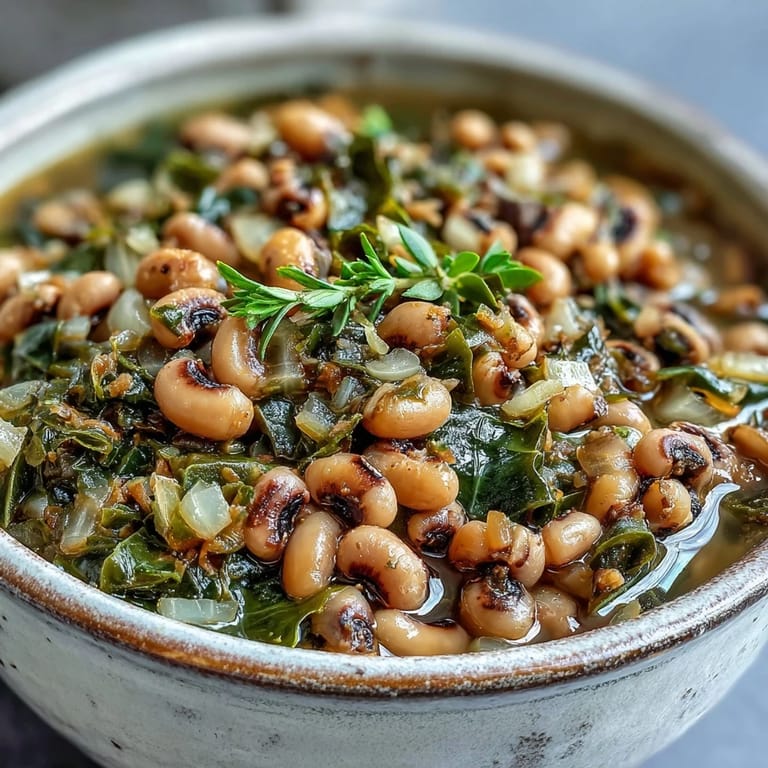
Save My mother taught me that New Year's food is about hope, and I've never forgotten it. Every time I make this dish, I think about the people sitting around the table and what they might need that year—and somehow, serving something this nourishing and intentional feels like you're feeding more than just hunger.
The Magic of Soaking
The first time I skipped soaking dried black-eyed peas to save time, I learned a hard lesson: they stayed firm and grainy even after hours of cooking. Now I soak them religiously, and the difference is night and day—they become creamy and tender, absorbing the broth like they're meant to. It takes five minutes of active work the night before, and it changes everything about the final dish.
Why This Dish Gets Better Overnight
Make this recipe a day ahead if you can, because something happens as it sits in the refrigerator—the flavors deepen and find each other, and the peas become even creamier. I've reheated this a dozen times, and it's never worse than the first day. The collard greens get silkier, the broth tastes richer, and somehow it feels even more like comfort food.
Beyond the Traditional Route
Southern cooking respects tradition, but it also respects adaptation. I've made this with mustard greens when collards weren't available, and honestly, it was just as good. I've served it vegetarian for friends who don't eat meat, and by doubling the smoked paprika and adding a splash of soy sauce, nobody missed the ham hock at all. The core of this dish—slow-cooked peas and greens—is flexible enough to meet you where you are.
- Substitute kale or mustard greens if collards aren't in season or available, though collards really are the traditional choice for a reason.
- For vegetarian versions, skip the meat and use vegetable broth, but add that extra teaspoon of smoked paprika to keep the depth of flavor.
- Leftover peas and greens freeze beautifully in containers, so make extra and have comfort food ready whenever the year gets hard.
 Save
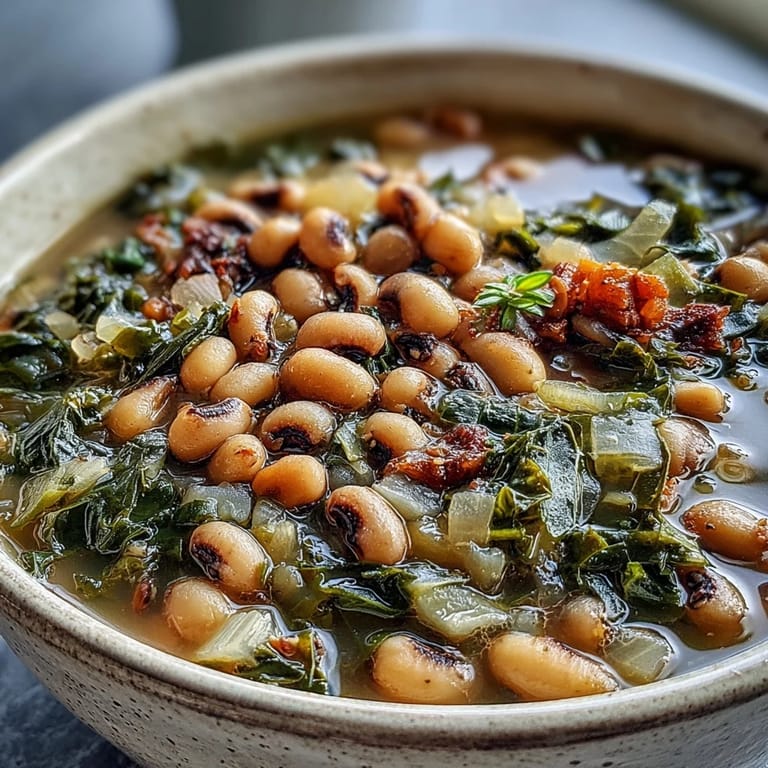
Save Make this dish when someone needs feeding, not just because it's New Year's. It's the kind of meal that says you care without needing words.
Recipe FAQ
- → Why are black-eyed peas and greens eaten on New Year's?
Southern tradition holds that black-eyed peas represent coins and collard greens symbolize paper money, making this combination believed to bring prosperity and good fortune in the coming year.
- → Do I need to soak dried black-eyed peas?
Yes, dried black-eyed peas require overnight soaking in cold water before cooking. This ensures even cooking and proper texture. Alternatively, you can use canned peas for a quicker preparation.
- → Can I make this vegetarian?
Absolutely. Simply omit the ham hock or smoked turkey and use vegetable broth instead of chicken broth. The dish remains flavorful and satisfying with just the aromatic vegetables and spices.
- → What can I substitute for collard greens?
Kale, mustard greens, or turnip greens work beautifully as substitutes. Each brings slightly different flavors and cooking times, but all complement the black-eyed peas perfectly.
- → How long do leftovers keep?
Leftovers store well in the refrigerator for 4-5 days and often taste even better as flavors continue to develop. The dish also freezes beautifully for up to 3 months.
- → What should I serve with this?
Cornbread is the traditional accompaniment, perfect for soaking up the flavorful broth. Crusty bread, rice, or crusty rolls also work well. A crisp white wine or sweet tea complements the Southern flavors.