 Save
Save I discovered the magic of a brunch board while visiting a small café in Portland on a lazy Sunday morning. The baker had arranged an array of golden pancakes, warm scones, and jewel-toned berries on a wooden platter with such care that it felt like edible art. That moment sparked my obsession with creating these vibrant boards at home, transforming simple ingredients into something that makes people slow down and savor the morning together.
I'll never forget hosting my first brunch board for my sister's book club. One guest who usually skipped breakfast ended up going back for thirds, loading her plate with pancakes, scones, and strawberries while laughing about how wrong she'd been about breakfast food. That's when I realized this wasn't just about feeding people — it was about creating a moment where everyone wanted to linger.
Ingredients
- All-purpose flour: The foundation for both pancakes and scones. I've learned to whisk it separately from other dry ingredients because it prevents overmixing, which keeps everything tender.
- Buttermilk: This creates tanginess and moisture in the pancakes. If you don't have it, whisk regular milk with a bit of lemon juice and let it sit for 5 minutes — it works beautifully.
- Cold unsalted butter: For scones, this must stay cold. I keep mine in the freezer for 10 minutes before cutting it in because warm butter makes dense, heavy scones.
- Heavy cream: The secret to tender, almost-crumbly scones. Don't skip this or substitute lighter cream.
- Fresh fruit: Choose what's at peak ripeness in your market. I rotate seasonally — berries in summer, pears and grapes in fall, pomegranate seeds in winter.
- Pure maple syrup: Real syrup makes a difference in taste and also looks more elegant pooling on the board.
- Optional mix-ins: Dried cranberries add tartness to scones, while chocolate chips make them feel indulgent.
Tired of Takeout? 🥡
Get 10 meals you can make faster than delivery arrives. Seriously.
One email. No spam. Unsubscribe anytime.
Instructions
- Whisk the pancake base together:
- In one bowl, combine flour, sugar, baking powder, baking soda, and salt. In another, whisk buttermilk, egg, melted butter, and vanilla until smooth. Here's what I've learned: don't overmix when combining wet and dry. Lumps are your friend — they make fluffy pancakes. Overmixed batter creates dense, rubbery ones. Stir just until the flour disappears.
- Cook pancakes low and slow:
- Heat your skillet over medium (not high!) heat and lightly grease it. Drop small spoonfuls of batter — about the size of a walnut — and let them cook undisturbed for 1 to 2 minutes until the bottom is golden and bubbles form on top. Flip gently and cook the other side until it's equally golden. You'll smell when they're ready. Transfer to a cooling rack so they don't steam and lose their crispness.
- Prepare scone dough with a light touch:
- Preheat your oven to 400°F and line a sheet with parchment. Combine dry ingredients, then cut in cold butter using a pastry cutter or your fingertips until it resembles coarse breadcrumbs. This texture matters — it's what creates those tender layers. Whisk cream, egg, and vanilla, then gently fold into the dry mixture. If using fruit or chocolate, fold those in last. The dough will be slightly sticky and that's perfect.
- Shape and bake with gentleness:
- Turn dough onto a lightly floured surface and pat gently to about 3/4 inch thick. Using a small round cutter or knife, cut into 1-inch rounds or triangles. Arrange on your baking sheet with a little space between each one. Bake for 10 to 12 minutes until the tops are just golden — don't overbake or they'll dry out. They should smell warm and slightly sweet when done. Cool on a rack.
- Prep fruit like you're painting a picture:
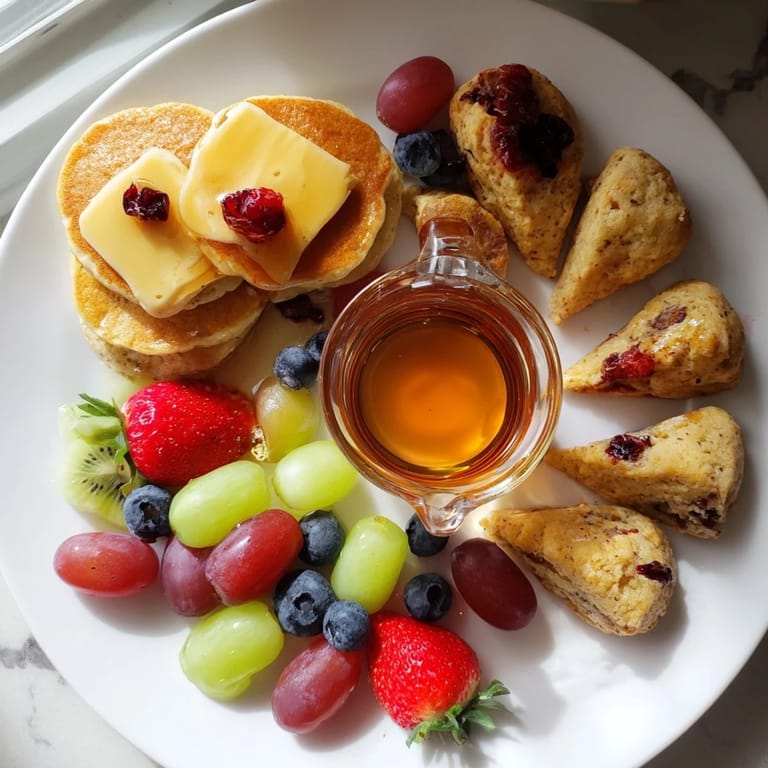
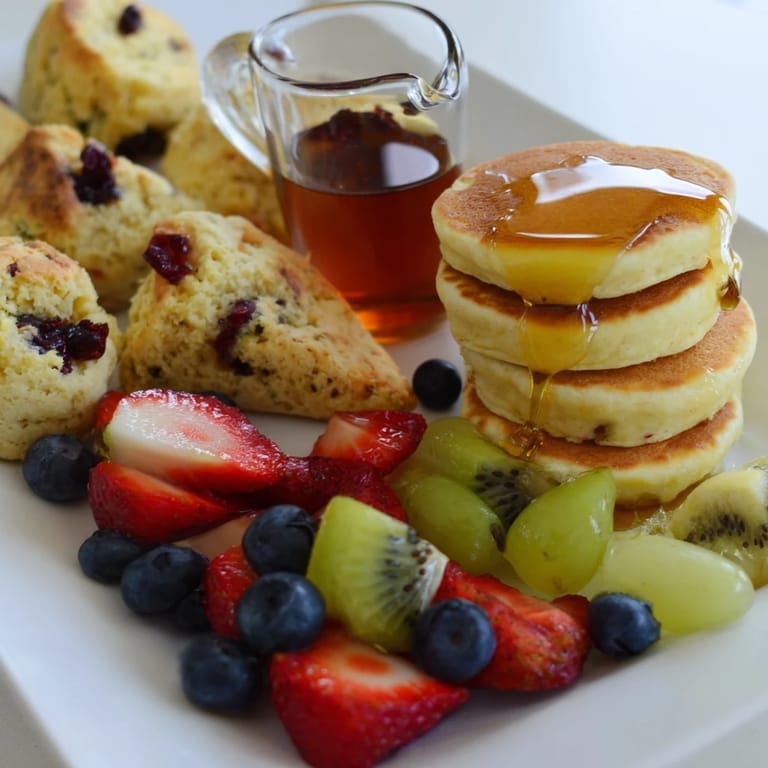
- Wash everything thoroughly and pat dry. Slice strawberries and kiwi, peel orange segments, halve grapes. Pat the fruit dry again with paper towels because moisture makes everything look less vibrant. Keep each type separate until you're ready to arrange.
- Arrange the board with intention:
- Start by creating curved lines or clusters of pancakes and scones across your platter. Tuck fruit into the spaces between, grouping each fruit type together so the colors create visual rhythm. Place your syrup pitcher slightly off-center for a natural look. Scatter fresh mint leaves as a final flourish. Step back and look at it — does it feel balanced and inviting? It should.
 Save
Save The real magic happened when my partner surprised me by setting up a small brunch board just for the two of us on a random Tuesday morning. He'd watched me prepare one a dozen times and recreated it with such care that I felt truly seen. That's when I understood that these boards aren't really about impressing people — they're about showing someone you care enough to create something beautiful.
Building Flavor Balance
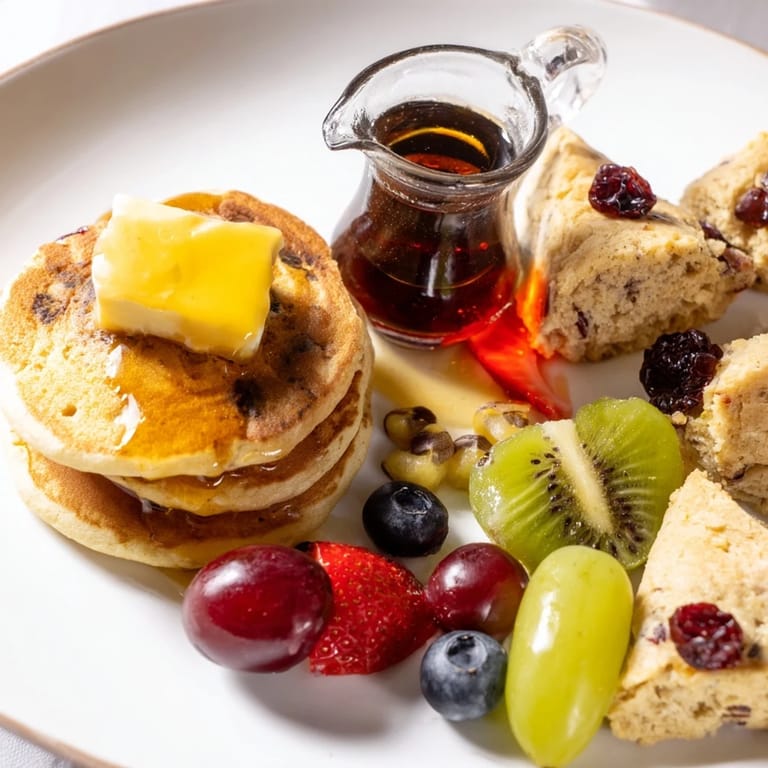
The beauty of a brunch board is in its contrasts. Warm pancakes against cool, tart berries. Buttery scones with the brightness of citrus. Sweet maple syrup with the slight tartness of kiwi. I always consider the flavor profile when I'm arranging: where is the sweetness coming from, where is the freshness, where is the richness? If you're adding optional toppings like nut butters or chocolate sauce, think about where they'll go and what they'll pair with on the plate. A dollop of chocolate sauce next to vanilla-forward pancakes, for instance, creates an experience rather than just a meal.
Timing Your Preparation
The secret to feeling calm on brunch day is understanding the timeline. I make the pancake and scone batters the night before and store them in the refrigerator. The batters actually benefit from resting overnight — they become more tender. In the morning, I cook the scones first (they need the oven), then while they cool I make the pancakes on the stovetop. Fruit gets prepped while the baked goods are cooling. If guests are arriving in an hour, start baking scones 45 minutes before they arrive. This means you're only doing last-minute fruit prepping and final assembly, which feels manageable and joyful rather than chaotic.
Personalization & Seasonal Swaps
I treat this recipe like a template that changes with the seasons and my mood. In spring, I add lemon zest to the pancake batter and use fresh rhubarb compote instead of syrup. Summer means berries everywhere and maybe candied mint. Fall calls for a touch of cinnamon and spiced applesauce. Winter is when I bring out the chocolate chips in the scones and add pomegranate seeds for jewel tones against the dark board. The structure stays the same, but the personality shifts. Here are a few swaps I've perfected:
- Substitute any dried fruit in the scones — dried apricots, dried cherries, or dried blueberries work wonderfully
- Try infusing the pancake batter with cardamom, nutmeg, or even a hint of lavender for unexpected warmth
- Whipped cream can be flavored with vanilla, honey, or a touch of citrus zest to add another layer of flavor
 Save
Save Every time I set down one of these boards, I'm reminded that the most meaningful meals aren't the complicated ones — they're the ones made with intention and arranged with love. This recipe is my love language.
Recipe FAQ
- → How do I keep the mini pancakes fluffy?
Ensure wet and dry ingredients are mixed until just combined to avoid overworking the batter. Cook pancakes on medium heat until golden on both sides.
- → Can I substitute the dried cranberries in the scones?
Yes, you can replace them with mini chocolate chips or omit the add-ins for a plain scone. Seasonal dried fruits also work well.
- → What fruits are best for assembling the board?
Use a mix of berries, grapes, kiwi, and citrus segments for color, texture, and a balance of tart and sweet flavors.
- → How should I serve the syrup to avoid sogginess?
Place syrup in a separate pitcher at the center to allow guests to drizzle as desired, preventing any premature dampening.
- → Can I prepare components in advance?
Mini scones can be baked earlier and gently reheated. Pancakes taste best fresh but can be kept warm briefly under foil.