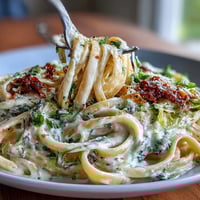
 Save
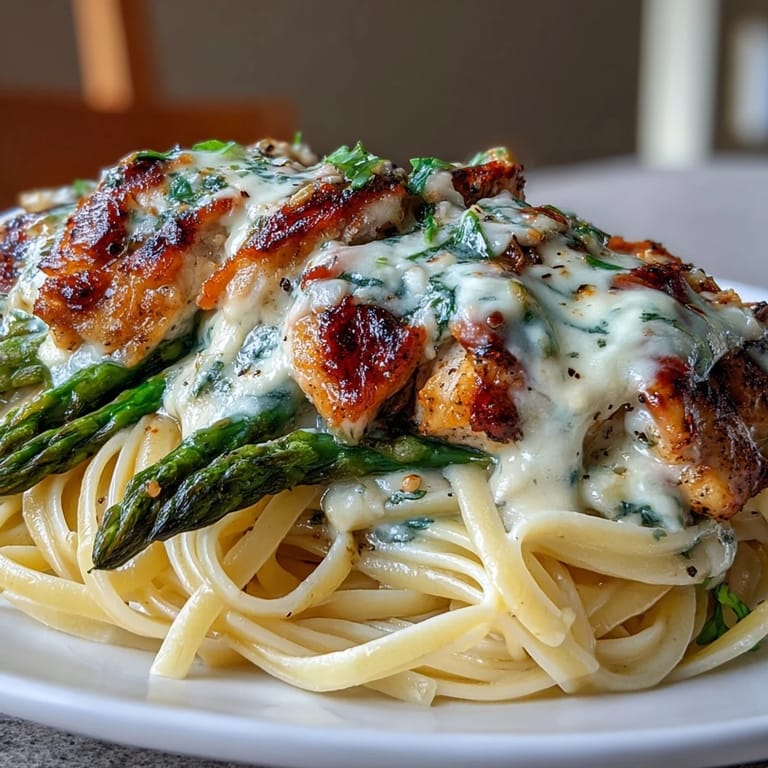
Save There's something about late spring that makes me crave pasta dishes that feel both indulgent and fresh at the same time. One evening, I was standing at the farmers market holding a bunch of vibrant asparagus, wondering how to transform it into something more than just a side dish, when the answer hit me—roast it with cheese until it's crispy, then toss it into a creamy Asiago sauce. That single decision turned an ordinary weeknight dinner into something I've made countless times since.
I made this for my partner's coworkers who were skeptical about asparagus in pasta, and watching them ask for seconds felt like a small victory. There's something satisfying about converting asparagus doubters with crispy cheese-coated stalks and rich cream sauce.
Ingredients
- Chicken breasts: Cutting them into bite-sized pieces means they cook quickly and distribute evenly throughout the pasta, so you get chicken in every forkful instead of hunting for it.
- Asparagus: Trim the woody bottom third—you'll feel the natural breaking point if you bend each stalk gently, and cutting them into 2-inch pieces helps them roast evenly and stay crispy.
- Asiago cheese: Freshly grated makes all the difference because pre-shredded cheese has anti-caking agents that prevent it from melting smoothly into the sauce.
- Heavy cream: Don't skip this or substitute it too early in your cooking journey; it's what transforms the Asiago into a silky sauce instead of a grainy mess.
- Linguine: The long, flat strands catch the sauce beautifully, but any pasta shape works if this is what you have on hand.
- Garlic and onion: These create the flavor foundation—the onion softens and sweetens while the garlic adds that aromatic punch that makes people ask what smells so good.
- Lemon zest: Optional but important; it brightens the richness and reminds your palate that this is still a spring dish, not autumn comfort food.
- Red pepper flakes: A small pinch adds complexity without heat, cutting through the cream in an elegant way.
Tired of Takeout? 🥡
Get 10 meals you can make faster than delivery arrives. Seriously.
One email. No spam. Unsubscribe anytime.
Instructions
- Prepare your workspace and get the oven ready:
- Preheat your oven to 220°C (425°F) and line a baking sheet with parchment paper so the cheese on the asparagus doesn't stick and burn onto the pan. Having everything ready before you start cooking makes the next 40 minutes feel organized instead of chaotic.
- Roast the asparagus until it's crispy and golden:
- Toss the asparagus pieces with olive oil, salt, pepper, and half the grated Asiago, then spread them in a single layer on the baking sheet. Roast for 12–15 minutes until the cheese is golden and crispy and the asparagus is tender but still has a slight bite—you'll know it's ready when it smells nutty and irresistible.
- Cook the linguine while everything else happens:
- Get a large pot of salted water boiling and add the linguine, stirring occasionally so it doesn't clump together. Before draining, scoop out about 120 ml of starchy pasta water and set it aside—this liquid is your secret weapon for adjusting sauce consistency later.
- Sear the chicken until it's golden and cooked through:
- Season your chicken pieces with salt and pepper, then heat olive oil in a large skillet over medium-high heat and add the chicken in a single layer. Let it sit for 2–3 minutes before stirring so it develops a golden crust, and cook until the pieces are cooked through, about 5–6 minutes total—a meat thermometer should read 165°F if you want to be certain.
- Build the cream sauce with butter, onion, and garlic:
- In the same skillet (all those brown bits are flavor), melt butter over medium heat and add the chopped onion, stirring occasionally until it's soft and beginning to turn golden, about 2–3 minutes. Add the minced garlic and cook for just 30 seconds until fragrant—this is the moment the kitchen smells incredible.
- Melt the cheese into the cream to create the sauce:
- Pour in the heavy cream and stir in the remaining Asiago cheese, letting it simmer gently and watching as the cheese melts into a smooth, velvety sauce. If it looks too thick after a couple minutes, stir in a splash of that reserved pasta water until it reaches the consistency of heavy cream—it will thicken slightly more as it cools.
- Bring everything together in the skillet:
- Add the cooked linguine, the seared chicken, and the roasted asparagus to the skillet, tossing gently to coat everything in the cream sauce. Taste and adjust the seasoning with salt, pepper, and a pinch of lemon zest or red pepper flakes if you'd like.
- Plate and garnish while everything is still hot:
- Serve immediately in shallow bowls, finishing each portion with a small handful of extra grated Asiago or Parmesan cheese if you like.
 Save
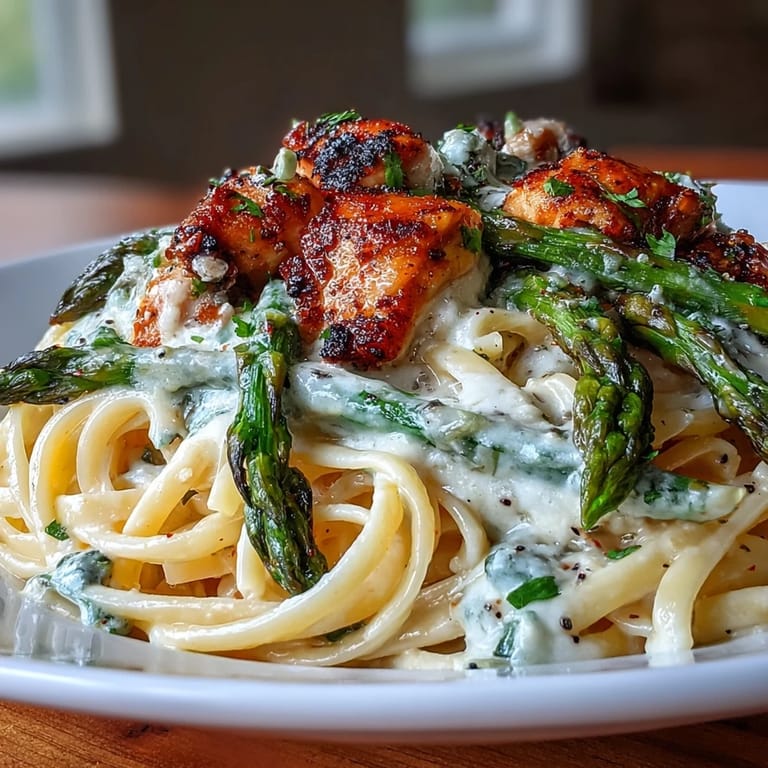
Save What started as a solution to the question "what do I do with this asparagus?" has become a dish I reach for whenever I want to impress someone or remind myself that home cooking can feel restaurant-quality. The combination of crispy asparagus and silky sauce somehow makes you feel both nourished and indulged.
Why Asiago Works Better Than Parmesan Here
Asiago is milder and creamier than Parmesan, which means it melts into a smooth sauce instead of becoming grainy or clumpy. Parmesan is wonderful for garnishing, but Asiago is what makes this sauce possible.
The Roasting Technique Changes Everything
Roasting asparagus with cheese is different from boiling or steaming it because the heat caramelizes the natural sugars and crisps the cheese coating, creating texture contrast that makes the dish interesting. The first time I tried this method, I was amazed that the asparagus didn't become mushy the way it does when you add it raw to a warm sauce.
Flexibility and Personal Touches
This recipe is forgiving enough to adapt based on what's in your kitchen or what you're craving. I've made it with peas instead of asparagus in winter, added baby spinach for color, and even tried it with a splash of white wine in the sauce instead of plain cream—each version tasted different but equally delicious.
- For a lighter version that still feels rich, substitute half-and-half for heavy cream or use a mix of both.
- Add a squeeze of fresh lemon juice at the end if the dish tastes heavy, or finish with a pinch of nutmeg for unexpected warmth.
- This pairs beautifully with a crisp Sauvignon Blanc or Pinot Grigio if you're serving it to guests.
 Save
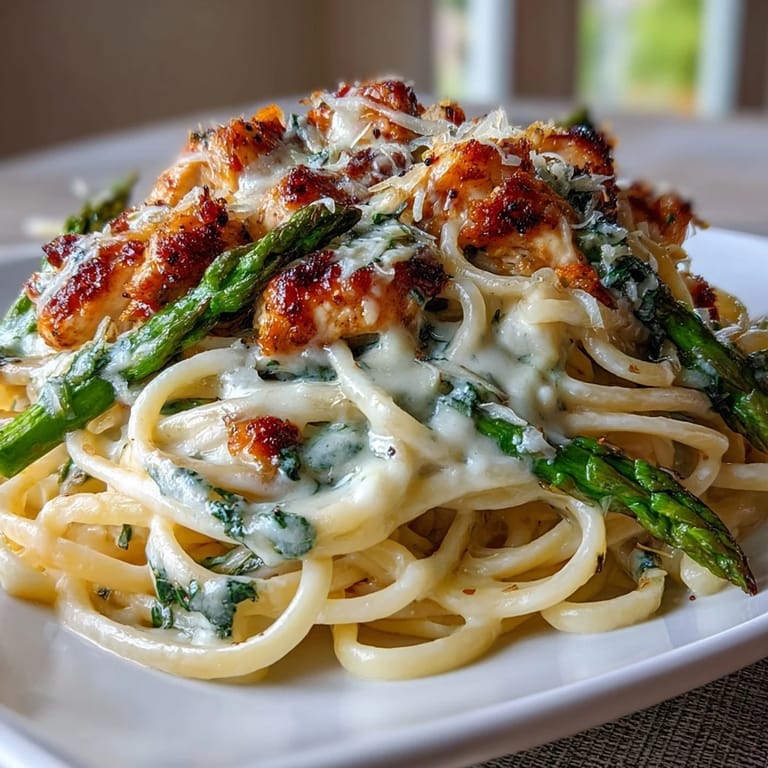
Save This dish proves that spring pasta doesn't have to be light to be satisfying, and that crispy asparagus can convert even the most devoted skeptics. Make it tonight and watch what happens.
Recipe FAQ
- → Can I use a different type of pasta?
Yes, fettuccine, penne, or rigatoni work well. The creamy sauce clings nicely to pasta with ridges or flat surfaces.
- → Can I substitute the Asiago cheese?
Parmesan, Romano, or aged provolone make good alternatives. The flavor profile will change slightly but remain delicious.
- → How do I store leftovers?
Store in an airtight container in the refrigerator for up to 3 days. Reheat gently with a splash of cream or pasta water to restore sauce consistency.
- → Can I make this lighter?
Substitute half-and-half for heavy cream. You can also increase the vegetable ratio by adding peas or baby spinach as suggested.
- → What wine pairs well with this dish?
A crisp Sauvignon Blanc or Pinot Grigio complements the rich sauce beautifully. The acidity cuts through the creaminess while enhancing the flavors.
- → Can I use chicken thighs instead of breasts?
Absolutely. Boneless skinless thighs work great and add extra richness. Adjust cooking time slightly to ensure they're cooked through.