 Save
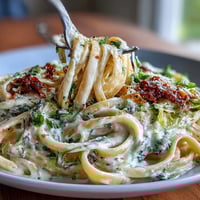
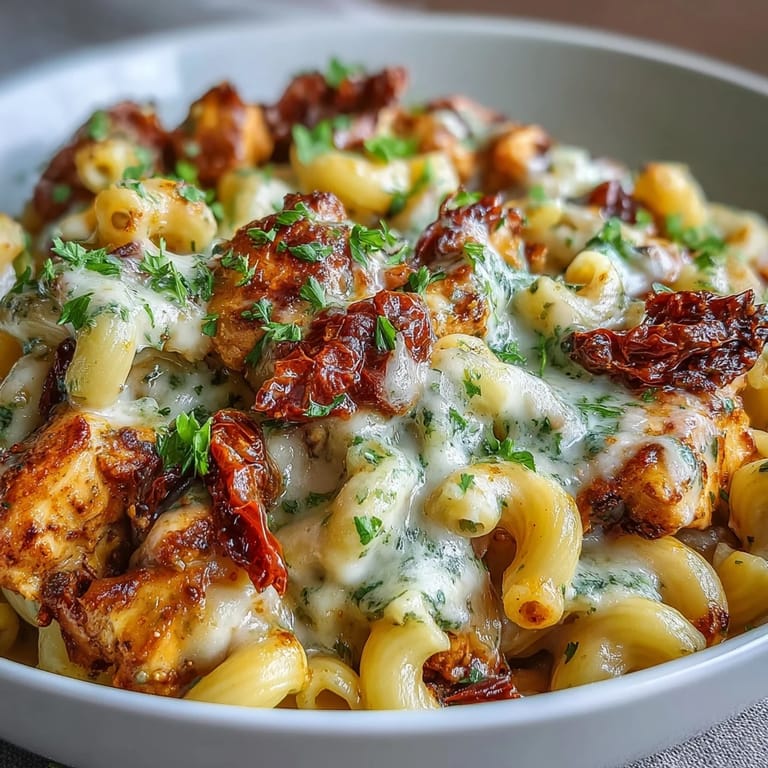
Save My neighbor dropped off a jar of homemade basil pesto one summer evening, and I stood there holding it like I'd been handed liquid gold, wondering what on earth to do with it besides the usual pasta. That night, staring at a box of elbow macaroni and some chicken breasts in the fridge, something clicked—what if I made chili mac but gave it an Italian accent? The result was this impossible-to-stop-eating bowl of creamy, tangy, herb-forward comfort that somehow feels both cozy and elegant at once.
I made this for my book club last fall, and watching everyone go back for seconds without even asking what was in it told me everything I needed to know. Someone asked if I'd used some fancy restaurant technique, and I had to laugh—nope, just good ingredients working together in a pot. That's when I realized this dish does something rare: it makes people slow down and actually taste their food.
Ingredients
- Elbow macaroni or small pasta shells (340 g/12 oz): Small shapes hold onto the saucy, pesto-rich liquid beautifully—don't skip the al dente step or you'll end up with mush.
- Boneless, skinless chicken breast, diced (450 g/1 lb): Keep the pieces roughly bite-sized so they cook evenly and stay tender; rushed chopping here means uneven cooking later.
- Yellow onion, diced (1 medium): Yellow onions caramelize slightly and add a gentle sweetness that balances the tang of pesto.
- Garlic cloves, minced (3): Fresh garlic is non-negotiable—it's the backbone that keeps this dish from tasting one-dimensional.
- Red bell pepper, diced (1): The color is gorgeous, but more importantly, it adds a subtle sweetness and crisp texture that survives the simmering.
- Oil-packed sun-dried tomatoes, drained and chopped (120 g/½ cup): These are concentrated flavor bombs; draining them prevents the dish from becoming greasy, but don't throw away that oil for dipping bread later.
- Canned diced tomatoes, undrained (400 g/14 oz): The juice matters as much as the tomatoes themselves—it becomes part of your sauce base.
- Shredded mozzarella cheese (180 g/1½ cups): Shred it fresh if you can; pre-shredded varieties contain anti-caking agents that sometimes prevent smooth melting.
- Grated Parmesan cheese (60 g/¼ cup): The nuttiness here grounds all the bright basil flavors, so don't be tempted to skip it.
- Prepared basil pesto (120 g/½ cup): This is your secret weapon and flavor anchor—taste your pesto first and adjust salt in the finished dish accordingly.
- Low-sodium chicken broth (720 ml/3 cups): Low-sodium lets you control the final salt level; regular broth can tip the balance.
- Olive oil (2 tbsp): Good quality here makes a difference in both flavor and the way your vegetables caramelize.
- Italian seasoning (1½ tsp): This ties the pesto and tomatoes together into one cohesive flavor profile.
- Crushed red pepper flakes (½ tsp, optional): A whisper of heat that wakes up all the other flavors without being aggressive.
- Salt and freshly ground black pepper, to taste: Add gradually and taste as you go—pesto and cheese both contain salt.
Tired of Takeout? 🥡
Get 10 meals you can make faster than delivery arrives. Seriously.
One email. No spam. Unsubscribe anytime.
Instructions
- Get your pasta going:
- Fill a large pot with salted water (it should taste like the sea) and bring it to a rolling boil while you prep your other ingredients. This way, nothing sits around waiting, and your timing stays tight.
- Sear the chicken until golden:
- Heat olive oil in a Dutch oven or deep skillet over medium-high heat until it shimmers, then add your diced chicken in a single layer. Don't touch it for the first minute—let it develop a golden crust, which means all that flavor is happening. Cook until just cooked through (about 5–6 minutes total), then transfer to a plate.
- Build your flavor base:
- In the same pot, add diced onion and red bell pepper to the remaining oil and cook until they soften and the onions turn translucent, roughly 4 minutes. You'll notice the pot smells amazing already, which is exactly right—add your minced garlic and cook for just 1 minute until it's fragrant but not brown.
- Introduce the sun-dried tomatoes and spices:
- Stir in your chopped sun-dried tomatoes, Italian seasoning, and red pepper flakes if you're using them. Let everything sit in that hot pan for about 1 minute—this blooms the spices and releases their essential oils.
- Create your braising liquid:
- Add the canned tomatoes with their juice and your chicken broth, stirring to combine everything smoothly. Bring the mixture to a gentle simmer, then nestle your cooked chicken back into the pot.
- Marry the pasta and sauce:
- Drain your cooked pasta (hold it back from the boiling water just before it reaches full tenderness—it'll finish cooking in the sauce) and stir it into the pot along with your pesto. Let everything simmer together for 3–4 minutes, which is just long enough for the flavors to start talking to each other. Taste and adjust salt and pepper carefully—remember, you're about to add cheese.
- Finish with creamy cheese:
- Remove the pot from heat and stir in your shredded mozzarella and grated Parmesan until they melt completely into a creamy, luxurious sauce. If it looks a touch thick, a splash of reserved pasta water loosens it without diluting flavor.
- Taste, adjust, and serve:
- Take a spoonful and really taste it—this is your moment to dial in the seasoning. Serve hot, and if you're feeling fancy (or just want extra verdant flavor), top with a small spoonful of fresh pesto or extra Parmesan.
 Save
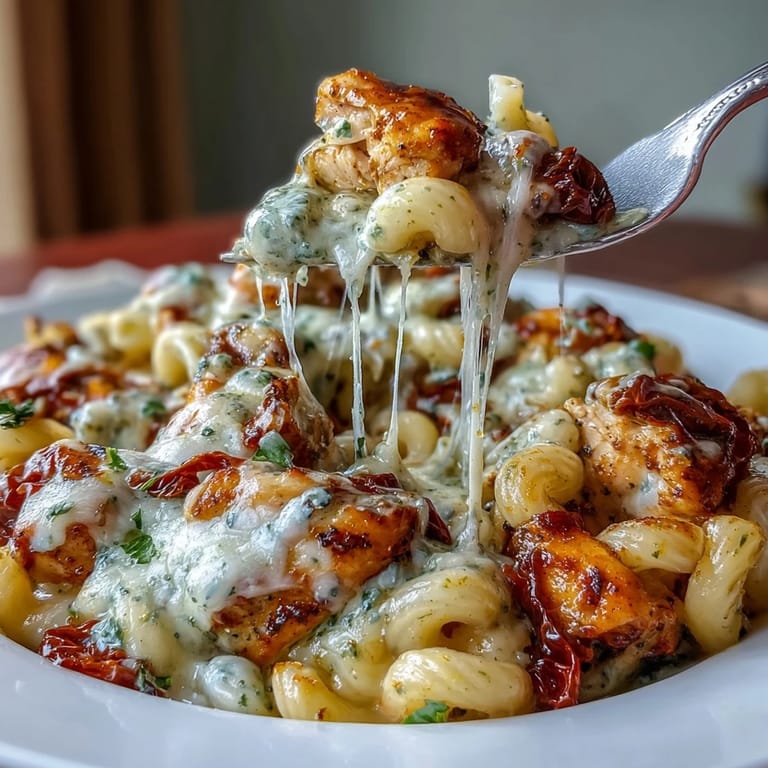
Save There's something about the moment you stir in that pesto and the whole pot transforms into this emerald-green, herbaceous dream that feels almost ceremonial. My daughter, who normally picks around anything green, has asked me to make this twice in the past month—no small feat in this house.
Why Pesto Transforms Everything
Pesto isn't just basil paste—it's an emulsion of fat, acid, and herbaceous intensity that tricks your brain into thinking something is lighter and fresher than it actually is. In this chili mac, it cuts through the richness of melted cheese and cream-like sauce with an almost aggressive brightness, which is exactly what prevents this dish from being heavy. Every spoonful feels bright rather than dense, which is why people keep coming back for more instead of feeling stuffed.
The Sun-Dried Tomato Secret
Sun-dried tomatoes are concentrated umami bombs—they've had most of their water removed, which means every bite delivers intense tomato flavor in a compact package. I learned this the hard way by using too many and overwhelming the pesto, so trust the measurement here. They add a slight chew and a tangy richness that feels almost meaty, which is why this dish satisfies even dedicated meat-eaters.
Timing, Temperature, and Texture Tips
The difference between this dish being creamy-luxurious versus broken and greasy comes down to one thing: not overcooking the cheese at the end. Add it off the heat, stir gently until melted, and you're done—heat after that just breaks the emulsion. The entire cook time is deceptively forgiving, and the hardest part is actually just resisting the urge to taste it before it's ready.
- Cook your pasta to just under al dente because it will finish cooking in the simmering sauce.
- Keep your chicken pieces uniformly sized so they cook at the same rate and none end up dry.
- Add cheese off the heat to prevent the sauce from breaking and becoming greasy rather than creamy.
 Save
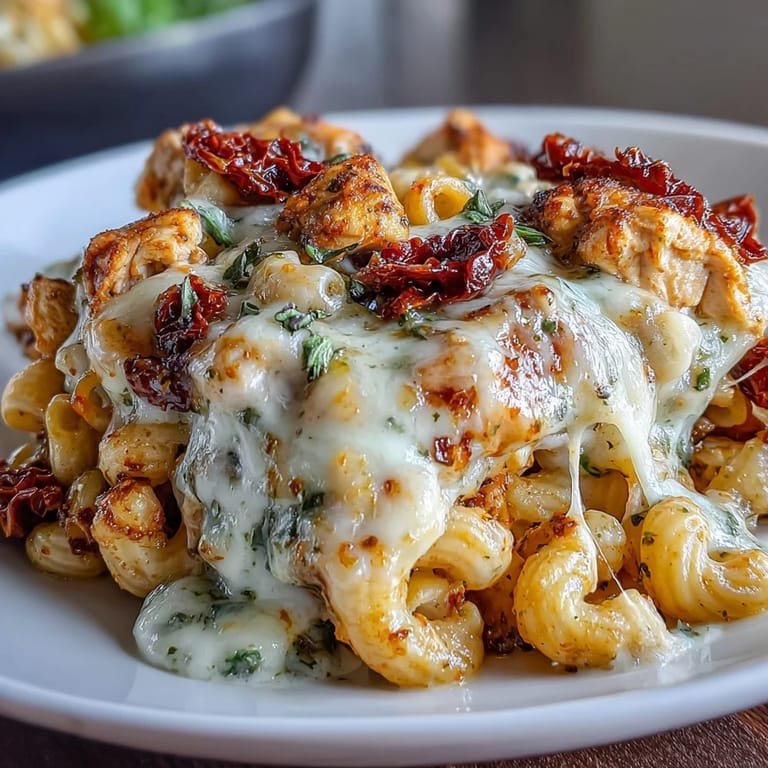
Save This is the kind of dish that makes weeknight cooking feel less like a chore and more like a small gift to yourself and the people eating at your table. Once you make it, you'll understand why it keeps getting requested.
Recipe FAQ
- → Can I make this ahead of time?
Yes, prepare everything up to step 6 and refrigerate. Reheat gently, adding a splash of broth if needed, then stir in the cheeses just before serving to maintain creaminess.
- → What pasta shapes work best?
Elbow macaroni, small shells, or cavatappi capture the sauce beautifully. Avoid long strands or tiny shapes that might get lost among the chicken pieces.
- → Can I use store-bought rotisserie chicken?
Absolutely. Shred about 3 cups from a rotisserie chicken and skip the initial browning step. Add it during step 6 to heat through.
- → Is there a nut-free pesto option?
Look for nut-free basil pesto brands or make your own using sunflower seeds instead of pine nuts. Many supermarkets now offer nut-free varieties.
- → How do I store leftovers?
Keep in an airtight container for up to 3 days. The pasta will absorb more liquid, so add a splash of broth when reheating on the stovetop or microwave.
- → Can I freeze this dish?
Freezing isn't recommended as the texture of the pasta and cheese can become grainy. It's best enjoyed fresh or refrigerated for a few days.