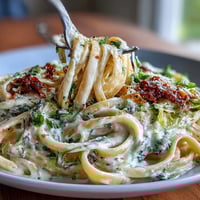
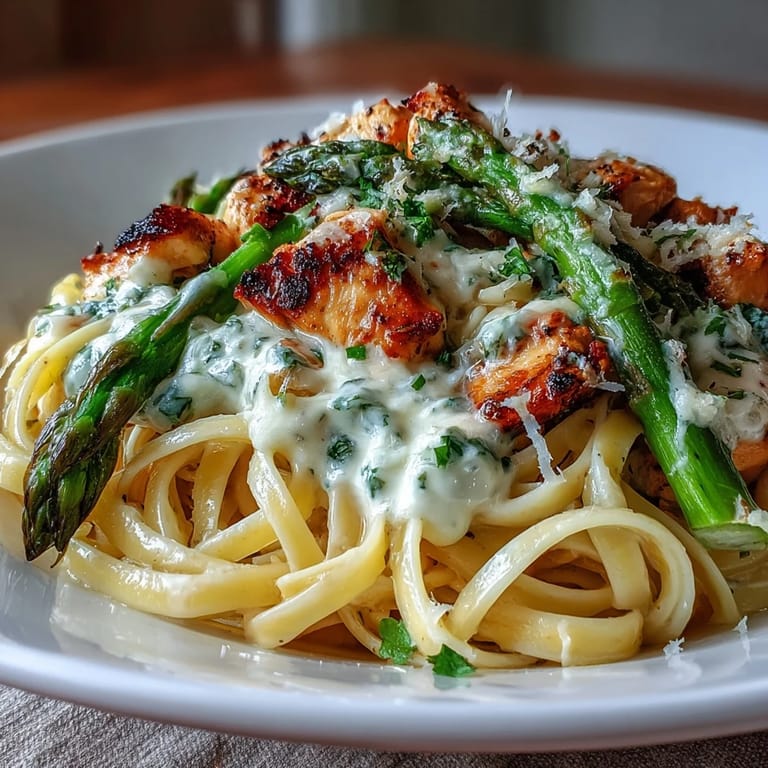
 Save
Save There's something about the way Asiago crisps up in the oven that made me fall for this dish—golden, almost nutty, clinging to tender asparagus like it was meant to be together. I was cooking for someone who'd had a rough week, and I wanted something that felt special without the fuss of a three-hour braise. This pasta came together almost by accident, really, when I grabbed what was in the fridge and decided to layer flavors instead of stacking complexity. The cream sauce pooled around the chicken, the cheese melted into silk, and suddenly the kitchen smelled like an Italian restaurant I'd always wanted to revisit.
I made this for a dinner party once, and someone asked if I'd been holding out on them all these years, as if this was some secret family recipe passed down through generations. It wasn't—I just knew that creamy pasta with properly cooked protein always lands, and that Asiago has this way of making everything feel a little more refined without demanding much in return. That night, people came back for thirds, and nobody touched their phones. Sometimes a dish does more than fill your stomach.
Ingredients
- Chicken breasts: Cut them into bite-sized pieces so they cook evenly and catch the sauce in every crevice—no waiting for thick chunks to finish cooking.
- Linguine: The flat ribbons hold onto that creamy sauce better than thin spaghetti, making every forkful satisfying.
- Asparagus: Trim the woody ends by snapping them where they naturally break, then cut into even pieces so they roast at the same speed.
- Asiago cheese: Divide it mindfully—some for crisping the asparagus, some for silking the sauce—because it's the backbone of this whole dish.
- Heavy cream: Don't skip this or swap it for milk; the richness is what makes the sauce feel luxurious rather than thin.
- Butter: Use unsalted so you control the salt level, and it helps develop a proper fond in the pan for flavor-building.
- Garlic and onion: The aromatics that turn a simple sauce into something that makes people ask for the recipe.
- Olive oil: A neutral, good quality one keeps everything tasting bright rather than heavy.
- Flour: Just enough to thicken the cream without making it pasty—think silky, not sludgy.
Tired of Takeout? 🥡
Get 10 meals you can make faster than delivery arrives. Seriously.
One email. No spam. Unsubscribe anytime.
Instructions
- Get the oven hot and prepare the asparagus:
- Preheat to 220°C and line your sheet with parchment—this keeps cleanup easy and prevents sticking. Toss the asparagus with olive oil, salt, pepper, and that first portion of Asiago, then spread it out in a single layer so every piece touches heat.
- Start the pasta water:
- Get a big pot of salted water boiling—this is your safety net for the sauce consistency later, so don't skip reserving that pasta water.
- Roast the asparagus until it's golden:
- About 10–12 minutes, and you'll know it's ready when the cheese browns slightly at the edges and the spears bend just a little when you touch them with a fork.
- Cook the linguine to al dente:
- Don't overcook it—it'll finish cooking slightly in the warm sauce, so if it's just barely tender when you drain it, that's perfect. Reserve that pasta water before you drain.
- Build the base with chicken:
- Heat olive oil and butter in your skillet, then add the chicken pieces seasoned with salt and pepper. Let them sit for a moment to develop a golden crust, then turn them—this takes about 5–6 minutes total, and you'll see them turn from pink to opaque.
- Soften the onion and bloom the garlic:
- In the same skillet, cook the onion until it's soft and starting to turn golden, then add garlic and let it smell amazing for about 30 seconds—don't burn it.
- Create the creamy base:
- Sprinkle flour over everything and stir for a minute so it coats the pan, then slowly pour in the cream while whisking constantly. This prevents lumps and builds a smooth foundation.
- Build the sauce with cheese:
- Lower the heat and stir in the Asiago until it melts completely into the cream—you'll see it transform from grainy to glossy and smooth. Add pasta water gradually if it's too thick.
- Bring it all together:
- Return the chicken to the pan, add the cooked linguine, and toss everything together so the sauce coats every strand and piece. Gently fold in the roasted asparagus at the end so it doesn't break apart.
- Finish and serve:
- Plate it up immediately while it's warm, and scatter fresh parsley and extra Asiago on top for color and that extra savory note.
 Save
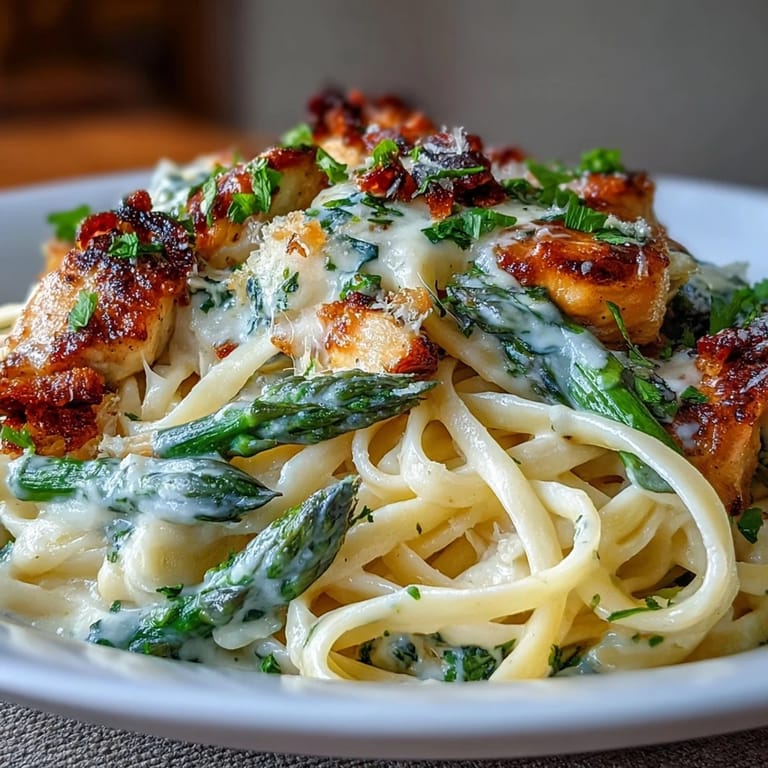
Save The best version of this dish happened when I wasn't trying to impress anyone, just cooking for myself on a Tuesday night after work. No audience, no pressure—just the smell of Asiago getting crispy in the oven and realizing mid-bite that sometimes the simplest decisions in the kitchen lead to the most satisfying meals.
Why This Combination Works
Asiago has this sharp, slightly nutty personality that keeps a creamy sauce from feeling one-dimensional, while roasting it on the asparagus adds texture and depth that you don't get from just stirring cheese into cream. The chicken is there to make it a complete meal, and the pasta is the vehicle that lets all those flavors travel together in every bite. It's not about complexity—it's about making sure each component earns its place on the plate.
The Asparagus Game-Changer
Roasting the asparagus separately, rather than throwing it into the sauce, was the move that changed everything for me. It keeps the pieces tender but still slightly firm, and that Asiago coating becomes this addictive crust that contrasts with the creamy pasta. If you're used to boiling asparagus into submission, this approach might surprise you in the best way.
Timing and Temperature Tips
The magic here is that everything finishes at almost exactly the same moment—the asparagus comes out golden just as the pasta hits al dente, and the sauce comes together while the chicken is resting. Keep things moving, taste as you go, and don't be afraid to adjust the pasta water ratio if your sauce is thicker or thinner than you'd like.
- If your sauce breaks or looks grainy, lower the heat and whisk in a splash of pasta water to smooth it out.
- Asiago can be sharp, so taste before you pile in all 80 grams—some brands are milder than others.
- Serve immediately; this dish doesn't hold well once assembled, so have your bowls ready and your guests at the table.
 Save
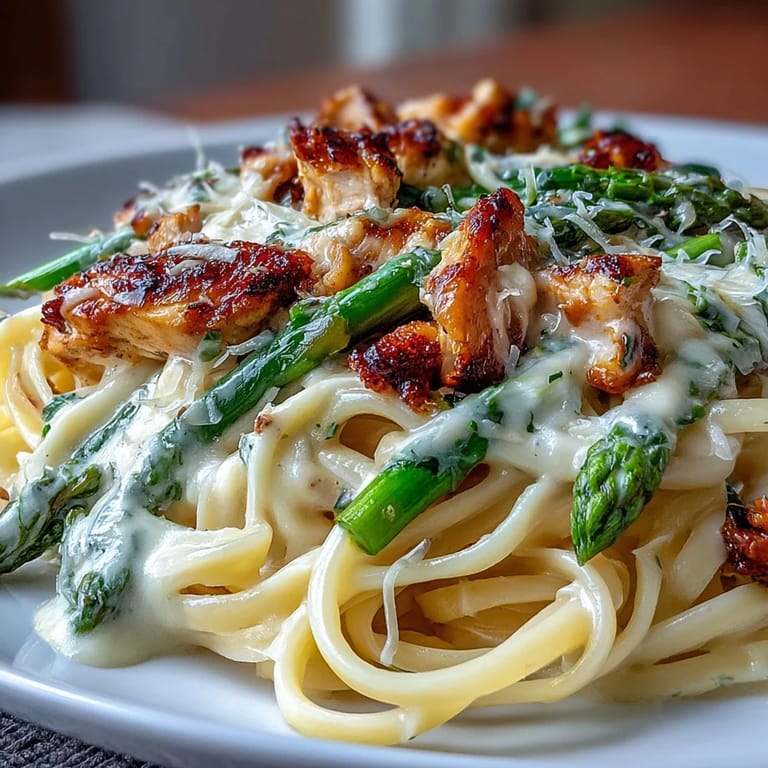
Save This is one of those dishes that feels fancy enough for guests but forgiving enough for Tuesday nights, which is exactly where the best recipes live. Make it once, and it'll find its way into rotation.
Recipe FAQ
- → Can I make this dish vegetarian?
Absolutely. Simply omit the chicken and add more vegetables like bell peppers, zucchini, or mushrooms. You may want to increase the Asiago cheese slightly to maintain richness.
- → What can I substitute for Asiago cheese?
Parmesan or Pecorino Romano work beautifully as alternatives. Both provide similar salty, nutty flavors that complement the creamy sauce perfectly.
- → How do I store and reheat leftovers?
Store in an airtight container for up to 3 days. Reheat gently with a splash of cream or pasta water to restore the sauce's creamy consistency.
- → Can I use a different pasta shape?
While linguine is ideal for sauce coating, fettuccine, penne, or rigatoni work well. Just adjust cooking time according to package directions.
- → How can I make the sauce lighter?
Replace half the heavy cream with whole milk or use half-and-half. You can also increase the pasta water ratio for a lighter, brothy consistency.
- → Why roast the asparagus separately?
Roasting concentrates the asparagus flavor and creates caramelized edges with crispy cheese coating. This texture contrasts beautifully with the tender pasta and creamy sauce.