 Save
Save I'll never forget the first time I wandered into a small bistro near the Luxembourg Gardens in Paris, where the waiter presented a simple yet breathtaking cheese and bread platter that somehow felt like an entire meal. It wasn't about abundance—it was about intention, quality, and the art of restraint. That moment taught me that elegance lives in the space between things, and I've been recreating that feeling ever since, gathering the finest ingredients and arranging them with the same care those Parisians showed.
Years ago, I hosted a dinner party on a whim and realized mid-afternoon I had nothing prepared. Instead of panicking, I raided my favorite cheese shop and came home with beautiful specimens, sliced some fresh bread, and created this platter. My guests were so enchanted by the elegance and simplicity that it became my signature move—the one thing people now ask me to bring to gatherings.
Ingredients
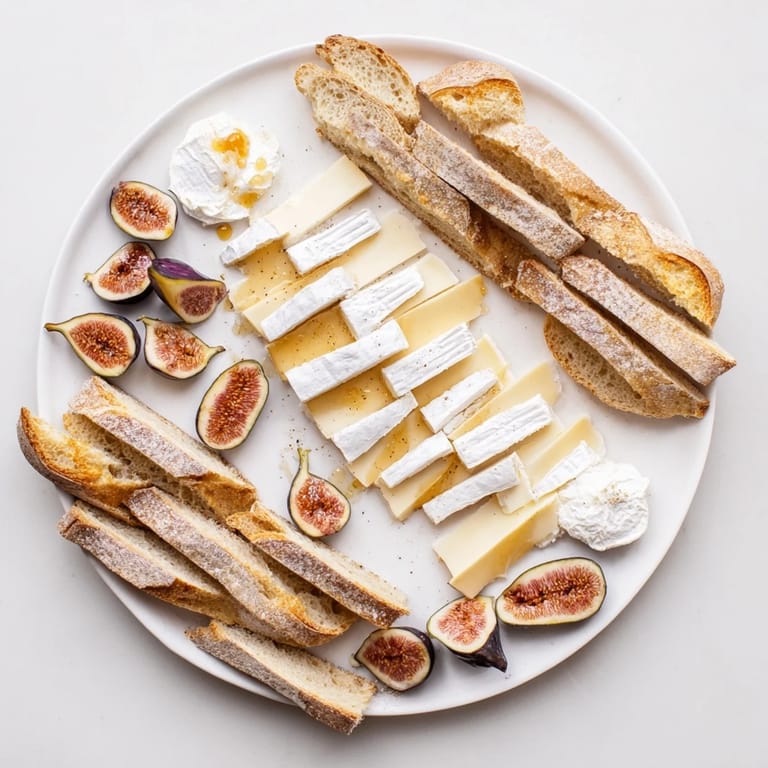
- Fresh French baguettes (2 long): The foundation of everything—seek out bakery-fresh ones that still have that crispy crust and tender crumb. Slice them diagonally because it's not just prettier, it actually gives you more surface area for toppings and feels more intentional.
- Brie cheese (150 g, sliced and fanned): This is the soft, welcoming presence on your platter. Let it sit at room temperature before serving so it's creamy and forgiving. Fanning the slices is a small gesture that transforms ordinary into elegant.
- Comté cheese (150 g, sliced and fanned): The sophisticated counterpart to Brie—nutty, firm, and deeply satisfying. It's the kind of cheese that makes you pause and really taste it.
- Chèvre or goat cheese (100 g, sliced): This brings brightness and tang, cutting through the richness beautifully. It's the unexpected note that makes people ask what they're tasting.
- Fresh figs or grapes (12 pieces): The sweetness here isn't an afterthought—it's essential. Figs especially feel luxurious and provide those moments of pure joy between bites of cheese.
- Unsalted butter (50 g, softened): Room temperature butter spreads like silk and bridges flavors in a way salted butter can't. This detail matters more than you'd think.
- High-quality honey (2 tbsp): Choose something with character—maybe a chestnut or acacia honey. The sweetness against the sharp cheese is where magic happens.
- Whole grain Dijon mustard (1 tbsp): The assertive friend in this group. Its texture and subtle heat elevate simple bread into something memorable.
- Flaky sea salt and freshly ground black pepper: These are your finishing touches—they wake up the cheeses and add visual interest. Never skip fresh cracking.
Tired of Takeout? 🥡
Get 10 meals you can make faster than delivery arrives. Seriously.
One email. No spam. Unsubscribe anytime.
Instructions
- Slice with intention:
- Hold your baguette at a slight angle and use a sharp serrated knife to cut diagonal slices about a quarter-inch thick. You want them thin enough to be delicate but sturdy enough to hold cheese. Listen for that satisfying crunch as you cut—it tells you the bread is fresh.
- Begin your canvas:
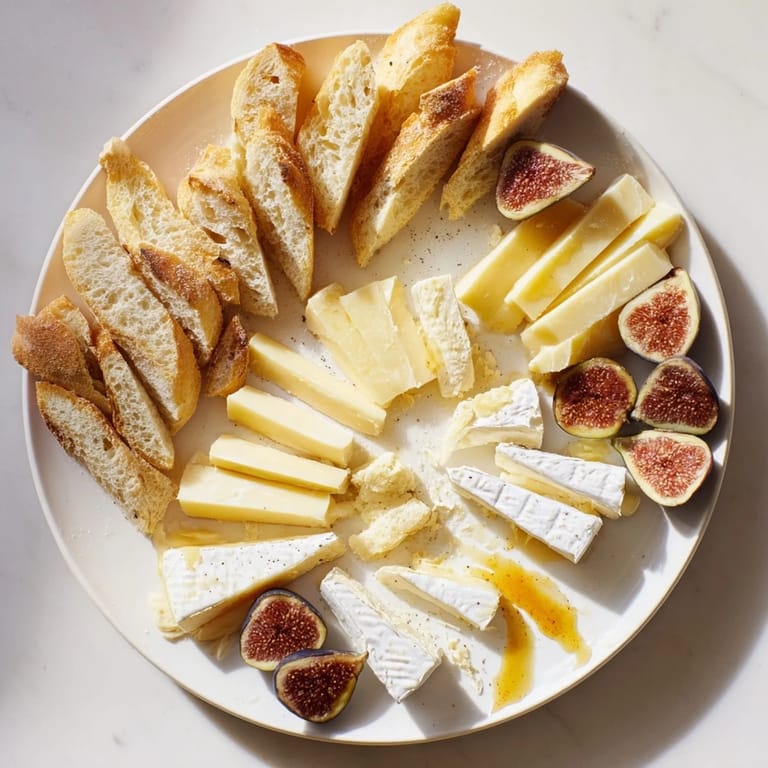
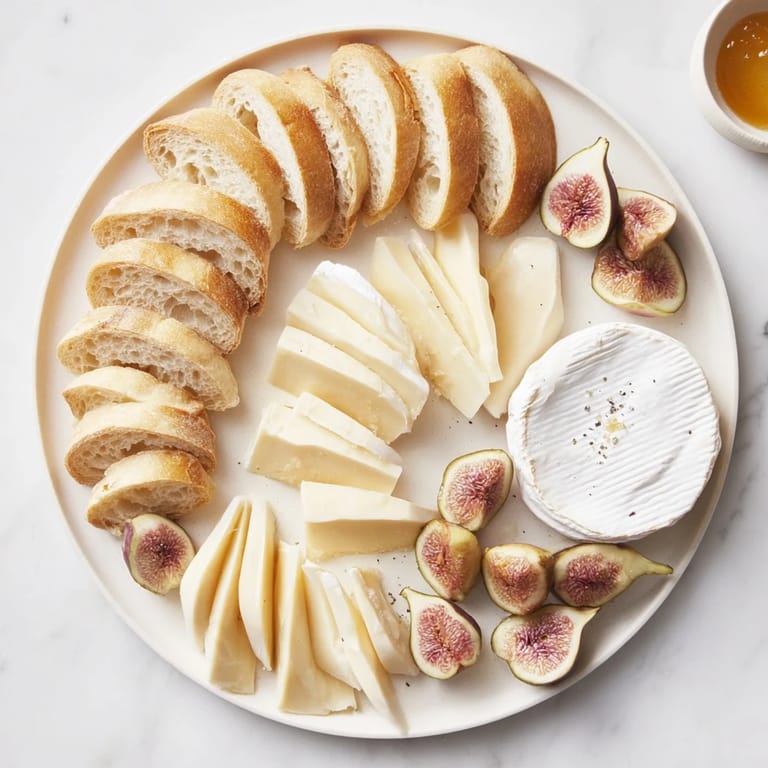
- Arrange your bread slices around the edge of a large platter, leaving generous space between each slice. Think of it like you're framing the empty space—that white plate is your co-star here, not something to fill.
- Fan the cheeses with grace:
- Lay Brie slices in overlapping rows, creating gentle waves. Do the same with Comté beside it. The repetition is soothing to look at, and it makes it easy for guests to grab what they want. Keep each cheese variety in its own section—the contrast matters.
- Distribute the jewels:
- Place your figs or grapes in small clusters, tucking them into the negative space. They should feel like pleasant surprises, not afterthoughts. Three or four small clusters work better than spreading them everywhere.
- Set up the dips and spreads:
- Pour honey and mustard into small ramekins, or create small artful dollops directly on the platter if you're feeling confident. Let the butter come to room temperature—it should be spreadable but still hold its shape. These additions are like the opening notes of a song.
- Season and serve:
- Give the cheeses a whisper of flaky salt and a grind or two of black pepper. Don't oversalt—you want to enhance, not overwhelm. Step back and look at your platter with the eyes of someone who's never seen it before. That's the moment to serve it, while everything is still at its best.
 Save
Save I remember one evening when a guest who claimed to be "not a cheese person" discovered Comté on this platter and had what can only be described as a revelation. They kept coming back to taste it with different accompaniments, building their own combinations. That's when I understood this platter isn't really about serving food—it's about creating a moment where people discover things about their own tastes they didn't know before.
The Art of Restraint
When I first started entertaining, I thought more was always better. I'd pile platters so high you couldn't see the plate beneath. Then I spent time actually watching how people eat at proper bistros, and I realized the magic is in what you leave out, not what you include. Three cheeses, not six. Figs, not a fruit salad. The empty space on the plate becomes as important as what's on it. It's the culinary equivalent of letting silence exist in a conversation—it makes everything else more meaningful.
Building Your Own Perfect Bite
There's something deeply satisfying about letting guests create their own combinations rather than presenting pre-assembled bites. Someone might pair Chèvre with fig and mustard. Another person discovers that Comté with butter and a whisper of salt is their absolute favorite thing. You become the curator of possibilities rather than the dictator of taste. It's a subtle shift, but it changes the entire energy of the meal. Watch people as they build their bites—their eyes light up when they find a combination that sings.
Wine and Companionship
This platter is fundamentally a vehicle for slowing down and connecting with people. Pour a glass of something cold and crisp—Sancerre if you can find it, Champagne if you're feeling celebratory, even a chilled dry white wine works beautifully. The magic happens when you're not rushing through meal service. You have time to sit, to taste, to talk. The food becomes the backdrop for what's actually happening, which is people enjoying each other's company. A well-arranged platter and a glass of wine are timeless—they work across decades and continents because they're fundamentally about hospitality.
- Serve everything at room temperature or slightly chilled, never cold from the refrigerator
- Prepare the platter no more than 30 minutes before serving so the bread stays crisp
- Trust your eye—if it looks beautiful and balanced to you, it is
 Save
Save This platter reminds me that the best meals are often the simplest ones—when you let good ingredients speak for themselves and trust that elegance comes from thoughtfulness, not effort. Share this with people you care about.
Recipe FAQ
- → What cheeses are ideal for a French bistro platter?
Brie, Comté, and chèvre (goat cheese) are excellent choices, offering a balance of creamy, nutty, and tangy flavors that complement fresh baguette.
- → How should the baguette be prepared?
Slice the baguette diagonally into thin, even pieces to create an elegant presentation and easy-to-handle portions.
- → What accompaniments enhance the cheese platter?
Fresh figs or grapes add natural sweetness, while softened butter, honey, and whole grain Dijon mustard provide creamy and tangy contrasts.
- → How can I add visual appeal to the platter?
Fan the cheese slices in neat, overlapping rows and arrange fruit clusters thoughtfully, leaving negative space for a minimalist, refined look.
- → Are there suggested pairings to enhance the experience?
A chilled glass of Sancerre or Champagne pairs beautifully, balancing the rich cheeses and sweet accompaniments.
- → Can figs be substituted with other fruits?
Yes, sliced pears or apples work well as alternatives, maintaining seasonal freshness and complementing the cheese flavors.