 Save
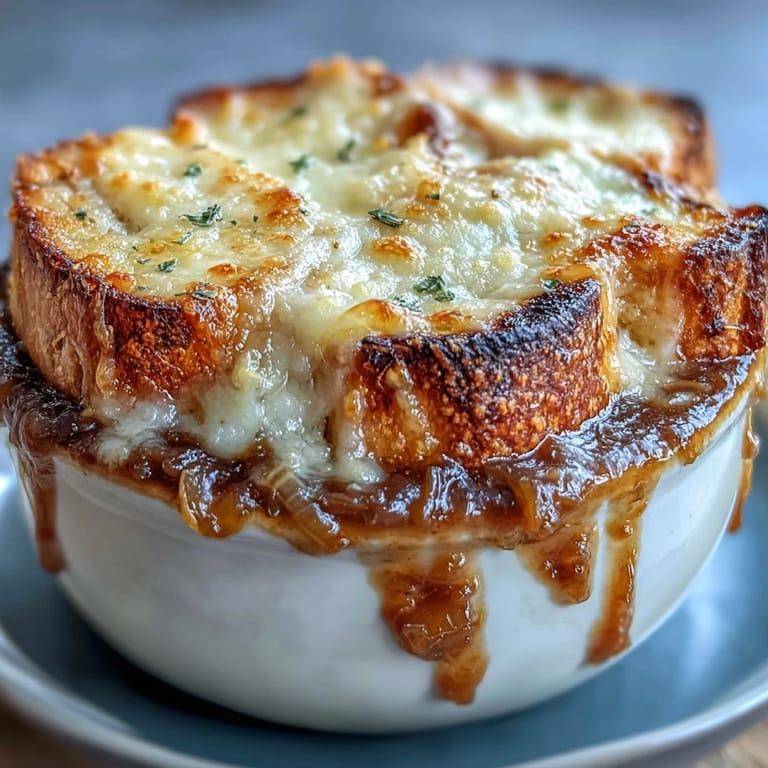
Save There's something almost meditative about standing at the stove on a gray afternoon, watching onions transform from sharp and crisp to golden pools of sweetness. My first real French onion soup came together almost by accident—I had a pot of onions going while waiting for friends to arrive, and instead of rushing through, I let them have the time they needed. That patience changed everything, and now whenever I make this soup, I'm transported back to that kitchen, where the smell alone felt like an invitation.
I made this for my neighbor last winter after he mentioned feeling under the weather, and watching his face when he tasted it—especially that first spoonful of melted cheese and bread—reminded me why cooking for others matters. He said it tasted like a hug, and I've been making it ever since whenever someone needs comfort on a cold night.
Ingredients
- Large yellow onions: Six of them might seem like overkill until you watch them shrink down to pure golden flavor—they're the backbone here, so don't skimp or use red onions which taste different.
- Unsalted butter and olive oil: The combination of both gives you richness without burning; use the butter for flavor and the oil to raise the smoke point.
- Beef broth: Quality matters more than you'd think, so taste it first and adjust seasoning at the end.
- Dry white wine: Optional but genuinely elevates the soup with a subtle depth that broth alone can't reach.
- Garlic, sugar, and salt: The sugar isn't about making it sweet—it amplifies the onion caramelization and balances everything.
- Fresh thyme and bay leaf: These herbs whisper in the background; dried thyme works if fresh isn't available, but use half the amount.
- Crusty French bread: Thick slices are essential so they don't disintegrate into the soup; day-old bread is actually better than fresh.
- Gruyère cheese: The nuttiness is irreplaceable here, though Emmental works in a pinch.
Tired of Takeout? 🥡
Get 10 meals you can make faster than delivery arrives. Seriously.
One email. No spam. Unsubscribe anytime.
Instructions
- Start the foundation:
- Melt butter with olive oil in your pot over medium heat, then add all those sliced onions at once. Stir occasionally for about fifteen minutes until they soften and release their moisture—you'll hear them sizzle and smell something sweet starting to develop.
- Build the caramel:
- Here's where patience becomes your secret weapon: sprinkle sugar and salt over the onions, then stir frequently as they turn from pale to golden to deep amber, about thirty to forty minutes. Lower the heat if they're browning too fast, and scrape up any stuck bits from the bottom—that's pure flavor.
- Deepen the flavor:
- Add minced garlic and let it cook for just one minute until fragrant but not burned. This moment matters because overcooked garlic turns bitter.
- Deglaze with wine:
- Pour in white wine if using, scraping up all those browned caramelized bits stuck to the pot—this is called deglazing and those bits are liquid gold. Let it simmer for two to three minutes while the alcohol cooks off.
- Simmer the soup:
- Add beef broth, thyme sprigs, bay leaf, and pepper, then bring to a boil before reducing to a gentle simmer for thirty minutes uncovered. This lets flavors marry and deepens, and you can taste it toward the end to adjust seasoning.
- Toast the bread:
- While the soup finishes, preheat your broiler and toast bread slices on a baking sheet until both sides turn lightly golden. This keeps them from getting soggy too quickly when they hit the hot soup.
- Assemble the magic:
- Ladle hot soup into oven-safe bowls, top each with a slice of toasted bread, then pile on a generous handful of grated Gruyère. Place under the broiler for two to three minutes until cheese bubbles and browns slightly at the edges.
- Serve with care:
- These bowls come out of the broiler piping hot, so warn anyone eating that the handles and rims will burn fingers—learned that one the hard way.
 Save
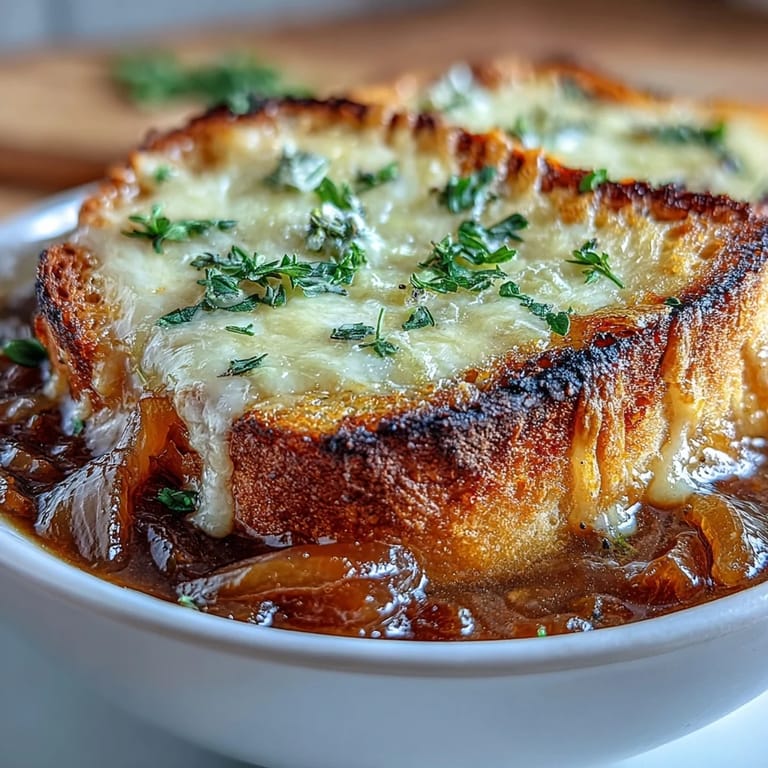
Save There's a moment when everyone at the table goes quiet after that first spoonful—cheese stretching, bread giving way, warm broth coating everything—and you know you've made something memorable. That's the real payoff of this soup, more than any compliment could tell you.
The Caramelization Secret
The difference between regular soup and restaurant-quality French onion soup lives entirely in those golden onions. Most home cooks skim this step or rush it, but I learned that every extra minute of low-heat stirring adds complexity and sweetness that can't be faked.
Cheese and Bread Chemistry
The toasted bread does two things: it creates a barrier so the cheese doesn't sink into the soup immediately, and it adds a subtle crunch that contrasts beautifully with everything soft. Some people use day-old bread specifically because fresh bread gets too soggy, and honestly that's worth remembering next time you have crusty bread hanging around.
Variations and Timing
This soup actually tastes even better the next day after flavors have settled, so making it ahead takes pressure off when guests arrive. You can refrigerate it for up to three days, then reheat gently before finishing with the bread and cheese toast under the broiler.
- For vegetarian versions, swap vegetable broth for beef and the soup loses nothing—the onions carry all the depth.
- A garlic-rubbed toasted bread slice before the cheese adds another layer if you're feeling adventurous.
- Pair with a dry white wine or light red to echo the wine already in the pot.
 Save
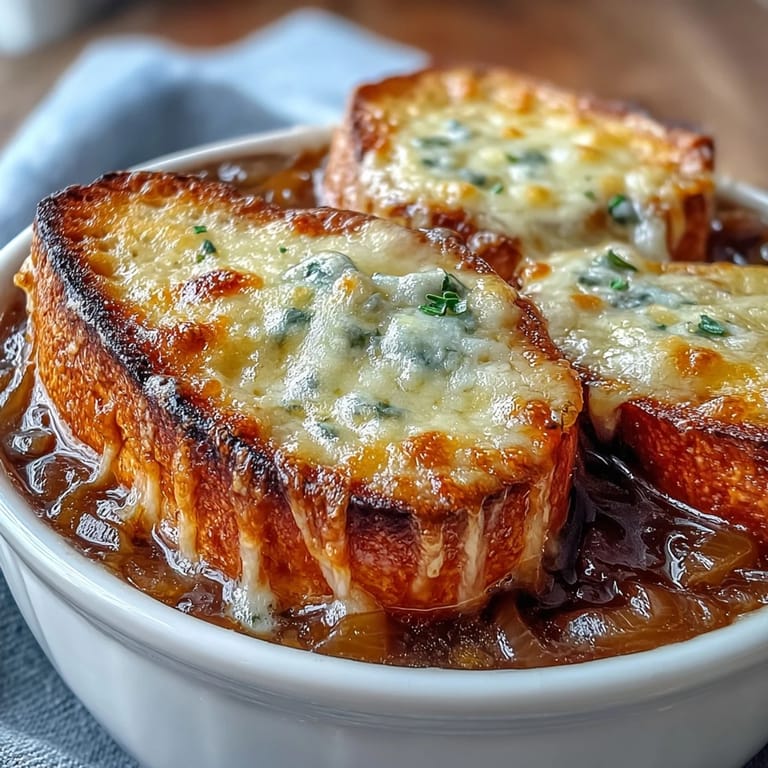
Save This soup has become my go-to when someone needs real comfort or when I want to prove that simple ingredients deserve respect. Every bowl that comes out of the oven reminds me that good food often starts with patience and ends with someone feeling genuinely cared for.
Recipe FAQ
- → How do you achieve perfectly caramelized onions?
Cook sliced onions slowly over medium heat with butter and olive oil for about 45 minutes total. First soften them for 15 minutes, then add sugar and salt to encourage browning. Stir frequently during the final 30 minutes until they reach a deep golden color and develop rich, sweet flavor.
- → What type of onions work best?
Yellow onions are ideal for French onion soup as they become naturally sweet when cooked down. You can also use a mix of yellow and red onions for slightly different flavor notes. Avoid sweet onions as they don't caramelize as well.
- → Can I make this vegetarian?
Absolutely. Simply substitute vegetable broth for the beef broth. The depth of flavor comes primarily from the caramelized onions, so the soup remains incredibly satisfying even without beef broth. You can also add a splash of balsamic vinegar for extra richness.
- → What cheese alternatives can I use?
Gruyère is traditional for its nutty flavor and excellent melting properties. Good alternatives include Emmental, Swiss cheese, Comté, or a blend of provolone and Parmesan. For a dairy-free version, use vegan cheese alternatives that melt well.
- → How do I store and reheat leftovers?
Store the soup and topping components separately. Keep the soup refrigerated for up to 4 days or freeze for 3 months. When ready to serve, reheat the soup on the stovetop, toast fresh bread, and add cheese just before broiling. This prevents the bread from becoming soggy.
- → What wine pairs well with this dish?
A dry white wine used in the cooking, such as Sauvignon Blanc or Pinot Grigio, makes an excellent pairing. If you prefer red, opt for a light-bodied choice like Pinot Noir or Beaujolais that won't overpower the delicate onion flavor.