 Save
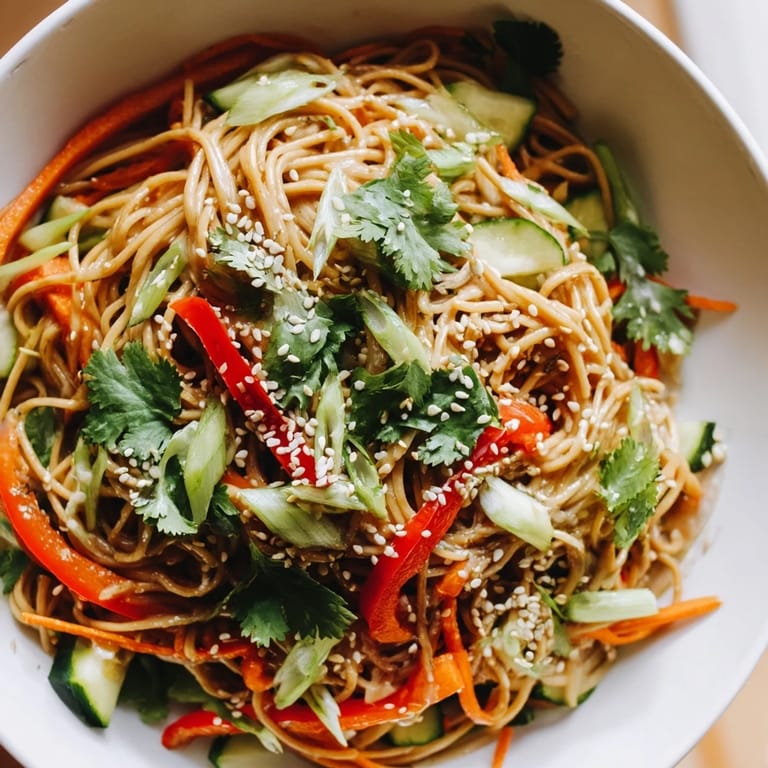
Save There's something about a bowl of cold noodles on a warm afternoon that just makes everything feel simpler. I discovered this garlic noodle salad quite by accident, actually—I was trying to use up vegetables before they wilted and had some leftover cooked noodles sitting in my fridge. The garlic oil came together in a moment of improvisation, and the first bite was so unexpectedly bright and aromatic that I've been making it ever since.
I made this for a potluck once and was surprised when someone asked for the recipe before even finishing their first bite. That's when I realized this quiet, humble salad had a kind of magic to it—nothing fancy, nothing pretentious, just really good flavors that work together in a way that feels both comforting and exciting.
Ingredients
- Dried wheat noodles (250 g): Lo mein, spaghetti, or soba all work beautifully here; the key is cooking them just until tender and then cooling them completely so they don't clump together.
- Neutral oil (3 tbsp): Grapeseed or vegetable oil matters because you want something that won't overpower the garlic, letting it be the real star.
- Garlic cloves (5 large): Finely minced garlic infuses the oil as it gently cooks—this is where the soul of the dish lives.
- Toasted sesame oil (1 tsp): A small amount goes a long way, adding that warm, nutty finish that makes people ask what makes this taste so good.
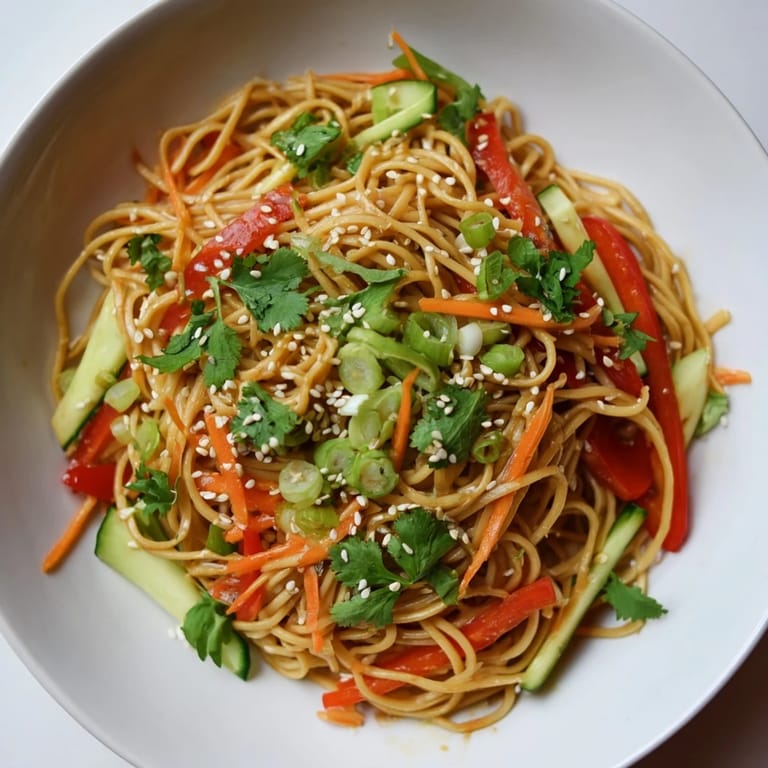
- Carrot (1 cup, julienned): The sweetness balances the savory elements and adds a satisfying crunch that doesn't soften, even after sitting overnight.
- Red bell pepper (1 cup, thinly sliced): Brings both color and a subtle sweetness that plays beautifully against the salty-sour dressing.
- Cucumber (1 cup, deseeded and julienned): Deseeding prevents excess moisture from making the salad watery; fresh and cool, it provides textural contrast.
- Spring onions (2, thinly sliced): A mild onion flavor that doesn't overpower but adds a gentle sharpness that livens everything up.
- Fresh cilantro (1/2 cup, roughly chopped): If you love cilantro, this is your moment; if not, it's completely optional and you can use parsley instead.
- Soy sauce (3 tbsp): The umami backbone—low sodium gives you control over the salt level if you prefer.
- Rice vinegar (1 tbsp): Bright acidity that keeps the whole dish from feeling heavy, especially important in the heat.
- Honey or maple syrup (1 tsp): Just a touch to round out the flavors and balance the saltiness and acidity with a whisper of sweetness.
- Chili flakes (1/2 tsp, optional): Only if you want a gentle heat that creeps in gradually rather than hits you upfront.
- Black pepper: Freshly ground makes a real difference in how sharp and alive the dressing tastes.
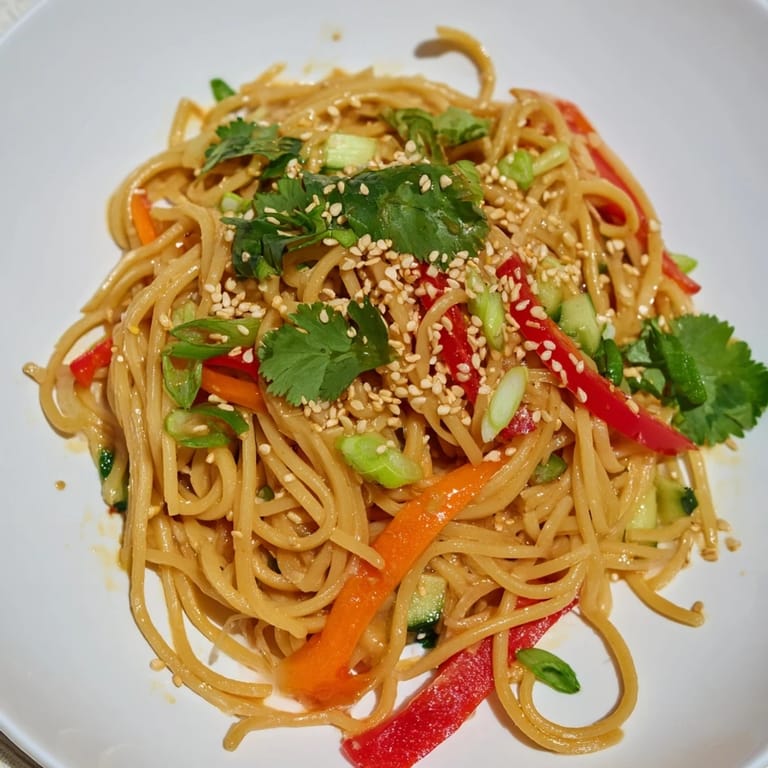
- Toasted sesame seeds (2 tbsp): The nutty, crunchy finish that catches light and makes the dish look as good as it tastes.
- Lime wedges: A squeeze of fresh lime just before eating brightens everything and adds a final pop of flavor.
Tired of Takeout? 🥡
Get 10 meals you can make faster than delivery arrives. Seriously.
One email. No spam. Unsubscribe anytime.
Instructions
- Cook and cool the noodles:
- Bring a pot of salted water to a boil, add your noodles, and cook until just tender according to package directions—don't overcook them or they'll fall apart when you toss. Drain in a colander, then rinse thoroughly under cold running water while stirring gently with your fingers to separate the strands and stop the cooking process completely.
- Make the garlic oil:
- Heat the neutral oil in a small saucepan over medium-low heat and add your minced garlic, listening for it to start sizzling—this should take about 2–3 minutes and you're looking for it to turn golden and fragrant, not brown or burnt. Once it smells absolutely incredible, remove it from heat and stir in the sesame oil, then let it sit for a moment to cool slightly so it won't wilt your vegetables later.
- Whisk the dressing:
- In a small bowl, combine soy sauce, rice vinegar, honey, chili flakes if you're using them, and a generous grind of black pepper, whisking until the honey dissolves completely. Taste it at this point—you can always add more of anything before it hits the noodles.
- Bring it together:
- Pour both the cooled garlic oil and the dressing over your noodles in that large bowl and toss thoroughly, making sure every strand gets coated with that gorgeous golden oil. This is the moment where the dish transforms from components into something unified and delicious.
- Add the vegetables:
- Now add your carrots, bell pepper, cucumber, spring onions, and cilantro, tossing gently so you don't bruise anything but making sure the vegetables are evenly distributed throughout. At this point you can taste and adjust seasonings if you need to.
- Plate and serve:
- Transfer everything to a serving platter or divide into bowls, then sprinkle that toasted sesame seeds generously over the top and serve with lime wedges on the side so people can squeeze them over as they eat.
 Save
Save This salad taught me that sometimes the most memorable meals aren't the complicated ones—they're the ones that come together with honesty and simplicity. There's something grounding about sitting down to a bowl of noodles that tastes like someone cared enough to get the basics really right.
Why This Salad Works
The magic here is in the contrast—warm garlic oil against cool crisp vegetables, savory soy sauce against bright rice vinegar, soft noodles against crunchy sesame seeds. Every component has a job to do, and when they're working together, the whole is genuinely greater than the sum of its parts. There's nothing trying too hard to impress; it's just really thoughtful flavor balance that happens to taste amazing.
Making It Your Own
One of the best things about this salad is how forgiving it is when you want to make it suit your mood or what you have on hand. Snap peas, radish, shredded cabbage, or even thinly sliced avocado all slot in beautifully alongside the core vegetables. If you want protein, shredded cooked chicken, crispy tofu, or a handful of edamame transforms it from a side dish into a complete, satisfying meal.
Storage and Next-Day Life
Leftovers actually improve slightly after a day in the fridge as the flavors meld together even more, though the vegetables will gradually soften and lose their crunch. If you're planning to eat it the next day, you can store the noodle mixture and vegetables separately and combine them just before serving, which keeps everything at its best texture-wise.
- Store in an airtight container in the refrigerator for up to 2 days, though it's best eaten within 24 hours for maximum crispness.
- Bring it to room temperature for about 10 minutes before serving if it's been in the fridge, as the flavors taste more vibrant when it's not ice-cold.
- Don't add the sesame seeds until right before serving or they'll soften and lose their satisfying crunch.
 Save
Save This salad has become my quiet favorite for those moments when I want something that tastes like it took real thought but doesn't require real stress. It's the kind of dish that reminds you why simple cooking, done with care, is always worth the space on your table.
Recipe FAQ
- → Can I use different noodles for this dish?
Yes, alternatives like soba or rice noodles work well, especially if gluten-free options are preferred.
- → How is the garlic oil prepared?
Minced garlic is gently cooked in neutral oil until fragrant and golden, then mixed with toasted sesame oil for depth.
- → What vegetables are best to include?
Carrots, red bell pepper, cucumber, spring onions, and fresh cilantro create a colorful, crisp combination.
- → Can I add protein to this dish?
For extra protein, add shredded cooked chicken, tofu, or edamame without altering the fresh flavors.
- → How should leftovers be stored?
Keep leftovers in the refrigerator for up to two days to maintain freshness and texture.