 Save
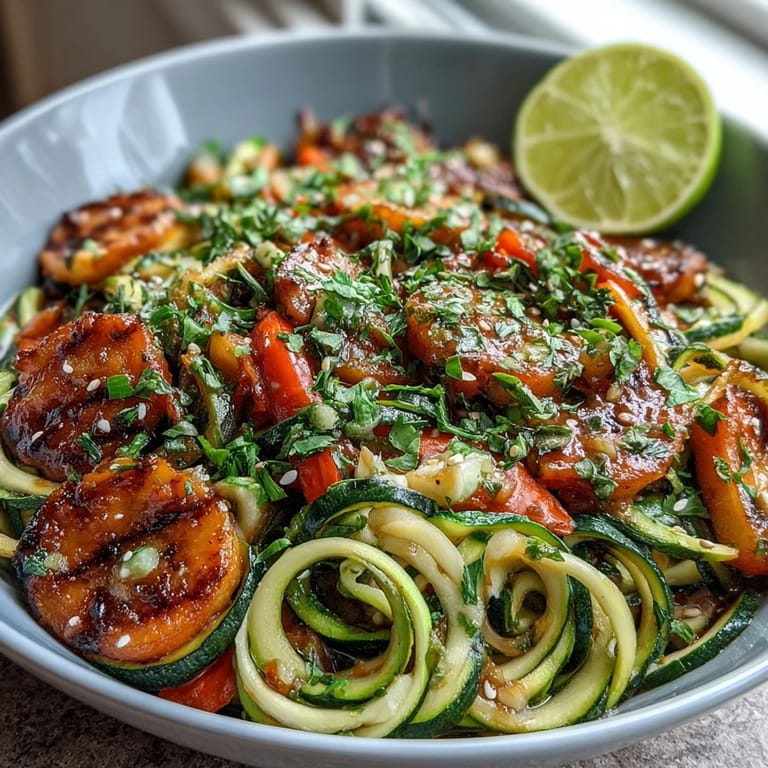
Save There's something magical about the moment a spiralizer transforms a plain zucchini into delicate noodles, and that's exactly what led me to perfect this stir fry on a humid summer evening when my garden was overflowing with vegetables. I was searching for something light but satisfying, something that wouldn't leave me feeling sluggish but would still feel like real food. What started as improvisation at the stove has become my go-to weeknight dinner, the kind of meal that comes together faster than takeout but tastes like you've been cooking all afternoon.
I made this for my sister who'd been trying to eat lighter, and watching her twirl the zucchini noodles on her fork with genuine enthusiasm told me everything I needed to know about whether the dish actually worked. She came back the next week asking if I remembered exactly how I'd made it, which is when I realized this wasn't just my favorite anymore.
Ingredients
- Zucchini, spiralized: The backbone of this dish—use medium zucchini because they're less watery than the giant ones lurking at the farmer's market, and spiralize them right before cooking so they stay crisp and don't weep into the pan.
- Red bell pepper: Thin slices cook down just enough to soften without collapsing, giving you pops of sweetness and that satisfying crunch.
- Carrot, julienned: Cut it thin enough to cook through in minutes, and you'll get that tender-crisp texture that makes vegetables actually exciting.
- Snap peas: They stay snappy if you don't overshadow them, and their natural sweetness balances the savory elements.
- Green onions and fresh ginger: These two are where the depth lives—the sharpness of raw ginger cut with the gentle onion flavor makes the whole dish sing.
- Garlic: Mince it fine and hit it with quick heat so it perfumes the oil without burning, which would turn bitter and ruin your entire mood.
- Soy sauce or tamari: The umami anchor—use low-sodium because you control the salt this way, and grab tamari if you're keeping it gluten-free.
- Toasted sesame oil: A little goes a long way here; it's the secret whisper of nuttiness that makes people ask what makes this taste so good.
- Rice vinegar: The bright acid that keeps everything from tasting heavy, cutting through the richness with a gentle touch.
- Honey or maple syrup: Just enough to round out the flavors and give the sauce a subtle sweetness that feels balanced.
- Sesame seeds and fresh herbs: These are your final flourish—they add texture and freshness that changes the entire experience from simple to intentional.
Tired of Takeout? 🥡
Get 10 meals you can make faster than delivery arrives. Seriously.
One email. No spam. Unsubscribe anytime.
Instructions
- Mix your sauce first:
- Whisk soy sauce, sesame oil, rice vinegar, honey, and chili flakes in a small bowl and set it aside—this way you're not scrambling while everything's hot and your pan is demanding attention. The flavors meld slightly as it sits, making the whole thing more cohesive.
- Get your pan singing:
- Heat a large non-stick skillet or wok over medium-high heat until a drop of water sizzles on contact, then add a splash of oil if you're worried about sticking. Once it's shimmering, add minced garlic and ginger and let them perfume the oil for about 30 seconds—you want fragrant, not burned.
- Cook the hardy vegetables first:
- Add bell pepper, carrot, and snap peas and let them sizzle for 3 to 4 minutes, stirring occasionally so they pick up some color and soften just slightly. They should still have backbone—you're not making soup here.
- Add the zucchini noodles in their moment:
- Toss in the spiralized zucchini and sliced green onions and stir-fry for 2 to 3 minutes until the noodles are heated through but still have some texture. This is the tricky part—overshooting it by even a minute turns them into mush, so stay close and keep the motion going.
- Finish with sauce and heat through:
- Pour in your prepared sauce and toss everything together for 1 to 2 minutes until everything's evenly coated and warm. The sauce should coat the noodles in a light, glossy layer, not pool at the bottom.
- Plate with intention:
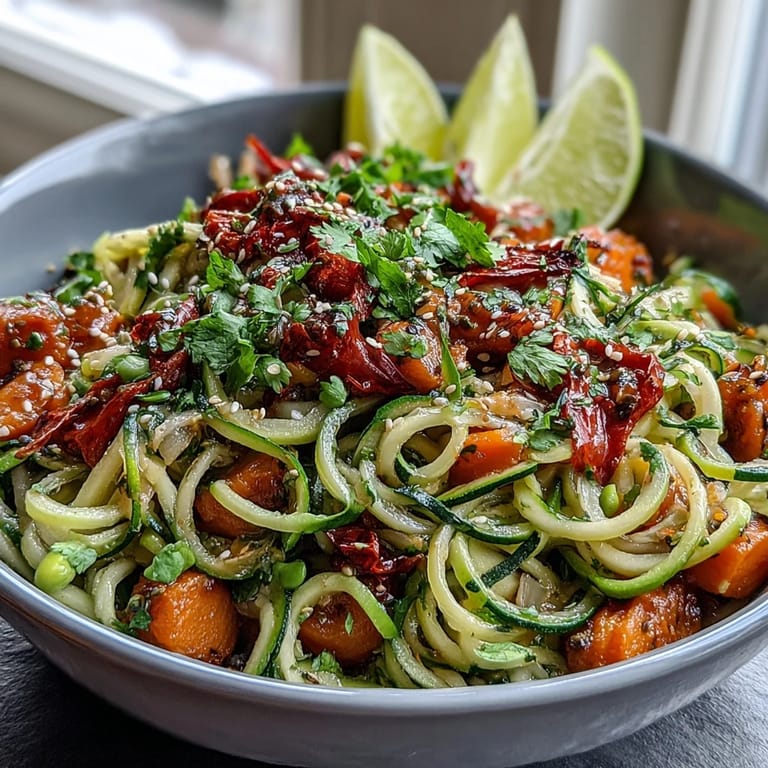
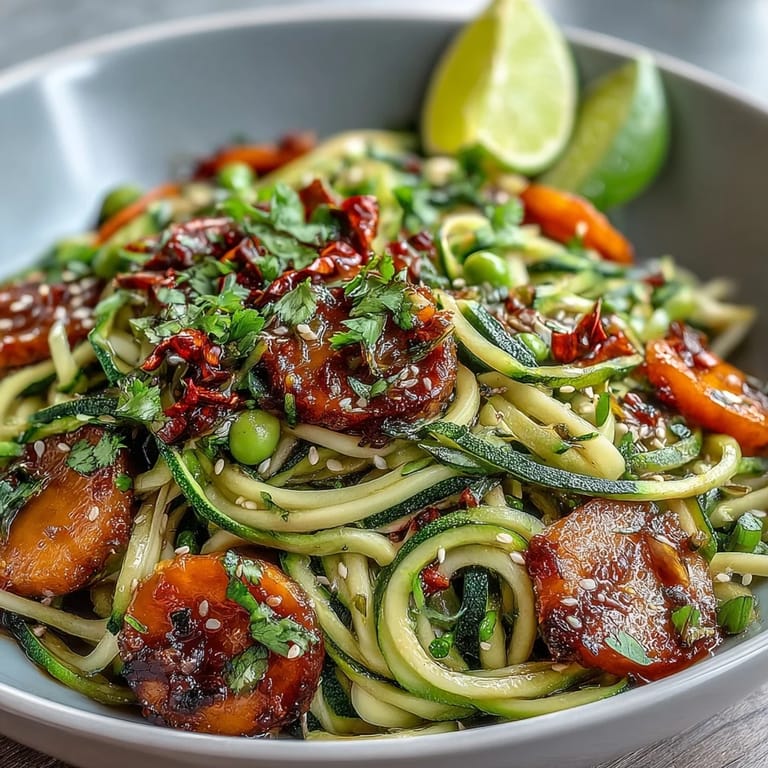
- Divide between bowls and top with sesame seeds, fresh cilantro or basil, and a lime wedge if you're using them. The lime adds a bright finish that ties everything together beautifully.
 Save
Save There was a moment while I was making this for a friend who was transitioning back to eating after a really difficult time when I realized food is about so much more than nutrition or convenience. Watching her face as she tasted it and realized she could eat something this vibrant and delicious and still feel good in her body made me understand why I keep coming back to this recipe.
The Sauce Strategy
What I love about this sauce is its restraint—it's there to enhance, not to overpower or mask the vegetables like some heavier Asian-inspired dishes do. The balance between salty, sour, sweet, and heat is what makes it interesting; each element plays a role, and if you skip any of them, you'll feel the absence. I've experimented with adding a splash of lime juice directly to the sauce instead of serving it on the side, and it's slightly different but equally delicious, so go with your instinct.
Customizing Your Stir Fry
This recipe is genuinely flexible in the way that matters—the vegetables can change based on what you have or what you're craving, the sauce ratio can adjust to your taste, and the garnishes are more suggestion than requirement. I've made this with broccoli when snap peas weren't at the market, with a splash of lime juice added directly to the sauce, and even with a handful of shredded red cabbage for extra crunch and color. What matters is respecting the basic cooking technique and not abandoning the sauce—that's what makes this work.
Making It A Full Meal
On its own, this is a beautiful, light dinner, but if you want something more substantial, you have options that feel natural rather than tacked on. Adding grilled tofu, shrimp, or rotisserie chicken transforms it from side-dish territory into something that anchors a meal, and if you're in a nutty mood, chopped peanuts or cashews add texture and richness that feels earned. The magic is that any protein addition doesn't overwhelm the vegetables—they stay the stars, everything else just supports them.
- Add cooked tofu, shrimp, or chicken during the final minute of cooking so they heat through without overcooking.
- Sprinkle with chopped peanuts, cashews, or walnuts for a protein and texture boost that feels intentional.
- Serve over brown rice or cauliflower rice if you want a base that soaks up the sauce.
 Save
Save This dish has become my quiet answer to the question of what healthy eating actually means—it's not about deprivation or forcing yourself to eat things you don't enjoy, it's about cooking with intention and tasting every bite. Make it once and it becomes part of your rotation; make it a few times and it becomes what you reach for when you want something that tastes good and makes you feel good.
Recipe FAQ
- → What zucchini type is best for spiralizing?
Medium-sized, firm zucchini works best for spiralizing as it creates sturdy noodles that hold up well during cooking.
- → How can I keep the noodles from becoming soggy?
Stir fry zucchini noodles briefly over high heat to keep them tender-crisp and avoid excess moisture that leads to sogginess.
- → Can I add protein to this dish?
Yes, cooked tofu, shrimp, or chicken complements the flavors and adds satisfying protein to the dish.
- → What can be used instead of soy sauce for gluten-free diet?
Tamari is a great gluten-free alternative to traditional soy sauce with similar depth and saltiness.
- → How to enhance the flavor without adding heat?
Omit chili flakes and add a bit more garlic or fresh herbs like cilantro or basil for brightness without spice.
- → Are there substitutions for the sesame oil?
Toasted olive oil or a mild vegetable oil can replace sesame oil, though flavor notes will slightly differ.