 Save
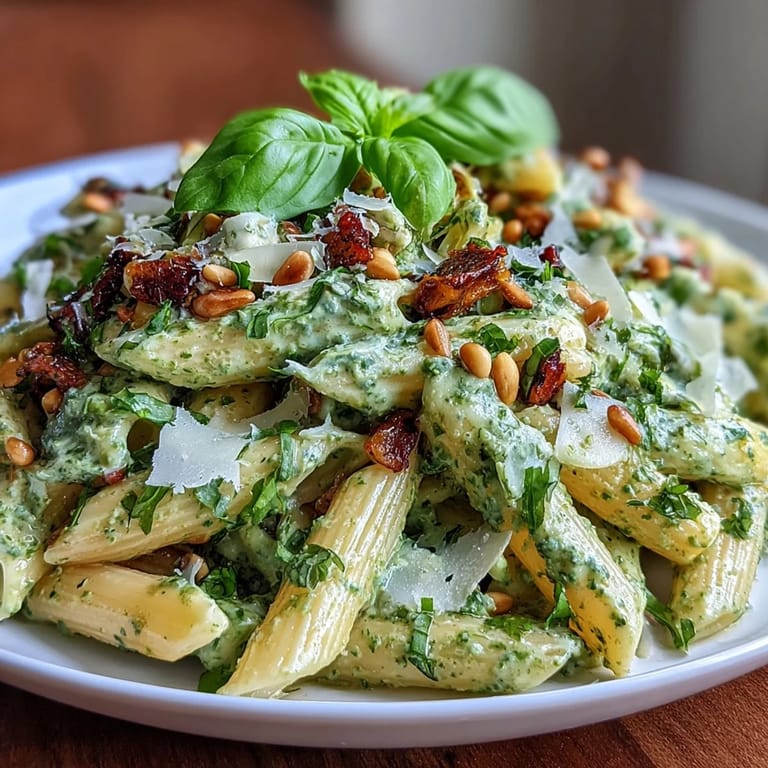
Save There's something about cream cheese that transforms the way you think about pesto. I discovered this by accident one weeknight when I'd run out of the heavy cream I usually relied on for pasta sauces, and somehow a softened block of cream cheese found its way into my food processor alongside the basil and garlic. The result was so unexpectedly luxurious and bright that I've made it this way ever since, trading the heaviness for a sauce that feels almost cloud-like against warm pasta.
My partner walked into the kitchen one evening while I was tossing this together and immediately asked what smelled so impossibly good. By the time I'd plated it, he was already reaching for a fork, and we ended up eating in comfortable silence for a few minutes, which says everything you need to know about how this pasta tastes.
Ingredients
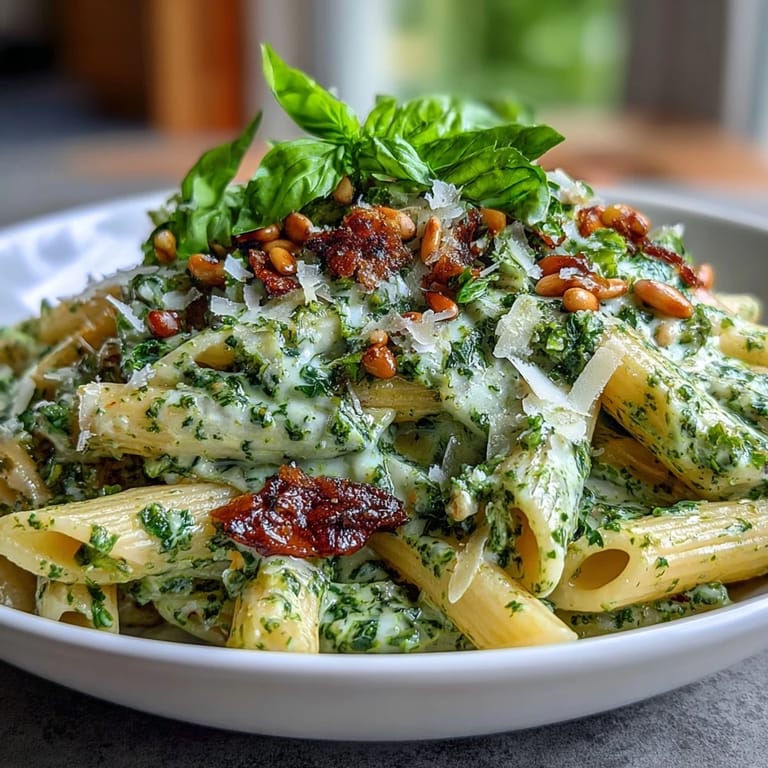
- Penne or fusilli: Their shape catches and holds the creamy sauce beautifully, though any pasta you love will work just fine.
- Light cream cheese, softened: This is the backbone of the sauce, providing richness without the density of heavy cream or butter.
- Fresh basil leaves: Use them at their peak of the season if possible, and avoid cooking them long so they stay vibrant and alive.
- Pine nuts: Toasting them for just a few minutes in a dry skillet deepens their flavor and adds a subtle crunch that balances the creamy sauce.
- Garlic cloves: Two cloves is gentle enough to let the basil shine, but feel free to add more if you're a garlic lover.
- Freshly grated Parmesan cheese: Pre-grated cheese won't melt as smoothly into the sauce, so a box grater or microplane makes all the difference.
- Extra-virgin olive oil: This is where you can taste the quality, so use something you genuinely enjoy.
- Lemon juice: Just a squeeze brightens everything, cutting through the richness with a whisper of acidity.
Tired of Takeout? 🥡
Get 10 meals you can make faster than delivery arrives. Seriously.
One email. No spam. Unsubscribe anytime.
Instructions
- Set the water to boil:
- Fill a large pot with water and salt it generously, tasting it like seawater before you add the pasta. This is your only chance to season the pasta itself.
- Toast the pine nuts:
- While the water heats, warm a dry skillet over medium heat and let the pine nuts tumble around for 2 to 3 minutes until they turn golden and fragrant. Transfer them to a plate so they don't burn.
- Cook the pasta:
- Add the pasta to the boiling water and cook until al dente, checking a minute or two before the package suggests. Reserve about half a cup of that starchy cooking water before draining, as it's going to be your secret ingredient for silky sauce.
- Build the pesto:
- While the pasta cooks, add the basil, toasted pine nuts, garlic, and Parmesan to your food processor. Pulse them together until everything looks finely chopped but still has some texture.
- Cream it together:
- Add the softened cream cheese, olive oil, lemon juice, salt, and pepper to the processor. Blend until smooth and creamy, pausing to scrape down the sides if needed.
- Marry pasta and sauce:
- Return the drained pasta to the pot and pour in the pesto sauce. Toss gently, adding reserved pasta water a little bit at a time until the sauce coats each piece of pasta silkily rather than clumping.
- Plate and garnish:
- Divide among bowls and crown each portion with extra pine nuts, fresh basil leaves, and a sprinkle of Parmesan if you'd like.
 Save
Save The first time someone asked me for this recipe, I realized it had quietly become the dish I'm known for making. There's something wonderful about that moment, when you realize a simple weeknight dinner has turned into something people request and remember.
The Toast That Changed Everything
I used to skip toasting the pine nuts because it felt like an extra step, until one evening when I decided to try it out of pure curiosity. The difference was immediate and undeniable, that gentle warmth bringing out a sweetness that raw nuts never quite achieve. Now I consider it the small gesture that elevates this from a weeknight dinner to something you'd be proud to serve guests.
When Cream Cheese Met Pesto
Traditional pesto relies on the emulsifying power of basil oil and nuts to hold its body, but cream cheese does something unexpected, it softens without deflating, adding a whisper of richness that feels modern and light at the same time. The first time I tasted this version, I understood why people had been searching for ways to make pesto creamier without resorting to heavy cream, and it felt like discovering a secret that had been hiding in plain sight. It's the kind of small innovation that reminds you why cooking is endlessly interesting.
Variations and Moments
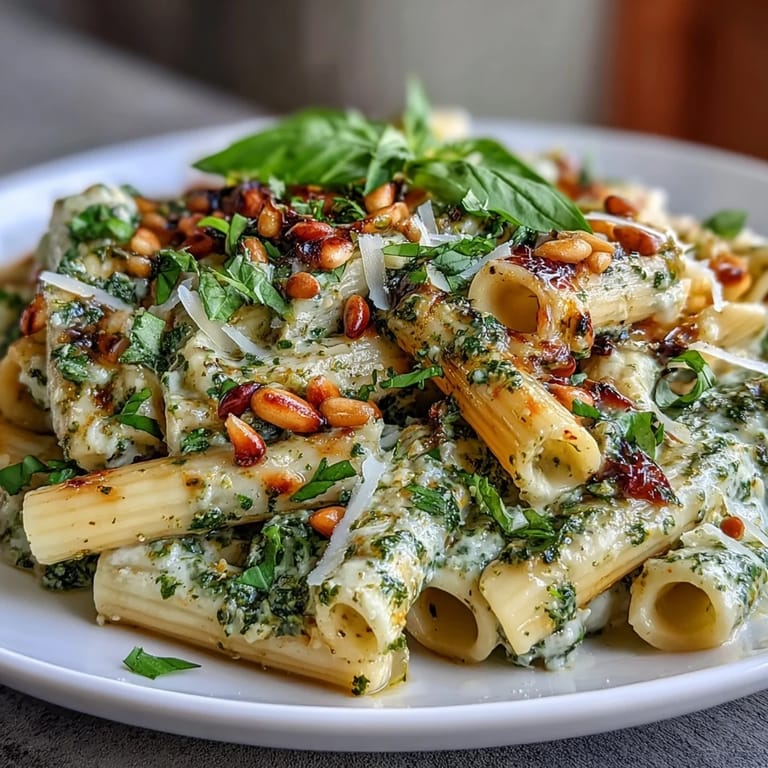
One summer afternoon, I added a handful of halved cherry tomatoes that had been briefly warmed in a skillet, and it transformed the dish into something entirely new, bright bursts of sweetness punctuating the creamy green. Another time, a friend brought grilled chicken, and we tossed it through the pasta, creating something substantial enough for a proper dinner party. The beauty of this sauce is how gracefully it welcomes additions without losing its essential character.
- Cherry tomatoes, quickly sautéed in a touch of olive oil, add a seasonal brightness that feels almost celebratory.
- Grilled or pan-seared chicken turns this into a complete meal that satisfies anyone at your table.
- A scatter of red pepper flakes across the top adds a whisper of heat that cuts through the richness beautifully.
 Save
Save This dish has become one of those recipes that feels effortless once you've made it a couple of times, the kind that turns an ordinary evening into something memorable. I hope it finds its way into your regular rotation too.
Recipe FAQ
- → What type of pasta works best for this dish?
Penne or fusilli are ideal as their shapes hold the creamy pesto sauce well.
- → Can I use other nuts instead of pine nuts?
Yes, toasted walnuts or almonds offer a nice alternative with a different flavor profile.
- → How do I make the sauce creamy without it being too thick?
Adding a bit of reserved pasta cooking water helps achieve a smooth, silky sauce that coats the pasta evenly.
- → Is it necessary to toast the pine nuts?
Toasting enhances their flavor and adds a pleasant crunch, but you can use them raw if preferred.
- → Can this dish be adapted for gluten-free diets?
Yes, simply substitute regular pasta with certified gluten-free pasta without altering the sauce.