 Save
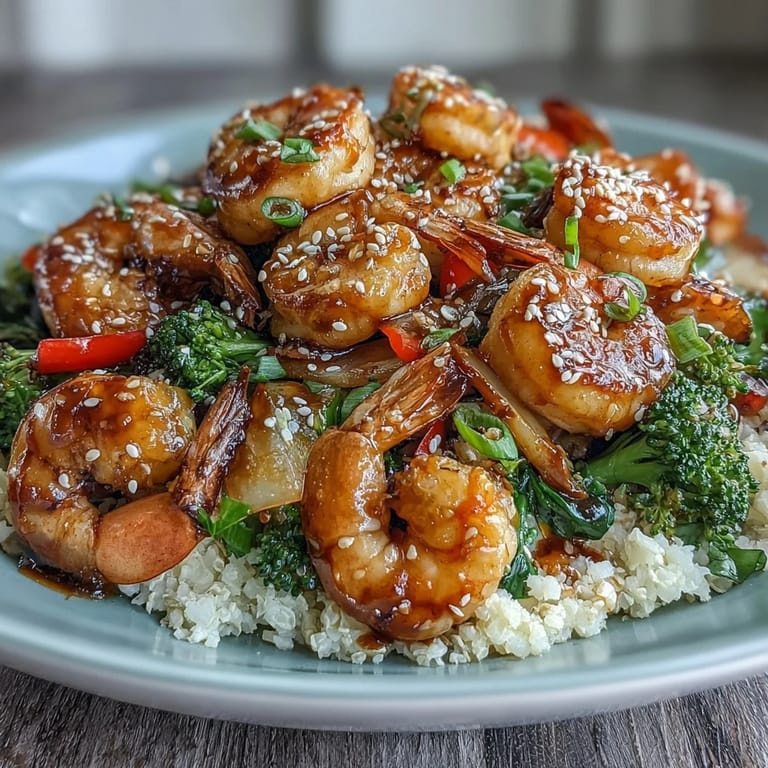
Save There's something about the sizzle of shrimp hitting a hot pan that makes me feel like I'm actually cooking something impressive, even on a Tuesday night when I have zero energy. My roommate wandered into the kitchen one evening, drawn by the sound and the smell of ginger and garlic dancing in the air, and asked what I was making—and I realized I'd stumbled onto the perfect weeknight dinner that feels fancy but takes barely twenty minutes. The cauliflower rice base came later, a practical discovery after I got tired of the rice-and-carbs guilt, and suddenly this became the meal I make when I want to feel good about what I'm eating. It's become my go-to when I need something fast, colorful, and genuinely delicious without the pretense.
I made this for my partner on a night when they came home saying they'd had the worst day, and I wanted to prove that good food doesn't require hours of fussing. Watching them take that first bite and actually smile—really smile, not just the polite kind—made me realize this simple stir-fry had become something meaningful in our routine. Now whenever they text asking what's for dinner and I say stir-fry, there's genuine excitement in their response.
Ingredients
- Large shrimp (1 lb): Look for shrimp that's already peeled and deveined to save the most time; frozen works beautifully if thawed properly, and honestly tastes just as sweet as fresh.
- Red and yellow bell peppers: The slicing matters more than you'd think—thin, even slices cook in exactly the right time and catch the sauce better.
- Sugar snap peas: These stay crisp and add a subtle sweetness that balances the salty-savory sauce.
- Broccoli florets: Cut them small enough that they cook through in the few minutes you're stir-frying, or they'll stay tough.
- Carrots (julienned): The matchstick cut means they cook fast and add a pleasant bite without overwhelming the other vegetables.
- Green onions: Reserve some for garnish at the end; they brighten everything and add a fresh onion flavor without the harshness of raw onion.
- Garlic and ginger: Fresh is non-negotiable here—the smell alone tells you when you've got the right amount, and it transforms the whole dish.
- Low-sodium soy sauce: Regular soy sauce works, but low-sodium gives you control over the saltiness and lets the other flavors shine.
- Toasted sesame oil: Use the real stuff, not the cheaper versions; a little goes a long way and it's worth the investment.
- Rice vinegar: This adds brightness without the harshness of other vinegars.
- Honey or maple syrup: A touch of sweetness rounds out the sauce and prevents it from tasting one-dimensional.
- Cornstarch: Optional, but if you like a glossy, clinging sauce, this is your secret weapon.
- Cauliflower rice: Pre-riced saves time, but pulsing fresh cauliflower gives you more control over the texture.
- Olive or avocado oil: For cooking the cauliflower rice, since sesame oil has a lower smoke point.
- Sesame seeds: These add a toasted nuttiness and visual appeal at the very end.
Tired of Takeout? 🥡
Get 10 meals you can make faster than delivery arrives. Seriously.
One email. No spam. Unsubscribe anytime.
Instructions
- Rice the cauliflower:
- Remove the leaves and stem from a large head of cauliflower, then pulse the florets in a food processor in batches until they're about the size of grains of rice. Don't over-process or you'll end up with mush.
- Toast the cauliflower rice:
- Heat a tablespoon of olive oil in a large skillet over medium heat, add your riced cauliflower with a pinch of salt and pepper, and sauté for 4 to 5 minutes, stirring occasionally, until it's tender but still has a slight bite. Transfer it to your serving bowls and keep them covered while you make the stir-fry.
- Build your sauce:
- In a small bowl, whisk together 3 tablespoons of soy sauce, 1 tablespoon of toasted sesame oil, 1 tablespoon of rice vinegar, 1 tablespoon of honey, and 2 tablespoons of water, along with the cornstarch if you're using it. Set it aside and don't second-guess yourself—this ratio works.
- Sear the shrimp:
- Get a large wok or skillet screaming hot over medium-high heat, then add your shrimp in a single layer and let them sit undisturbed for about 2 to 3 minutes per side until they turn that beautiful coral pink and feel firm to the touch. Remove them to a clean plate and don't wash the pan.
- Stir-fry the vegetables:
- If the pan looks dry, add a splash more oil, then add your minced garlic and grated ginger and let them perfume the pan for about 30 seconds until your whole kitchen smells incredible. Immediately add your bell peppers, carrots, broccoli, and sugar snap peas and keep everything moving for 3 to 4 minutes until the vegetables are bright and crisp-tender.
- Bring it all together:
- Return the shrimp to the pan, pour in your sauce, and toss everything to coat evenly, then cook for 1 to 2 minutes more until the sauce clings to everything and the shrimp is heated through. The whole kitchen will smell like a restaurant right now.
- Finish and serve:
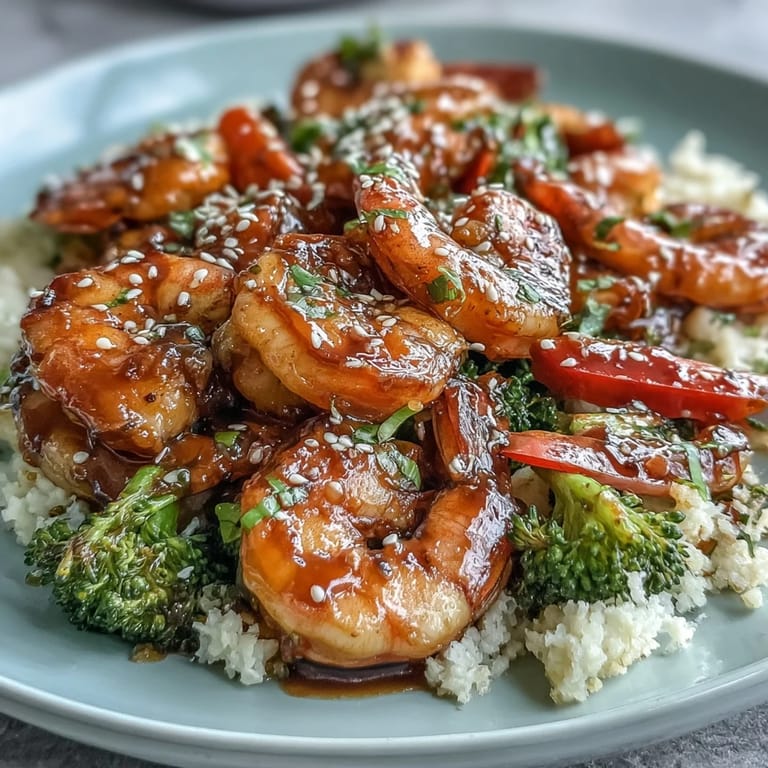
- Spoon the stir-fry over your warm cauliflower rice, top with sliced green onions and a sprinkle of sesame seeds if you have them, and taste before serving to see if you want more soy sauce or a squeeze of lime.
 Save
Save There was an evening when my neighbor asked what I was making and the smell pulled her over, and she ended up staying for dinner and we talked until late about nothing important and everything at once. That's when I realized this meal had become something that brings people together, even if it's just two of us at a kitchen counter with low expectations and surprisingly full hearts.
Building Better Layers of Flavor
The secret to this tasting like restaurant food lies in not mixing everything at once. Each component—the shrimp, the vegetables, the sauce—should have its moment to develop flavor before meeting on the plate. This approach of cooking in stages instead of dumping everything in a pan at once is what separates a stir-fry that tastes flat from one that tastes bright and intentional. I learned this the hard way after rushing through a version where I threw it all together and ended up with something that tasted like sadness in a bowl.
The Cauliflower Rice Breakthrough
Cauliflower rice used to feel like a depressing compromise, something you ate because you felt obligated to count carbs, until I learned that sautéing it with just enough heat and oil actually brings out its natural sweetness. The texture matters too—you want it tender but not mushy, which takes practice and a willingness to stay present while it cooks instead of checking your phone. Once you nail that texture, suddenly it's not a sacrifice but an actual choice you want to make again.
Variations and Improvisation
This recipe is forgiving in ways that make it perfect for experimenting. Chicken breast works beautifully if shrimp isn't in your budget that week, and tofu becomes almost crispy when you use the same high-heat technique. The vegetable mix is really just a suggestion—whatever you have that's crisp and colorful will work, and I've made versions with snap peas replaced by bok choy or mushrooms swapped in for carrots depending on what's sitting in my crisper drawer.
- If you like heat, add red chili flakes or a few dashes of sriracha to your sauce before mixing it all together.
- Lime wedges on the side brighten everything right before eating and feel like a restaurant-level finishing touch.
- Make extra sauce because you'll want more than you think, and it keeps in the fridge for another quick stir-fry tomorrow.
 Save
Save This meal has become my quiet weeknight anchor, the thing I make when I need proof that good food and ease aren't mutually exclusive. It's given me confidence in my cooking that extends far beyond stir-fries.
Recipe FAQ
- → Can I substitute the shrimp with other proteins?
Yes, chicken breast, tofu, or tempeh make excellent alternatives, each absorbing the sauce beautifully while maintaining texture.
- → How do I prepare the cauliflower rice?
Pulse cauliflower florets in a food processor until rice-sized, then sauté with oil, salt, and pepper until tender but not mushy.
- → What gives the stir-fry its vibrant flavor?
Fresh ginger, garlic, and a balanced sauce of soy, sesame oil, rice vinegar, and honey create a lively and savory taste.
- → Is this dish suitable for gluten-free diets?
Absolutely — using tamari or coconut aminos as a soy sauce alternative ensures it remains gluten-free.
- → Can I add heat to this stir-fry?
Yes, incorporating chili flakes or a dash of sriracha adds a pleasant kick to the dish.