 Save
Save The first time I encountered blood oranges in a salad, I was skeptical about how citrus would pair with fried cheese. That skepticism lasted exactly one bite. The way the sweet-tart orange juices mingle with salty halloumi and that earthy sumac dressing created something I couldn't stop eating.
I made this for a summer dinner party last year when my friend mentioned she'd never tried halloumi before. Watching her eyes light up at that first bite of warm salty cheese against the bright blood oranges was pretty satisfying. By the end of the meal, she was asking for the cheese brand name and where I bought sumac.
Ingredients
- 200 g halloumi cheese: This Cypriot cheese is the star because it holds its shape when fried and develops this incredible golden crust. I've learned to pat it dry before frying for the best sear.
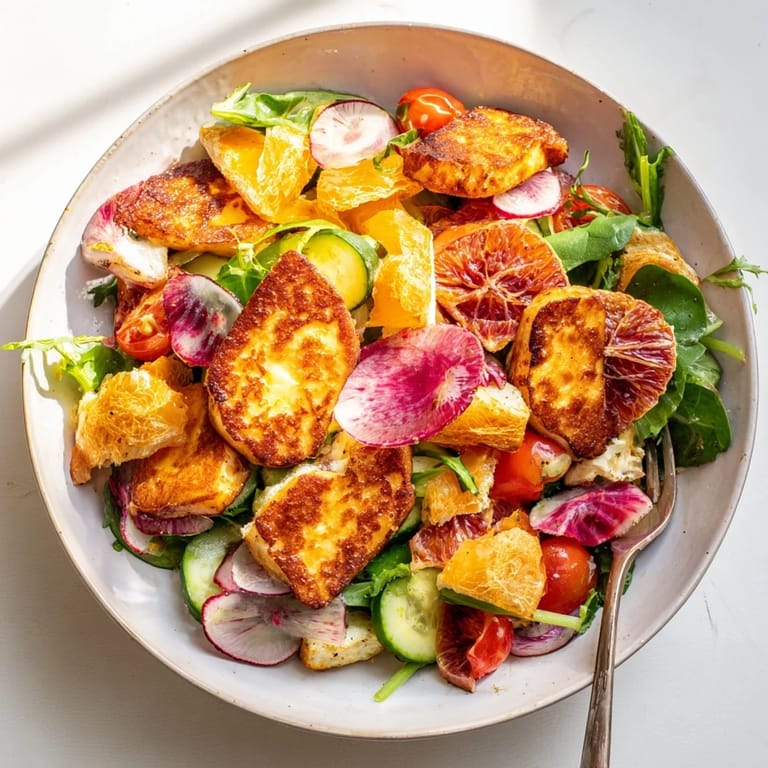
- 2 blood oranges: Their stunning ruby color and subtle berry notes make them worth seeking out. Regular oranges work in a pinch but you'll miss that gorgeous pink hue.
- 200 g mixed salad greens: I use a combination of peppery arugula, fresh mint, and sturdy romaine. The mint especially brightens everything and feels authentically Middle Eastern.
- 1/2 cucumber and 200 g cherry tomatoes: These provide essential crunch and juice that balance the rich cheese. I've found that quartering the tomatoes instead of halving keeps them from making the salad too watery.
- 4 radishes and 1 small red onion: Thinly sliced, these add sharp bites that cut through the halloumi's richness. A mandoline makes this work effortless but a sharp knife works perfectly fine.
- 2 thick slices sourdough bread: Day-old sourdough creates the sturdiest croutons that stay crisp longer than soft bread. The tangy sourdough flavor complements the sumac beautifully.
- 3 tbsp extra virgin olive oil and 1 tbsp each fresh lemon juice and red wine vinegar: This trio forms the backbone of the dressing. Quality olive oil matters here since it's not cooked.
- 1 tsp ground sumac: This tart, citrusy spice is non-negotiable for authentic fattoush flavor. If you've never used it, think lemon meets pepper in powdered form.
- 1 tsp pomegranate molasses: The secret ingredient that adds depth and a gorgeous fruitiness. Look for it in Middle Eastern groceries or well-stocked international aisles.
Tired of Takeout? 🥡
Get 10 meals you can make faster than delivery arrives. Seriously.
One email. No spam. Unsubscribe anytime.
Instructions
- Crisp the sourdough croutons:
- Preheat your oven to 180°C (350°F) and toss those sourdough cubes with 2 tbsp olive oil and a pinch of salt until they're evenly coated. Spread them in a single layer on a baking sheet and bake for 8–10 minutes, turning once halfway through, until they're golden brown and sound hollow when tapped. Let them cool slightly while you prep everything else.
- Whisk together the zesty dressing:
- In a small bowl, combine the olive oil, lemon juice, red wine vinegar, ground sumac, pomegranate molasses, salt, and black pepper. Whisk vigorously until the mixture emulsifies and turns a lovely pinkish-orange from the sumac. Set it aside to let the flavors meld.
- Fry the halloumi to golden perfection:
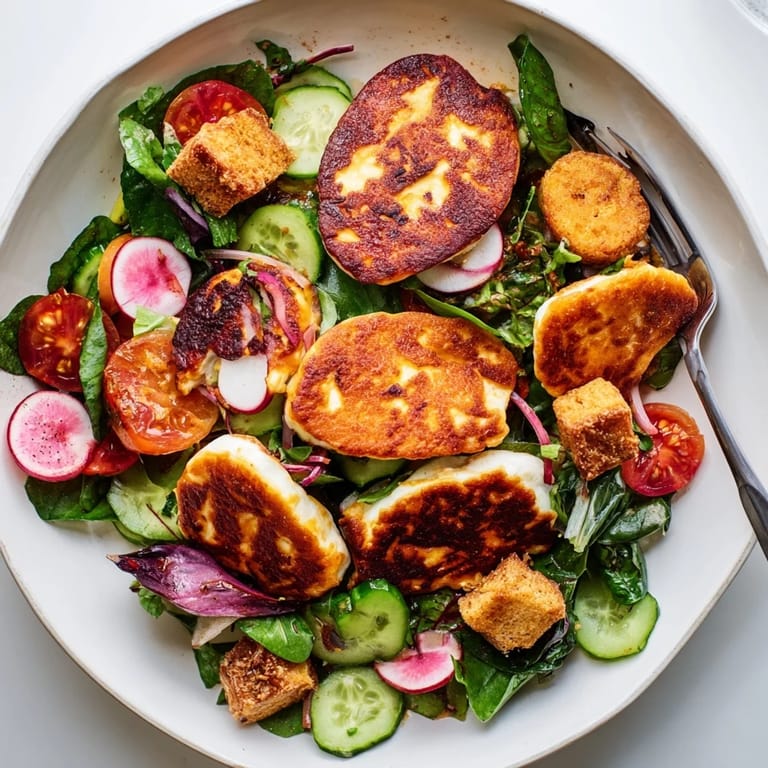
- Heat 1 tbsp olive oil in a nonstick skillet over medium heat until it shimmers. Add the halloumi slices in a single layer, working in batches if needed, and fry for 1–2 minutes per side until deep golden brown with those gorgeous charred lines. Transfer to a plate and don't be tempted to crowd the pan or the cheese will steam instead of sear.
- Assemble your vibrant salad base:
- In a large salad bowl, combine the mixed greens, sliced cucumber, halved cherry tomatoes, thinly sliced radishes, and red onion. This colorful foundation needs to be large enough to accommodate all the toppings without feeling cramped.
- Add the warm and cool elements:
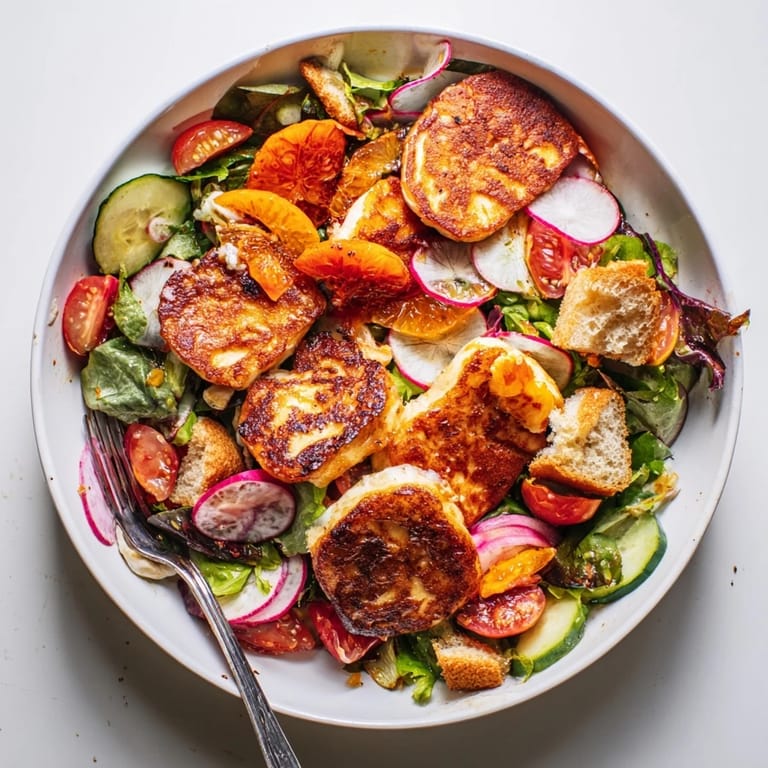
- Arrange the blood orange slices and still-warm halloumi over the greens, then scatter those crispy sourdough croutons on top. The contrast of temperatures is part of what makes this salad special, so don't let the halloumi cool completely before adding it.
- Dress and serve immediately:
- Drizzle about two-thirds of the sumac vinaigrette over the salad and toss gently with your hands or salad servers to combine without bruising the greens. Taste and add more dressing if needed, then serve right away while the croutons are still crunchy and the halloumi is warm.
 Save
Save This recipe has become my go-to for nights when I want something that feels fancy but comes together in under 30 minutes. There's something deeply satisfying about cutting into that warm halloumi and watching it steam against the cool oranges.
Making It Your Own
I've learned that this salad is incredibly forgiving. Sometimes when I can't find blood oranges, I use regular oranges and add a handful of pomegranate seeds for that ruby color. Last week I threw in some kalamata olives and the salty brine worked surprisingly well with the sweet oranges.
The Halloumi Learning Curve
My early attempts at frying halloumi resulted in rubbery, unevenly cooked cheese because I didn't let the pan get hot enough. Now I know that sizzling sound when the cheese hits the oil is exactly what you want. Medium heat, patience, and resisting the urge to flip too soon make all the difference between okay halloumi and great halloumi.
Getting Ahead Without Losing Crunch
The hardest part about fattoush is keeping the croutons crisp once they meet the dressing. Over time, I've found a few workarounds that let you prep ahead without sacrificing texture.
- Make the croutons up to two days in advance and store them in an airtight container at room temperature
- Whisk the dressing in the morning and keep it in a jar, giving it a good shake before using
- Prep all the vegetables and store them separately, then assemble everything just before serving
 Save
Save There's nothing quite like a salad that makes you slow down and appreciate every bite. This one does exactly that.
Recipe FAQ
- → Can I make the croutons ahead of time?
Yes, bake the sourdough croutons up to 2 days in advance. Store in an airtight container at room temperature and add just before serving to maintain their crisp texture.
- → What can I substitute for halloumi?
Grilled tofu or vegan feta work well for a dairy-free option. Paneer or firm feta can also be used, though they won't have the same salty bounce as halloumi when fried.
- → How do I prevent the salad from getting soggy?
Dress the salad immediately before serving. Keep the croutons separate until ready to toss, and pat the halloumi and vegetables dry before combining to maintain the perfect crunch.
- → Can I use regular oranges instead of blood oranges?
Absolutely. Navel or Valencia oranges provide similar sweetness and juice. Blood oranges add beautiful color and a slightly berry-like flavor, but the dish works perfectly with regular citrus.
- → What does sumac taste like?
Sumac has a tart, lemony flavor with subtle fruity notes. It's a staple Middle Eastern spice that adds bright acidity without making the dish overly sour.
- → Is this suitable for meal prep?
Prepare components separately in advance. Store the dressing, croutons, and fried halloumi in different containers. Assemble just before eating for the best texture and flavor.