 Save
Save I still remember the first time I experienced a true Mediterranean mezza platter—it was at a small taverna in Athens, where an elderly woman emerged from the kitchen with the most stunning arrangement of colorful dips, cheeses, and vegetables I'd ever seen. She placed it in the center of our table with such care, as if presenting edible art. That moment taught me that the best meals aren't always elaborate or fussy; sometimes they're about gathering good ingredients, arranging them with intention, and letting people enjoy them together. Now, whenever I create this platter at home, I'm transported back to that sunny afternoon, sharing stories and food with strangers who became friends.
I've served this platter countless times—at casual weeknight dinners, on lazy summer afternoons by the pool, and at elegant dinner parties where I wanted to impress without fussing. My favorite memory is watching my skeptical teenage nephew, who usually picks at vegetables, load his plate with roasted peppers and hummus, completely unaware he was eating something healthy. That's the magic of a mezza platter: it lets people discover flavors they didn't know they'd love.
Ingredients
- Classic Hummus (1 cup): The creamy anchor of your platter. Homemade is wonderful if you have time, but a quality store-bought version saves effort without sacrificing flavor—look for brands with simple ingredients and a good balance of tahini and lemon
- Baba Ganoush (1 cup): This smoky eggplant dip adds sophisticated depth that guests always ask about. The charred flavor is what makes it special, so if making it yourself, don't be shy with the heat
- Tzatziki (1 cup): The cooling, herbaceous heart of the spread selection. Its creamy tang is essential for balancing the richer elements of the platter
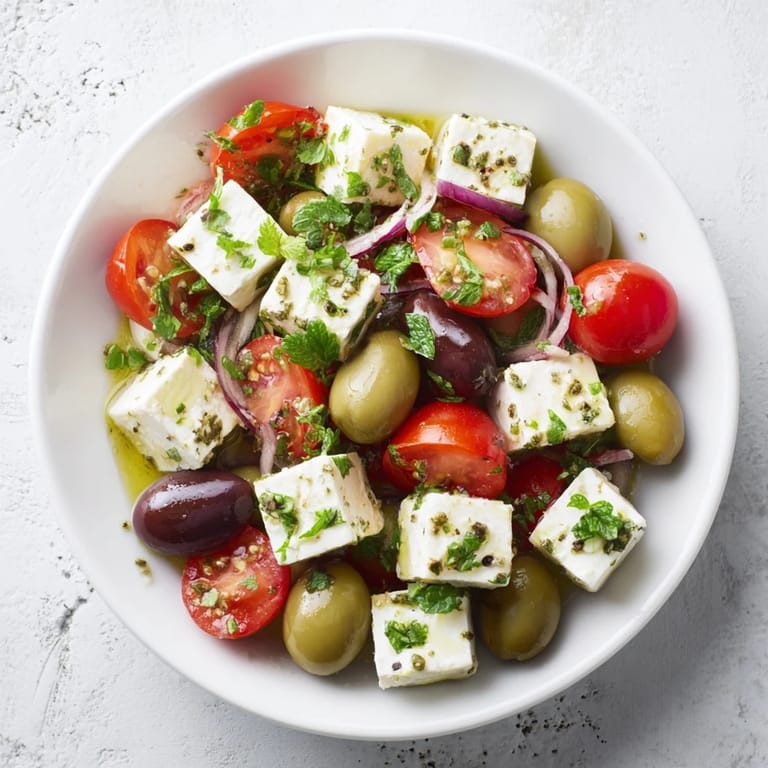
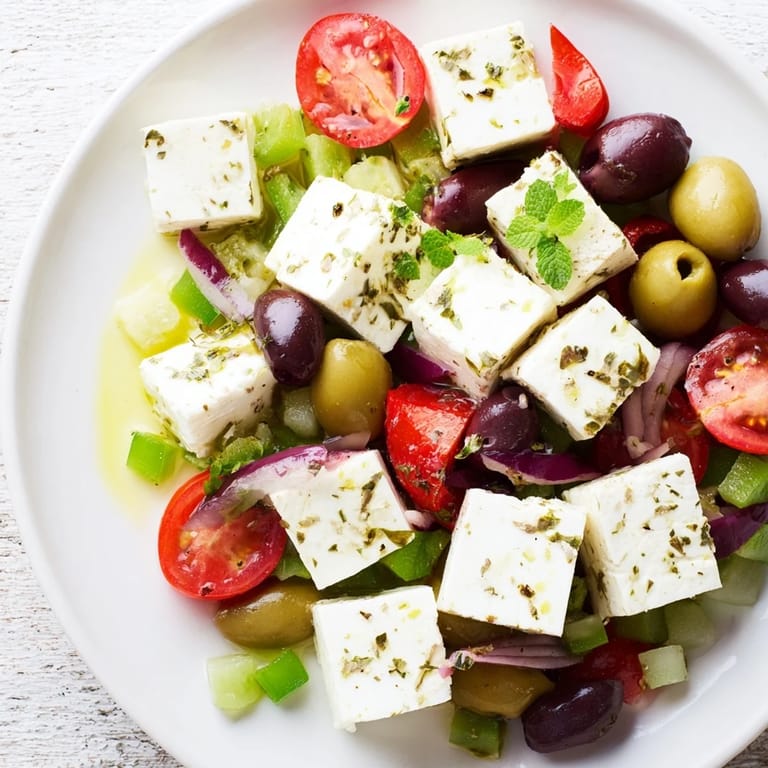
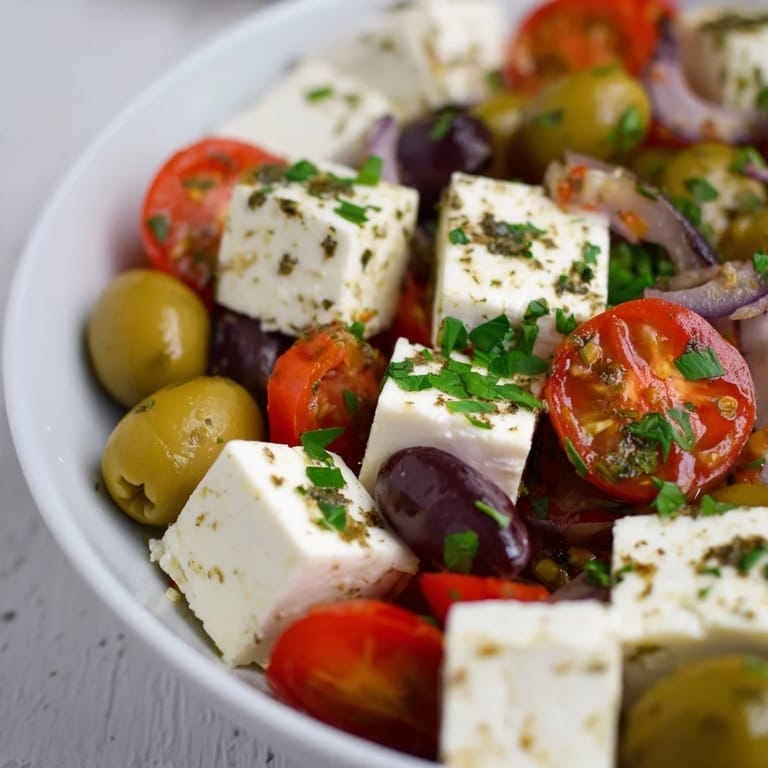
- Feta Cheese (150 g, cut into rustic cubes): Choose a quality block feta and cut it chunky and irregular—the imperfect, generous appearance invites people to dig in. Those cubes become little flavor bombs when paired with olives and bread
- Cherry Tomatoes (1 cup, halved): Pick tomatoes at their peak ripeness; they should be bursting with sweetness and acidity. The halves show off their beautiful interior and release more juice as they sit
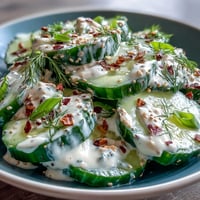
- Cucumber (1 cup, sliced into rounds): These cool, crisp rounds provide textural contrast. I slice them just before serving to prevent them from weeping and creating puddles on the platter
- Assorted Olives (1 cup—Kalamata, green, Castelvetrano): Mixing varieties creates visual interest and gives people choices; the buttery Castelvetrano olives often convert olive skeptics. Drain them well so they don't make your platter soggy
- Roasted Red Bell Pepper (1 pepper, sliced): Jar-roasted peppers work beautifully here and save precious time. Their soft, sweet flesh is irresistible and adds a glossy, jewel-toned elegance
- Red Onion (1 small, thinly sliced): Paper-thin slices are essential—they'll still bite, but won't overwhelm. Some people soak them in ice water for a few minutes to mellow them slightly
- Pita Breads (2 large, cut into triangles): Fresh, warm pita is ideal, but day-old works too. Toast them lightly if they've been sitting around; the warmth refreshes them. Gluten-free flatbread is a seamless substitute
- Fresh Parsley (1/4 cup, roughly chopped): This bright green garnish is your platter's finishing touch—it brings freshness and prevents everything from looking too muted. Chop it just before serving so it stays vibrant
- Fresh Mint (2 tbsp, torn): Tearing rather than chopping releases more aromatic oils. A whisper of mint elevates the whole experience and adds an unexpected freshness
- Extra-Virgin Olive Oil (2 tbsp, for drizzling): This is not the time to use ordinary oil; splurge on something flavorful. The generous drizzle both protects the dips and adds richness that ties everything together
- Sumac or Zaatar (1 tsp, optional): If you have it, these spice blends add color and a subtle tang that makes people wonder what you did differently. They're not essential, but they're the secret weapon that elevates a good platter to an unforgettable one
- Sea Salt and Black Pepper: Taste and season as you go; the dips may already be salted, so add judiciously to avoid overwhelming them
- Marinated Artichoke Hearts (1/2 cup, optional): These tender, briny morsels add richness and sophistication. Drain them well before adding
- Dolmas (1/2 cup, optional): Grape leaves rolled with rice and herbs—they add an element of luxury and intrigue for guests who know and love them
- Toasted Pine Nuts (1/4 cup, optional): A handful scattered over the finished platter adds crunch and a nutty richness that feels indulgent
Tired of Takeout? 🥡
Get 10 meals you can make faster than delivery arrives. Seriously.
One email. No spam. Unsubscribe anytime.
Instructions
- Setting the stage:
- Retrieve your largest serving platter or wooden board—you want generous space so everything has room to breathe and look abundant. I always use a board worn smooth from years of use; there's something about presenting food on something with history that makes the meal feel more intentional. Take a moment to envision where each element will go, thinking about color balance and flow.
- Creating the dip foundation:
- Spoon the hummus, baba ganoush, and tzatziki into three distinct mounds around your platter, leaving space between them. Don't worry about perfection—let them pool naturally and organically. These soft, creamy bases are your anchors, so position them where they'll have room to breathe and be easily accessible.
- Building your cheese moment:
- Cluster the feta cubes together in one small area, creating a generous pile that invites people to grab a piece. The irregular, rustic arrangement makes it feel more generous than a neat arrangement ever could.
- Orchestrating the vegetables:
- Now comes the fun part—arrange the tomatoes, cucumber, olives, roasted pepper, and red onion in loose, organic mounds throughout the platter. Think of this like painting with vegetables; you're creating visual interest through varying colors, textures, and heights. Don't arrange everything in perfect lines; let clusters sit where they feel natural. This is where the platter becomes a landscape rather than a list.
- Positioning the bread:
- Create a separate pile of pita triangles or fan them around the platter's edge, making them easy to grab. Warm bread is always more inviting, so if your pita has been sitting, toast it lightly just before serving.
- Adding the luxury touches:
- If using artichoke hearts, dolmas, or pine nuts, scatter them in small clusters where they'll catch the light and draw the eye. These optional elements are the jewelry of your platter; they should feel like delightful surprises, not obligatory additions.
- The golden finishing drizzle:
- Generously drizzle excellent olive oil over the dips, cheese, and vegetables. Don't be timid here—this is your signature move. The oil not only adds richness but also creates a glossy, appetizing sheen that says, 'Someone cared about this.'
- The final flourish:
- Scatter the chopped parsley and torn mint across the platter with abandon. Sprinkle your sumac or zaatar if using it, and season with sea salt and cracked black pepper. Taste a piece of something to ensure the seasoning feels balanced—sometimes the dips need a whisper more salt, sometimes they're already perfect.
- The moment of presentation:
- Step back and admire what you've created. Then bring it directly to the table, set it down with intention, and watch people's faces light up. That's the real magic of this dish.
 Save
Save There's a particular warmth that happens when people gather around a mezza platter. I watched my grandmother, who grew up eating these foods in her own family home, tear up slightly when she saw how I'd arranged everything just like her mother used to do. Food carries memory across generations, and in that moment, I understood that this wasn't just about feeding people—it was about honoring where these recipes come from and creating new memories layered on top of the old ones.
Making It Your Own
The beauty of a mezza platter is its flexibility. I've served it on lazy summer nights with nothing but what I had in the kitchen, and I've spent hours sourcing the most beautiful ingredients for special occasions. Both versions brought the same joy. Some of my favorite additions have been grilled halloumi cheese (which becomes wonderfully squeaky), warm spiced lamb, crispy falafel, and even some marinated mushrooms for richness. Think of this platter as a canvas rather than a rigid recipe—your tastes and what's available to you should guide your choices.
The Wine Pairing That Changed Everything
Years ago, I served this platter with whatever wine I had on hand, but then a friend brought a crisp Sauvignon Blanc and everything clicked into place. The acidity cut through the richness of the dips and cheese, while the herbal notes echoed the fresh herbs in the platter itself. Now I always reach for a light, crisp white or a dry rosé—they're like having a sommelier in your glass, directing attention to how well each component works with the next. If wine isn't your thing, sparkling water with lemon works beautifully too.
Storage and Next-Day Magic
Any leftover dips keep beautifully in the refrigerator for up to five days, and honestly, they often taste even better the next day once flavors have had time to meld. The vegetables should be eaten that day, but bread can be stored and warmed when you're ready. I've learned that the best policy is to assemble only what you think will be eaten and keep remaining ingredients separate in containers—that way, the platter stays fresh and you can add more as the evening progresses. It's a small secret that keeps everything tasting its very best.
- Cover leftover dips loosely with plastic wrap and store in the coldest part of your refrigerator
- Fresh herbs lose their punch quickly, so add the parsley and mint to your platter only an hour or so before serving
- Vegetables prepped ahead should be stored in separate airtight containers with paper towels to absorb moisture
 Save
Save This platter is my answer to the question 'What should I serve?' when I want everyone to feel welcome and cared for without spending hours in the kitchen. It's become the thing friends request and the meal I return to again and again.
Recipe FAQ
- → What dips are included in the mezza platter?
The platter features classic hummus, smoky baba ganoush, and refreshing tzatziki for a variety of creamy textures and flavors.
- → Can this platter accommodate gluten-free diets?
Yes, by substituting the pita bread with gluten-free flatbreads, the platter can suit gluten-free preferences without compromising taste.
- → How should fresh herbs be used on the platter?
Fresh parsley and torn mint leaves are scattered atop the platter to add brightness and fresh aroma, enhancing all components.
- → Are there options to make this platter vegan?
Omitting feta and tzatziki or replacing them with plant-based alternatives creates a vegan-friendly spread while maintaining variety.
- → What garnishes complement the Mediterranean flavors?
Sprinkling sumac or zaatar and seasoning with sea salt and freshly ground black pepper finishes the platter, adding subtle tang and spice.
- → How can the mezza platter be served stylishly?
Arrange each element in distinct organic clusters on a large rustic serving board or platter for an inviting, shareable presentation.