 Save
Save My neighbor invited me to a dinner party years ago with just one instruction: bring something that looks like it took all day but doesn't actually demand it. I stood in my kitchen staring at those bell peppers and cucumber, thinking about the clay tent cities I'd seen in travel photos, and suddenly the whole presentation clicked into place. What started as frustration about impressing people became this gorgeous, pointed canopy of color that practically assembled itself. Now whenever I need to feel creative without stress, I build this tent.
I made this for my partner's birthday open house, and people kept taking photos before eating anything—their phones came out instantly when they saw that tent shape rising from the platter. Someone asked if I'd catered it, someone else demanded the recipe on the spot, and the best part was watching strangers reach across each other for cucumber slices and dips without needing any instructions. That's the moment I realized presentation isn't pretentious when it makes people actually happy.
Ingredients
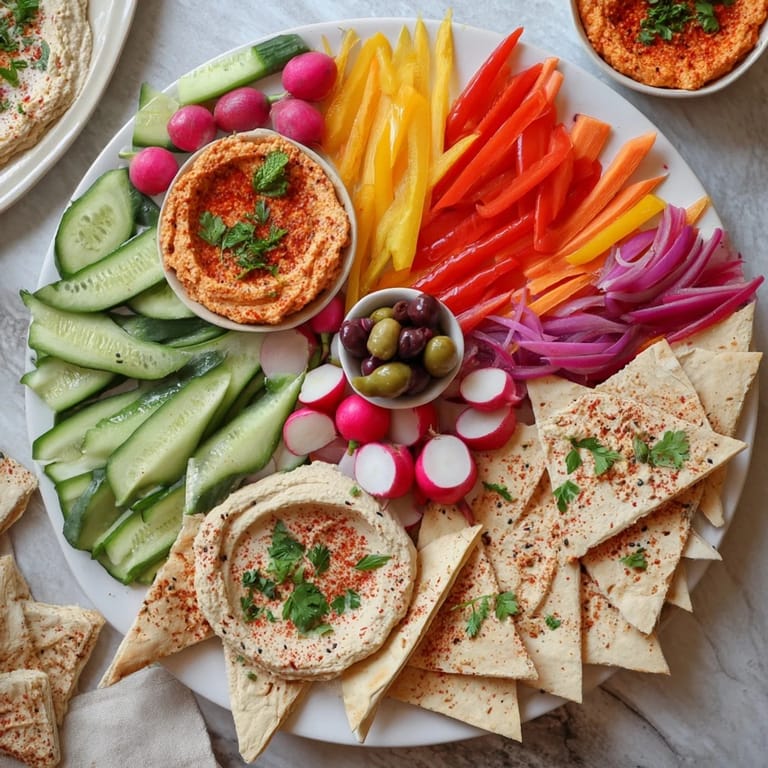
- Cucumber: Slice lengthwise into long spears rather than rounds—they lean against other vegetables better and catch the light beautifully.
- Red and yellow bell peppers: Cut into wide strips so they're substantial enough to hold their shape in the tent arrangement and feel sturdy to hold while dipping.
- Carrots: Peeled sticks taste fresher and look more intentional than rough-cut rounds; they're naturally sweet and crunch in exactly the right way.
- Cherry tomatoes: Halving them creates little bowls that collect dip, and the exposed flesh shows off their color.
- Red onion: Thin slices add a sharp note that cuts through the richness of the dips—slice them paper-thin so they're more pleasant than aggressive.
- Radishes: Their peppery bite and crisp snap matter more than you'd expect; they're the unexpected guest that everyone mentions afterward.
- Pita breads or msemen: Warming them first keeps them pliable for arranging and tastes so much better than cold bread.
- Hummus, muhammara, and baba ganoush: Buy good quality or make your own—the dips are the soul of this, and tasting them matters more than any vegetable.
- Green and black olives: Use proper olives, not canned ones if you can help it; taste the difference immediately.
- Fresh cilantro or parsley: Chopped fresh and scattered at the end, it's your green light that says this was made with intention.
- Toasted sesame seeds: Toast them yourself for thirty seconds in a dry pan—the smell is worth it alone, and the flavor transforms the whole platter.
- Ground cumin and smoked paprika: Dust these over the dips; they whisper spice without overwhelming and tie the whole arrangement to its Moroccan roots.
Tired of Takeout? 🥡
Get 10 meals you can make faster than delivery arrives. Seriously.
One email. No spam. Unsubscribe anytime.
Instructions
- Prep your vegetables with intention:
- Wash and slice everything first, arranging your cuts on the counter so you can see the colors together before you place them on the platter. This takes five minutes and saves you from that anxious moment mid-assembly when you're not sure what goes where.
- Build the tent from the peak down:
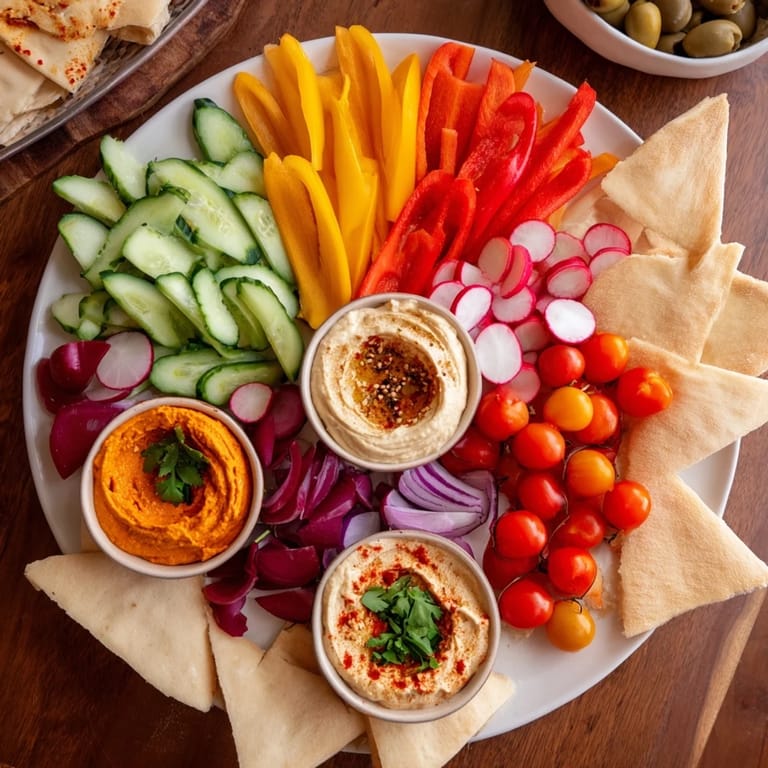
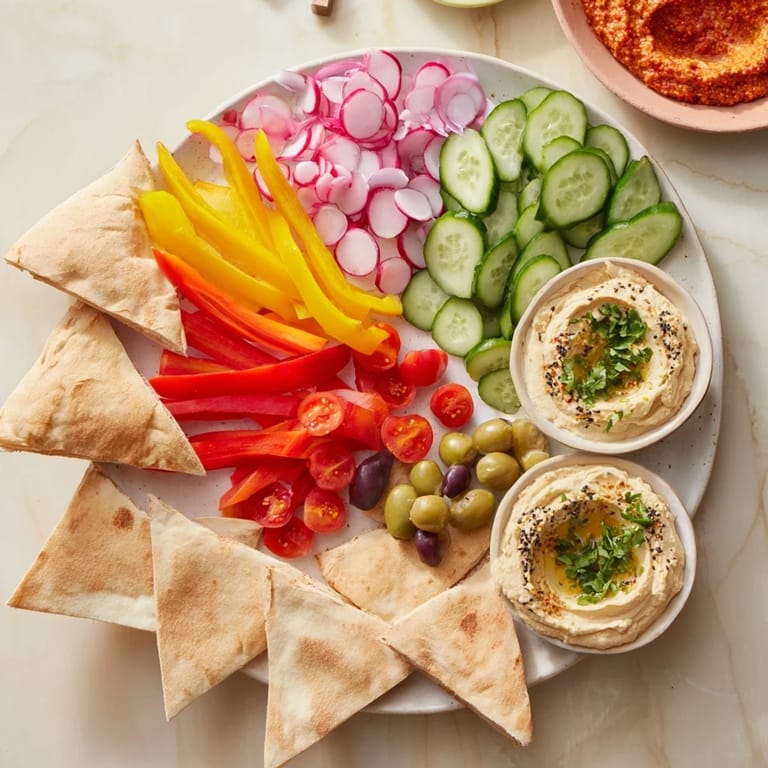
- Start at the top center of your platter with the tallest pieces—I use thick carrot sticks or tall pepper strips—and angle them to meet a point. Then lean the other vegetables against them, alternating colors as you spiral outward, so you create that natural tent silhouette without any actual structure holding it up.
- Warm your bread gently:
- Place pita or msemen in a dry skillet over medium heat for just two to three minutes, turning once, until they're pliable and warm but not crispy. Cut them into triangles while they're still warm, then fan them out at the base like they're supporting the tent.
- Arrange your dips at the center:
- Spoon each dip into its own small bowl, making a trio at the heart of the arrangement where the tent meets the base. The dips sit between the bread fans and the vegetable peak, creating the functional center of the whole thing.
- Garnish with confidence:
- Scatter olives around the dips, sprinkle sesame seeds over the top of each dip, dust with cumin and paprika, then shower the whole arrangement with fresh cilantro or parsley. This is your signature moment—make it look alive and intentional.
- Present and step back:
- Bring it to the table whole and let people admire it for a breath before they start reaching. There's something special about food that looks like you cared, even if it only took you thirty-five minutes.
 Save
Save What stays with me most is how this platter becomes a conversation piece without trying. People don't just eat from it—they admire it, comment on the arrangement, ask about the inspiration, and end up connecting with each other over food that looks like it came from somewhere important. That's the real magic, not the vegetables themselves.
The Tent Presentation Matters
I used to think presentation was extra, something for fancy restaurants or people trying too hard. Then I realized that when food looks beautiful, people actually slow down and enjoy it instead of just consuming it. The tent isn't complicated—it's just stacked vegetables arranged in a vaguely triangular shape—but it signals that someone cared enough to make something worth looking at. That changes the whole mood of eating.
Making This Work for Your Crowd
The best part about this platter is how flexible it is without losing its personality. If you've got guests who don't eat gluten, skip the bread or bring a good cracker instead. If someone's vegan, double-check your store-bought dips aren't hiding dairy, or make your own versions which honestly taste better anyway. If you want to add roasted chickpeas for crunch or marinated feta cubes if dairy's welcome, layer them in wherever there's visual space. The structure is loose enough that you're making decisions, not following rules.
Serving and Storage Tips
Serve this the moment it's arranged because vegetables are at their crispest within the first hour, and the bread stays best when it's still slightly warm from its skillet. If you're making this for a longer event, prep everything separately and assemble thirty minutes before guests arrive. Store any leftover vegetables in the fridge in sealed containers, and they'll last two days though the dips are honestly better the day they're opened.
- Slice vegetables no more than two hours before serving to keep them crisp and fresh.
- If you're using store-bought dips, taste them first to make sure they align with what you're building.
- The bread is optional—some guests will skip it entirely and just dip vegetables, which is perfectly fine.
 Save
Save This tent has become my default move for potlucks, dinner parties, and moments when I want to feel creative without spending hours cooking. It's proof that simple ingredients arranged with a little intention can become something memorable.
Recipe FAQ
- → What vegetables work best for this platter?
Fresh, crunchy vegetables like cucumber, bell peppers, carrots, cherry tomatoes, radishes, and red onions provide vibrant colors and textures.
- → Can I use alternative flatbreads?
Yes, pita or Moroccan msemen are traditional, but naan or lavash can also be warmed and cut into triangles for serving.
- → How should the dips be seasoned?
Season dips with ground cumin, smoked paprika, and toasted sesame seeds to enhance the flavors and add subtle warmth.
- → Are there vegan options for this platter?
Ensure the dips and breads are dairy-free and plant-based to make this platter suitable for vegan diets.
- → What garnishes add a festive touch?
Pitted green and black olives, chopped fresh cilantro or parsley, and toasted sesame seeds create an inviting presentation.
- → How long does preparation take?
Preparation and assembly take about 25 minutes, with an additional 10 minutes for warming the breads.