 Save
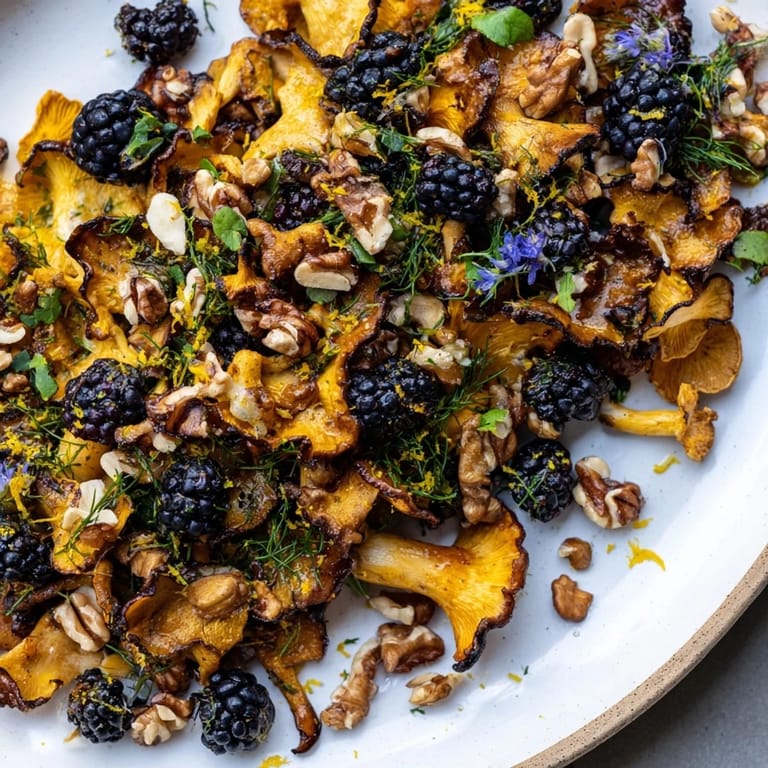
Save I discovered this dish during a misty autumn afternoon wandering through the farmer's market in Portland, where a vendor arranged wild mushrooms, fresh berries, and foraged herbs in the most beautiful, organic way. It sparked something in me—a desire to capture that forest floor magic on a plate. That evening, I spent hours in my kitchen playing with textures and colors, and this Northwest Forest Forager was born. It became my signature dish for intimate dinner parties, a conversation starter that transported everyone to the rainy, verdant Pacific Northwest.
I'll never forget the first time I served this to my mother. She stood over the plate for what felt like forever, just staring, before whispering that it reminded her of moss-covered rocks from her childhood hikes. That's when I knew this wasn't just a salad—it was a memory on a plate, a bridge between seasons and stories.
Ingredients
- Mixed wild mushrooms (chanterelle, shiitake, oyster), 200 g: These three varieties create complexity—the delicate chanterelles add a subtle fruity note, shiitake brings earthiness and umami, while oysters contribute a tender, silky texture. Each one tells the story of the forest floor.
- Unsalted butter, 1 tbsp: This golden fat carries flavor like nothing else and creates that irresistible nutty aroma as the mushrooms cook. Don't skip it, even for a vegan version—it's the difference between good and unforgettable.
- Olive oil, 1 tbsp plus 1 tbsp for herb moss: Use a good quality extra virgin for the herbs—it becomes the aromatic glue holding everything together.
- Garlic clove, 1 minced: Just enough to whisper in the background without overpowering the delicate fungi.
- Toasted hazelnuts, 50 g, coarsely chopped: Toasting brings out their hidden sweetness and creates that crucial crunch that contrasts beautifully with the soft mushrooms.
- Toasted walnuts, 30 g, coarsely chopped: Earthier and more assertive than hazelnuts, they ground the plate with a slightly bitter note.
- Fresh blackberries, 80 g: These tart jewels pop with acidity and add visual drama against the forest tones.
- Fresh blueberries, 60 g: Milder and sweeter than blackberries, they balance the darker notes and create visual depth.
- Fresh flat-leaf parsley, 20 g: The backbone of your herb moss, grassy and fresh.
- Fresh dill, 10 g: It brings a whisper of anise and brightness that lifts the entire dish.
- Fresh chervil or tarragon, 10 g: Chervil is delicate and subtle; tarragon is bold and slightly licorice-forward. Choose based on your mood.
- Fresh chives, 1 tbsp finely snipped: Their onion whisper ties everything together at the very end.
- Lemon zest, 1 small lemon: This is your secret weapon—it brightens everything and prevents the plate from feeling heavy.
- Flaky sea salt, to taste: Use it generously; it's not just seasoning, it's texture.
Tired of Takeout? 🥡
Get 10 meals you can make faster than delivery arrives. Seriously.
One email. No spam. Unsubscribe anytime.
Instructions
- Preparing Your Mushrooms—The Foundation:
- Gently clean your mushrooms with a damp cloth (never submerge them or they'll absorb water and steam instead of sear). Slice them roughly—you want pieces that feel substantial in your mouth, not thin wisps. Heat your skillet over medium heat until a drop of water dances across the surface. Add the butter and oil together; they should foam slightly and smell like hazelnuts. This is your moment to add the garlic, letting it perfume the fat for just 30 seconds before it browns. Now add your mushrooms in a single layer if you can—they need space to breathe and brown properly. Let them sit undisturbed for 2-3 minutes; resist the urge to stir. When you do shake the pan, they should be golden on one side. After 6-8 minutes total, they'll be tender and caramelized. Taste one—if it makes you close your eyes, you're done. Season generously with salt and pepper, then let them cool on a clean plate.
- Crafting the Herb Moss—Your Green Magic:
- On a cutting board, finely mince all your fresh herbs together. I mean really finely—the goal is for the herbs to almost clump together, like actual moss. The more you chop, the more the juices release, and that's what creates the moss texture. Transfer this fragrant pile to a small bowl and pour in your olive oil. Add the lemon zest and a good pinch of flaky sea salt. With a fork or spoon, gently toss and massage everything together. It should look vibrant green and slightly damp, holding together in clusters. Taste it—adjust lemon if needed. This is flavor concentrated, so don't be shy.
- Toasting the Nuts—If Starting from Raw:
- Spread your hazelnuts and walnuts on a baking tray in a single layer. Toast at 180°C (350°F) for 8-10 minutes, giving the tray a shake halfway through. You'll know they're ready when the kitchen fills with a toasty, nutty aroma that makes your stomach rumble. Let them cool completely—warm nuts can be soft and disappointing. Once cool, give them a rough chop; you want pieces chunky enough to bite through, not powder.
- Assembling the Forest Floor—The Art Part:
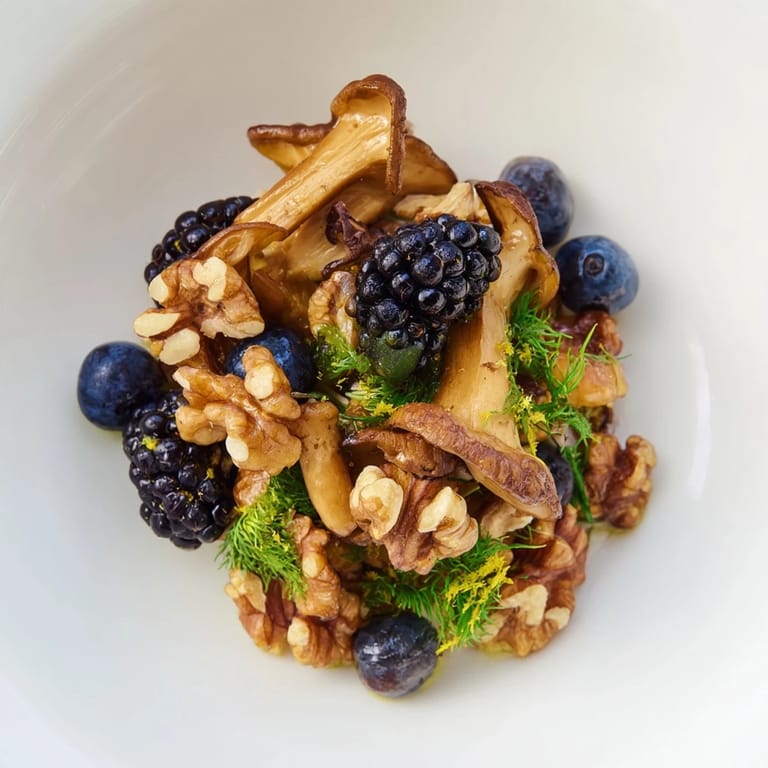
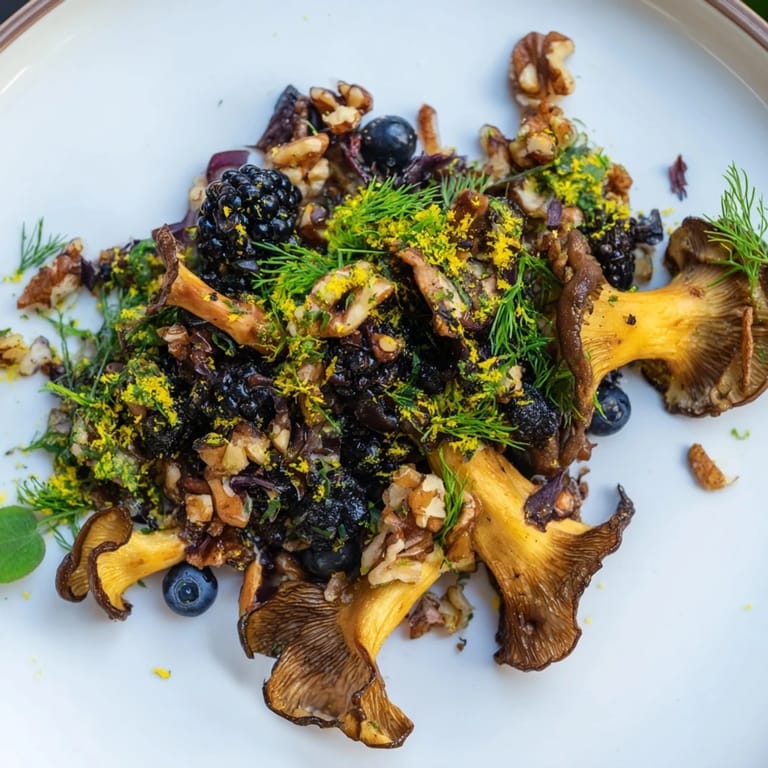
- This is where you become a painter. On a large platter or individual plates, scatter your cooled mushrooms in dense, organic clusters—don't arrange them in neat rows, think forest chaos. Nestle the nuts into pockets and gaps, mixing hazelnuts and walnuts so each bite surprises. Scatter your berries with purpose, placing them where they'll catch light. Now comes the magic: generously spoon your herb moss around and between all the clusters, filling gaps and creating a lush, mossy landscape. The herbs should feel like the glue holding this edible forest together. If using edible flowers or microgreens, scatter them as the final touches—these are optional but transform the dish into something truly special.
- The Final Moment:
- Serve at room temperature. Never cold—cold mutes the delicate flavors. Wait a beat before presenting; let people absorb the beauty before they taste it. That pause is part of the magic.
 Save
Save There's a quiet magic that happens when someone tastes this dish and realizes they're eating something alive with flavor and intention. I'll treasure the moment a guest turned to me and said, 'I can taste the forest.' That's when I understood that the best recipes aren't just instructions—they're invitations to remember why we cook.
Seasonal Variations to Keep It Fresh
This dish transforms with the seasons. In spring, swap the berries for fresh peas and asparagus tips, and introduce tender new herbs like chervil and tarragon more boldly. Summer brings stone fruits—apricots or plums—alongside the berries for warmer notes. Fall is when this dish truly belongs, with wild mushrooms at their peak and late blackberries. Winter calls for roasted root vegetables and pomegranate seeds to replace fresh berries, maintaining that jewel-like quality when fresh berries aren't available. The bones of the recipe stay the same, but the personality shifts with what the market offers.
Building Flavor Beyond the Expected
The secret to this dish transcending its simple ingredient list is understanding that every element serves a purpose in the broader flavor story. The mushrooms are your canvas—earthy and substantial. The nuts add both richness and a textural wake-up call. The berries provide acidity and brightness that prevents the dish from settling into one note. The herb moss is the revelation, the moment when everything clicks into place. But here's what I discovered through countless iterations: the real magic is in the lemon zest. It's not about citrus flavor; it's about unlocking the green, fresh quality of the herbs and preventing them from tasting muted or dull. Similarly, that flaky sea salt does double duty as seasoning and as textural punctuation that makes your teeth want to crunch.
Making It Your Own
Once you've made this dish once or twice, you'll feel confident improvising. Maybe you'll add roasted root vegetables—parsnips and beets would be stunning. Perhaps pickled shallots will join the composition, adding a sharp, vinegary element. Some might introduce a drizzle of walnut oil or a touch of aged balsamic to deepen things. The beauty of a composed plate is that it's forgiving; as long as your core elements—mushrooms, nuts, berries, herbs—are treated with respect, your variations will sing. One friend added crispy chickpeas for extra protein, another layered in some roasted red peppers. Each version felt uniquely theirs.
- For a vegan twist, replace butter with extra virgin olive oil or vegan butter—the result is lighter but still delicious
- Roasted root vegetables like beets, parsnips, and carrots extend the earthiness and make it more of a main course
- A light vinaigrette drizzled over everything unifies flavors and adds moisture—try a simple lemon and walnut oil dressing
 Save
Save This dish taught me that sometimes the most memorable food is the simplest when approached with love and intention. Every time you make it, you're painting with ingredients, telling a story of where they came from and why they matter.
Recipe FAQ
- → What mushrooms work best for this dish?
Mixed wild mushrooms like chanterelle, shiitake, and oyster provide the ideal earthy texture and flavor.
- → Can the nuts be substituted?
Yes, pecans or pine nuts can be used to maintain a warm, woody flavor profile.
- → How is the herb moss prepared?
Finely chop fresh herbs like parsley, dill, chervil, and chives, then toss with olive oil, lemon zest, and flaky sea salt to create a vibrant, clumping texture.
- → Is this dish suitable for vegans?
To make it vegan, omit the butter or replace it with a plant-based alternative when sautéing mushrooms.
- → What beverages pair well with this dish?
Light Pinot Noir or crisp dry cider complement the earthy and fresh flavors beautifully.
- → Can this be served warm or cold?
It's best served at room temperature to preserve the textures and layered flavors of the components.