 Save
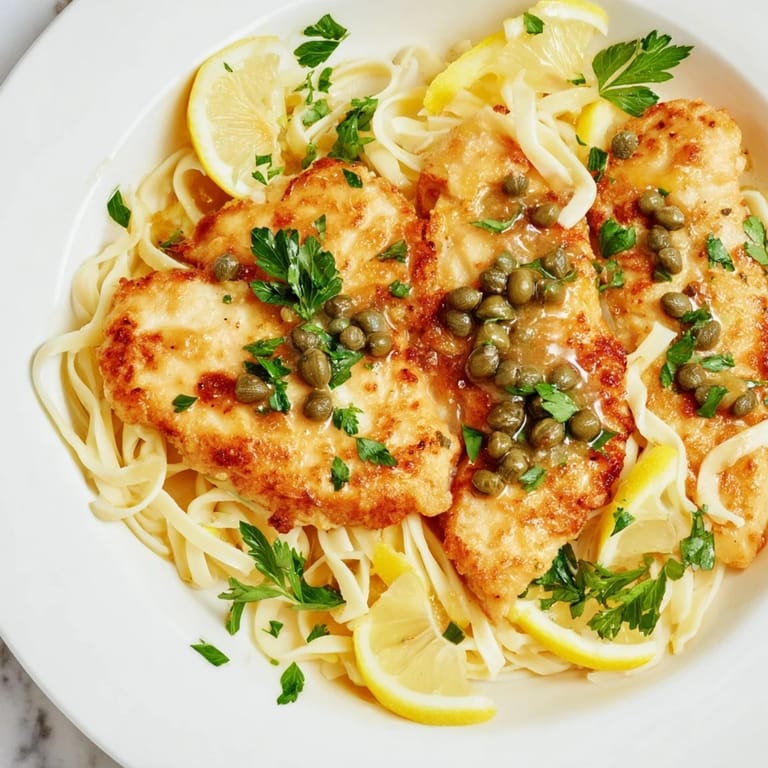
Save There's something about the smell of lemon and capers hitting a hot pan that makes you feel like you've mastered something fancy, even when you're just throwing together dinner on a Tuesday night. I discovered chicken piccata by accident, really—my roommate left a bottle of white wine on the counter and a half lemon, and I had chicken defrosting. Thirty minutes later, I understood why this dish shows up on every Italian restaurant's menu. The brightness of it, the way the sauce clings to pasta with such elegance, made me realize that restaurant-quality meals don't always require hours of work.
I made this for a date once, and halfway through the sauté, the chicken cutlets stuck to the pan in a way that felt like a small disaster. But when I deglazed with wine and the caramelized bits loosened up, it actually deepened the flavor. That moment taught me that cooking is often about recovering from small mistakes with confidence.
Ingredients
- Boneless, skinless chicken breasts (2 large): Sliced thin so they cook through quickly and stay tender—this is where the speed comes from.
- All-purpose flour (½ cup): Just enough to create a light golden crust that catches the sauce beautifully.
- Olive oil (2 tablespoons) and unsalted butter (1 tablespoon): The oil prevents the butter from burning while the butter adds richness and helps the chicken brown evenly.
- Dry white wine (½ cup): Non-negotiable for deglazing; the alcohol cooks off and leaves a sophisticated depth behind.
- Fresh lemon juice (⅓ cup): Bottled won't give you the same brightness, so squeeze real lemons if you can.
- Capers (¼ cup), drained and rinsed: The salty, briny punch that makes this sauce memorable instead of just buttery.
- Chicken broth (½ cup) and butter (2 tablespoons): Together they create a glossy, silky sauce that coats every strand of pasta.
- Garlic (3 cloves, minced): A quick sauté mellows it into the background, supporting rather than shouting.
- Fresh parsley (2 tablespoons, finely chopped): Adds color and a whisper of fresh herb right before serving.
- Spaghetti or linguine (12 ounces): Thinner pastas catch the sauce better than thicker shapes would.
Tired of Takeout? 🥡
Get 10 meals you can make faster than delivery arrives. Seriously.
One email. No spam. Unsubscribe anytime.
Instructions
- Get the pasta started:
- Bring a large pot of salted water to a boil—it should taste like the sea. Cook your pasta according to the package directions, but fish out a piece a minute or two before it's supposed to be done so you can taste and adjust; pasta continues cooking slightly after you drain it. Reserve about half a cup of that starchy water before you drain everything.
- Slice and season the chicken:
- Lay each chicken breast on your cutting board and place your hand flat on top to keep it steady, then slice horizontally through the middle to create two thin cutlets from each breast. This thickness is essential—it means your chicken will be cooked through and tender in just minutes. Season both sides with salt and pepper, then dredge lightly in flour, shaking off any excess so you're coating, not caking.
- Sear the chicken until golden:
- Heat your large skillet over medium-high heat and add the olive oil and butter together; wait until the butter foams and the pan is hot enough that a pinch of flour sizzles immediately. Lay the chicken cutlets in carefully and don't move them—this is how they get that beautiful golden crust. After about three to four minutes, flip them once and cook the other side the same way until they're golden and cooked through. Transfer to a plate and tent loosely with foil to keep them warm.
- Build the sauce from the fond:
- In that same pan with all the browned bits stuck to the bottom, add your minced garlic and let it sauté for just thirty seconds until fragrant. Pour in the white wine carefully and use a wooden spoon to scrape up all those caramelized bits—this is called deglazing and it's where massive flavor comes from. Let the wine reduce by half, which should take a minute or two, then add your lemon juice, drained capers, and chicken broth. Simmer gently for two to three minutes until the sauce loses some of its sharp edge and comes together.
- Finish with butter and reunite everything:
- Turn the heat down to medium and whisk in the two tablespoons of butter piece by piece, letting it melt into the sauce slowly so it becomes silky and glossy rather than separated and greasy. Return the chicken to the skillet and spoon that beautiful sauce over the top, letting it coat each cutlet.
- Bring it all together on the plate:
- Add your drained pasta directly to the skillet and toss everything together gently, letting the sauce coat each strand. If the pasta seems dry, add a splash of that reserved pasta water and toss again; the starch in that water helps the sauce cling beautifully.
- Plate and garnish:
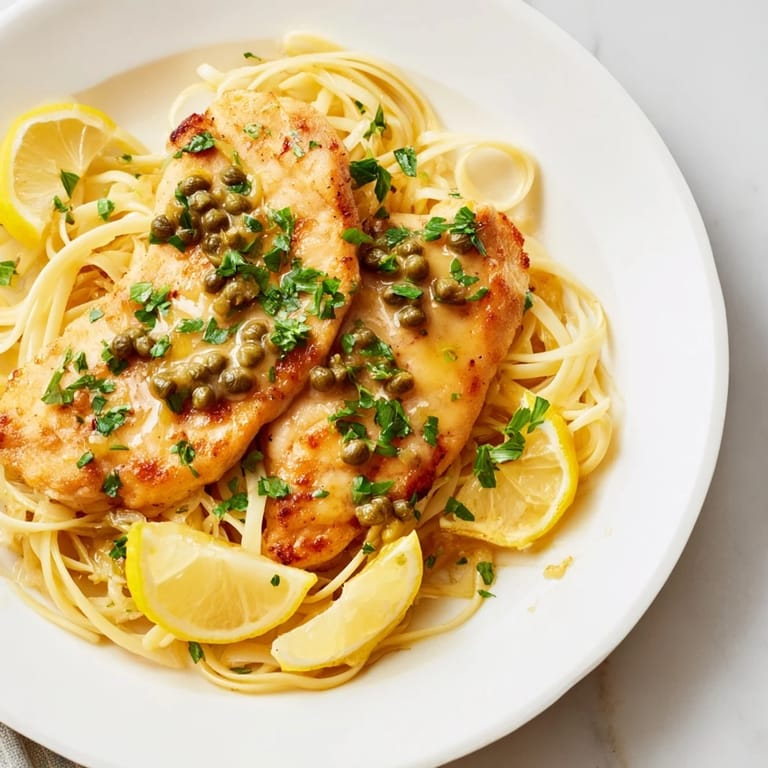
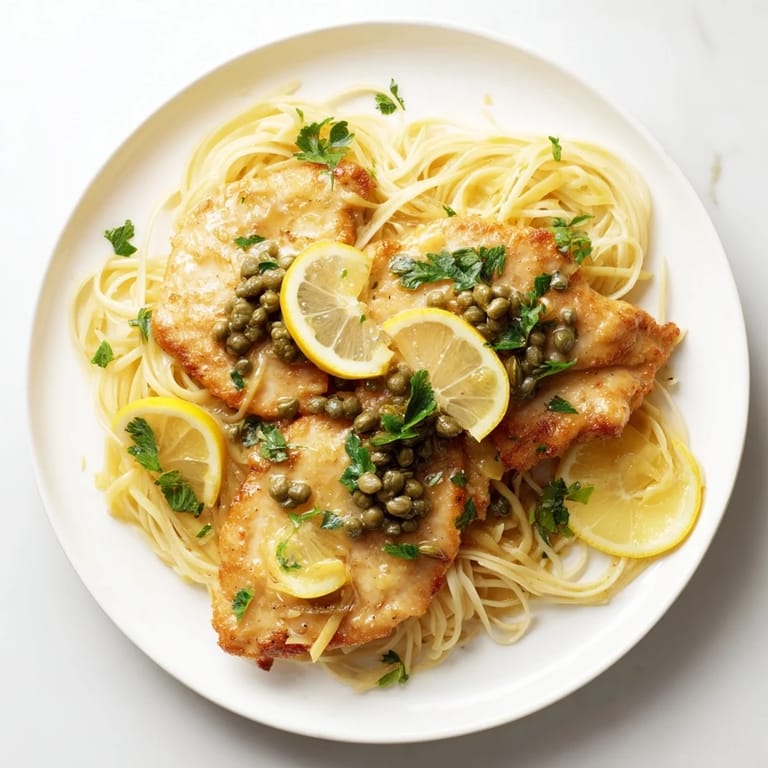
- Divide the pasta among four plates, top each with a piece of chicken, spoon extra sauce over everything, and finish with a scatter of fresh parsley and a lemon slice for color. Serve immediately while everything is still warm and steaming.
 Save
Save The real magic moment came when I realized this dish is forgiving in the best way. A friend came to my kitchen stressed about hosting dinner and worried about trying something new, and I walked her through making piccata. Watching her face when she tasted that first bite—bright, sophisticated, and completely hers—reminded me that cooking is about sharing confidence as much as it is about sharing food.
Why This Works So Well
Piccata succeeds because it balances four things perfectly: richness from butter, brightness from lemon, saltiness from capers, and the slight sweetness of white wine. The chicken is thin enough to cook through without drying out, and the sauce is built right in the pan where all the chicken's browned bits add hidden depth. Thirty minutes feels like cheating when the result tastes like you've been simmering something all afternoon.
What to Drink with This
A crisp white wine is essential, not just for cooking but for drinking alongside. Pinot Grigio or Sauvignon Blanc both echo the lemon and capers in the sauce, creating a harmony on your palate that feels intentional. If you prefer not to drink wine, a sparkling water with fresh lemon works surprisingly well.
Making It Your Own
Once you understand how piccata works, you can play with it endlessly. Try it with thin pounded veal cutlets, or swap the chicken for firm white fish fillets and reduce the cooking time. The sauce structure stays the same, but the dish becomes something new and interesting each time.
- Angel hair pasta gives you a lighter, more delicate dish if that's what you're after that evening.
- A gluten-free flour or cornstarch works perfectly if you need to avoid wheat, and the crust will still be beautiful.
- If you don't have white wine, unsalted chicken broth will work in a pinch, though you'll miss that subtle sophistication the wine adds.
 Save
Save This is the kind of dinner that reminds you why cooking matters—not because it's complicated, but because it's possible. You have everything you need right now to make something that tastes like you belong in a kitchen.
Recipe FAQ
- → What pasta works best for this dish?
Spaghetti or linguine are ideal for carrying the light lemon-caper sauce evenly, but angel hair pasta works well for a lighter texture.
- → Can I substitute the white wine in the sauce?
Yes, chicken broth is a great substitute that maintains the sauce's depth without the alcohol.
- → How do I ensure the chicken stays tender?
Slice the chicken breasts thinly, dredge lightly in flour, and sauté over medium-high heat until just cooked and golden for juicy results.
- → Is there a gluten-free alternative for this meal?
Use gluten-free flour and gluten-free pasta to adapt the dish for a gluten-free diet while keeping the same flavor profile.
- → What garnishes complement the flavors?
Fresh parsley and thin lemon slices enhance the bright, tangy notes and add a pleasant visual appeal.