 Save
Save I still remember the summer I spent in Tuscany, staying with my grandmother in her stone farmhouse just outside Siena. Every evening around sunset, she'd pull out this enormous wooden board—worn smooth from decades of use—and begin assembling what she called her "tavola rustica." There was no recipe, no measuring, just her hands arranging cheeses, meats, and bread with the kind of casual confidence that only comes from doing something a thousand times. That board became the center of our table, the reason neighbors would mysteriously appear at dinnertime, and the thing I thought about most when I got back home. Now, whenever I recreate it, I'm transported right back to that golden hour light, the taste of cold wine, and the sound of laughter mixing with the clinking of glasses.
I made this board for my partner's birthday last spring, gathering ingredients from three different shops because I was determined to get that specific Parmigiano-Reggiano with the crystalline crunch and the Taleggio that was almost melting at room temperature. When I set it down on the table, the way their face lit up reminded me that the best meals aren't about perfection—they're about someone taking the time to think about what makes you happy.
Ingredients
- Parmigiano-Reggiano (200 g, broken into large chunks): This is the backbone of your board. The crystalline texture and sharp, complex flavor ground everything else. I learned to break it rather than cut it because those irregular pieces are more inviting to grab, and they somehow taste better that way—almost like the cheese is saying 'come closer.'
- Pecorino Toscano (200 g, cut into wedges): This is where you get that peppery edge that makes people pause mid-bite. It's saltier and more assertive than the Parmigiano, so it balances the richness of the cured meats beautifully.
- Taleggio (150 g, torn into rustic pieces): This one is the wildcard—it's creamy, almost buttery, with a funky aroma that shouldn't work but absolutely does. Let it sit at room temperature for a few minutes before serving so it becomes almost spreadable.
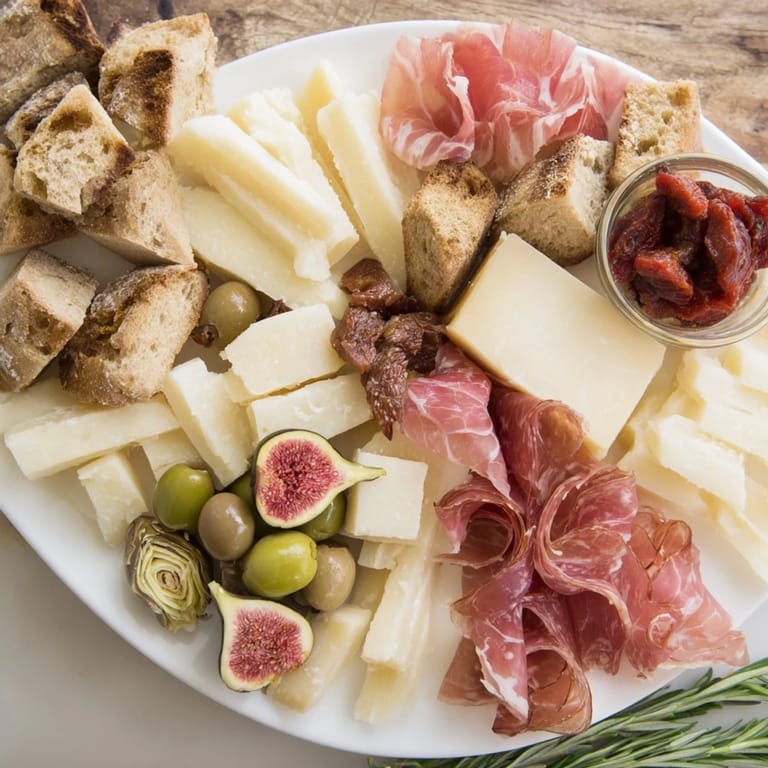
- Prosciutto di Parma (150 g, loosely piled): Never arrange this too neatly. The loose, casual pile is what makes it look abundant and inviting. The delicate, salty sweetness is what keeps people coming back for one more piece.
- Finocchiona salami (120 g, thickly sliced): The fennel in this is subtle but important—it adds a whisper of anise that ties everything together. Slice it thick enough that it doesn't curl.
- Coppa (120 g, arranged in rustic folds): The marbling in this meat is gorgeous, and when you fold it loosely, it catches the light. It's got a silky texture and just enough spice to keep things interesting.
- Rustic Italian loaf, such as ciabatta (1 large loaf, torn into rough pieces): Tear it by hand into completely uneven pieces—some thick, some thin. The imperfection is what makes it look abundant. If your bread is a day old, even better; it'll have better structure and won't get soggy as quickly.
- Castelvetrano olives (1 cup): These buttery, mild olives are different from the aggressive green ones you might be thinking of. They're almost creamy and they won't overpower delicate cheeses.
- Sun-dried tomatoes in olive oil (1 cup, drained): Don't skip the draining step; too much oil pools on the board. These add a concentrated, slightly sweet tang that cuts through the richness of the cheese and meat.
- Marinated artichoke hearts (1 cup, quartered): Quarter them right before serving so they don't dry out. They add texture and a bright, slightly herbaceous note.
- Fresh grapes or figs (1 small bunch, halved): Fruit on a cheese board might seem traditional, but it's there for a reason—the sweetness and freshness is the punctuation mark that lets your palate reset between bites.
- Extra-virgin olive oil (1/4 cup, for drizzling): Use the good stuff here. A generous drizzle over the bread and cheese isn't just flavor; it's part of the visual story of abundance.
- Fresh rosemary sprigs (for garnish): These aren't just decoration. Break a sprig as you're arranging the board and smell it—that's what your guests will smell when they lean over the table, and it sets the entire mood.
- Coarse sea salt and cracked black pepper (to taste): The textures matter here. The larger crystals of sea salt and the visible black pepper tell your guests this is intentional and thoughtful, not lazy.
Tired of Takeout? 🥡
Get 10 meals you can make faster than delivery arrives. Seriously.
One email. No spam. Unsubscribe anytime.
Instructions
- Start with your canvas:
- Pull out that wooden board or platter—the bigger the better. This isn't the time for a modest presentation. You want people to feel like there's abundance before they even start picking things up. If your board is new and slick, that's fine, but the worn ones have character.
- Build your cheese foundation:
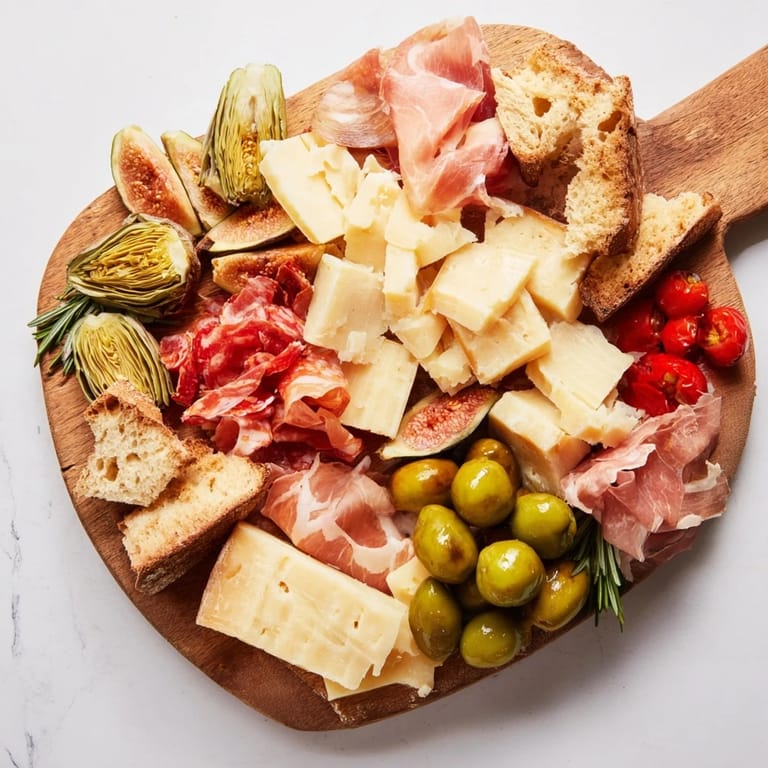
- Begin by placing the Parmigiano chunks first, then the Pecorino wedges. Don't arrange them in a line or a neat grid. Instead, think about creating little clusters—break the Taleggio into irregular pieces and tuck it among the harder cheeses. As you do this, you're creating little flavor journeys for people to discover. Step back and look at it. There should be negative space, little pockets of emptiness where other things will go.
- Layer in the cured meats with generosity:
- Now take the Prosciutto and create loose piles—let it bunch and fold naturally. It's almost like you're caressing it onto the board. Arrange the Finocchiona slices in overlapping layers, creating little fans. The Coppa gets folded into rustic folds that catch light and shadow. This is where the board starts to look like something people will want to photograph.
- Scatter the bread with intention:
- Tear your bread into pieces of varying sizes—some big enough to hold meats, some smaller for cheese. Scatter them around the board in a way that looks natural, like someone just tore bread and dropped it there, even though you're being intentional about coverage. Bread is your neutral canvas, so make sure it's accessible from all angles.
- Fill the gaps with treasures:
- Now comes the fun part. Pile the olives in one corner, the sun-dried tomatoes in another. The artichoke hearts go where they'll be protected from getting lost. Scatter the grapes or figs so they peek out from between other ingredients. Each little pile is its own flavor moment. Leave small spaces between things; crowded boards look messy, but spacious boards look intentional.
- Finish with the final touches:
- Drizzle the extra-virgin olive oil gently over some of the bread and cheese—not everywhere, just enough to catch light and add richness. Scatter fresh rosemary sprigs around the board, breaking one or two so the scent releases. The final grinding of salt and pepper goes on the bread and edges of the cheeses—you're not seasoning everything, just highlighting the places where people will start.
- Serve with intention:
- Serve this immediately. The magic happens in those first moments when everything is at its best—cheeses not yet sweating, bread still ready to be torn, everything at the right temperature. Set it down on the table and then step back and let people discover it.
 Save
Save I realized something watching people gather around a board like this: it stops being just food and becomes an invitation. It says, 'There's time here. There's plenty. Slow down and stay a while.' That's when the best conversations happen.
Choosing Your Ingredients Like You Mean It
The magic of this board isn't in following a recipe exactly; it's in the choices you make when you're standing in front of the cheese counter or the salami section. I learned this when I stopped trying to find exact matches for what my grandmother used and started asking myself what excited me. What cheese looked beautiful? What cured meat smelled like adventure? What bread had the texture I wanted to tear into? When you approach each ingredient as something worth thinking about rather than just checking a box, that intention translates into the final dish. Your guests can taste when you've actually cared about something, even if they can't put their finger on what it is.
The Rhythm of Sharing
There's something about a board like this that changes how people interact at a table. Instead of everyone waiting for their plate, people reach, share, discover. A chunk of Taleggio gets paired with Prosciutto, and someone finds a combination they'll remember. A piece of bread gets dipped in olive oil and topped with sun-dried tomato and Pecorino, and it becomes a little culinary moment. The board gives people permission to be creative, to make mistakes, to find their own way through the flavors. It's more casual than plated food, but somehow more intimate too.
Making This Your Own
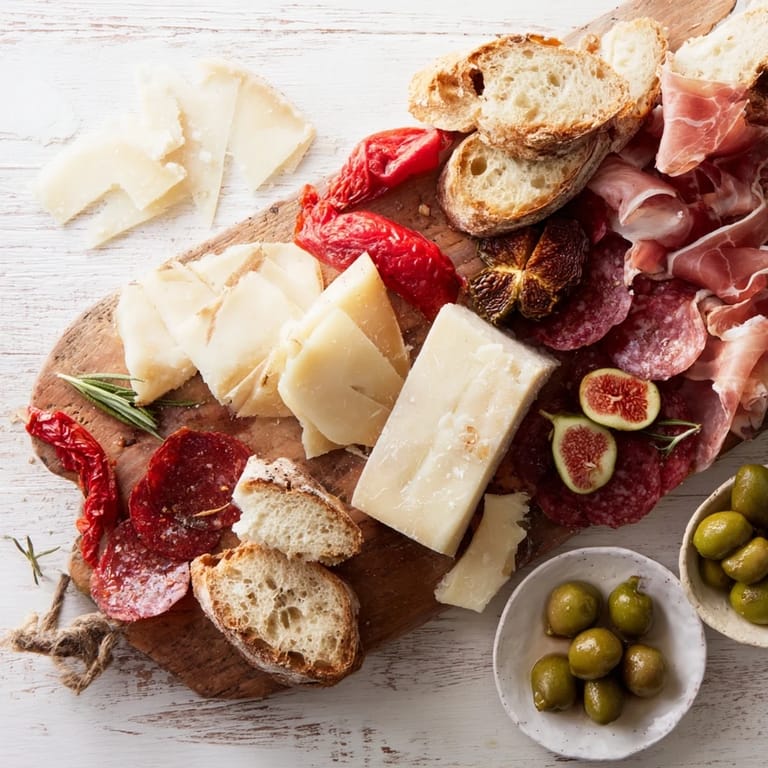
This is the beautiful thing about a farmhouse board—it's a framework, not a prison. If Gorgonzola speaks to you more than Pecorino, use it. If you find a salami at your market that makes you excited, that's the one that belongs here. I've added roasted almonds when I had them, scattered pickled red onions when I was feeling adventurous, even thrown on a few slices of fresh mozzarella in the summer when it felt right. The board adapts to you, to your market, to what you're feeling. One version is never the same twice, and that's exactly as it should be.
- Don't be afraid to use what excites you rather than what the recipe says.
- Taste as you build and adjust the balance—more salt if it needs it, more fruit if it's feeling too savory.
- Remember that good ingredients don't need much fussing; let them speak for themselves.
 Save
Save A board like this is really just an excuse to slow down and be together. Make it with love, and watch what happens.
Recipe FAQ
- → What cheeses are traditionally used in this farmhouse board?
Parmigiano-Reggiano, Pecorino Toscano, and Taleggio provide a balance of sharp, salty, and creamy textures ideal for this board.
- → How should the bread be prepared for serving?
Tear a rustic Italian loaf like ciabatta into rough, uneven pieces to complement the texture of cheeses and meats.
- → Which cured meats enhance the flavor variety?
Prosciutto di Parma, Finocchiona salami, and Coppa give layers of savory, aromatic, and slightly spicy notes.
- → What accompaniments add brightness to the platter?
Castelvetrano olives, sun-dried tomatoes, marinated artichoke hearts, and fresh grapes or figs contribute fresh and tangy contrasts.
- → How is seasoning handled in this dish?
Lightly season with coarse sea salt and cracked black pepper, finishing with a drizzle of extra-virgin olive oil for richness.