 Save
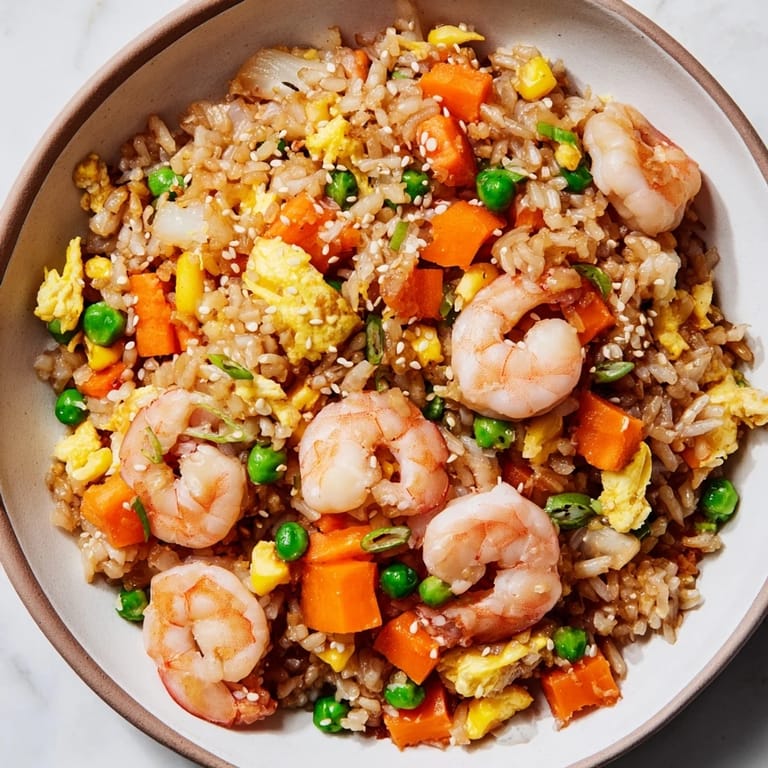
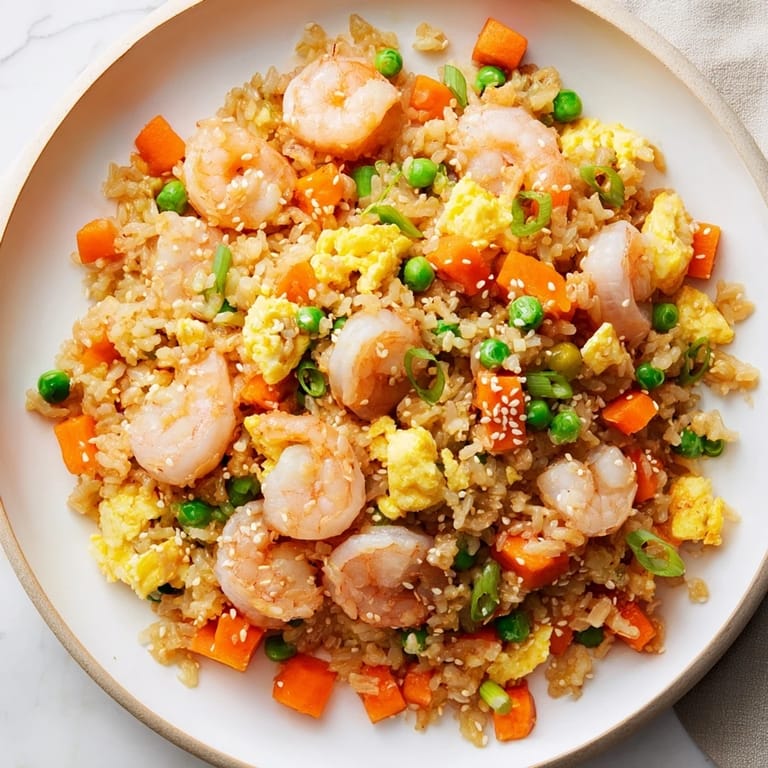
Save I discovered this shrimp fried rice hack on a random Tuesday night when I had exactly ten minutes before guests arrived and a fridge full of shrimp and yesterday's rice. The beauty of this recipe isn't just its speed, it's how it tastes like you spent an hour at the stove when really you were just moving fast and confident. That first time, the aromatic sizzle of shrimp hitting hot oil set the tone, and by the time my friends walked in, the dish was plated and steaming.
What really sold me on this recipe was making it for my sister after she mentioned being too tired to cook. Watching her eyes light up when she tasted it, then asking for seconds while scrolling through her phone like it was no big deal, that's when I knew this hack belonged in regular rotation. It became our weeknight weapon against takeout temptation.
Ingredients
- Medium shrimp, peeled and deveined (200 g): The smaller the better for quick, even cooking; frozen shrimp works great and actually defrosts as the pan heats.
- Large eggs (2): These create little pockets of richness that catch and hold the soy sauce flavor.
- Frozen mixed vegetables (100 g): No thawing needed; they add sweetness and color without extra prep work.
- Scallions (2): Slice them thin so they distribute throughout rather than clump together in one bite.
- Cooked jasmine rice, chilled (300 g): Day-old rice is non-negotiable—fresh rice turns mushy and steams instead of frying.
- Soy sauce (2 tbsp): The backbone of the whole dish; use good soy sauce and it elevates everything.
- Oyster sauce (1 tbsp, optional): Adds umami depth without making anything taste fishy if you use it sparingly.
- Sesame oil (1 tsp): A little goes a long way; it's the secret finishing touch that makes people ask what the smell is.
- Ground white pepper (1/2 tsp): Milder than black pepper and dissolves into the dish rather than showing up as specks.
- Vegetable oil (1 tbsp): High smoke point oil is essential so nothing sticks or burns at medium-high heat.
Tired of Takeout? 🥡
Get 10 meals you can make faster than delivery arrives. Seriously.
One email. No spam. Unsubscribe anytime.
Instructions
- Get Your Pan Screaming Hot:
- Pour vegetable oil into a large nonstick skillet or wok and let it heat over medium-high until the surface shimmer dances. You want it hot enough that the shrimp will sizzle the moment they hit the pan.
- Cook the Shrimp Until Just Pink:
- Add shrimp and let them cook undisturbed for about a minute so they get a light sear, then stir and cook another 1-2 minutes until they've turned opaque pink. Remove them to a plate immediately—they keep cooking in residual heat.
- Scramble the Eggs Fast:
- Crack eggs directly into the pan and stir aggressively with a spatula, breaking them into small, fluffy pieces. Push them to one side once they're just set but still slightly soft.
- Warm the Vegetables:
- Add frozen vegetables to the empty side of the pan and stir for about a minute. They thaw and heat through faster than you'd expect.
- Break Up and Fry the Rice:
- Pour in the cold rice and use your spatula to break apart any clumps, pressing them against the hot pan. Stir constantly for about 2 minutes until the rice grains separate and start to toast slightly.
- Bring Everything Together:
- Return the shrimp to the pan and drizzle with soy sauce, oyster sauce, and sesame oil. Toss everything together for 30 seconds so the seasonings coat every grain and protein.
- Finish with Freshness:
- Add the sliced scallions and give everything one final toss. Taste, adjust salt or soy sauce if needed, and serve immediately while everything is hot and fragrant.
 Save
Save The moment I realized this recipe was special was when my partner, who usually just politely eats what I make, asked me to write down exactly what I did because he wanted to cook it himself. Suddenly it wasn't just dinner, it was something he wanted to create and control, which for someone like him felt like the highest compliment possible.
Why This Works as a Weeknight Dinner
Everything about this recipe bends to the reality of being tired at 6 PM. You don't need fresh vegetables because frozen ones are already cut and cooked partway. You don't need time to let rice cool because yesterday's rice is actually better. You don't need fancy equipment or multiple pans because everything happens in one skillet, which also means less cleanup when you're done eating. The protein cooks fast, the vegetables need almost no attention, and by the time you've finished with the rice, the whole dish is ready. It's a recipe that understands modern life and works with it instead of against it.
The Secret to Restaurant Flavor at Home
People always seem surprised that this tastes like takeout because they think something that quick must be simple or incomplete. The trick is that every component gets its moment of direct heat, which builds flavor rather than just warming things up. The shrimp gets seared, the eggs scramble in high heat, the rice gets toasted, and the vegetables warm in the hot pan. Then when you add the soy, oyster, and sesame oils at the end, they're mixing with everything at peak temperature, so the flavors actually meld instead of sitting on top like a sauce. It's layered cooking in a single pan.
Customizing Without Losing the Magic
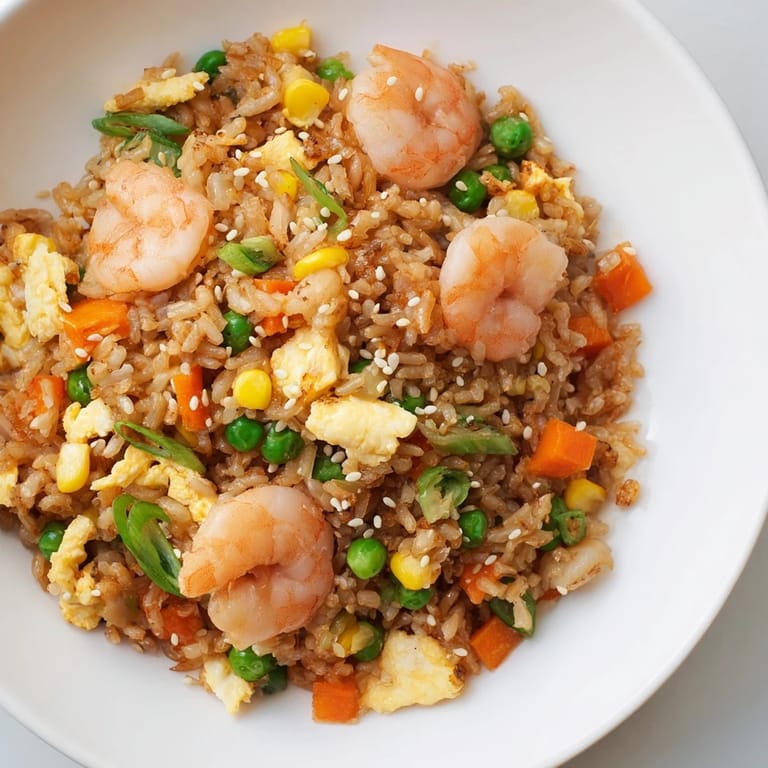
This recipe is flexible enough that you can adapt it to what's actually in your kitchen without it falling apart. I've made it with leftover rotisserie chicken when I didn't have shrimp, with soft tofu when I wanted to go vegetarian, even with just extra vegetables and eggs when I needed to stretch it into a side dish. The framework stays solid no matter what protein you swap in or which vegetables you choose. The only rule is to keep the rice cold and the heat high.
- Add a splash of chili sauce or sriracha if you want heat without it overwhelming the other flavors.
- Toss in a handful of cashews or peanuts for texture if you have them and want crunch.
- Use whatever vegetables you actually have—broccoli, mushrooms, bell peppers all work just as well as the frozen mix.
 Save
Save This has become my move when I want to feel like I've cooked something impressive without the stress. It's proof that the best recipes aren't the complicated ones—they're the ones that understand what you actually need.
Recipe FAQ
- → What type of rice works best for this dish?
Day-old cooked jasmine rice is ideal as it prevents clumping and yields a light, fluffy texture when stir-fried.
- → Can I substitute shrimp with other proteins?
Yes, chicken, tofu, or even a vegetarian option works well and adapts easily to the same cooking method.
- → Why add eggs to the stir-fry?
Scrambled eggs provide a silky richness that balances the savory sauces and adds protein to the dish.
- → How do the sauces influence the flavor?
Soy and sesame oils deliver salty and nutty notes, while oyster sauce introduces a subtle depth and umami boost.
- → What cooking tools are recommended?
A large nonstick skillet or wok ensures even heat distribution and easy stirring without sticking.