 Save
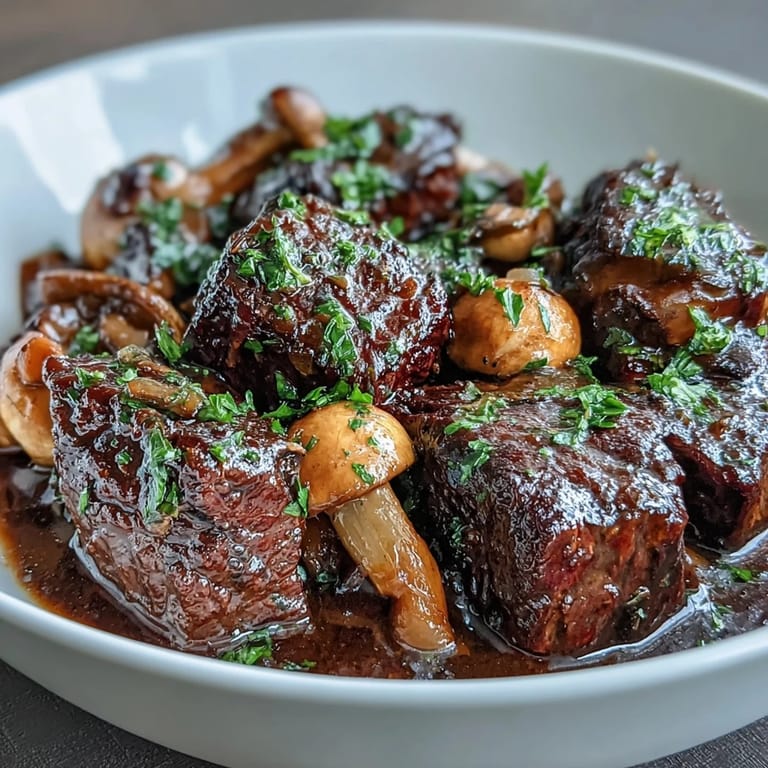
Save There's something about the smell of beef and red wine simmering in the oven that makes you feel like you've stepped into a Parisian kitchen, even if you're just in your regular Tuesday night. I discovered wild mushroom beef bourguignon quite by accident when a friend brought a bunch of chanterelles to dinner and I realized the classic French dish could be even more luxurious with a mix of earthy fungi. What started as an experiment became the dish I now make whenever I want to feel both accomplished and genuinely moved by what I'm cooking.
I made this for a dinner party once when I was trying to impress my partner's colleagues, and halfway through the braising, I realized I'd forgotten to add the pearl onions until the very end. Instead of panicking, I sautéed them separately with butter until they caramelized, and everyone at the table asked what I'd done differently—turns out that small mistake turned into the exact right move. That's when I learned that cooking isn't about following orders perfectly; it's about paying attention and trusting your instincts.
Ingredients
- Beef chuck (1.5 kg): This cut has just enough marbling to become incredibly tender when braised low and slow; resist the urge to use leaner cuts or you'll end up with tough, stringy meat.
- Wild mushrooms (250 g): Chanterelles, porcini, or cremini each bring their own earthiness; I sauté them separately so they stay distinct instead of dissolving into the sauce.
- Pearl onions (200 g): These tiny gems caramelize beautifully and add a subtle sweetness that balances the wine's tannins.
- Carrots and celery (2 medium carrots, 2 stalks): These form the flavor base and actually soften enough by the end to be worth eating.
- Yellow onion and garlic (1 large onion, 3 cloves): The aromatic foundation—don't skip mincing the garlic fine or you'll bite into harsh, raw chunks.
- Dry red wine (750 ml): Use something you'd actually drink, like a Burgundy or Pinot Noir; cheap wine makes cheap-tasting braise.
- Beef stock (500 ml): A good stock means the difference between a dish that tastes homemade and one that tastes like it came from a can.
- Tomato paste (2 tbsp): This adds acidity and depth, but a little goes a long way—too much and it tastes tomato-forward instead of wine-forward.
- Olive oil and unsalted butter (3 tbsp oil, 2 tbsp butter): The oil sears the meat, the butter enriches the pearl onion and mushroom sauté.
- Fresh thyme and bay leaves: These are non-negotiable for that classic French flavor—dried herbs won't have the same brightness.
- All-purpose flour (2 tbsp): This thickens the sauce naturally as it cooks; use gluten-free if needed and the results are just as silky.
- Smoked bacon or pancetta (100 g, optional): If you use it, let it crisp first—the smoky flavor weaves through everything and makes people ask what your secret ingredient is.
Tired of Takeout? 🥡
Get 10 meals you can make faster than delivery arrives. Seriously.
One email. No spam. Unsubscribe anytime.
Instructions
- Get your oven ready and prep the beef:
- Heat your oven to 160°C (325°F) while you pat the beef cubes completely dry with paper towels and season them generously with salt and pepper. Wet beef won't sear properly, so don't skip this step even if it feels fussy.
- Sear the beef in batches:
- Heat 1 tbsp olive oil in your Dutch oven over medium-high heat until it shimmers, then add beef cubes in a single layer without crowding. Let them sit undisturbed for a few minutes so they develop a golden crust, then turn them and repeat on all sides—you're building flavor here, not cooking them through. Work in batches so the pan stays hot and the meat sears instead of steaming, setting each finished batch aside.
- Cook the bacon, if using:
- Add your diced bacon to the empty pot and let it crisp, then remove it and set aside with the beef so it doesn't disappear into the sauce.
- Build the flavor base:
- Add 1 tbsp olive oil to the pot and sauté your chopped onion, carrots, and celery for about 5 minutes until they start to soften and the kitchen smells incredible. Add minced garlic and cook for just 1 minute more so it releases its fragrance without burning.
- Make a light roux:
- Sprinkle flour over the vegetables and stir everything together for about 2 minutes so the flour coats the vegetables and begins to cook. This thickens the braise naturally as it simmers.
- Deglaze with wine:
- Stir in tomato paste first so it caramelizes slightly, then pour in all the red wine while scraping the bottom of the pot with a wooden spoon to lift up all those browned, flavorful bits. This is called deglazing and it's the difference between a good sauce and a great one.
- Return the beef and add braising liquid:
- Add back the beef and bacon, then pour in beef stock and add your thyme sprigs and bay leaves, stirring gently. Bring everything to a simmer right on the stovetop before transferring to the oven.
- Braise low and slow:
- Cover the Dutch oven and slide it into the 160°C oven for 2 hours until the beef is so tender a fork slides through it easily. You shouldn't need to stir it, just let the gentle heat work its magic.
- Meanwhile, sauté the mushrooms:
- While the beef braises, heat 1 tbsp olive oil and 2 tbsp butter in a large skillet over medium-high heat and add your wild mushrooms in a single layer. Let them cook undisturbed for a few minutes so they develop a golden color, stirring occasionally until any liquid they release has evaporated completely. This concentrates their earthy flavor so they don't get lost in the sauce.
- Caramelize the pearl onions:
- In the same skillet (all those mushroom bits add flavor), add the pearl onions and cook them for about 8 minutes until they're golden and slightly caramelized on the edges. They'll smell sweet and buttery.
- Bring it all together:
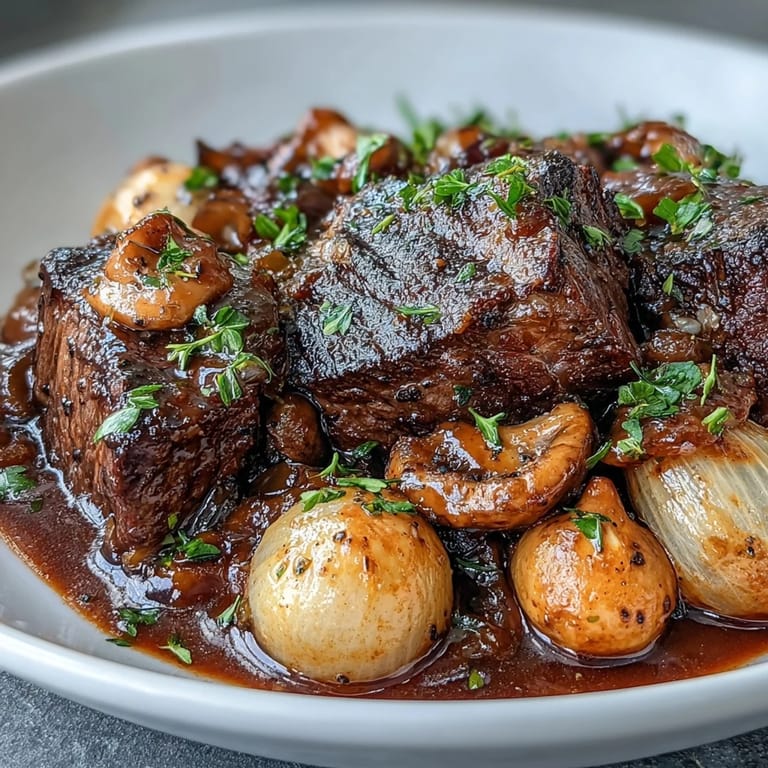
- After 2 hours, carefully add the sautéed mushrooms and pearl onions to the Dutch oven and stir gently. Leave the cover off and braise for another 30 minutes so the sauce reduces slightly and thickens into something glossy and clinging to each piece of beef.
- Finish and serve:
- Fish out and discard the bay leaves and thyme sprigs, then taste and adjust the salt and pepper—you might be surprised how much seasoning the wine and stock can handle. Serve it hot in wide bowls, finishing with a scatter of fresh chopped parsley.
 Save
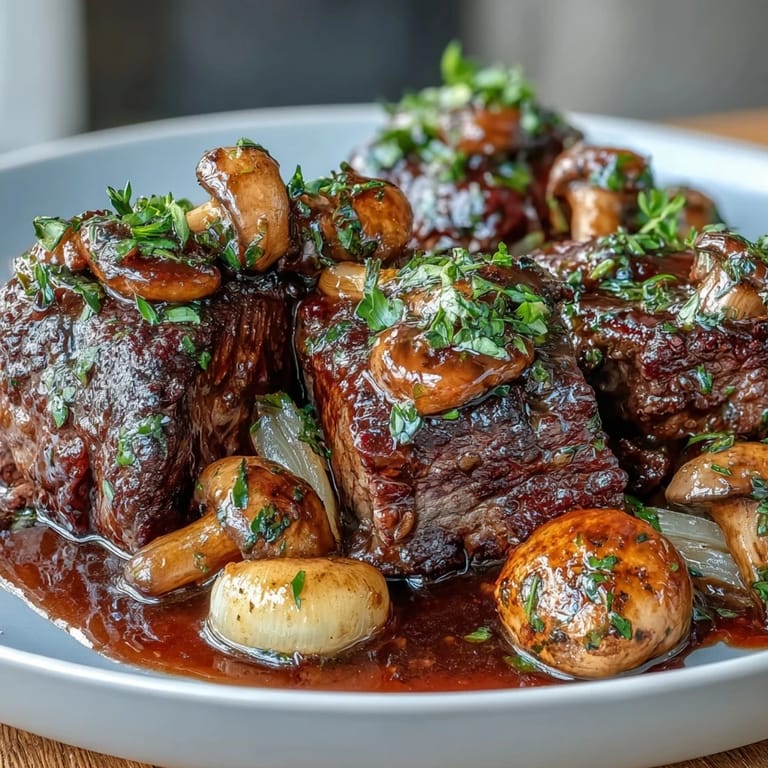
Save There was a rainy Sunday when my kitchen was full of friends who'd just dropped by, and I pulled this out of the oven right in front of them—the moment they caught that first smell and saw how the sauce clung to the beef, the whole conversation shifted. Everyone suddenly became quieter, more present, gathered around the table like we were all in on something sacred together.
What to Serve Alongside
The sauce is so rich and silky that you want something substantial to soak it up without stealing the spotlight. Creamy mashed potatoes are the traditional choice and for good reason—they're a perfect blank canvas for the wine and mushroom flavors. Buttered egg noodles work beautifully too, catching pockets of sauce with every twirl of your fork, while crusty French bread is essential for the last bits of sauce on the plate.
Making It Ahead and Storing
This dish genuinely tastes better the next day because the flavors continue to marry and deepen, so don't hesitate to make it a day or two ahead and reheat it gently. Store it in an airtight container in the fridge for up to 4 days, or freeze it for up to 3 months—just thaw it overnight in the fridge and warm it on the stovetop over low heat, stirring occasionally so nothing sticks to the bottom.
Variations and Substitutions
If wild mushrooms are hard to find or outside your budget, cremini or even button mushrooms will work, though you won't get quite the same earthy complexity. Some versions of beef bourguignon skip the mushrooms entirely, so this is genuinely your dish to make your own. You can also marinate the beef in red wine overnight before cooking if you want an even deeper wine flavor, or swap the beef for beef short ribs if you like more bone and less meat.
- Use gluten-free flour if you need to avoid gluten and the sauce will thicken just as beautifully.
- Skip the bacon entirely if you prefer, though it adds a subtle smokiness that's hard to replicate.
- Substitute dry white wine if you prefer a lighter, less tannic braise, though the flavor will be noticeably different.
 Save
Save This is the kind of dish that reminds you why you cook in the first place, and why it's worth spending an afternoon in the kitchen. Once you master it, you'll find yourself making it whenever you want to feel a little more intentional about the food on your table.
Recipe FAQ
- → What type of mushrooms work best?
Wild varieties like chanterelles, porcini, or cremini add earthiness and depth, but button mushrooms can be used as a substitute.
- → How do I ensure the beef is tender?
Slow braising at low heat for about 2 to 2.5 hours breaks down connective tissue, resulting in tender, flavorful meat.
- → Can I prepare the dish ahead of time?
Yes, marinating the beef in red wine overnight enhances flavor and leftovers taste even better the next day.
- → What sides pair well with this dish?
Creamy mashed potatoes, buttered noodles, or crusty French bread complement the rich sauce and tender beef perfectly.
- → How do I avoid the sauce becoming too thin?
Sautéing mushrooms and pearl onions separately before adding them back helps thicken the sauce; also, allowing it to braise uncovered for the final 30 minutes concentrates flavors.