 Save
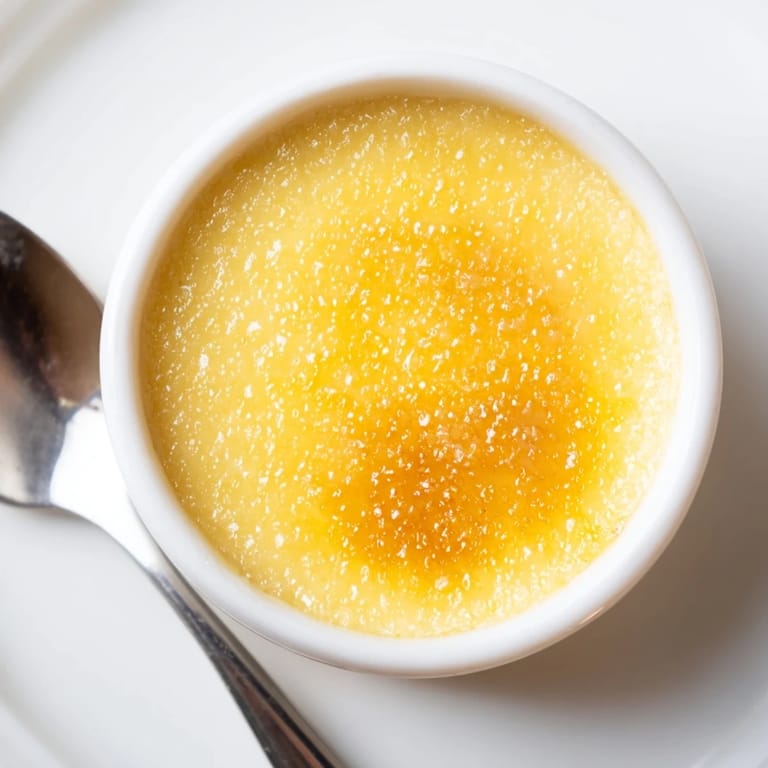
Save There's a moment in every baker's life when they realize that elegance doesn't require complexity. Mine came on a quiet Sunday afternoon when I decided to stop overthinking desserts and just make crème brûlée. Three ingredients seemed almost foolishly simple, yet when I cracked through that caramelized sugar shell and the spoon sank into the silky custard beneath, I understood why this French classic has endured for centuries. It was the sound of that crack, actually—the way the sugar gave way like thin ice—that made me realize this dessert wasn't about impressing anyone with a long ingredient list. It was about mastering restraint.
I made this for my sister's birthday once, and she was convinced I'd spent hours in the kitchen. When I told her it was just three ingredients, she didn't believe me until I showed her my messy bowl and saucepan as proof. The real work wasn't in the complexity—it was in watching the custard set just enough in the oven, in that anxious moment when you're never quite sure if it's done. She still asks me to make it every time we celebrate something, and I've never once gotten tired of it.
Ingredients
- Heavy cream (2 cups): This is the soul of the custard—use the best quality you can find, because there's nowhere for it to hide. Cold cream whisks better and gives you more control when tempering the eggs.
- Egg yolks (4 large): Room temperature eggs mix more smoothly with the cream and create a custard that's impossibly silky. Save those whites for scrambled eggs the next morning.
- Granulated sugar (1/2 cup plus 4 tablespoons for topping): Fine white sugar dissolves cleanly into the custard without graininess, and it caramelizes evenly on top. Don't use superfine—it behaves differently and you won't get that satisfying crack.
Tired of Takeout? 🥡
Get 10 meals you can make faster than delivery arrives. Seriously.
One email. No spam. Unsubscribe anytime.
Instructions
- Warm the cream gently:
- Heat your cream in a saucepan over medium heat until you see it just begin to steam around the edges—you'll notice tiny bubbles forming at the bottom, but it shouldn't boil. This takes about 5 minutes and the smell will shift from raw dairy to something richer.
- Whisk eggs and sugar until pale:
- In a separate bowl, whisk your egg yolks with the 1/2 cup sugar until the mixture lightens in color and becomes slightly thickened, about 3 minutes. You want it pale yellow and airy—this step prevents the eggs from scrambling when the hot cream hits them.
- Temper the eggs slowly:
- This is where patience matters. Pour the warm cream into the egg mixture in a thin stream, whisking constantly to distribute the heat evenly. If you pour too fast, you'll end up with scrambled eggs instead of custard.
- Strain for silk:
- Push the mixture through a fine sieve into a large measuring cup or bowl, using the back of a spoon to press everything through. This removes any egg particles that might have cooked and gives you that restaurant-perfect silky texture.
- Divide and water bath:
- Pour the strained custard evenly among four ramekins, then set them in a deep baking dish. Pour hot water around the ramekins until it comes halfway up their sides—this gentle, moist heat ensures the custards cook evenly without cracking on top.
- Bake with confidence:
- Bake at 325°F for 30 to 35 minutes. You're looking for custards that are set around the edges but still slightly wobbly in the very center when you gently shake the ramekin—that small jiggle means they'll be creamy inside. Overbaking makes them rubbery and grainy.
- Chill thoroughly:
- Let the ramekins cool to room temperature, then refrigerate for at least an hour (or up to two days). This resting time lets the custard firm up properly and flavors deepen.
- Caramelize the topping:
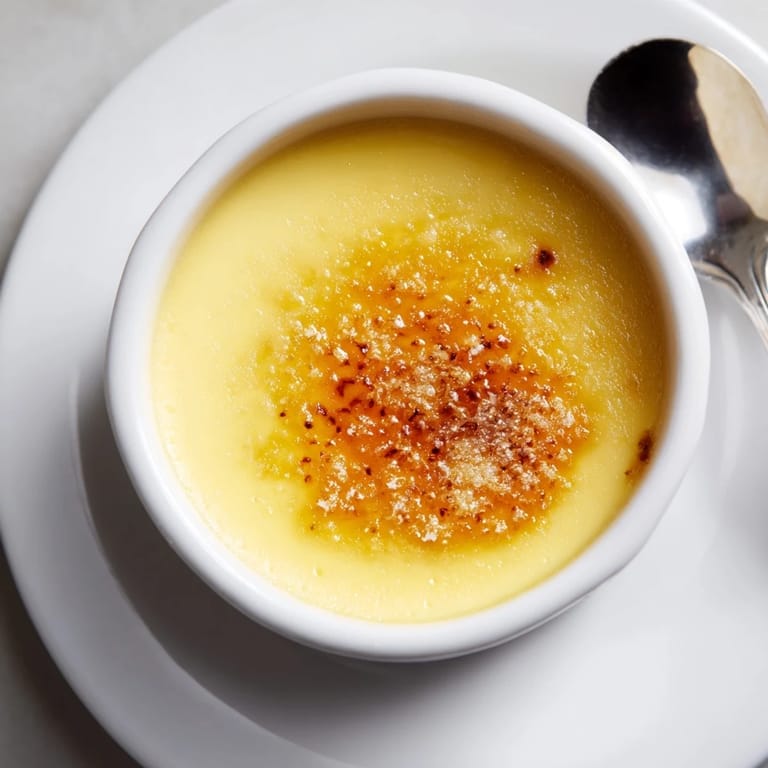
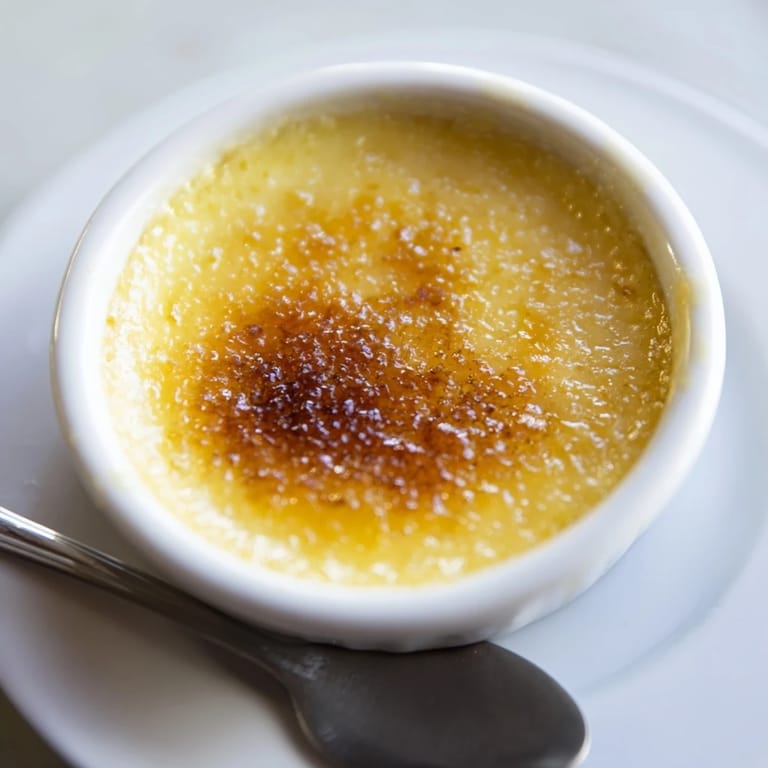
- Just before serving, sprinkle 1 tablespoon of sugar evenly over each custard and use a kitchen torch to caramelize it until it's a deep amber brown. Hold the torch a few inches above the sugar and move it in steady circles—you want crackling bubbles and a crisp shell, not black burnt bits.
 Save
Save There's something almost meditative about standing in front of a ramekin with a lit torch, watching sugar transform from crystalline to liquid amber in real time. It's the moment the dessert becomes theater, and your guests lean in to watch. I've made this enough times to know that moment—when someone's eyes light up at that first crack of the shell—is worth every careful step.
Why This French Classic Never Gets Old
Crème brûlée has been around since the 17th century for good reason: it's the perfect balance of technique and simplicity. You're not fighting with complicated flavors or layers of components—you're just nailing the fundamentals. The contrast between the crispy sugar and the cool, silky custard is pure sensory pleasure, and it never stops feeling special, even on your tenth batch. People think French cooking has to be complicated, but this proves that the opposite is true.
Flavor Variations Worth Trying
Once you've nailed the basic recipe, you can gently infuse the cream with flavors that feel effortless. Split a vanilla bean lengthwise and scrape the tiny seeds into the cream before heating, or add a strip of lemon zest and let it steep as the cream warms, then fish it out before mixing with the eggs. I've experimented with everything from lavender to cardamom, and the magic is that you're not adding extra ingredients—you're just coaxing flavor out of what's already there. A sprig of fresh mint or a few raspberries on the side also dress up the final plate without changing the custard itself.
Serving and Storage Wisdom
These ramekins hold beautifully in the refrigerator for up to two days, which means you can make them the day before a dinner party and finish the caramelizing just before guests arrive. That way, the sugar is fresh and snappy, and you're not stressed in the kitchen at the last minute. Serve them straight from the fridge—the cold custard and warm sugar create the best temperature contrast. A simple garnish of fresh berries or a delicate mint leaf makes the plate look refined without stealing focus from the dessert itself.
- Make the custards ahead, but caramelize the sugar topping no more than 15 minutes before serving so the sugar stays crisp.
- If you're serving a crowd, you can assemble and bake multiple batches—just stagger them so they're all cool and ready at the same time.
- Leftovers without the caramelized topping keep well, and you can always torch a fresh layer of sugar on top the next day.
 Save
Save Crème brûlée has taught me that the most elegant dishes often come from restraint, not indulgence. It's a dessert that proves you don't need a long list of ingredients to create something truly memorable. Make it once, and you'll understand why.
Recipe FAQ
- → What makes the custard smooth and creamy?
Slowly combining warm cream with whisked egg yolks and sugar, then baking in a water bath, ensures a silky, smooth texture by preventing curdling and uneven cooking.
- → How do I achieve a perfectly caramelized sugar crust?
Sprinkle an even layer of sugar on chilled custard, then use a kitchen torch or broiler to melt and caramelize it until golden and crisp, avoiding burning by moving the heat source evenly.
- → Can I add flavor variations to the custard?
Yes, infusing the cream with vanilla bean or adding citrus zest before mixing enhances the custard’s aroma and depth without altering its smooth consistency.
- → Why is the custard baked in a water bath?
Baking in a water bath moderates heat, ensuring the custard cooks evenly and gently, resulting in a tender set without cracks or overcooked edges.
- → How long should the custard chill before caramelizing sugar?
Chilling the custard for at least one hour firms it properly, providing a stable base for the caramelized sugar topping to form a crisp crust.