 Save
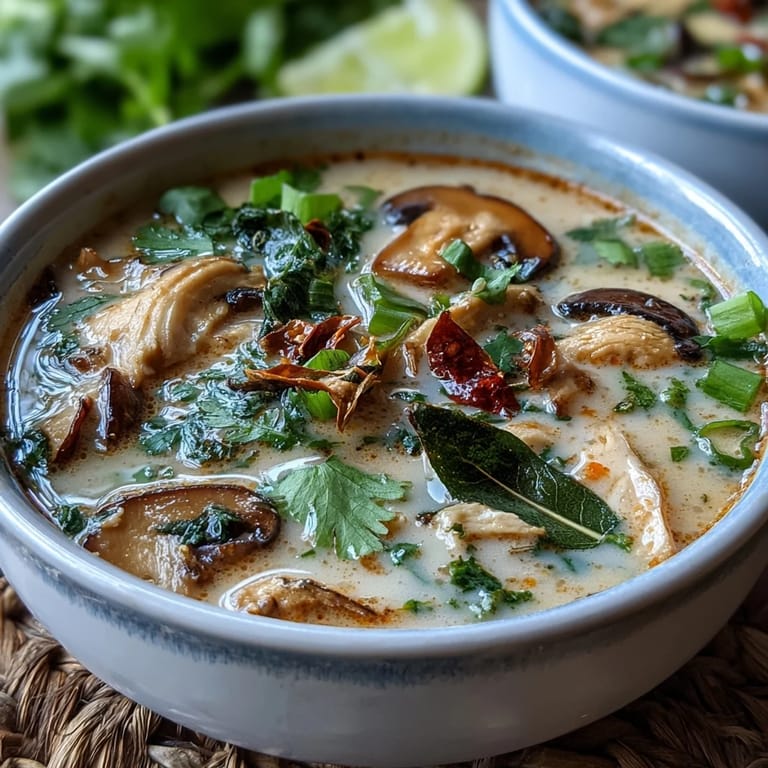
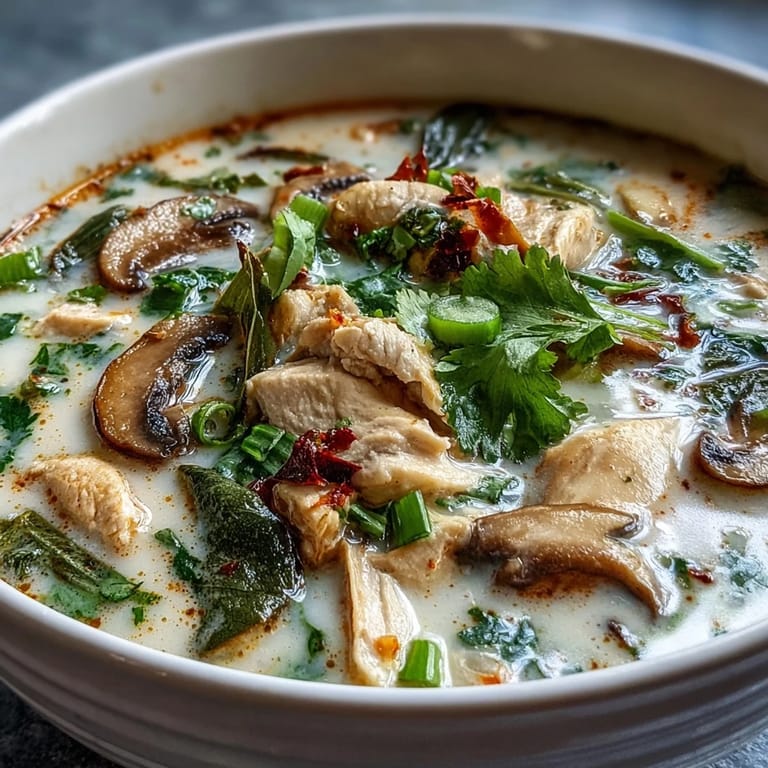
Save My first bowl of Tom Kha Gai arrived on a humid Bangkok evening, steam rising from a ceramic spoon, and I remember thinking how something so simple—just broth, coconut, chicken—could taste so impossibly complete. Years later, I attempted to recreate it in my own kitchen, and that first sip transported me right back, though I've since learned that the magic isn't in complexity but in patience with the aromatics. This soup has become my answer to almost everything: a sick day, a dinner party with minimal fuss, or simply when I want to taste Thailand without leaving home. What drew me in then still holds true now—it's the way the coconut milk rounds out the sharp brightness of lime and lemongrass, creating this perfect balance that feels both exotic and oddly familiar.
I made this for a friend who was skeptical about Thai food, convinced it would be too spicy or too strange. She took one cautious spoonful and immediately asked for seconds, then spent the next week messaging me photos of her attempts to recreate it. That's when I realized Tom Kha Gai isn't just a soup—it's a conversation starter, a bridge between what people think they like and what they actually love once they taste it.
Ingredients
- Chicken broth: Use good quality broth here because it's your foundation—I learned this after a batch tasted oddly hollow, and swapping to homemade broth changed everything.
- Lemongrass: Smash it hard with the side of your knife to release those fragrant oils; the smell alone tells you something special is about to happen.
- Galangal: It's different from ginger—more floral, slightly pine-like—and worth hunting down at an Asian market rather than settling for a substitute.
- Makrut lime leaves: Tear them gently with your hands so they release their oils into the broth without turning bitter.
- Thai bird's eye chilies: Lightly crush them rather than slicing; this way you control the heat and can fish them out if things get too spicy.
- Chicken thighs: Thighs stay tender and forgiving, unlike breasts which can turn stringy if you're not watching constantly.
- Coconut milk: Full-fat and unsweetened is non-negotiable; the light versions taste like they're apologizing for existing.
- Mushrooms: Straw mushrooms are traditional and delicate, but cremini works beautifully if that's what you have.
- Shallots: Their sweetness softens the sharp notes of the lime and balances the savory fish sauce.
- Fish sauce: It smells funky in the bottle, I know, but trust it—it disappears into the soup and adds a savory depth that's impossible to fake.
- Lime juice: Fresh lime is essential; bottled tastes tired and flat by comparison.
- Palm sugar: Just a touch to round out the flavors, though brown sugar works if you can't find it.
- Cilantro and green onions: Don't skip the garnish—they add freshness and prevent the soup from feeling heavy.
Tired of Takeout? 🥡
Get 10 meals you can make faster than delivery arrives. Seriously.
One email. No spam. Unsubscribe anytime.
Instructions
- Build Your Aromatic Base:
- Pour the broth into your pot and bring it to a gentle simmer—you want bubbles breaking lazily at the surface, not a rolling boil. Add the smashed lemongrass, galangal slices, torn lime leaves, and crushed chilies, then let them steep for 5 to 7 minutes until the broth turns golden and smells intoxicating.
- Cook the Chicken Through:
- Add your sliced chicken and the shallot to the simmering broth and cook for 3 to 4 minutes until the chicken loses its rawness and turns pale. You're not looking for golden color here, just opaque and cooked through.
- Marry the Coconut Milk:
- Pour in the coconut milk and stir gently to combine, then bring everything back to a simmer. This is important—never let it boil hard or the coconut milk can break and turn grainy instead of silky.
- Add the Mushrooms:
- Slip in the mushrooms now and let them cook for 2 to 3 minutes until they soften slightly and absorb some of the broth. Their delicate texture contrasts beautifully with the richness of the coconut.
- Balance the Flavors:
- Season with fish sauce, a touch of palm sugar, and fresh lime juice. Taste as you go and keep adjusting—you want salty, sour, and sweet in a conversation with each other, each one noticeable but none overwhelming.
- Finish and Serve:
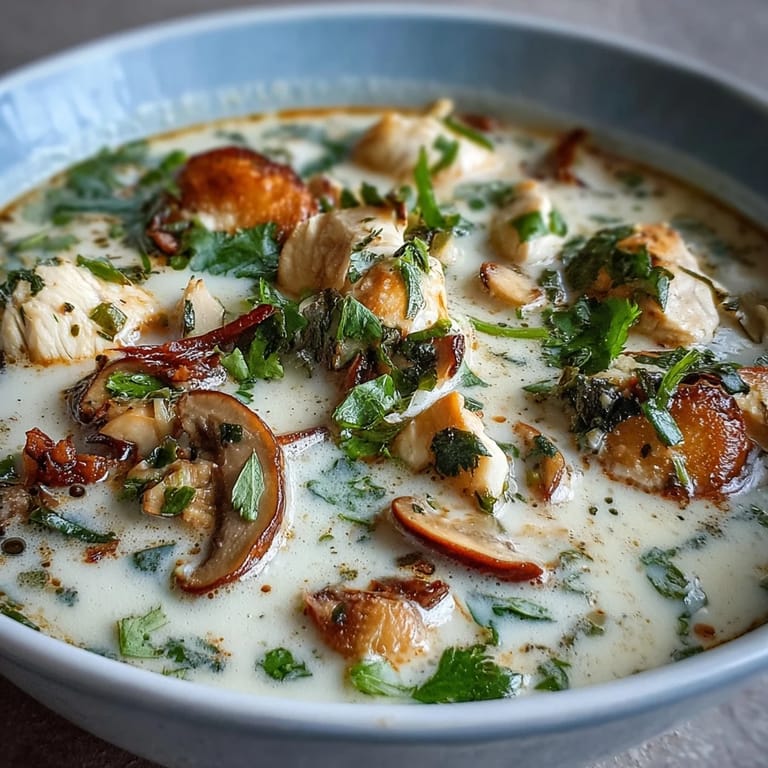
- Remove the pot from heat and fish out the larger aromatics (lemongrass stalks, galangal slices, and lime leaves) if you prefer, though some people leave them in for continued flavor. Ladle into bowls and top with fresh cilantro, green onions, and serve alongside lime wedges so people can adjust the tartness to their taste.
 Save
Save There's a moment in every batch where the kitchen fills with this warm, complex aroma that somehow feels both foreign and comforting, and that's when I know the soup is going to be good. It reminds me why I cook—not for Instagram or accolades, but for that simple pleasure of transforming separate ingredients into something that tastes like care.
The Aromatics Matter Most
This soup lives or dies by its aromatics, and I learned this through trial and error—mostly error. My first attempts skipped the initial infusion step and went straight for adding everything at once, resulting in a soup that tasted decent but somehow flat. Once I learned to let the lemongrass, galangal, and lime leaves steep in the broth before adding anything else, the whole experience shifted. The broth becomes fragrant and golden, and it sets the tone for everything that follows. It's a small shift in technique but makes a noticeable difference in the final taste.
Why Coconut Milk Needs Respect
Coconut milk is temperamental but in a predictable way once you understand what bothers it. High heat causes it to separate and become grainy, which is why I always return to a gentle simmer after adding it. The full-fat version is essential here because light coconut milk tastes watered-down and misses the entire point of the dish. I also learned that stirring gently rather than vigorously keeps everything integrated and smooth, which might sound like a small detail but changes the mouthfeel entirely.
Seasoning Is Personal
Thai food is about balance, and Tom Kha Gai is no exception—it should taste salty, sour, and slightly sweet all at once. The first time I made this, I added all the fish sauce at once and ended up with something that tasted like the ocean. Now I layer the seasoning gradually, tasting as I go and adjusting based on what the broth is telling me. Some broths need more lime, others need less fish sauce, and that's perfectly fine.
- Start with half the fish sauce and lime juice, then taste and adjust—it's easier to add than to remove.
- Remember that palm sugar should be subtle, just enough to round the sharp edges, not to make the soup sweet.
- Save a wedge of lime for each bowl so people can brighten their own soup to their preference.
 Save
Save This soup tastes like comfort wrapped in authenticity, and it's become my go-to when I want to remind myself—or someone else—that good food doesn't require complicated techniques or impossible-to-find ingredients. It just requires intention and a willingness to taste as you cook.
Recipe FAQ
- → What makes Tom Kha Gai different from other Thai soups?
Tom Kha Gai stands apart for its rich coconut milk base, unlike the clear broth of Tom Yum. The creamy texture balances perfectly with tangy lime and aromatic herbs like galangal and lemongrass, creating a uniquely comforting yet vibrant soup.
- → Can I substitute galangal with ginger?
While ginger works as a substitute, galangal has a distinct piney, citrusy flavor that's essential to authentic taste. If using ginger, reduce the amount slightly as it's more pungent. Look for frozen galangal at Asian markets for the best results.
- → How do I prevent the coconut milk from separating?
Keep the heat at a gentle simmer rather than a rolling boil. Stir occasionally and avoid overheating once the coconut milk is added. If separation occurs, simply whisk gently before serving—the flavor remains unchanged.
- → What's the best way to adjust the spice level?
Start with fewer chilies and add more gradually. Removing the seeds reduces heat significantly. For a milder version, slit the chilies instead of crushing them, allowing flavor infusion without excessive spice. Always taste and adjust before serving.
- → Can I make this vegetarian?
Absolutely. Replace chicken broth with vegetable broth and use firm tofu cubes instead of chicken. Substitute fish sauce with soy sauce or a vegetarian fish sauce alternative. The aromatic base remains the same, delivering that signature Thai flavor profile.
- → How should I store and reheat leftovers?
Store in an airtight container for up to 3 days. The flavors often develop and improve overnight. Reheat gently over low heat, stirring occasionally. Avoid boiling to prevent coconut milk separation. Add fresh garnishes before serving for the best presentation.