 Save
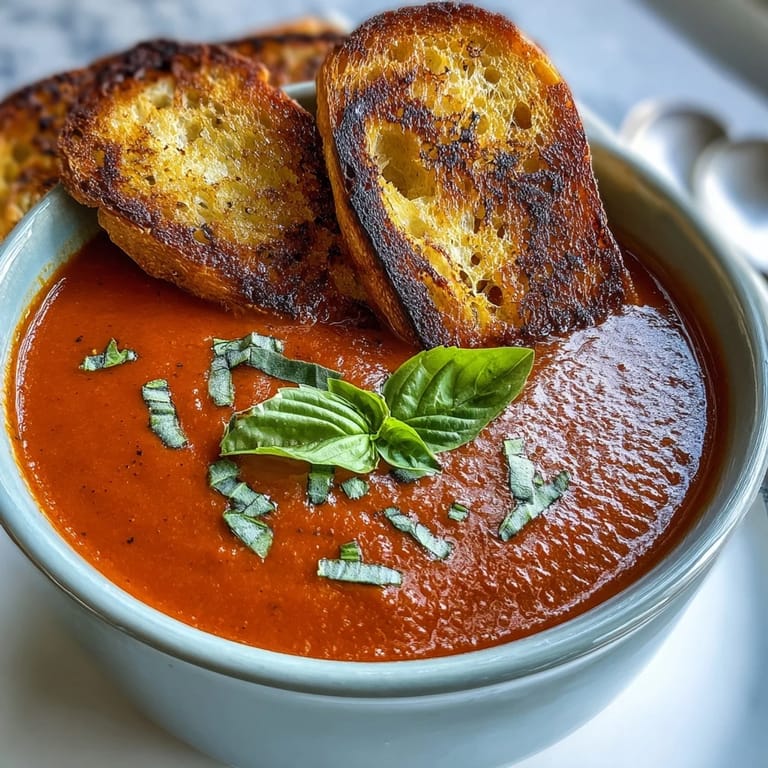
Save There's something about a bowl of tomato soup that stops time. My neighbor knocked on my door one October afternoon with a bundle of basil from her garden, still damp with morning dew, and insisted I had to make something with it that day. I'd never paid much attention to fresh basil before, but watching it wilt slightly as she handed it over, smelling its peppery sweetness, I knew I had to do something special. This soup came together almost by accident, but the way the cream swirled into the vibrant red, how the basil turned the whole thing into something almost jewel-like—it felt like I'd discovered something I didn't know I was missing.
I made this for my sister during her first week at a new job, back when she was too tired to think about cooking. She sat at my kitchen counter and ate two bowls while telling me about her office, and by the second bowl, she was actually smiling. That's when I knew this recipe wasn't just about feeding someone—it was about giving them permission to slow down.
Ingredients
- Olive oil: Two tablespoons is enough to build a flavor base without making the soup heavy or slick on your tongue.
- Medium yellow onion, chopped: Don't rush this—let it get properly soft and translucent, almost caramelizing at the edges, because that sweetness balances the tomato's acidity.
- Garlic cloves, minced: Three cloves is my sweet spot; more and it starts tasting like you're making something medicinal instead of comforting.
- Crushed tomatoes, one 28-ounce can: Canned tomatoes are actually better than fresh here because they're picked at peak ripeness and the acidity is already balanced.
- Vegetable broth: Two cups dilutes the tomato intensity without watering things down, and it keeps the soup from feeling too heavy.
- Tomato paste: A tablespoon deepens the tomato flavor without adding more liquid, like you've concentrated all that summer brightness into a spoon.
- Sugar and salt: One teaspoon sugar cuts the acidic edge that sometimes lingers; adjust salt at the very end because basil and cream change how salty everything tastes.
- Freshly ground black pepper: Half a teaspoon gives you a whisper of bite, but grind it fresh or it tastes like dust.
- Heavy cream: Half a cup makes the soup luxurious without turning it into a cream soup masquerading as tomato soup.
- Fresh basil leaves, chopped: This matters more than you think—if you can't find fresh, don't use dried; just let the tomato shine and add basil next time.
- Sourdough loaf, sliced thick: Thick slices don't fall apart when you dunk them; thin slices are just an appetizer.
- Unsalted butter, softened: Soft butter spreads easy and toasts evenly, making the bread golden instead of burnt and greasy.
- Garlic clove, halved: Rubbing warm bread with fresh garlic is like giving it a little whisper of flavor.
Tired of Takeout? 🥡
Get 10 meals you can make faster than delivery arrives. Seriously.
One email. No spam. Unsubscribe anytime.
Instructions
- Build your flavor base with onion and garlic:
- Heat olive oil in a large pot over medium heat and add your chopped onion. Let it cook for five minutes, stirring occasionally, until the pieces turn soft and mostly translucent with golden edges. Add your minced garlic and cook for just one minute—you're not looking for color, just the moment when your whole kitchen suddenly smells like you're making something worth the effort.
- Add the tomatoes and broth:
- Stir in your crushed tomatoes, vegetable broth, tomato paste, sugar, salt, and pepper all at once. The mixture will look chunky and unappealing for a moment, but that's exactly where it should be right now. Bring everything to a simmer, which usually takes about five to seven minutes.
- Let it simmer and meld:
- Reduce your heat so the soup bubbles gently and cook for twenty minutes, stirring every few minutes so nothing sticks to the bottom. The soup will smell increasingly concentrated and rich, almost like you're cooking with restaurant-quality tomato sauce instead of opening a can.
- Finish with cream and basil:
- Remove the pot from heat and stir in your heavy cream and fresh chopped basil, letting the residual heat gently warm the cream without cooking it. The basil will release its oils into the creamy-red soup, turning everything a shade of coral that almost looks too pretty to eat.
- Blend until silky:
- Use an immersion blender to blend the soup directly in the pot, moving it around slowly until everything is smooth and velvety. If you're using a countertop blender, work in batches and be careful with the hot liquid; let it cool slightly first and always remove the center cap from the lid so steam can escape.
- Taste and adjust:
- This is crucial—taste the soup before serving and adjust salt and pepper as needed. What tasted balanced at the stove might need a tiny pinch more salt now that the cream has softened everything.
- Toast the sourdough:
- Preheat a skillet or griddle over medium heat while your soup finishes. Spread softened butter on both sides of each thick sourdough slice, spreading it thin enough that it melts but thick enough that you get that golden, crispy crust.
- Grill until golden:
- Place the buttered slices on the hot skillet and cook for two to three minutes per side, listening for the gentle sizzle and watching for the bread to turn a deep golden brown. The butter should smell nutty and the bread should feel crispy on the outside when you press it lightly.
- Garlic finish and cutting:
- While the bread is still warm, rub each slice lightly on both sides with the cut side of your garlic clove—you're not trying to make it taste like garlic, just adding a whisper. Cut the bread into strips or chunks for dipping.
- Serve with intention:
- Ladle hot soup into bowls, garnish with extra fresh basil leaves, and place a handful of warm sourdough dippers on the side or balanced across the top.
 Save
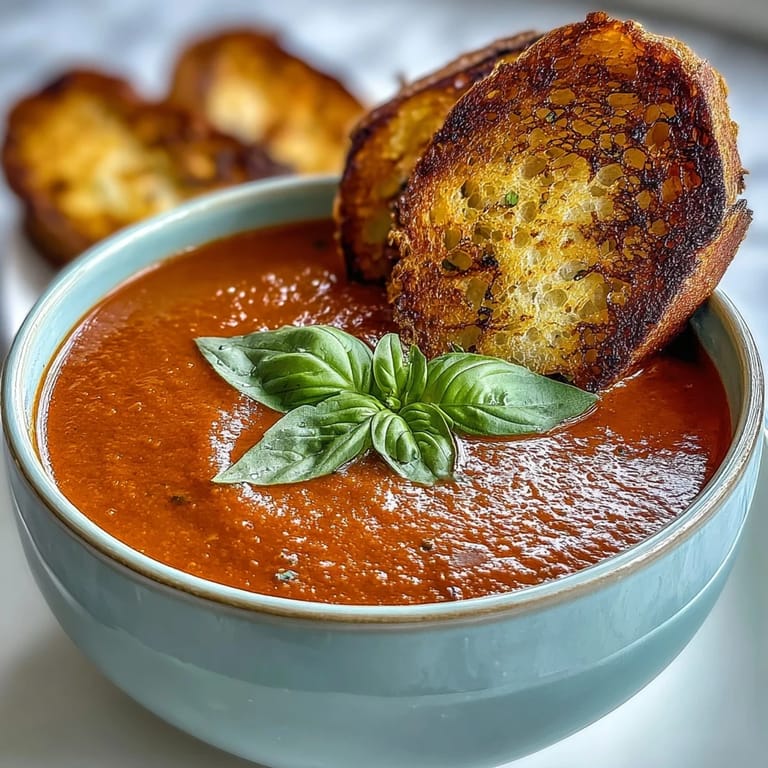
Save My mom came to visit last winter and sat in my kitchen while I made this, and halfway through the second bowl she got quiet. Not sad quiet, but the kind of quiet where someone realizes they're exactly where they need to be. That's the power of a good bowl of soup—it's not just dinner, it's permission to rest.
The Magic of Canned Tomatoes
I spent years dismissing canned tomatoes, convinced that real cooking meant fresh tomatoes in season. Then one January I realized that summer tomatoes canned at their peak are actually better for soup than the mealy, flavorless fresh ones shipped halfway around the world. The acidity is balanced, the sweetness is concentrated, and there's no bitter taste lurking at the edges like there sometimes is with fresh. It's a small shift in thinking, but it freed me from the pressure of timing and seasons.
Basil as the Final Flourish
I learned the hard way that basil has a personality. Cook it too long and it turns dark and loses that bright, almost peppery thing that makes it worth adding. Stir it in at the very end, off the heat, and it stays vibrant and present. It's like the difference between a whisper and a shout, and soup needs a whisper. Fresh basil is non-negotiable here; dried basil tastes like something between grass clippings and a kitchen cabinet.
Why the Dippers Matter
Sourdough dippers aren't just a side—they're part of the whole experience. The tangy flavor of sourdough plays against the sweetness of the soup, and the ritual of dunking, of watching the bread soften as you draw it through the bowl, is what makes you slow down and actually taste what you're eating. Buttered and toasted, they add a textural contrast that makes each spoonful more interesting. This is soup that wants to be eaten with your hands, with a little mess, with contentment.
- Thick slices of sourdough stay sturdy enough to dunk without disintegrating halfway through.
- Toasting the bread right before serving keeps it crispy on the outside even as it softens in the soup.
- A light rub of fresh garlic on warm bread is all you need—restraint is everything here.
 Save
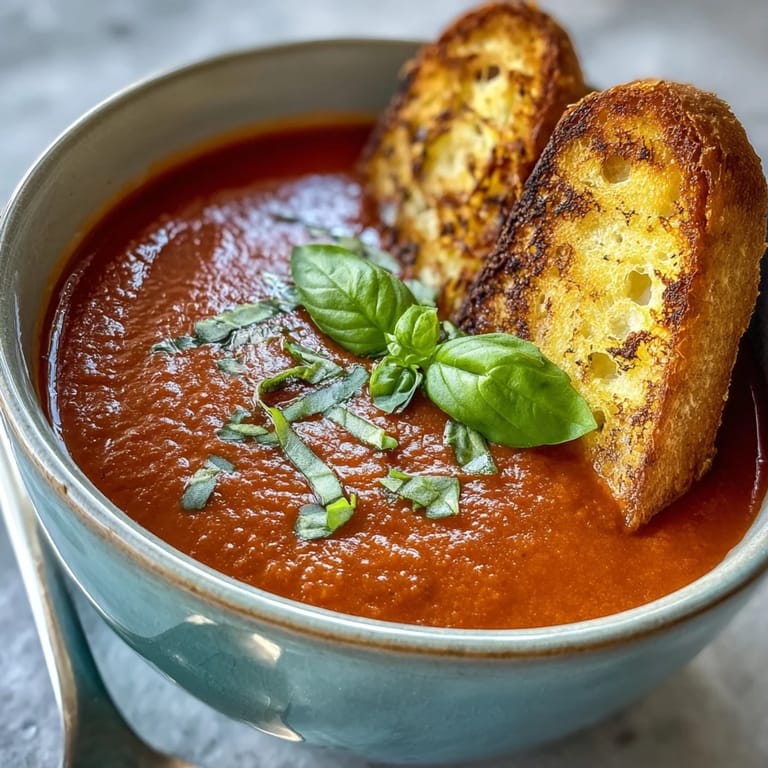
Save There's quiet comfort in a bowl of soup, especially when the kitchen is warm and the light is starting to fade. This one never fails to slow things down exactly when they need slowing.
Recipe FAQ
- → How can I make the soup vegan?
Replace the heavy cream with coconut or cashew cream and use plant-based butter for the sourdough dippers.
- → What is the best way to enhance the soup’s flavor?
Sautéing the onion and garlic until translucent and fragrant before adding liquids helps deepen the soup’s flavor.
- → Can I use a regular blender instead of an immersion blender?
Yes, blend the soup in batches carefully to achieve a smooth, creamy texture.
- → How do I make the sourdough dippers crispy?
Butter both sides of sourdough slices and grill them on medium heat until golden brown, then rub with garlic while warm.
- → What wine pairs well with this dish?
A crisp Sauvignon Blanc or a light Pinot Noir complements the soup’s bright and creamy flavors perfectly.