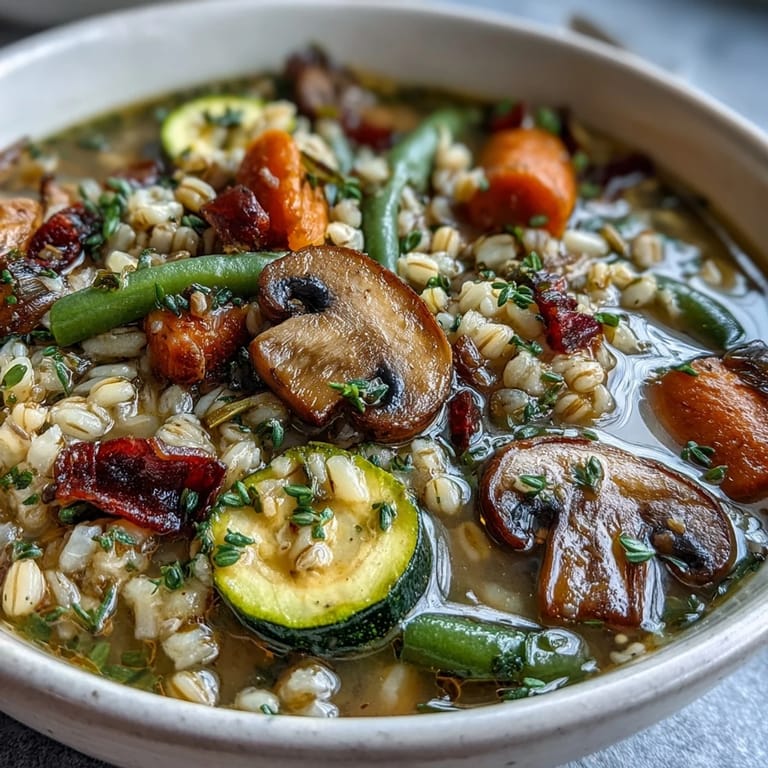
 Save
Save There's something about a pot of vegetable barley soup that makes a kitchen feel instantly warmer, even on the coldest days. My neighbor once stopped by mid-afternoon and the aroma alone pulled her inside, curious and hungry. We ended up cooking it together that day, laughing over how much chopping goes into something so deceptively simple. She's made it at least a dozen times since, and now it's become her go-to when friends need comfort food. That's when I knew this soup was special.
I made this soup for my sister during her first autumn in a new apartment, when she was still figuring out how to make a place feel like home. We chopped vegetables at her tiny kitchen counter, and by the time the pot was simmering, her whole apartment smelled like a proper home should. She ate bowls of it all week, told me it helped her settle in somehow. Food does that sometimes—it's not just nourishment, it's comfort in a way words can't quite capture.
Ingredients
- Pearl barley: Rinse it first to remove excess starch, and don't skip this step—it keeps the broth clear and the texture perfect instead of gummy.
- Olive oil: Use a good quality one because it's the foundation of your flavor base; cheap oil won't carry the aromatics the same way.
- Yellow onion, carrots, and celery: This is your holy trinity, the flavor backbone that makes everything else sing together.
- Garlic: Mince it fresh rather than using jarred; the difference in aroma and taste is immediate and worth the extra minute.
- Cremini or white mushrooms: They release their earthy moisture into the broth, adding umami depth that makes the whole soup taste more developed.
- Potato: It will soften and thicken the broth naturally, no cream needed, creating a silky texture that coats your spoon.
- Zucchini: Add it fresh in step 3 so it stays slightly firm; overcooking turns it to mush and it disappears into nothing.
- Canned diced tomatoes: They add brightness and prevent the soup from tasting too one-note and heavy.
- Green beans: Cut them to 1-inch pieces so they cook evenly and stay crisp-tender rather than becoming stringy.
- Vegetable broth: This is where you can really taste the difference between a thin broth and a quality one, so choose carefully.
- Thyme and oregano: These dried herbs are gentle enough that they won't overpower, they just whisper in the background where they belong.
- Bay leaf: It adds subtle complexity but remove it before serving—biting into one is an unpleasant surprise I learned the hard way.
- Salt and pepper: Taste at the end because the broth varies in saltiness; it's the only way to get it just right for your palate.
- Fresh parsley: Chop it just before serving so it stays bright green and adds a final fresh note that makes people notice.
Tired of Takeout? 🥡
Get 10 meals you can make faster than delivery arrives. Seriously.
One email. No spam. Unsubscribe anytime.
Instructions
- Build your flavor foundation:
- Heat the olive oil in a large soup pot over medium heat, then add the diced onion, carrots, and celery. Let them sauté for 5 minutes, stirring occasionally, until the onions turn translucent and the kitchen fills with that unmistakable savory aroma. You'll know it's ready when the vegetables have softened and the flavors are starting to meld together.
- Invite in the mushrooms:
- Stir in the minced garlic and sliced mushrooms, cooking for another 5 minutes while they release their moisture and shrink down. You'll watch them go from fresh and firm to tender and darker, which means they're giving all their earthy flavor to the pot.
- Layer in the vegetables:
- Add the diced potato, zucchini, green beans, and canned tomatoes with their juice, stirring everything together so nothing sticks to the bottom. This is where the soup starts to look like it actually is a soup, with all those colors and textures appearing.
- Pour in the soul of the soup:
- Add the vegetable broth and the rinsed pearl barley, then scatter in the thyme, oregano, bay leaf, salt, and pepper. Stir well to distribute everything evenly, and take a moment to breathe in how the herbs transform the whole pot's aroma.
- Let it simmer into tenderness:
- Bring the soup to a boil, then reduce the heat to low and cover the pot. Simmer for 40 to 45 minutes, stirring occasionally, until the barley is tender and the vegetables are soft but not falling apart. This is the patience part, where you're rewarded for waiting with deeply developed flavors.
- Taste and adjust:
- Remove the bay leaf, then taste the soup and adjust the salt and pepper to your preference. Every vegetable broth is different in saltiness, so trust your own taste buds here.
- Serve with warmth:
- Ladle the soup into bowls and top each one with a scattered pinch of fresh chopped parsley. The green brings color and a final fresh brightness that reminds you there's nature in this warming bowl.
 Save
Save This soup taught me that the most memorable meals don't need to be complicated—they just need to be made with attention. My dad, who's not usually one for vegetables, had three bowls one evening and asked for the recipe, which I never thought I'd see happen. That's when I realized this soup has a quiet power to change minds.
Why Barley Matters
Pearl barley is one of those ingredients that transforms a soup from thin and forgettable into something hearty and substantial. It absorbs the broth's flavors while releasing its own starch, creating a naturally creamy texture that makes you feel full and satisfied without any cream. The kernels soften into tender little parcels that catch your spoon and make each bite feel complete, which is why this soup works as a full meal rather than just a side.
Making It Your Own
This recipe is sturdy enough to handle your changes and creative enough to stay interesting with small tweaks. I've made it with sweet potatoes instead of regular ones on fall nights, added white beans for extra protein on hungrier days, and once threw in leftover roasted vegetables from the night before. The barley and broth framework stays the same, holding everything together while you play with what the season or your mood demands.
Storing and Reheating
This soup actually improves after a day in the refrigerator as the flavors deepen and meld together, making it perfect for meal prep or doubling the batch. Store it in an airtight container for up to 4 days, and when you reheat it, add a splash of water or broth because the barley continues to absorb liquid even when it's stored. A slow gentle reheat on the stove brings it back to life better than the microwave, and you'll taste the difference.
- Freeze it in individual portions for up to 3 months and thaw overnight in the refrigerator before reheating.
- If the soup thickens too much over time, thin it with vegetable broth or water until it reaches your preferred consistency.
- Fresh parsley should always be added just before serving, never during storage, so it stays bright and vibrant.
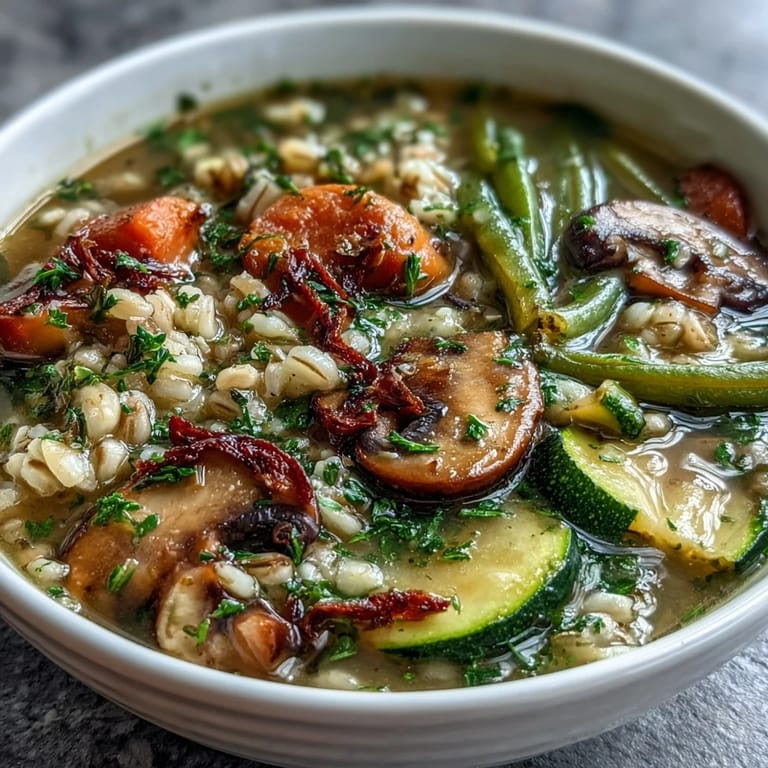 Save
Save This soup reminds me that good cooking is really just about paying attention and caring enough to do it right. Once you've made it once, you'll know exactly how it should taste, and that knowledge becomes your guide for making it again and again.
Recipe FAQ
- → Can I substitute barley for a gluten-free grain?
Yes, you can replace barley with brown rice or quinoa to make the dish gluten-free, but adjust cooking times accordingly as these grains cook differently.
- → What types of mushrooms work best for this soup?
Cremini mushrooms are ideal for their earthy flavor, but white button mushrooms can be used as a milder alternative.
- → How can I add extra protein to this dish?
Adding a drained can of white beans during cooking provides a vegan protein boost without altering the flavor significantly.
- → Is it necessary to rinse the pearl barley beforehand?
Rinsing barley helps remove any dust or debris and can improve the texture by reducing starchiness during cooking.
- → Can I prepare this soup in advance?
Yes, the soup tastes even better the next day after flavors have melded. Store it in the refrigerator and reheat gently before serving.