 Save
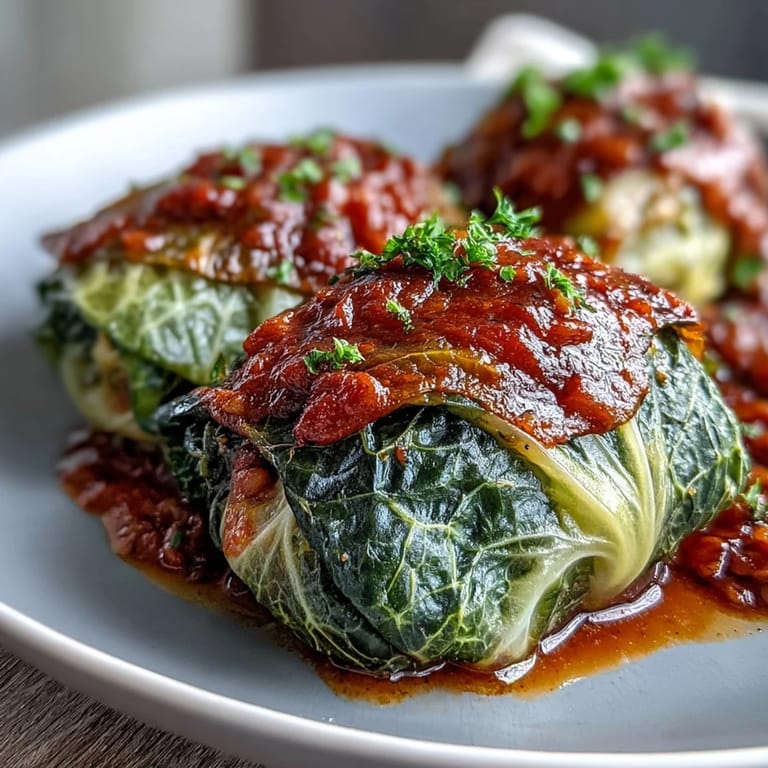
Save My neighbor Maria knocked on my door one October afternoon with a container of cabbage rolls still steaming from her oven, insisting I learn her family recipe but adapt it vegan since I'd mentioned cutting back on dairy. What started as a quick tutorial turned into hours of us sitting in my kitchen, laughing as I struggled to roll the leaves without tearing them, while she shared stories about making these every fall in her childhood home. That day, I realized this dish wasn't just about technique—it was about understanding how comfort food travels across generations and continents, and how it transforms when you honor both tradition and your own values.
I served these for the first time at a dinner party where I'd invited friends I hadn't seen in months, and I was nervous about the vegan aspect—not because I doubted the food, but because I wanted everyone to feel like they were eating something special, not a substitute. When someone asked for seconds and then a third roll, still dragging their bread through the sauce, I understood that this dish doesn't need apologies or explanations. It simply arrives at the table with quiet confidence and does what good food does best: it brings people closer.
Ingredients
- 1 large head green cabbage: Choose one that feels dense and heavy for its size; this ensures sturdy leaves that won't fall apart during rolling and a naturally sweet, subtle flavor that balances the rich filling.
- 1 cup cooked brown rice: Brown rice gives the filling texture and earthiness—I cook mine with a vegetable broth cube for depth, but plain works beautifully too.
- 1 cup cooked green or brown lentils: Lentils are your protein hero here, holding their shape and adding a slightly peppery note that complements the tomato sauce without overpowering it.
- 1 small onion, finely chopped: The onion softens into the filling, becoming almost invisible but essential for building that savory backbone.
- 2 cloves garlic, minced: Don't skip mincing—it distributes the garlic evenly so you get that warm pungency in every bite.
- 1 medium carrot, grated: Grating instead of chopping means the carrot disappears into the filling, adding natural sweetness and a hint of moisture without texture.
- 2 tbsp tomato paste: This is your secret weapon; it concentrates the tomato flavor and adds umami depth that makes people ask what your ingredient is.
- 1 tbsp olive oil: Use good olive oil here—you'll taste it, and it makes a difference in how the filling comes together.
- 2 tbsp chopped fresh parsley: Fresh herbs scattered through the filling brighten everything; don't use dried parsley as a substitute—the flavor disappears.
- 1 tsp dried thyme: Thyme's earthiness anchors the filling and reminds you that this dish has history.
- 1 tsp smoked paprika: Smoked paprika is non-negotiable here; it adds a subtle depth and color that sweet paprika can't match.
- 1/2 tsp salt and 1/4 tsp black pepper: Season generously; you'll taste the difference between underseasoned and perfectly balanced.
- 2 cups canned crushed tomatoes: Canned tomatoes are your friend—they're picked at peak ripeness and actually more reliable than fresh ones.
- 1 small onion and 2 cloves garlic for the sauce: The sauce gets its own aromatics to build a distinct layer of flavor separate from the filling.
- 1 tsp dried oregano: Oregano belongs in tomato sauce the way thyme belongs in cabbage rolls; don't skip it.
- 1 tsp sugar (optional): Only add sugar if your tomatoes taste acidic; sometimes they don't need it, and that's fine.
Tired of Takeout? 🥡
Get 10 meals you can make faster than delivery arrives. Seriously.
One email. No spam. Unsubscribe anytime.
Instructions
- Get your oven and water ready:
- Preheat your oven to 375°F while you bring a large pot of generously salted water to a rolling boil. The salt matters—it seasons the cabbage leaves as they blanch and helps them become flexible without becoming mushy.
- Soften the cabbage leaves:
- Carefully peel 8 to 10 outer leaves from the head of cabbage, then place them in the boiling water for 2 to 3 minutes until they're pliable but still have some structure. You want them bendable, not falling apart; fish them out with tongs and lay them flat on a cutting board to cool.
- Build the filling base:
- Heat 1 tablespoon of olive oil in a skillet over medium heat, then add your chopped onion and garlic. Sauté for 3 to 4 minutes until the kitchen smells sweet and the onion turns translucent, then add the grated carrot, tomato paste, thyme, smoked paprika, salt, and pepper. Cook for another 2 minutes, stirring constantly so the tomato paste browns slightly and releases its concentrated flavor.
- Combine filling components:
- Transfer the cooked vegetables to a large bowl and fold in your cooled brown rice, lentils, and fresh parsley. Mix gently but thoroughly, tasting as you go and adjusting salt or pepper if needed—this filling should taste slightly bold on its own since it will be tempered by the sauce.
- Make the tomato sauce:
- Heat 1 tablespoon of olive oil in a saucepan, then sauté your onion and garlic until translucent. Add the crushed tomatoes, dried oregano, optional sugar, and a pinch of salt and pepper, then let it simmer for 10 minutes while you work on rolling. The sauce should taste rich and well-balanced, not raw or tinny.
- Layer the baking dish:
- Spread about 1/2 cup of your tomato sauce across the bottom of a baking dish—this prevents sticking and ensures every roll gets sauce underneath. This is your foundation, so don't rush it.
- Roll with intention:
- Lay a cabbage leaf flat on your work surface and trim away any really thick stem at the base if needed. Place 2 to 3 tablespoons of filling near the base of the leaf, fold in the sides, and roll it up tightly like you're tucking a letter into an envelope. Place it seam-side down in the baking dish and repeat with remaining leaves, nestling them close together so they hold their shape.
- Finish and cover:
- Pour the remaining tomato sauce over all the rolls, covering them generously. Cover the baking dish tightly with foil—this traps steam and keeps everything moist as they bake.
- Bake in stages:
- Bake covered for 45 minutes until everything is heated through and you can see the sauce bubbling at the edges. Remove the foil and bake for an additional 10 to 15 minutes until the top gets a little color and the sauce bubbles more vigorously.
- Cool and serve:
- Let the rolls rest for 5 to 10 minutes before serving—this lets the flavors settle and makes plating easier. Sprinkle with extra fresh parsley if you like that bright finishing touch.
 Save
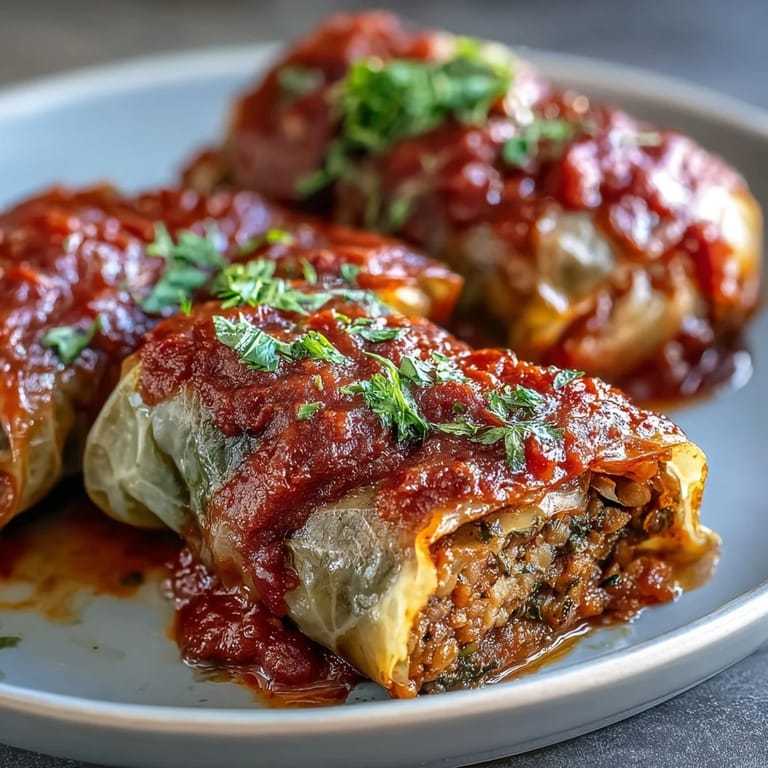
Save Months after that first dinner party, a friend texted me a photo of cabbage rolls she'd made using my recipe, saying her usually picky daughter asked for thirds. Something about sharing this dish with people mattered more than I expected—it wasn't just feeding them, it was passing along a small piece of comfort that Maria had given me, transformed through my own hands and kitchen.
Why This Dish Works as Plant-Based Comfort Food
The reason these rolls feel so satisfying despite being completely vegan is that lentils and brown rice together create a complete protein with real textural complexity. You're not missing anything because the filling was never meant to depend on dairy or meat—it stands on its own merit, anchored by the umami of tomato paste and the earthy depth of the sauce. The cabbage leaf itself becomes a warm embrace, and the whole effect is that particular kind of comfort that comes from simple, honest ingredients working together.
Making Ahead and Storage
These rolls actually improve overnight in the refrigerator as the flavors continue melding and the sauce becomes even richer. You can assemble them completely and refrigerate for up to two days before baking, or bake them fully and refrigerate the finished dish for up to four days, reheating gently in a 350°F oven covered with foil. They also freeze beautifully either raw or cooked, though I prefer freezing them before baking so the textures stay fresher when you eventually cook them.
Variations and Personal Touches
This recipe is flexible enough that you can make it your own without losing what makes it special. Some people add chopped mushrooms or walnuts to the filling for extra umami and texture, others swap the brown rice for quinoa to boost the protein, and I once added a tablespoon of balsamic vinegar to my sauce on a whim and it transformed everything into something darker and more sophisticated. The foundation is strong enough to support your creativity, which is part of what makes returning to this dish over and over again feel natural rather than repetitive.
- Try adding 1/2 cup chopped mushrooms sautéed with the onions for earthier depth.
- Sprinkle crushed walnuts into the filling if you want textural contrast and a nutty note.
- A dash of balsamic vinegar in the sauce adds complexity if you're cooking for people who appreciate deeper flavors.
 Save
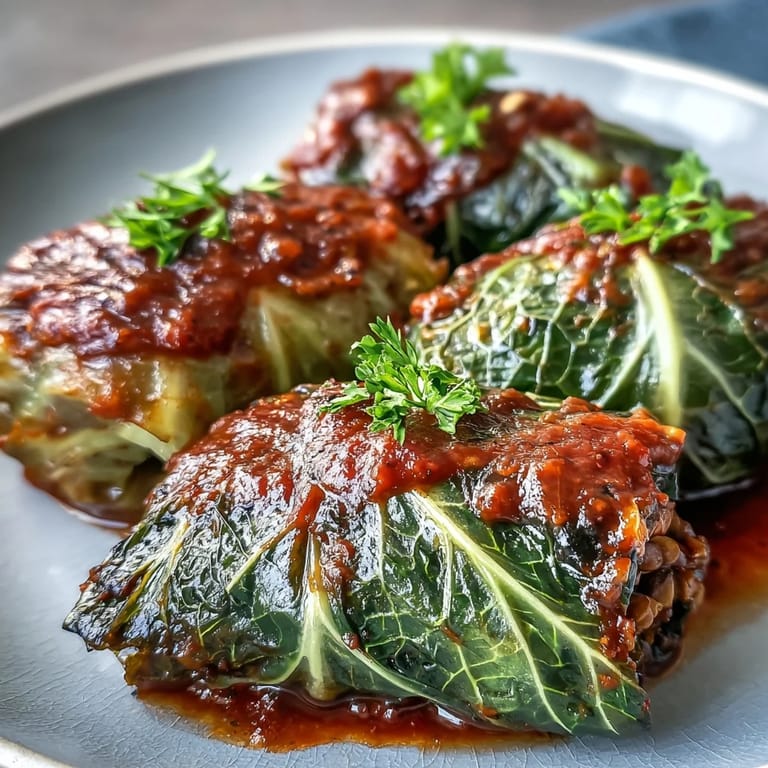
Save This recipe has become my answer to almost every question: when someone needs comfort, when I'm cooking for mixed diets, when I want to prove that vegan food doesn't mean deprivation. It's become a small ritual that connects me to Maria, to my friends who've made it, and to everyone who will discover it in their own kitchen.
Recipe FAQ
- → Can I use a different grain instead of brown rice?
Yes, quinoa works wonderfully as a substitute and adds extra protein. Bulgur wheat or farro are also excellent alternatives that complement the lentils beautifully.
- → How do I prevent the cabbage leaves from tearing?
Blanch the leaves in boiling water for 2-3 minutes until they become pliable. If a leaf tears, you can overlap two smaller leaves or patch with another piece. Don't over-boil or they'll become too soft.
- → Can these be made ahead and frozen?
Absolutely! Assemble the rolls completely, then freeze them unbaked in an airtight container for up to 3 months. Thaw overnight in the refrigerator before baking as directed, adding 10-15 extra minutes to the cooking time.
- → What type of lentils work best?
Green or brown lentils are ideal because they hold their shape well after cooking. Red lentils tend to break down too much and create a mushy texture in the filling.
- → How do I store leftovers?
Store cooled cabbage rolls in an airtight container in the refrigerator for up to 4 days. Reheat in the oven at 350°F covered with foil, or microwave individual portions with a splash of water to prevent drying.
- → Can I add more vegetables to the filling?
Definitely! Finely chopped mushrooms, bell peppers, or celery make excellent additions. Just sauté them with the onions and garlic to remove excess moisture before mixing into the filling.