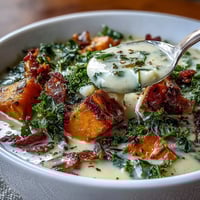
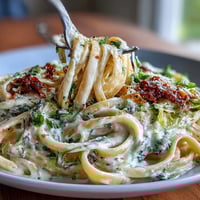
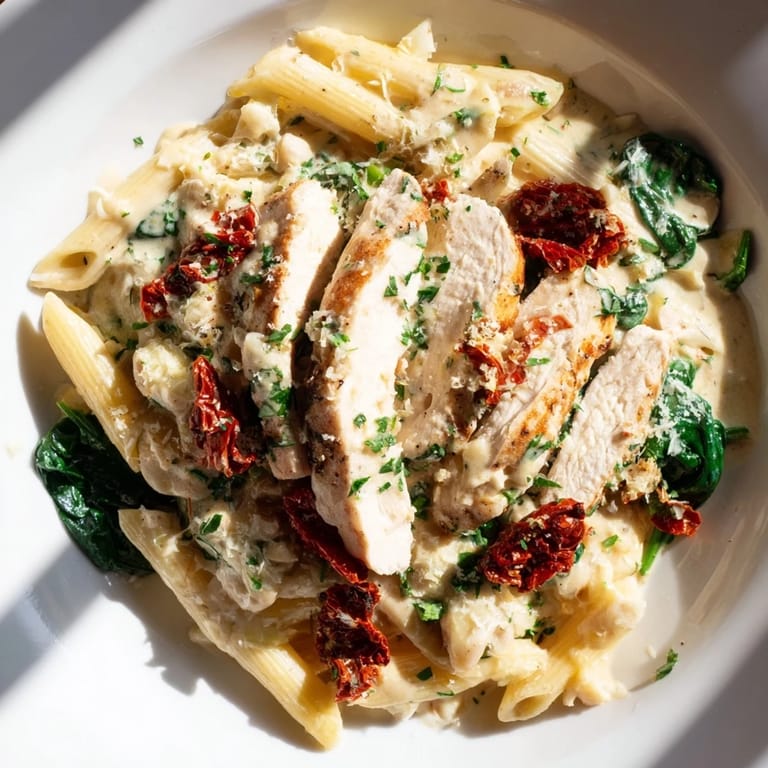
 Save
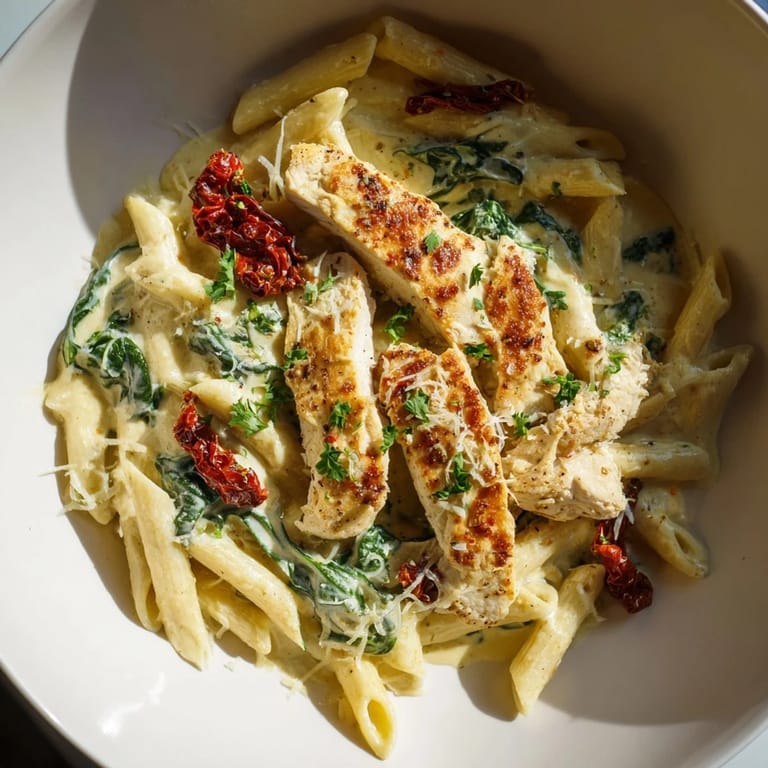
Save There's something about the way cream catches the light in a pan that made me fall for this dish years ago, watching my neighbor toss golden chicken through silky sauce with the ease of someone who'd done it a hundred times. She'd call me over on random weekends, and this became the meal that convinced me Italian cooking didn't require hours or mystery ingredients. The aroma alone—garlic and sun-dried tomatoes melting into butter—turned my kitchen into something that smelled expensive. Now I make it when I want to feel like I've got everything under control, even when I don't.
I made this for a friend who'd just moved to the city and was living on takeout, half joking that pasta was his only survival skill. Watching him taste it, the way his whole face changed—that's when I realized cream sauces are kitchen magic for people who think they can't cook. He's made it probably forty times since, and somehow it tastes better at his place than mine.
Ingredients
- Penne or fettuccine, 350 g (12 oz): Penne holds the sauce in its ridges like tiny edible cups, but fettuccine works too if you prefer long ribbons that catch the cream differently.
- Boneless, skinless chicken breasts, 2 large: Slice them thin after cooking so they nestle into the sauce rather than sit on top like an afterthought.
- Unsalted butter, 2 tbsp: This is where the sauce gets its velvety base, so don't skip it or swap it for oil.
- Garlic, 3 cloves minced: Mince it fine so it dissolves into the butter rather than leaving chunks.
- Sun-dried tomatoes in oil, 120 g (3/4 cup) drained and sliced: These are the secret punch—tangy and concentrated, they wake up the whole dish.
- Chicken broth, 120 ml (1/2 cup): This keeps the sauce from being one-dimensional heavy cream.
- Heavy cream, 240 ml (1 cup): The foundation of everything delicious happening here.
- Grated Parmesan cheese, 60 g (2 oz): Freshly grated melts better than pre-grated, which comes coated in anticaking powder.
- Fresh baby spinach, 80 g (3 cups): Add it at the end so it stays bright green and doesn't turn into sad dark flakes.
- Red pepper flakes, 1/4 tsp optional: A tiny whisper of heat that rounds out the richness.
- Fresh basil or parsley for garnish: This isn't decoration—it's freshness cutting through the cream.
Tired of Takeout? 🥡
Get 10 meals you can make faster than delivery arrives. Seriously.
One email. No spam. Unsubscribe anytime.
Instructions
- Get your pasta water going:
- Salt the water generously before the pasta goes in—it should taste like the sea. This is your insurance policy for flavor later, and that reserved pasta water becomes your secret weapon for silky sauce.
- Season and sear the chicken:
- Pat the chicken dry first so it actually browns instead of steaming. Don't move it around constantly; let it develop a golden crust on each side, which takes about five minutes per side over medium-high heat.
- Build the sauce foundation:
- In the same pan, the browned bits stuck to the bottom are pure flavor waiting to happen. Melt butter, add garlic, and listen for it to smell incredible—that's your cue it's about to transform.
- Deglaze and simmer gently:
- Pour in broth and scrape those brown bits up with a wooden spoon, then reduce heat so the cream doesn't break or separate. Low heat is your friend here; you're coaxing everything into harmony, not forcing it.
- Wilt the spinach in:
- Stir just until it disappears into the sauce, which takes maybe 30 seconds. Over-stirring loses that fresh bright color.
- Bring it together:
- Toss pasta, chicken, and sauce in the pan, using pasta water to reach the consistency you want—it should coat everything without pooling. Taste and adjust seasoning because some Parmesan is saltier than others.
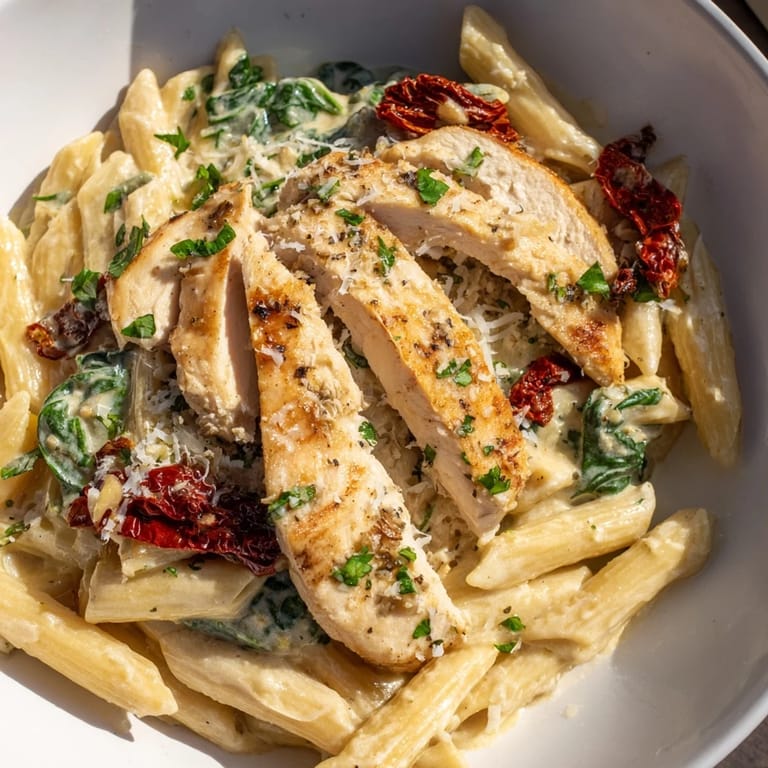 Save
Save My uncle made this dish on Christmas Eve three years ago, and nobody touched the fancy prime rib he'd also prepared. The pasta kept disappearing, people asking for seconds before finishing their first plate, and I saw his face light up in a way that told me food isn't about complexity—it's about people suddenly understanding they're loved. That's what this dish does.
Why This Works Every Time
There's no fancy technique here, which is exactly why it works. The chicken cooks fast enough that it stays tender, the cream sauce comes together in the same pan you used for the chicken so you don't add more dishes to wash, and everything finishes within the time pasta takes to cook. It's forgiving because cream absorbs mistakes—too much garlic just means more garlic, oversalted broth gets balanced by the pasta water. This is cooking without a net, but the net is made of butter and heavy cream.
Timing and Temperature Matter
The speed of this dish means you need to pay attention without stress. Have everything prepped before the pasta goes in, because once the chicken is searing, things move quickly. Medium-high heat browns the chicken but won't burn the butter in the sauce—it's the sweet spot. Too low and the chicken steams; too high and your cream sauce breaks and you're standing there wondering what went wrong.
Make It Your Own
This dish is a canvas, which is why I've kept making it for years instead of moving on. I've swapped in roasted red peppers when sun-dried tomatoes seemed boring, added lemon zest for brightness on days when cream felt too heavy, and once threw in prosciutto bits because that's what was in the fridge. The bones of the recipe are strong enough to hold almost anything.
- Try half-and-half instead of heavy cream if you want richness without the heaviness, or add a splash of white wine to the broth for complexity.
- Shrimp works beautifully here—cook it separately for 2 minutes per side instead of chicken, and the sauce doesn't need to change.
- Gluten-free pasta absorbs sauce differently, so start with less pasta water and add it gradually.
 Save
Save This is the dish I reach for when I want to remember why I love cooking—it's simple enough to feel calm, good enough to feel proud, and the kind of thing that makes people want to sit at the table longer than usual. Some meals are just food; this one becomes a moment.
Recipe FAQ
- → How do I cook the chicken for best flavor?
Season chicken breasts with salt, pepper, and Italian herbs, then cook in olive oil over medium-high heat until golden and cooked through. Let rest before slicing to retain juices.
- → Can I substitute the pasta type?
Yes, penne or fettuccine both work well, and gluten-free pasta can be used as an alternative.
- → What gives the sauce its creamy texture?
The sauce is made rich and smooth with a blend of heavy cream, butter, and grated Parmesan cheese simmered gently with garlic and sun-dried tomatoes.
- → How should I add spinach without overcooking it?
Stir fresh baby spinach into the sauce just until wilted to preserve its bright color and slight crunch.
- → What can I use instead of chicken for a seafood twist?
Grilled shrimp can be substituted, offering a delightful variation while pairing well with the creamy sauce and sun-dried tomatoes.