 Save
Save The first time I made a king cake, I was standing in my kitchen at midnight on Epiphany, watching the dough rise under a kitchen towel while my roommate kept sneaking peeks like it was treasure. There's something almost magical about how a simple braid transforms into this showstopper—golden, jewel-toned, and impossible not to reach for. That particular night, the lemon filling smelled so bright and clean against the butter-rich dough that I knew this recipe would become my go-to for any celebration worth making noise about.
I made this for a potluck once, and a quiet coworker I'd barely spoken to came back for seconds and told me it reminded her of her grandmother's kitchen. Those are the moments that stick with you—when food becomes a bridge to something bigger than itself, when the smell of lemon and yeast can unlock somebody's memory.
Ingredients
- All-purpose flour (4 cups / 500 g): This is your structure—make sure it's not packed down when measuring, or you'll end up with a dense, stubborn dough.
- Active dry yeast (2 1/4 tsp): The bloom is everything; if your water and milk aren't warm enough to feel like a gentle bath, the yeast will sulk and your rise will suffer.
- Granulated sugar (1/2 cup for dough, 1/3 cup for filling): Sugar feeds the yeast and tenderizes the crumb, but don't skip the lemon juice in the filling—it's the conversation starter in every bite.
- Unsalted butter (1/4 cup melted): Melted butter incorporates more evenly than cold pieces, giving you that silky texture throughout.
- Eggs (2 large plus 1 yolk): Room temperature eggs blend seamlessly into the dough without shocking the temperature; cold eggs create lumps.
- Cream cheese (8 oz): Let it soften completely at room temperature so it beats to cloud-like smoothness without lumps fighting back.
- Fresh lemon juice and zest: Fresh is non-negotiable here—bottled juice tastes flat and hollow next to the real thing.
- Colored sanding sugar: These aren't just decorative; they catch the light and make people smile before they even taste it.
Tired of Takeout? 🥡
Get 10 meals you can make faster than delivery arrives. Seriously.
One email. No spam. Unsubscribe anytime.
Instructions
- Wake up the yeast:
- Warm water and milk should feel like bathwater on your wrist—around 110°F. Pour them together with the yeast and wait; you'll see it foam up like it's coming to life, and that's exactly what you want.
- Build the dough:
- Add your sugar, eggs, melted butter, and salt to the foamy liquid, then gradually work in the flour until you have a soft, shaggy mass. This is where patience matters more than speed.
- Knead until it's ready:
- Eight to ten minutes of kneading transforms the dough from rough to silky—you'll feel the shift under your hands when it's ready, becoming smooth and elastic like skin.
- Let it rise slow:
- A greased bowl in a warm corner (near a sunny window, or on top of the fridge) is perfect for the ninety-minute rise; it should roughly double.
- Prepare the filling:
- Beat softened cream cheese until it's completely smooth, then add sugar, lemon juice, zest, and egg yolk; the mixture should be creamy and pale, almost mousse-like.
- Shape into a rectangle:
- Once risen, punch down the dough with satisfaction and roll it into a 10-by-18-inch rectangle on a lightly floured surface—don't overwork it, or it'll spring back at you.
- Fill and cut:
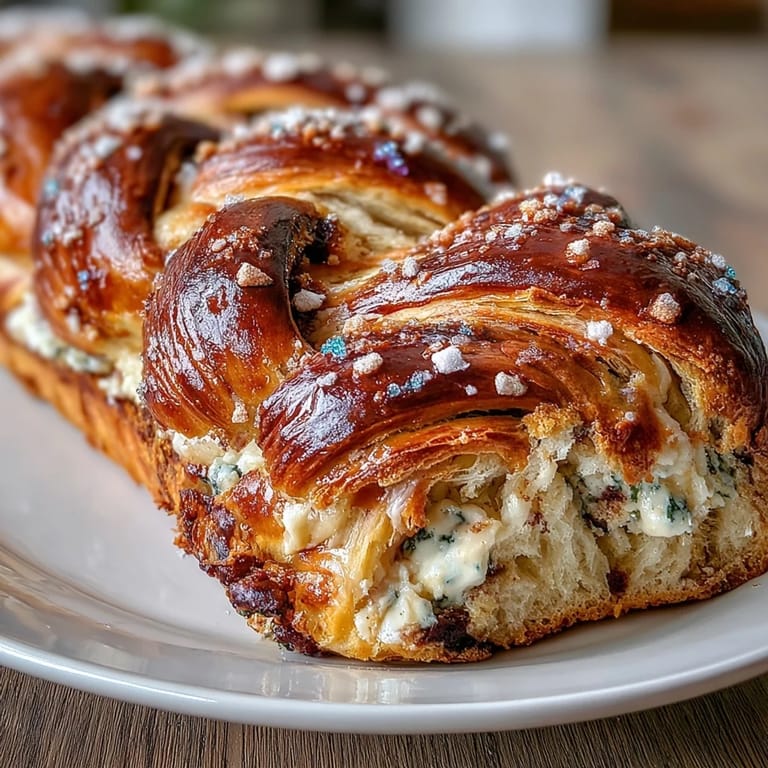
- Spread the lemon filling down the center third of the dough in a neat stripe, then using a sharp knife, cut diagonal strips about 1 inch wide on both sides, leaving the center and ends untouched.
- Braid with intention:
- Fold strips alternately over the filling, left then right, creating that signature crown pattern; tuck the ends under to seal everything in.
- Second rise:
- Transfer to parchment paper and cover loosely for 45 minutes while the shaped dough relaxes and puffs up again.
- Egg wash and bake:
- Brush the entire braid with a mixture of egg and milk to give it that gorgeous golden shine, then bake at 350°F for 28 to 32 minutes until deeply golden and a skewer comes out clean.
- Cool before glazing:
- Let it sit on a wire rack until completely cool; trying to glaze warm bread is like chasing water—it just runs right off.
- Glaze and decorate:
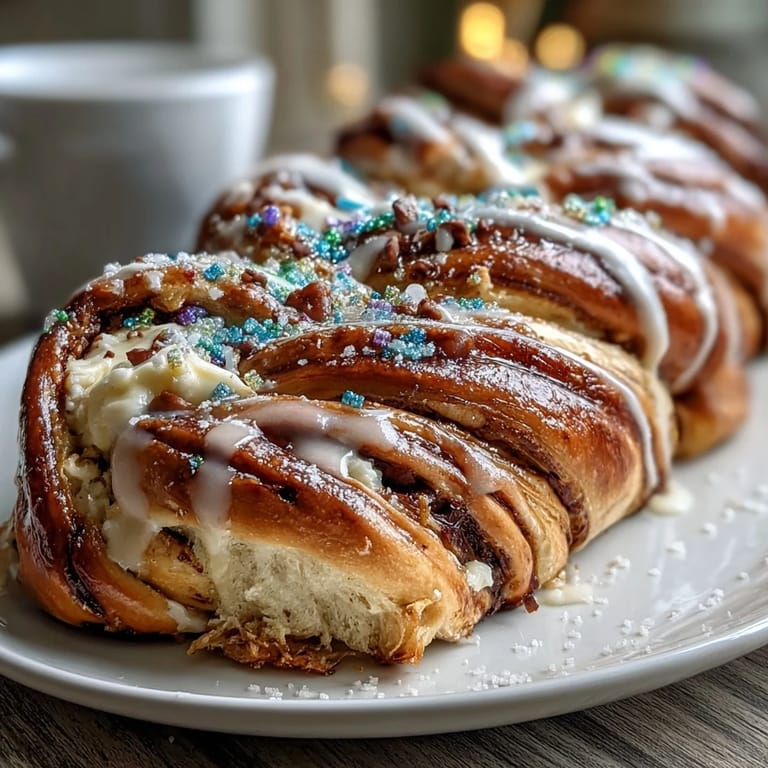
- Whisk powdered sugar with lemon juice or milk until thick, drizzle it over the cooled braid, and immediately scatter the purple, green, and gold sugars in alternating stripes for that Mardi Gras glow.
 Save
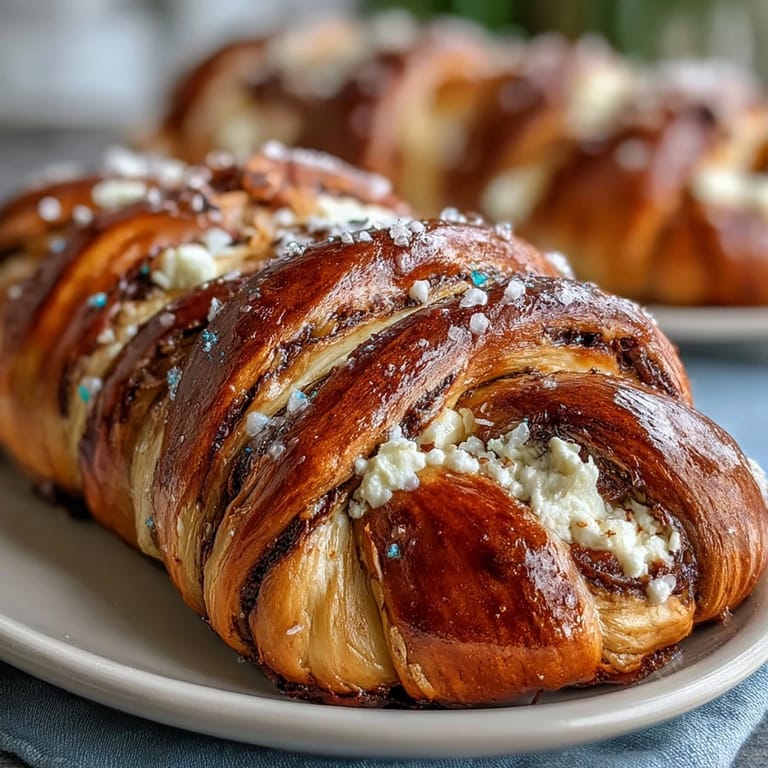
Save There's a moment when the glaze hits the golden braid and those jewel-toned sugars catch it like stained glass that you realize you've created something beautiful. It stops being just bread and becomes a centerpiece, a reason to gather, a small act of joy.
The Braiding Technique Explained
The braid isn't as intimidating as it looks—think of it like weaving. You have a center stripe of filling, and you're simply folding the strips from one side, then the other, over the top, creating an interlocking pattern that holds everything in place while baking. The key is not overthinking it; slight imperfections are part of the charm. If a strip tears, just press it back together—the dough is forgiving at this stage.
Why Fresh Lemon Matters
Bottled lemon juice feels tired compared to what you get from a fresh lemon—there's an almost bitter edge to bottled that can muddy the filling. Fresh lemon is bright, assertive, and worth the extra thirty seconds of juicing. If you zest the lemon first, it's even easier, and you get those tiny flavor bombs scattered throughout the filling.
Timing and Temperature Tips
Temperature controls everything in bread baking, and it's worth paying attention. Your water and milk should be warm but not hot; use a thermometer if you have one, aiming for around 110°F. A kitchen that's too cold will stretch your rise time dramatically, and a kitchen that's too warm might cause the dough to over-proof. Trust your instincts and your eyes more than the clock.
- If your kitchen is cold, turn your oven on to 200°F for a minute, turn it off, and proof the dough inside—it creates a gentle, consistent warmth.
- Room temperature eggs and cream cheese beat into the dough and filling without creating lumps or temperature shock.
- Let the braid cool completely before glazing, or you'll watch the glaze melt right off like snow in spring.
 Save
Save This bread tastes best on the day it's made, but it keeps beautifully wrapped in foil and reheated gently. Pair it with strong coffee in the morning or sparkling wine at night, and know that you've just created something worth celebrating.
Recipe FAQ
- → What type of dough is used for the braid?
A soft, enriched dough made with all-purpose flour, yeast, butter, eggs, milk, and sugar creates a tender, elastic base ideal for braiding.
- → How is the lemon cream cheese filling prepared?
The filling combines softened cream cheese, granulated sugar, fresh lemon juice, lemon zest, and an egg yolk for a smooth, tangy spread.
- → Can the bread be made ahead of time?
Yes, after baking and cooling, it can be stored in an airtight container for a day or two to retain freshness.
- → What is the purpose of the colored sanding sugar?
The sanding sugar adds a colorful, festive decoration with a subtle crunch, enhancing visual appeal and texture.
- → Are there any traditional additions to the King Cake braid?
Traditionally, a small plastic baby or almond can be hidden inside the braid after baking to continue festive customs.