 Save
Save My neighbor knocked on my door one Tuesday evening holding a container of something that smelled like garlic, sesame, and something sweet I couldn't place. She'd made too much Korean beef, she said, and thought I might want some. I ate it standing at the counter, straight from the container, and by the next afternoon I was in my kitchen trying to recreate it. That first attempt was clumsy, I added too much sugar and not enough gochujang, but even my mistakes tasted good enough to eat twice.
I started making this bowl every time someone came over for a casual dinner, the kind where you eat on the couch and talk too much. People always asked for the recipe, and I loved watching them taste it for the first time, that little pause before they go back for another bite. One friend said it reminded her of a place she used to go in college, and suddenly we were all sharing food memories instead of small talk. It became the meal I made when I wanted to feel like I had my life together, even when I didn't.
Ingredients
- Lean ground beef: The base of everything, and using lean meat keeps it from getting greasy while still giving you that rich, savory flavor that soaks up the sauce.
- Gochujang: This Korean chili paste is what makes the whole dish sing, it brings heat, sweetness, and a deep fermented funk you can't get anywhere else.
- Low sodium soy sauce: Controls the salt level so you can adjust to your taste, and tamari works perfectly if you need it gluten free.
- Brown sugar: Balances the heat and saltiness with just enough sweetness to round everything out without making it taste like dessert.
- Sesame oil: A little goes a long way, it adds that nutty, toasted aroma that makes the kitchen smell like a restaurant.
- Garlic and ginger: The aromatic duo that wakes everything up, always use fresh if you can because the flavor is sharper and cleaner.
- Rice vinegar: Cuts through the richness with a gentle tang that keeps each bite interesting.
- Cauliflower rice or white rice: Your call depending on the day, cauliflower keeps it light and white rice makes it more filling and comforting.
- Cucumber and carrot: Fresh, crunchy contrast to the warm, saucy beef, they add color and a clean bite that keeps the bowl from feeling one note.
- Green onions and sesame seeds: The final touch that makes it look and taste finished, a little sharpness and nuttiness right at the end.
Tired of Takeout? 🥡
Get 10 meals you can make faster than delivery arrives. Seriously.
One email. No spam. Unsubscribe anytime.
Instructions
- Brown the beef:
- Heat the sesame oil in a large skillet over medium high heat until it shimmers, then add the ground beef and break it up with your spatula as it cooks. Let it brown for 4 to 5 minutes, you want some crispy edges for texture.
- Add the aromatics:
- Toss in the minced garlic and grated ginger, stirring them into the beef for about a minute until the smell fills your kitchen and you can taste it in the air.
- Build the sauce:
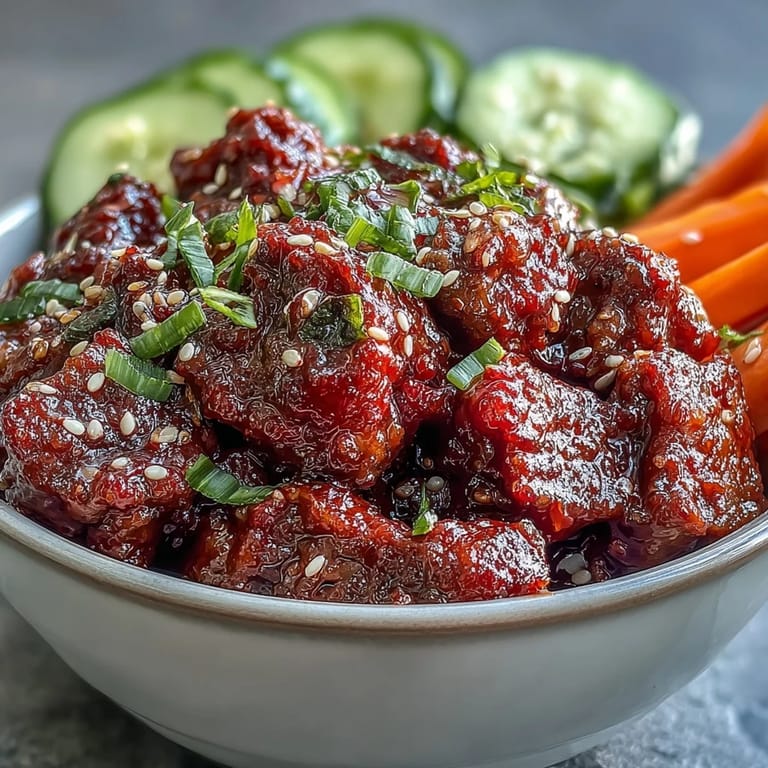
- Stir in the gochujang, soy sauce, brown sugar, rice vinegar, and black pepper, mixing until the beef is completely coated. Let it simmer for 2 to 3 minutes so the sauce thickens just enough to cling to the meat.
- Taste and adjust:
- This is your moment to make it yours, add more gochujang if you want heat, a pinch of sugar if it's too salty, or a splash of vinegar if it needs brightness. Pull it off the heat when it tastes right to you.
- Assemble the bowls:
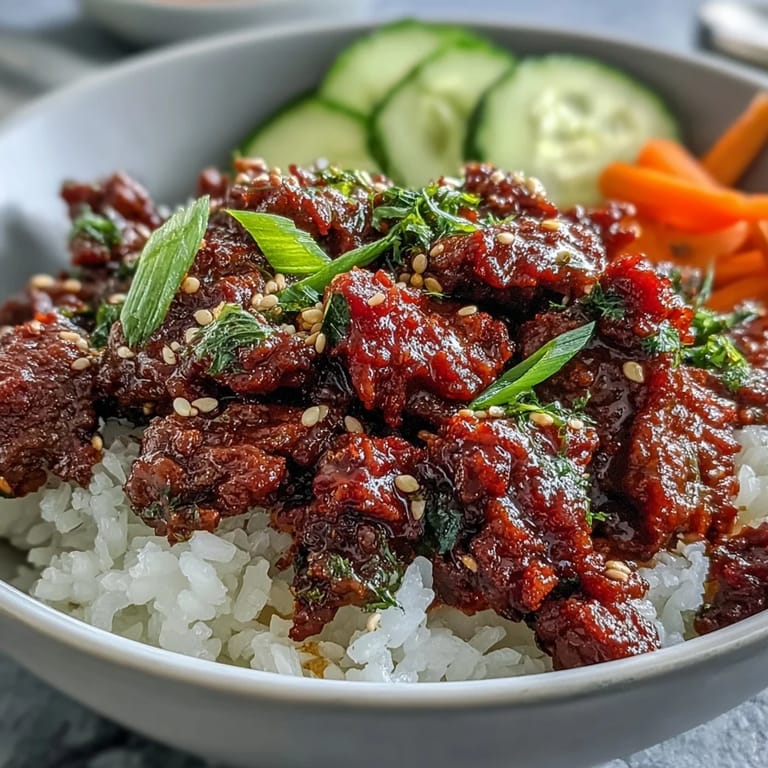
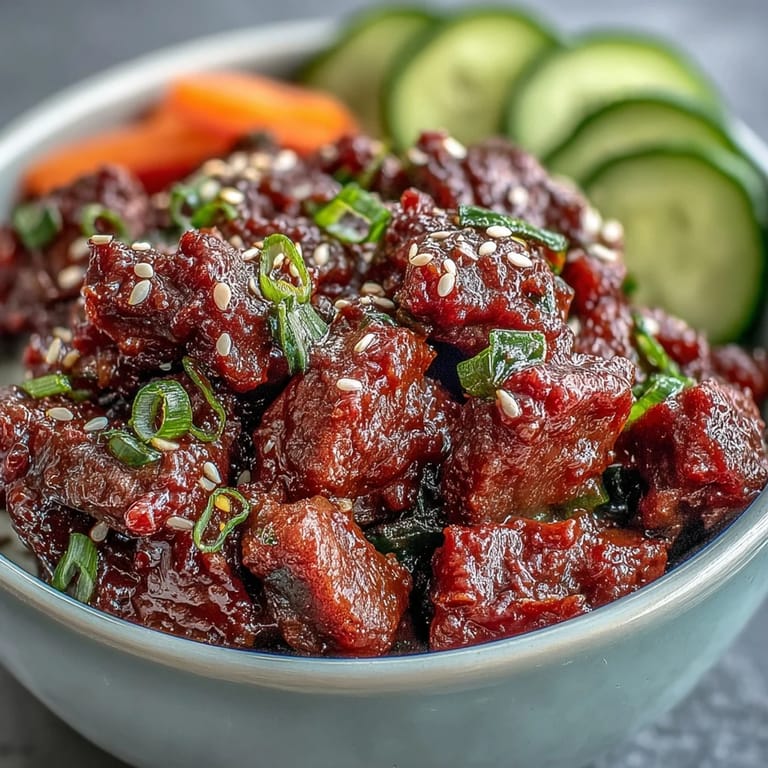
- Divide your rice or cauliflower rice into four bowls and spoon the hot beef over the top. Scatter the cucumber, carrot, green onions, and sesame seeds across each bowl, adding chili slices or kimchi if you have them.
 Save
Save I made this bowl the night my sister told me she was moving across the country, and we sat at my tiny kitchen table not saying much, just eating and passing the kimchi jar back and forth. The food didn't fix anything, but it made the hard conversation easier somehow. Now every time I make it, I think about that night and how food can hold space for you when words can't.
Choosing Your Base
I've made this bowl with white rice on cold nights when I wanted something warm and filling, and with cauliflower rice on days when I felt like eating lighter. Both work beautifully because the sauce is bold enough to make anything underneath it taste good. If you're using cauliflower rice, cook it just until tender and squeeze out any extra water so the bowl doesn't get soggy.
Making It Your Own
Ground turkey or chicken work just as well if you want something leaner, though I add a tiny bit more sesame oil to keep it from drying out. I've also made this with crumbled tofu for a vegetarian version, pressing it first and letting it crisp up in the pan before adding the sauce. The beauty of this bowl is that the sauce does most of the work, so you can swap the protein and still end up with something delicious.
Storing and Reheating
Leftovers keep in the fridge for up to four days, and I store the beef separate from the rice and toppings so nothing gets mushy. Reheat the beef gently in a skillet with a splash of water to bring the sauce back to life, and add fresh garnishes right before serving. I've eaten this cold straight from the fridge more than once and it still tastes good, though I won't tell anyone if you do the same.
- Store the beef in an airtight container and keep the fresh toppings separate until you're ready to eat.
- Freeze the cooked beef for up to three months and thaw it overnight in the fridge before reheating.
- If you're meal prepping, cook the beef on Sunday and assemble fresh bowls all week long.
 Save
Save This bowl has become my answer to almost every weeknight question, quick enough for a Tuesday and special enough for company. I hope it finds a spot in your rotation the way it has in mine.
Recipe FAQ
- → What is gochujang?
Gochujang is a Korean fermented chili paste that delivers a unique combination of sweet, spicy, and umami flavors. It's made from red chili powder, glutinous rice, fermented soybeans, and salt.
- → Can I make this dish gluten-free?
Yes. Substitute regular soy sauce with tamari and verify that your gochujang brand is certified gluten-free. Serve over cauliflower rice for a complete low-carb version.
- → How spicy is this bowl?
The heat level is moderate and adjustable. Gochujang provides mild to medium spice. Add more gochujang, fresh red chili slices, or sriracha to increase heat to your preference.
- → Can I use a different protein?
Ground turkey or chicken work well as lighter alternatives. Adjust cooking time slightly as poultry may cook faster than beef. The sauce complements any ground meat beautifully.
- → How long do leftovers keep?
Store the seasoned beef separately from rice and toppings in airtight containers. It will stay fresh for 3-4 days in the refrigerator. Reheat gently and add fresh garnishes before serving.
- → What toppings work best?
Crisp cucumber, shredded carrot, sliced green onions, and toasted sesame seeds provide texture and freshness. Kimchi adds authentic flavor and probiotic benefits.