 Save
Save The smell of garlic and ginger hitting hot sesame oil still makes my mouth water before I even start cooking. I stumbled onto this bowl one weeknight when I had leftover rice, half a jar of gochujang, and zero patience for complicated recipes. What came together in under thirty minutes tasted like something I would have ordered at my favorite Korean spot downtown. Now it is my default answer when someone asks what is for dinner and I actually want to impress them without breaking a sweat.
I made this for a group of friends who claimed they did not like spicy food, so I went light on the gochujang and let them add more at the table. By the end of the night, the jar was nearly empty and everyone was taking photos of their bowls. One friend texted me the next day asking for the recipe, which is when I realized I had been winging it the whole time. That is how this version was born.
Ingredients
- Lean ground beef: I use 90% lean because it browns beautifully without leaving too much grease in the pan, and it soaks up the sauce like a dream.
- Gochujang: This Korean chili paste is the soul of the dish, bringing deep umami heat that is nothing like hot sauce, so do not skip it or substitute with sriracha.
- Soy sauce: It adds the salty backbone and helps the sugar caramelize around the beef for those crispy, flavorful edges.
- Brown sugar: Just enough sweetness to balance the heat and create a glaze that clings to every bite of meat.
- Garlic and ginger: Fresh is essential here because the fragrance when they hit the oil sets the tone for the whole bowl.
- Toasted sesame oil: A tablespoon goes a long way, adding that nutty richness that makes everything taste more luxurious.
- Green onions: Half go into the beef for flavor, half on top for color and a sharp, fresh bite.
- Short-grain rice: It is sticky enough to hold the toppings and soak up the sauce without turning mushy.
- Edamame: I love the pop of green and the little protein boost, plus they add a fun texture contrast.
- Cucumber and carrot: Cool, crunchy, and refreshing, they cut through the richness and make every forkful feel balanced.
- Kimchi: Tangy, funky, and alive, it brings acidity and complexity that turns this into a real Korean-style bowl.
- Toasted sesame seeds: They look pretty and add a subtle crunch and nuttiness that ties everything together.
Tired of Takeout? 🥡
Get 10 meals you can make faster than delivery arrives. Seriously.
One email. No spam. Unsubscribe anytime.
Instructions
- Bloom the aromatics:
- Heat the sesame oil in a large skillet over medium heat, then add the garlic and ginger, stirring constantly for about a minute until your kitchen smells incredible. Do not let them brown or they will turn bitter.
- Brown the beef:
- Add the ground beef and break it up with a spatula, letting it cook undisturbed for a minute or two so it gets those caramelized bits, then stir and continue until no pink remains, about five to six minutes total. Those browned edges are where the flavor lives.
- Build the glaze:
- Stir in the gochujang, soy sauce, and brown sugar, mixing everything thoroughly so the beef is coated in that glossy, spicy-sweet sauce. Let it bubble and thicken for two to three minutes, stirring occasionally.
- Finish the beef:
- Remove the skillet from the heat and stir in half of the sliced green onions so they soften slightly but keep their bite.
- Assemble your bowls:
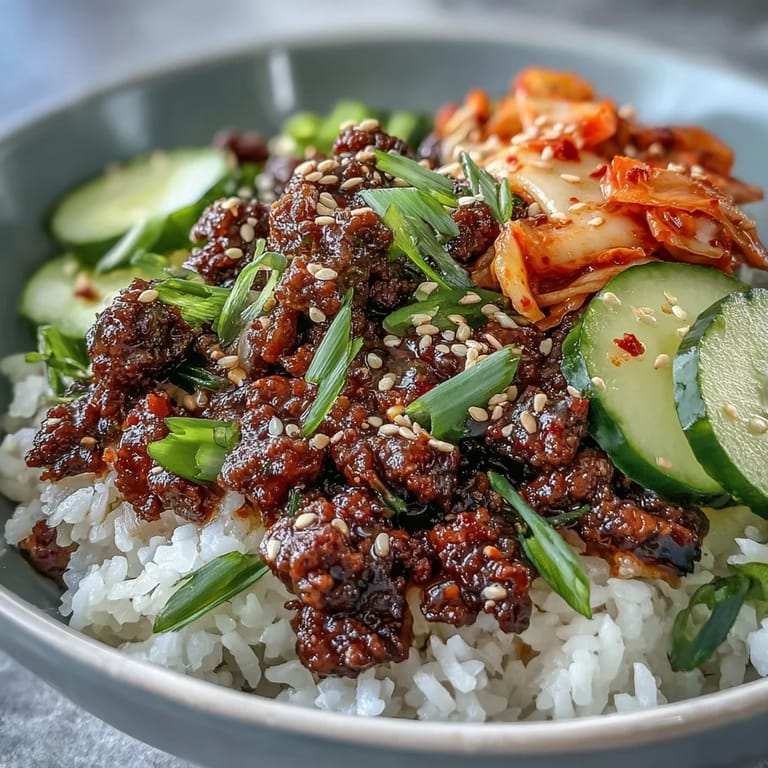
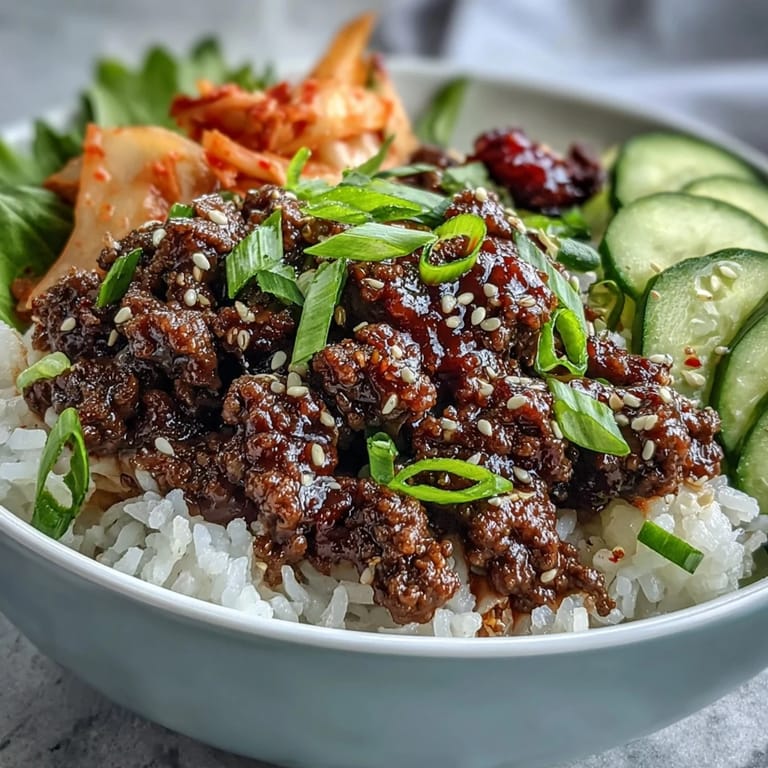
- Divide the cooked rice among four bowls, then arrange the beef, edamame, cucumber, carrot, and kimchi on top in separate sections for a beautiful, colorful presentation. Sprinkle with the remaining green onions and toasted sesame seeds, then serve right away while everything is warm and vibrant.
 Save
Save The first time I topped this with a fried egg, the yolk broke over the beef and rice and created this silky, rich sauce that made the whole bowl feel like a warm hug. My husband looked up mid-bite and said it was the best thing I had made all month, which is saying something because I cook a lot. Now I cannot imagine serving it without that runny egg on top, even though the recipe does not require it.
Swapping the Protein
Ground turkey or chicken work beautifully if you want something leaner, though I add an extra splash of sesame oil because they can be a little dry. I have also used crumbled tofu and plant-based crumbles for friends who do not eat meat, and honestly, the gochujang glaze is so bold that the swap barely registers. The key is to cook whatever protein you choose until it gets a little caramelized before adding the sauce.
Making It Your Own
This bowl is incredibly forgiving, so if you do not have edamame, try snap peas or blanched broccoli. I have added thinly sliced radishes for extra crunch, shredded purple cabbage for color, and even leftover roasted sweet potato when I had it sitting in the fridge. The rice can be swapped for cauliflower rice if you are watching carbs, though I will be honest, the real stuff is worth it here.
Storing and Reheating
I prep the beef and rice ahead of time and keep them in separate containers so I can throw together a fresh bowl in minutes. The beef reheats beautifully in the microwave or a skillet with a splash of water to loosen the sauce. Keep the fresh veggies and kimchi separate until you are ready to eat, or they will wilt and lose their crunch.
- Store the cooked beef in an airtight container in the fridge for up to four days.
- The rice keeps well for three days, or you can freeze portions for up to a month.
- Do not assemble the bowls ahead of time or the textures will get mushy and sad.
 Save
Save This bowl has become my go-to when I want something that feels special but does not require me to spend an hour in the kitchen. Every bite is a little different depending on what you scoop up, and that is exactly why I keep coming back to it.
Recipe FAQ
- → What does gochujang taste like?
Gochujang offers a complex flavor profile combining fermented umami, moderate heat, subtle sweetness, and a rich, savory depth. It's less spicy than sriracha but more robust than regular chili paste.
- → Can I make this dish less spicy?
Simply reduce the amount of gochujang to 1 tablespoon or substitute with a milder fermented bean paste. You can also add extra brown sugar to balance any remaining heat.
- → What rice works best for Korean bowls?
Short-grain white rice is traditional and provides the perfect sticky texture to hold everything together. Brown rice adds nuttiness and fiber but will be less clingy.
- → How long does the cooked beef keep?
The seasoned ground beef stores beautifully in an airtight container for up to 4 days. Reheat gently with a splash of water to prevent drying, then assemble fresh bowls.
- → What other vegetables can I add?
Spinach, bean sprouts, zucchini, sautéed mushrooms, or pickled radish all work wonderfully. You can also add shredded cabbage for extra crunch and volume.
- → Is this dish freezer-friendly?
The cooked beef mixture freezes well for up to 3 months. Thaw overnight in the refrigerator and reheat before assembling bowls with freshly cooked rice and vegetables.