 Save
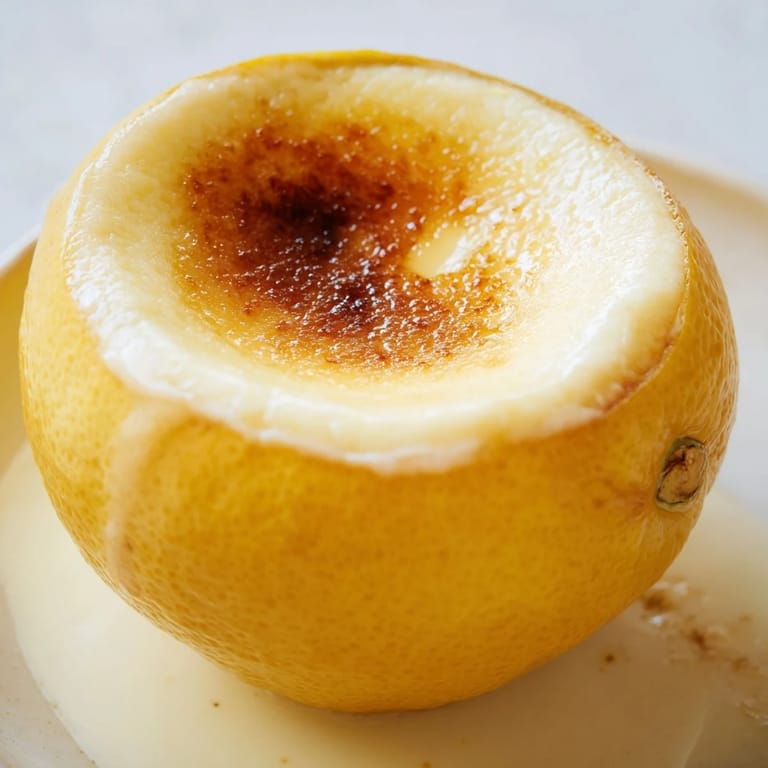
Save The first time I encountered lemon posset was at a tiny dinner club in Notting Hill, where the chef served these stunning lemon shell creations that looked like jewels on the plate. I was so enchanted that I spent weeks perfecting my own version, discovering along the way that this medieval British dessert is essentially magic—cream, sugar, and lemon transforming into silk through nothing more than heat and acid. The brûlée topping was my own addition, inspired by crème brûlée's signature crack, and it turns an already elegant dessert into something truly show-stopping.
I made these for my sister's summer garden party last year, setting up a little brûlée station on the patio where guests could watch the sugar caramelizing. Something about that torch's blue flame against golden evening light made the whole moment feel magical, and when people cracked through that crisp sugar layer into the cool cream beneath—there were actual gasps around the table. Now they request them by name, and I've learned to double the recipe because the first batch always disappears before anyone even sits down to eat.
Ingredients
- Double cream (heavy cream): The high fat content is non-negotiable here—lower fat creams won't set properly, and you'll end up with soup instead of silk
- Caster sugar: Finely ground sugar dissolves quickly into the hot cream, giving you that smooth custard-like texture without graininess
- Lemon zest: Infusing the cream with zest releases the aromatic oils, creating layers of lemon flavor beyond just bright acidity
- Freshly squeezed lemon juice: Bottled juice won't work—its the fresh acid that causes the cream to set, and concentrate gives off-flavors
- Large lemons for shells: Look for lemons with thick skins that stand upright easily, and save any juice you scoop out for the recipe
- Extra caster sugar for brûlée: This creates that signature crackle—you need enough for an even layer but not so much it becomes overwhelmingly sweet
Tired of Takeout? 🥡
Get 10 meals you can make faster than delivery arrives. Seriously.
One email. No spam. Unsubscribe anytime.
Instructions
- Prepare the lemon shells:
- Cut each lemon in half lengthwise and gently squeeze out the juice, saving it for the posset base. Use a spoon to carefully scrape out any remaining flesh, being mindful not to pierce the skin. Trim just enough from the bottom of each shell so they sit flat without wobbling, then chill them while you make the filling.
- Infuse the cream:
- Combine the cream, sugar, and lemon zest in a medium saucepan over medium heat, stirring until the sugar completely disappears. Bring it to a gentle bubble and let it simmer for exactly 3 minutes—this concentrated sweetness balances the sharp lemon that comes next. Watch closely so it doesn't boil over, as cream expands dramatically when it hits a rolling boil.
- Add the acid:
- Remove from heat and stir in the fresh lemon juice, watching in fascination as the mixture instantly thickens and transforms. Let it cool for 10 minutes, then strain through a fine mesh sieve to catch the zest pieces, pressing gently to extract all that infused cream.
- Fill the shells:
- Pour the warm posset mixture into your prepared lemon shells, filling them nearly to the rim but leaving just enough space for the sugar layer later. Transfer everything to the fridge and let them set for at least 3 hours, though overnight is even better for the deepest flavor development.
- Create the brûlée top:
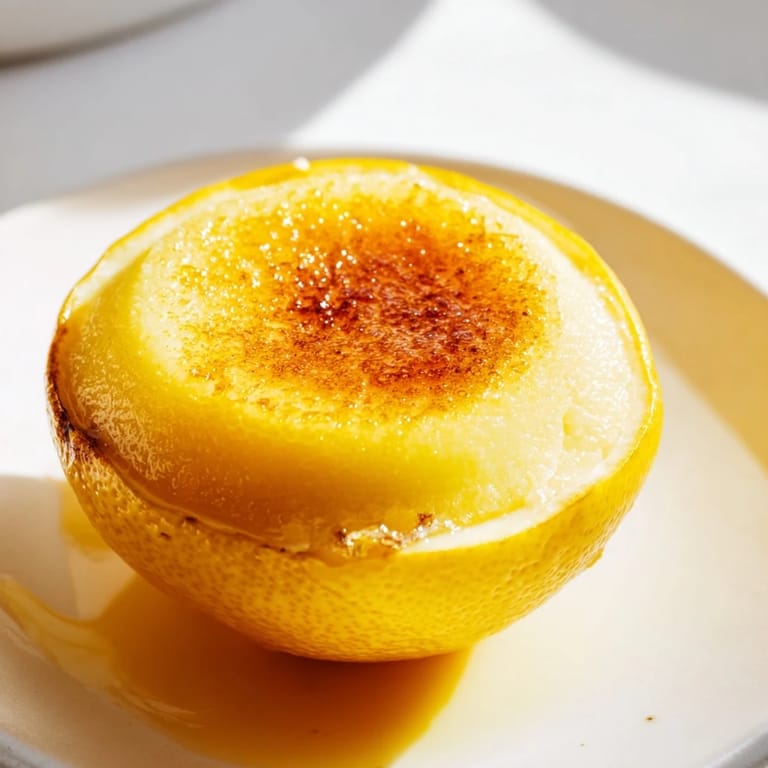
- Right before serving, sprinkle about a teaspoon of sugar over each posset, tilting and tapping to create an even layer. Fire up your kitchen torch and move it in slow circles until the sugar melts into golden caramel, then deepen to a deep amber—this should take 20 to 30 seconds per posset. Let the sugar harden for a few minutes before serving, so you get that satisfying crack when you dig in.
 Save
Save What started as a dinner party experiment has become my go-to dessert for moments that matter. There's something about the ritual of torching the sugar at the table, the sound of cracking caramel, the way cool cream meets warm burnt sugar—that turns dessert into an experience. These lemon possets have become the dish I make when I want people to feel cherished, because eating something this deliberately beautiful does something to your soul.
Make Ahead Magic
The possets themselves can be fully prepared 24 hours in advance, stored uncovered in the refrigerator so the surface doesn't collect condensation. In fact, the flavor deepens and improves overnight as the lemon zest infusion continues to work its way through the cream. The only step that must happen last-minute is the brûlée topping, which loses its crisp texture after about 30 minutes as the sugar gradually absorbs moisture from the air and the posset beneath.
Flavor Variations
While the classic version is stunning on its own, I've learned that a sprig of thyme or basil added during the cream infusion creates an herbaceous complexity that makes the lemon sing even brighter. Lavender works beautifully too, but use it sparingly—just a pinch during the simmer step, then strain it out with the zest. Some restaurants add a splash of elderflower liqueur to the cooled posset base for floral notes, though I find that distracting from the lemon's pure sunshine.
Troubleshooting Your Posset
If your posset hasn't set after chilling, the most common culprit is not simmering the cream long enough or using low-fat cream. Unfortunately, you cannot fix unset posset—save it for a delicious sauce over vanilla ice cream and try again with proper double cream and careful timing. If the posset has small grainy lumps, the cream may have gotten too hot or boiled too vigorously, so next time keep the heat at medium and watch it like a hawk during that critical 3-minute simmer.
- Work quickly when filling the shells—posset begins setting as soon as it cools below 110°F
- If your lemons roll around, press them into a bed of coarse sugar or rock salt for stability
- Leftover posset filling keeps beautifully in ramekins, though obviously without the dramatic shell presentation
 Save
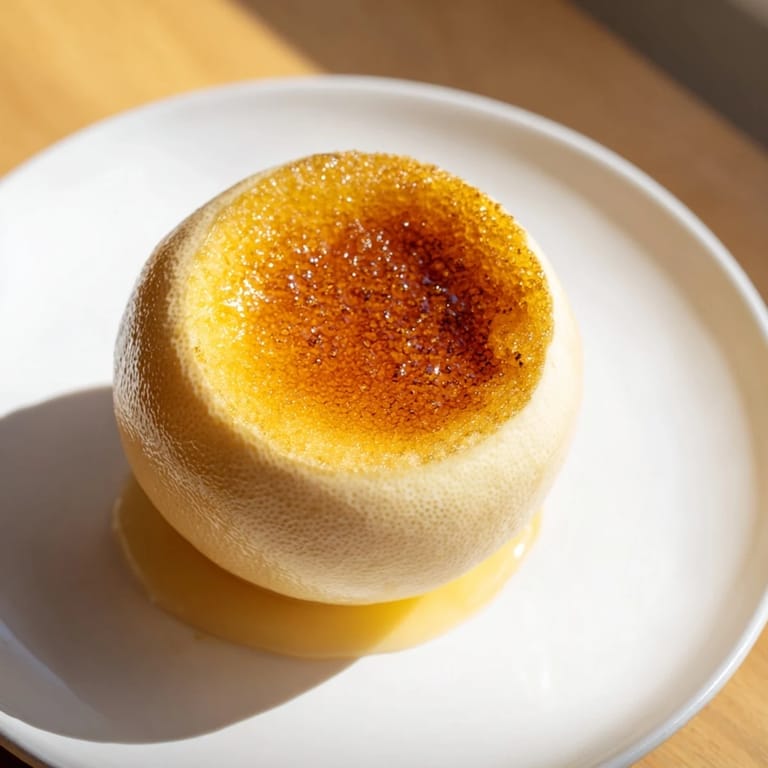
Save These lemon brûlée possets are the kind of dessert that makes people pause, makes them pay attention to what they're eating. That first crack through burnt sugar into cool, tart cream is a small moment of perfection, one that lingers in memory long after the last spoonful is gone.
Recipe FAQ
- → What is the best way to caramelize the sugar topping?
Using a kitchen blowtorch is ideal for evenly caramelizing the sugar to a crisp, golden crust. Alternatively, a hot grill or broiler can be used with close attention to avoid burning.
- → How do I prepare the lemon shells for serving?
Halve fresh lemons lengthwise, carefully scoop out the flesh while keeping the shells intact, and trim a thin slice off the bottom so they can stand upright in the fridge.
- → Can I add flavors to the cream base?
Yes, infusing the cream with herbs like thyme or basil during simmering adds subtle aromatics. Remove herbs before adding the lemon juice for a smooth finish.
- → How long should the posset chill before serving?
Chill for at least 3 hours to allow the lemon cream to set properly and develop its silky texture.
- → What can I serve alongside this dessert?
Crisp shortbread or almond biscuits complement the creamy and tart flavors, adding a pleasant textural contrast.
- → Is it necessary to strain the lemon zest from the cream?
Straining the lemon zest after cooling enhances smoothness, delivering a delicate texture while maintaining the fresh citrus flavor.