 Save
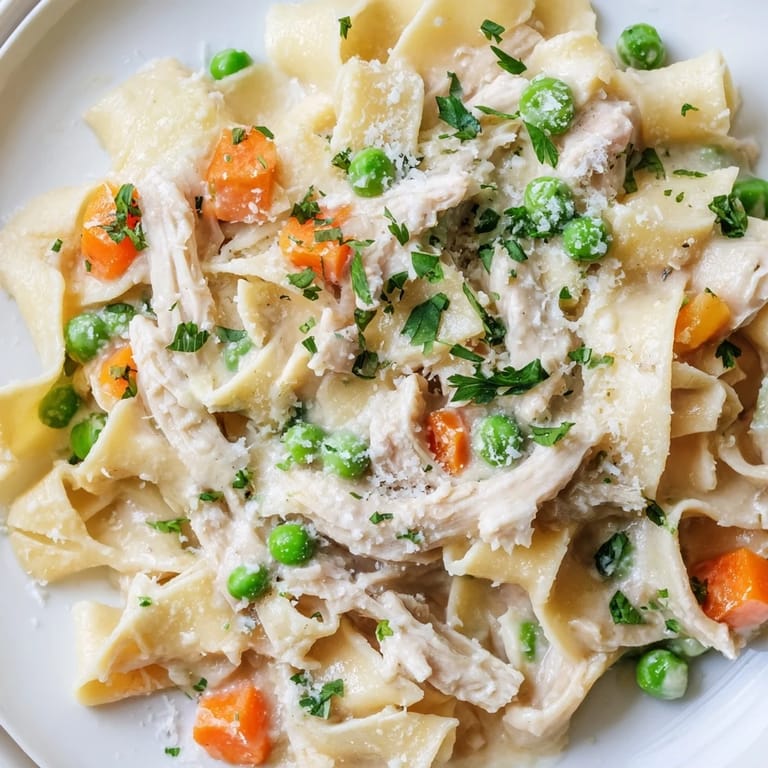
Save The skillet was still warm from breakfast when I decided to throw this together on a Saturday afternoon, using leftover rotisserie chicken from the night before. My daughter wandered into the kitchen, drawn by the smell of butter and garlic, and asked if we were having "the noodle thing" again. I hadn't realized it had already become one of her favorites. Sometimes the recipes that stick around aren't the complicated ones—they're the ones that feel like a hug in a bowl.
I started making this during that stretch of April when the farmers market had just opened again but the evenings were still cool enough to want something warm. My son had been asking for chicken noodle soup all week, but I wanted something less brothy, more substantial. This became the compromise, and now it's the dish I make when I want comfort without heaviness. It sits somewhere between a casserole and a stir-fry, and that in-between place is exactly where it belongs.
Ingredients
- Cooked, shredded chicken: Rotisserie chicken is your best friend here—it's already seasoned and saves you from poaching or roasting, plus the darker meat keeps things moist.
- Wide egg noodles: They hold the sauce better than thin noodles and give the dish that classic, old-fashioned feel; don't overcook them or they'll turn mushy when you fold them in.
- Frozen peas: They add sweetness and a pop of green without any prep work, and they thaw perfectly in the warm sauce.
- Diced carrots: Fresh carrots bring a slight crunch and natural sweetness that balances the richness of the cream; cut them small so they cook through quickly.
- Yellow onion: A small onion is all you need to build a savory base without overpowering the lighter, springtime vibe of the dish.
- Garlic: Two cloves give just enough warmth and fragrance to make the kitchen smell like someone's been cooking all day, even though you haven't.
- Unsalted butter: It starts the sauce with a rich, silky foundation and lets you control the salt level as you go.
- All-purpose flour: This thickens the sauce into something that clings to the noodles instead of pooling at the bottom of the skillet.
- Low-sodium chicken broth: It keeps the sauce light and lets you season to your own taste without worrying about it getting too salty.
- Whole milk or half-and-half: A little dairy makes the sauce creamy without turning it into a heavy cream bomb; half-and-half gives it extra body if you want it richer.
- Grated Parmesan cheese: It melts into the sauce and adds a subtle nutty, salty finish that ties everything together.
- Dried thyme: A classic herb for chicken dishes, it brings a gentle earthiness that feels right for spring.
- Black pepper and salt: Simple seasoning that lets the other flavors shine through; taste as you go and adjust at the end.
- Fresh parsley: Optional, but a handful of chopped parsley at the end makes it look and taste fresher, like you put in more effort than you did.
Tired of Takeout? 🥡
Get 10 meals you can make faster than delivery arrives. Seriously.
One email. No spam. Unsubscribe anytime.
Instructions
- Cook the noodles:
- Boil the egg noodles in salted water until they're just al dente, then drain them and set them aside. They'll finish cooking in the skillet, so undercook them slightly to avoid mushiness.
- Sauté the vegetables:
- Melt the butter in a large skillet over medium heat, then add the onion and carrots, stirring occasionally until they soften and the onion turns translucent, about 4 to 5 minutes.
- Add the garlic:
- Toss in the minced garlic and stir for about 30 seconds, just until it smells amazing and starts to turn golden.
- Make the roux:
- Sprinkle the flour over the vegetables and stir it around for a full minute to cook off the raw flour taste. This step is what keeps your sauce from tasting pasty later.
- Build the sauce:
- Slowly whisk in the chicken broth and milk, then add the thyme, salt, and pepper, bringing everything to a gentle simmer. Stir frequently and let it thicken for 3 to 4 minutes until it coats the back of a spoon.
- Add the chicken and peas:
- Stir in the peas, shredded chicken, and Parmesan cheese, letting everything warm through for about 2 minutes. The cheese will melt into the sauce and make it silky.
- Fold in the noodles:
- Gently mix in the cooked noodles, tossing them until every strand is coated in sauce. Let it all cook together for another minute or two, then pull the skillet off the heat.
- Finish and serve:
- Sprinkle fresh parsley over the top if you have it, then serve the skillet warm, straight from the pan if you're feeling casual.
 Save
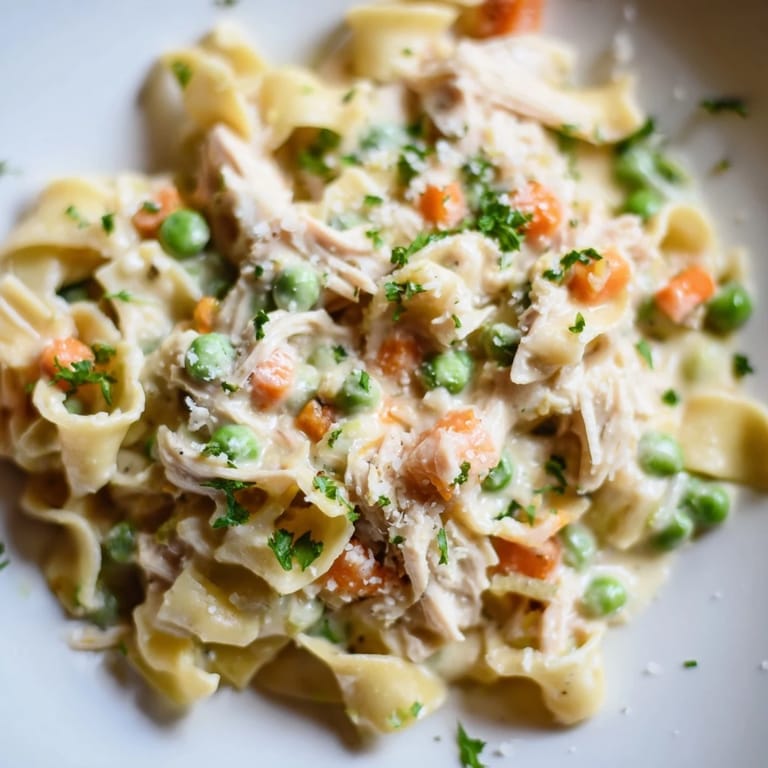
Save The first time I served this to friends, one of them scraped her bowl clean and asked if I'd learned the recipe from my grandmother. I hadn't, but I took it as the highest compliment anyway. There's something about a dish that feels like it's been passed down, even when you just made it up on a Tuesday. It became the kind of recipe I bring to new parents or friends who've had a long week, because it says "I care" without requiring a three-hour commitment.
Choosing Your Chicken
Rotisserie chicken is the fastest route, and honestly, it adds a depth of flavor that plain poached chicken sometimes lacks. If you have leftover roast chicken or even grilled chicken from the night before, shred it up and use that instead. I've also made this with turkey after Thanksgiving, and it worked beautifully. The key is to use meat that's already cooked and seasoned, so you're not starting from scratch and can focus on building the sauce.
Customizing for the Season
This recipe is flexible enough to shift with whatever vegetables you have on hand or whatever looks good at the market. In late spring, I'll throw in blanched asparagus tips or a handful of baby spinach at the end, letting them wilt into the sauce. Sometimes I add a squeeze of lemon juice just before serving, which brightens everything up and makes it taste even more like spring. If you want to lean into comfort over freshness, swap the peas for mushrooms and add a pinch of nutmeg to the sauce.
Storing and Reheating
Leftovers keep well in the fridge for up to three days, though the noodles will soak up more sauce as they sit. When you reheat it, add a splash of chicken broth or milk and warm it gently on the stovetop, stirring frequently so the sauce loosens up again. I don't recommend freezing this one, because egg noodles get a little mushy after thawing, and the texture just isn't the same.
- Reheat on low heat with extra liquid to bring the sauce back to life.
- Store in an airtight container and eat within three days for best texture.
- If you know you'll have leftovers, cook the noodles separately and combine them only with the portion you plan to eat right away.
 Save
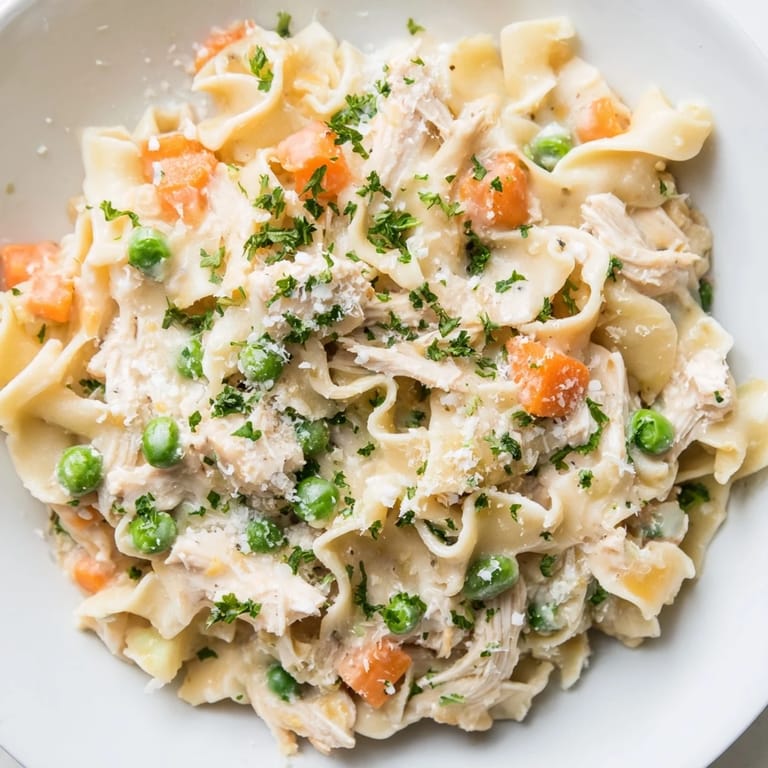
Save This is the kind of dinner that doesn't ask much of you but gives back more than it should. It's warm, easy, and just springtime enough to feel like something new without pretending to be fancy.
Recipe FAQ
- → Can I use fresh vegetables instead of frozen peas?
Yes. Fresh peas work wonderfully—add them toward the end of cooking so they remain tender and bright. Fresh carrots may need slightly longer sautéing to soften. Fresh asparagus or baby spinach are also excellent spring substitutes.
- → What type of chicken works best?
Rotisserie chicken is most convenient and flavorful. You can also poach chicken breasts or use leftover cooked chicken. Ensure it's shredded into bite-sized pieces for even distribution throughout the dish.
- → How do I prevent the sauce from becoming too thick or lumpy?
Whisk the broth and milk slowly into the flour base to avoid lumps. Cook the flour briefly before adding liquids. If lumps form, strain the sauce through a fine-mesh sieve. Adjust consistency by adding more broth if too thick.
- → Can this be made ahead or frozen?
Yes, prepare through step 6 and refrigerate up to 2 days. Reheat gently on the stovetop, adding noodles just before serving to maintain their texture. This freezes well for up to 3 months; thaw overnight and reheat slowly.
- → What can I add for extra flavor?
A squeeze of fresh lemon juice brightens the dish beautifully. A pinch of nutmeg adds warm complexity to the sauce. Fresh dill, tarragon, or chives complement the spring theme. Crispy bacon bits add richness and texture.
- → Is this dish suitable for dietary restrictions?
It contains eggs, milk, and gluten. Use gluten-free noodles and flour for celiac accommodation. Substitute butter with dairy-free options and use non-dairy milk for vegan adaptations. Always verify ingredient labels for allergen information.