 Save
Save My first encounter with Tom Kha happened on a rainy Bangkok evening when a friend's mother stirred this pot with the kind of practiced ease that comes from making it a hundred times before. The steam rising from the bowl carried such a complex perfume—simultaneously creamy, citrusy, and deeply aromatic—that I knew immediately this wasn't just soup, it was a feeling you could eat. Years later, I still chase that exact balance of flavors, that silky texture that coats your mouth with warmth, and the way a single spoonful can transport you somewhere far away from your kitchen.
I made this soup for my partner during their first week of a new job, when they came home exhausted and not particularly hungry for anything heavy. After one bowl, they asked for seconds and spent the entire meal talking about how the flavors somehow felt both comforting and energizing at the same time. That's when I realized Tom Kha isn't just nourishing—it's genuinely healing in a way that transcends the ingredients.
Ingredients
- Boneless, skinless chicken breast or thighs (300 g): Thighs stay more tender and forgiving, but breasts work perfectly fine if that's what you have—just slice them thin so they cook evenly in the broth.
- Coconut cream (400 ml): This is the soul of the soup, giving it that velvety richness; don't skip it or substitute it with lite coconut milk unless you enjoy a thinner, less luxurious result.
- Chicken stock (500 ml): Use good quality stock or even homemade if you have it—it makes a noticeable difference in the final depth of flavor.
- Lemongrass (2 stalks): Trim the dry ends and bruise the stalks by smashing them gently with the side of your knife; this releases their essential oils and makes the flavor sing.
- Fresh galangal (4 slices) or ginger: Galangal has a slightly peppery, medicinal quality that ginger can't quite replicate, but ginger works in a pinch and honestly, most people won't know the difference.
- Kaffir lime leaves (4): These are non-negotiable if you can find them—they add a bright, almost floral citrus note that lime juice alone cannot achieve.
- Button mushrooms (200 g): Slice them thick enough that they hold their shape during cooking; they should remain slightly firm, not mushy.
- Shallots and garlic: The shallots add subtle sweetness while garlic grounds the soup with savory depth; always smash the garlic instead of mincing it so you can remove it easily later.
- Thai bird's eye chilies: Smash them whole to release heat without turning your soup red; you can always fish them out if things get too spicy.
- Fish sauce (2 tbsp): This is the secret ingredient that makes everything taste more like itself; it's not about fish flavor, it's about umami and depth.
- Lime juice and sugar: These two balance each other—acidity and sweetness—creating the brightness that makes you come back for another spoonful.
Tired of Takeout? 🥡
Get 10 meals you can make faster than delivery arrives. Seriously.
One email. No spam. Unsubscribe anytime.
Instructions
- Build your flavor base:
- Pour the coconut cream and chicken stock into a large saucepan and add the lemongrass, galangal, lime leaves, shallots, garlic, and chilies all at once. This isn't a step where timing matters as much as accuracy—you're creating an aromatic foundation that will perfume everything that follows.
- Let the broth marry:
- Bring everything to a gentle simmer over medium heat, then back off and let it bubble softly for 10 minutes. You'll notice the kitchen filling with that distinctive fragrance—that's the signal that your broth is becoming something special.
- Cook the protein and vegetables:
- Add the sliced chicken and mushrooms directly to the simmering broth and continue cooking for 8 to 10 minutes until the chicken is just cooked through and opaque. The mushrooms should be tender but still hold their shape; if they start looking like they're dissolving, you've gone too far.
- Remove the aromatics:
- Fish out the lemongrass stalks, galangal slices, and lime leaves with a slotted spoon or small strainer. These have done their job and have become slightly bitter if left to bob around any longer.
- Season to taste:
- Stir in the fish sauce, lime juice, and sugar, then taste before adding salt—the fish sauce is already salty, so you might need less than you'd expect. This is where the soup transforms from fragrant to absolutely crave-worthy; take your time adjusting it until it tastes exactly right to you.
- Serve with intention:
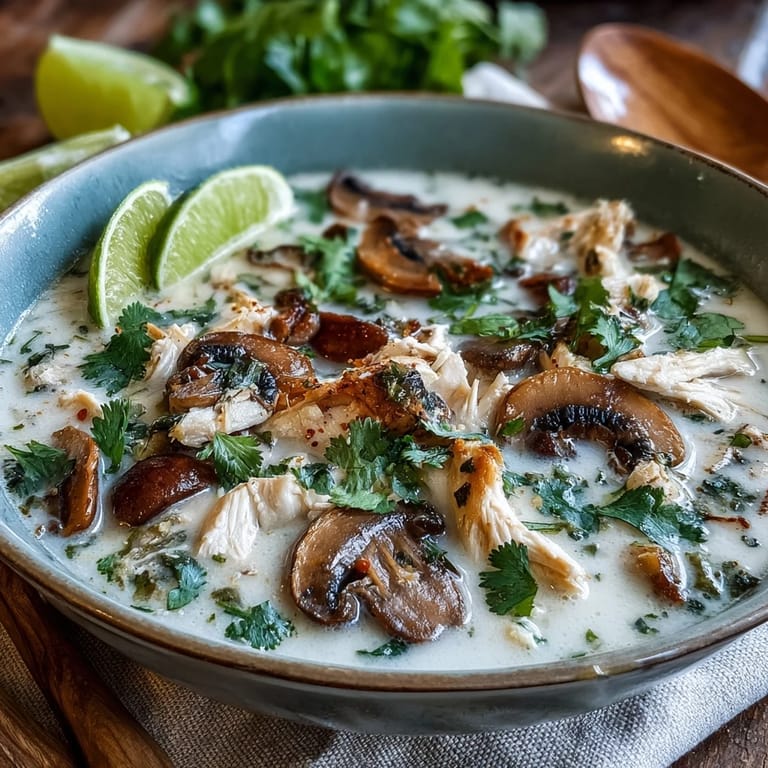
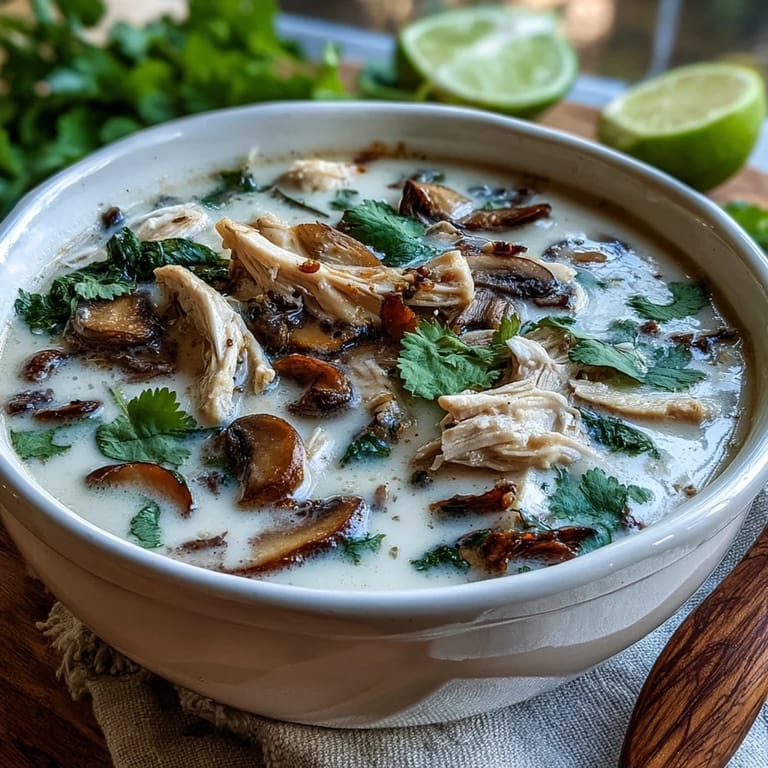
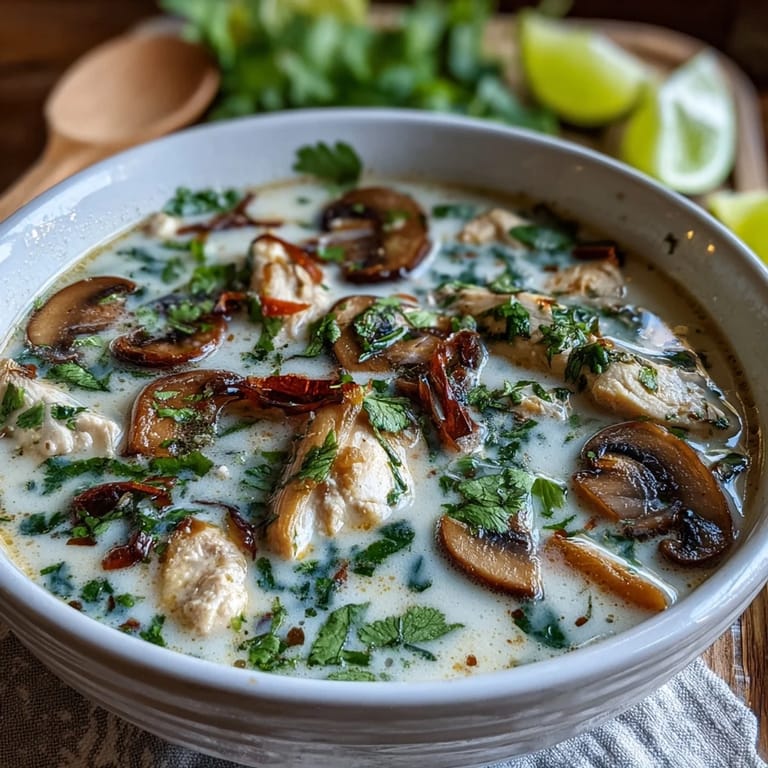
- Ladle the soup into bowls, making sure each gets a good portion of chicken and mushrooms, then scatter cilantro over the top and serve with lime wedges on the side. People will squeeze the lime over their own bowl, and that personal touch of acidity matters more than you'd think.
 Save
Save There's a moment in the cooking process when the aroma becomes almost overwhelming—that's when you know you've got it right. I've found that standing over the pot and breathing in deeply for just a second can reset your entire day.
Why This Soup Feels Different
Tom Kha doesn't announce itself loudly the way some soups do; instead, it works quietly, wrapping you in warmth and spice and tropical comfort. The balance between the creamy coconut and the bright citrus notes from lime and lemongrass creates something that tastes both indulgent and refreshing at the same time, which is why you'll want to eat it regardless of the season or weather outside.
Playing With Heat Levels
I've learned that Thai bird's eye chilies are deceptive—they don't taste super hot when you first taste them, but the heat creeps up on you slowly and lingers. If you're cooking for a mixed group with different spice tolerances, smash the chilies and leave them whole so people can eat around them, or add them to individual bowls at serving time so everyone controls their own heat level.
Making It Your Own
The beauty of Tom Kha is that it's flexible enough to accommodate what you have on hand while remaining true to its essential character. I've made it with tofu for vegetarian friends (using soy sauce instead of fish sauce), added extra coconut milk when I wanted something richer, and once threw in some snap peas near the end because that's what was in my crisper drawer. The soup welcomed every change without protest, which is the hallmark of a truly forgiving recipe.
- If you can't find galangal, ginger works—it won't be identical but it will still be delicious.
- This soup reheats beautifully and tastes even better the next day as flavors deepen and blend together.
- Serve with jasmine rice if you want to turn soup into a complete meal, or eat it on its own as a light, satisfying dinner.
 Save
Save This soup has a way of becoming a favorite that people ask for again and again. Once you make it once, you'll understand why.
Recipe FAQ
- → What makes Tom Kha different from Tom Yum?
Tom Kha features coconut cream creating a rich, velvety texture while Tom Yum is a clear broth. The coconut mellows the heat and adds body, making Tom Kha more comforting and less sharp than its tangy counterpart.
- → Can I make this vegetarian?
Yes, substitute chicken with firm tofu and replace fish sauce with soy sauce or a vegetarian fish sauce alternative. The coconut base and aromatic herbs remain the same, maintaining the authentic flavor profile.
- → What can I use if I can't find galangal?
Fresh ginger makes an acceptable substitute, though the flavor will be slightly different. Use approximately 1 tablespoon of sliced ginger for every 4 slices of galangal called for in the traditional preparation.
- → How spicy is this soup?
The heat level depends on the number of Thai chilies used. Starting with 2-3 chilies provides a gentle warmth that complements rather than overpowers the coconut. Adjust upward for more heat or omit entirely for a mild version.
- → How long does this keep in the refrigerator?
Store in an airtight container for up to 3 days. The coconut cream may separate when chilled but will emulsify again when gently reheated. Avoid boiling as this can cause the coconut to separate permanently.
- → What rice pairs best with Tom Kha?
Fragrant jasmine rice is the traditional accompaniment, its floral notes complementing the coconut and aromatics. Sticky rice or steamed white rice also work well to soak up the creamy broth.