 Save
Save The first time I made Tom Yum, my kitchen filled with such an intoxicating fog of lemongrass and galangal that my neighbor actually knocked on the door thinking something was burning. That's when I realized this wasn't just soup, it was an experience that arrives before you even taste it. What started as curiosity about Thai cooking became an obsession with balancing those four impossible flavors, and somehow this bowl of aromatic broth taught me more about cooking than years of culinary school could have. Now whenever I smell that particular combination, I'm transported back to that moment of discovery.
I made this for my sister during a particularly stressful week, and watching her take that first spoonful, her eyes light up with recognition of something warm and healing, made me understand why certain dishes become the ones people ask for again and again. There's something about tom yum that feels both sophisticated and deeply comforting, the kind of soup that wraps around you like an embrace.
Ingredients
- Boneless, skinless chicken thighs or breasts (400 g): Thighs stay tender and flavorful even with longer cooking, though breasts work too if you prefer leaner meat and slice them thin to cook through quickly.
- Chicken stock (1.2 liters): The foundation of everything, so don't skimp on quality; homemade stock will make you taste the difference in every spoonful.
- Lemongrass (2 stalks): These papery stalks release an oil that's impossible to replicate, so trim off the dry tops and smash them to wake up their aromatic soul.
- Fresh galangal (4 slices) or dried (2 tsp): This knobby root brings a subtle peppery note that neither ginger nor turmeric can replicate, and fresh always outshines dried.
- Makrut lime leaves (5 leaves): These are the secret ingredient that elevates tom yum from good to unforgettable, bringing a sophisticated citrus note that fresh lime juice alone cannot capture.
- Birds eye chilies (4): These small fiery peppers pack concentrated heat, so crush them lightly to release their power without turning your soup into liquid fire.
- Mushrooms (150 g): Oyster mushrooms absorb the broth beautifully and add an earthy depth that balances the bright aromatics.
- Tomatoes (2 medium): They soften into the broth and provide subtle sweetness that rounds out the sharp, spicy edges.
- Onion and garlic: The onion becomes silky in the broth while smashed garlic cloves infuse their pungent character throughout.
- Fish sauce (3 tbsp): This is where umami lives; it seems intense on its own but becomes the secret savory backbone that makes everything taste more alive.
- Lime juice (2 tbsp): The acidity should taste balanced, not overpowering, so taste and adjust as you go since lime strength varies.
- Sugar and salt: These humble seasonings are your precision tools for balancing the competing flavors into harmony.
- Fresh cilantro and spring onions: These add brightness and a fresh herbal note at the very end that prevents the soup from feeling heavy.
Tired of Takeout? 🥡
Get 10 meals you can make faster than delivery arrives. Seriously.
One email. No spam. Unsubscribe anytime.
Instructions
- Awaken the aromatics:
- Take your lemongrass stalks and lay them flat on the cutting board, then use the side of your knife to smash them with a firm thwack, not gentle pressure. You'll see the oils release and suddenly your workspace transforms into something that smells like Thailand, which means you've done it right.
- Build your flavor base:
- Pour the stock into your pot and bring it to a rolling boil, watching it transform from clear to fragrant as you add the bruised lemongrass, galangal slices, torn lime leaves, crushed chilies, and smashed garlic cloves. Let this simmer uncovered for five minutes while you resist the urge to rush, because this infusion time is where the magic happens.
- Cook the chicken and onion:
- Slide your thinly sliced chicken into the simmering broth along with the onion slices, and watch for that initial foam that rises to the surface. Skim it away with a spoon because it will keep rising for about eight to ten minutes, and removing it keeps your broth clear and refined looking.
- Add vegetables and finish cooking:
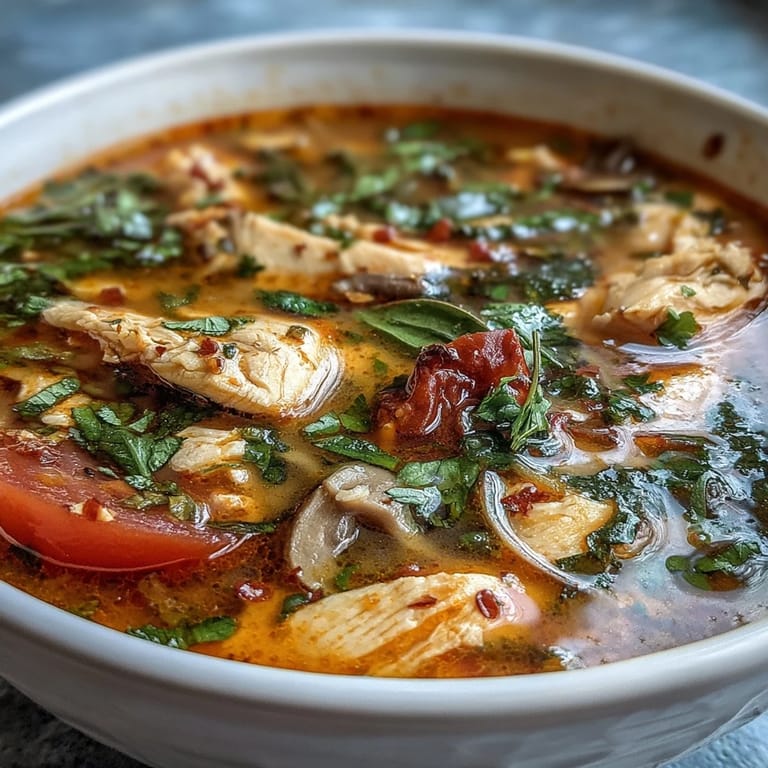
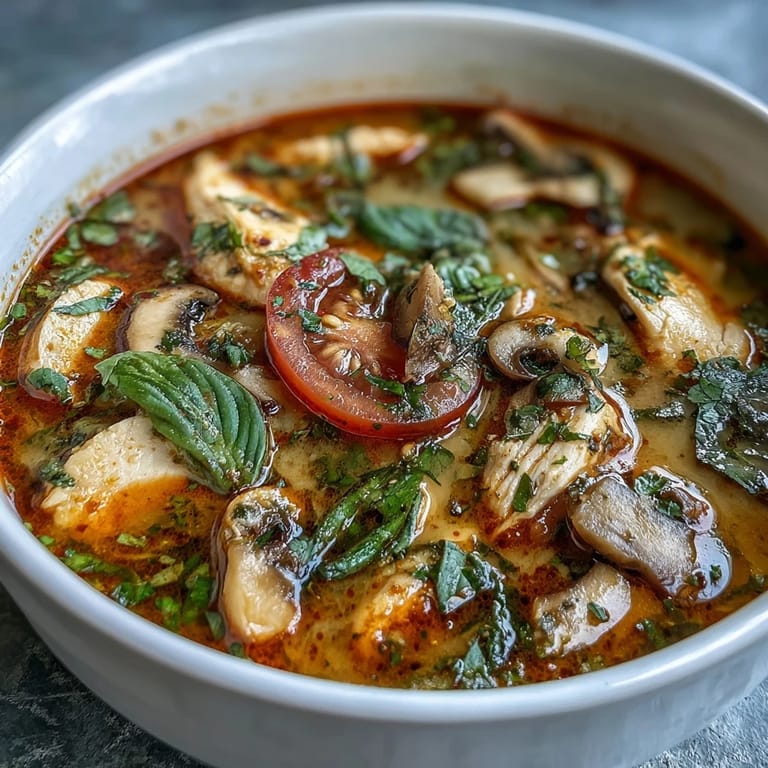
- Once the chicken is nearly cooked through, toss in your mushroom slices and tomato wedges, and let everything cook together for another five to seven minutes until the vegetables soften but still hold their shape. The mushrooms will darken slightly and the tomatoes will begin to dissolve into the broth, which is exactly what you want.
- Season with intention:
- This is where your senses take over, so stir in the fish sauce, lime juice, sugar, and salt, then taste before doing anything else. You might need more lime if it tastes flat, or more fish sauce if it seems too sharp, so adjust gradually and keep tasting until you find that elusive balance where sour, salty, and spicy each get equal voice.
- Final touches and serving:
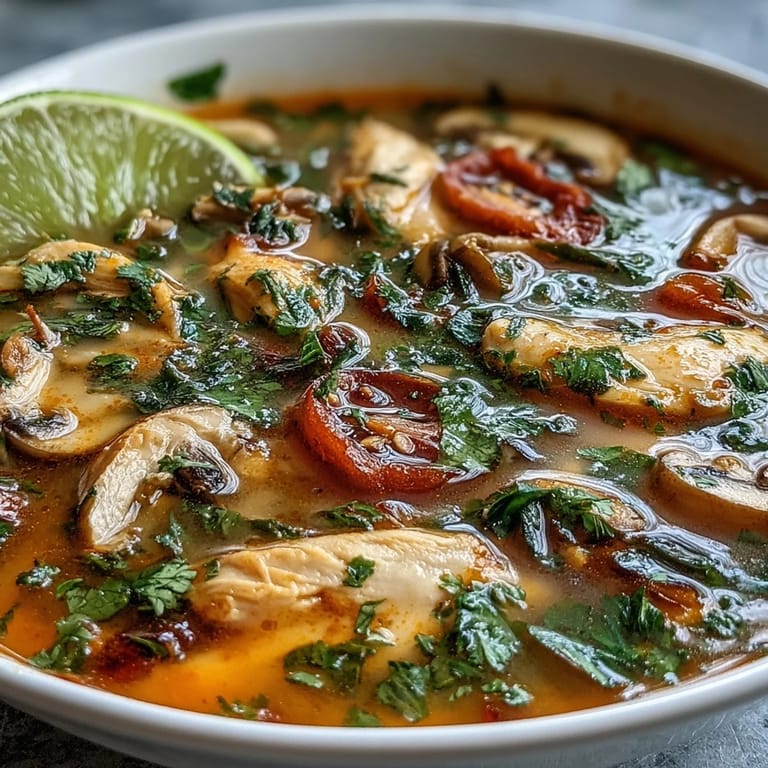
- You can leave the aromatics in for a rustic presentation or remove them for a cleaner look, though I usually leave the lemongrass and chilies in since people know to push them aside. Ladle the soup into bowls and scatter cilantro and spring onions across the top, adding a lime wedge on the side so each person can adjust the sourness to their own preference.
 Save
Save I'll never forget the quiet moment when my father, who is skeptical of most foods, took a second bowl and quietly asked if I could teach him how to make it. That's when I understood that tom yum isn't about impressing people with technique or exotic ingredients; it's about creating something that tastes like care and curiosity in a bowl.
The Soul of Tom Yum
What makes this soup distinctly tom yum rather than just another aromatic broth is the deliberate layering of scents and flavors that each contribute something singular. The lemongrass whispers grass and citrus, the galangal adds a subtle peppery warmth, the makrut leaves bring sophisticated depth, and the chilies promise heat without overwhelming everything else. It's like a conversation between different voices that somehow all speak at once and make sense together. I realized after making this dozens of times that tom yum teaches you about balance in a way few other dishes can, because if any single flavor dominates, the whole experience collapses.
Playing With Heat
The birds eye chilies are optional in the way that they're technically not required, but they're really the definition of the dish in terms of personality and identity. I've learned that crushing them slightly rather than leaving them whole gives you better control, because whole chilies can be temperamental, sometimes docile and sometimes explosively hot for no reason anyone understands. My approach now is to add four crushed chilies to the base, taste it, and keep a fifth one nearby for anyone who wants to add more heat to their own bowl at the table, which turns seasoning into an interactive experience rather than a final pronouncement.
Timing and Texture
The vegetables should finish cooking at roughly the same time as the chicken, which is why the timing in the instructions matters more than it might seem at first glance. If you add everything at once, your mushrooms will dissolve completely and your tomatoes will turn to mush while your chicken still needs several more minutes. The rhythm of adding chicken first, then vegetables later, means everything arrives at the table with its own distinct texture that contributes something different to each spoonful. This soup rewards patience and attentiveness because you're not just boiling things together, you're orchestrating a sequence that ends with everything in perfect synchronization.
- Cut your chicken thin so it cooks quickly and stays tender without becoming stringy.
- Add fresh herb garnishes right before serving so they stay bright and don't wilt into the hot broth.
- Keep lime wedges at the table because people will have different preferences for sourness and personalization is part of the joy.
 Save
Save Tom yum has become my kitchen's version of a warm conversation, the thing I make when someone needs comfort or excitement simultaneously. Every time I smell those familiar aromatics rising from the pot, I'm reminded that cooking well isn't about following rules perfectly, but about understanding the flavors you're working with and trusting yourself to make it yours.
Recipe FAQ
- → What makes Tom Yum distinctive?
The signature comes from the holy trinity of Thai aromatics: lemongrass, galangal, and makrut lime leaves. These ingredients create the characteristic citrusy, piney, and floral notes that define this soup.
- → Can I adjust the spice level?
Absolutely. Start with fewer bird's eye chilies if you prefer milder heat, or add more for extra fire. You can also remove the seeds before crushing them to reduce intensity while preserving flavor.
- → What's the difference between clear and creamy versions?
Traditional Tom Yum has a clear broth, while Tom Yum Nam Khon includes evaporated milk or coconut milk for richness. Both versions share the same aromatic base.
- → Can I use other proteins?
Shrimp works beautifully and creates Tom Yum Goong. You can also use a combination of seafood, tofu for a vegetarian option, or a mix of mushrooms for extra texture.
- → How do I balance the flavors?
Taste and adjust the lime juice for sourness, fish sauce for saltiness, and sugar to round out sharp edges. The goal is a harmonious blend where no single element dominates.