 Save
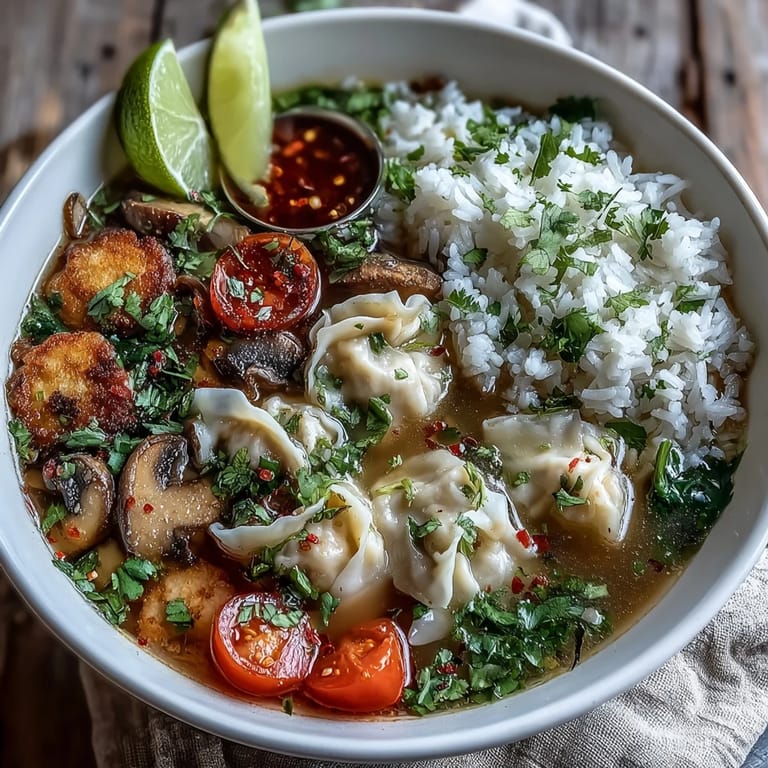
Save The first time I made tom yum wonton soup, I was trying to impress someone who'd just returned from Bangkok with stories about street food stalls and fragrant broths that lingered in the air for blocks. I didn't have all the traditional ingredients that afternoon, so I improvised with what I had and folded wontons while my kitchen filled with the sharp, citrusy smell of lemongrass hitting hot broth. What emerged from that pot was something unexpectedly personal, a bridge between two cuisines that somehow felt like home, even though I'd invented it on the spot.
Years later, I made this for a friend who was recovering from being under the weather, and watching her face light up as she tasted that first spoonful of broth told me everything. She asked for the recipe before she'd even finished the bowl, and now whenever someone mentions they need comfort food with an edge, this is what I suggest they make.
Ingredients
- Ground pork: Gives the wontons a tender filling that absorbs the broth beautifully, though chicken works just as well if that's what you prefer.
- Soy sauce: Seasons the wonton filling with umami depth and a subtle saltiness.
- Sesame oil: A small amount goes a long way, adding a toasted aroma that makes the filling taste more authentic.
- Ginger and garlic: Fresh and minced fine so they distribute evenly through the filling without overpowering it.
- Spring onion: Chopped small, it adds brightness and a slight onion note to each bite.
- White pepper: More delicate than black pepper, it won't speckle the filling visibly but brings warmth.
- Wonton wrappers: These thin wheat squares are what make wontons possible, and they seal beautifully with a dab of water.
- Chicken stock: Low-sodium is crucial here because the fish sauce will add its own salinity, and you want control over the final flavor.
- Lemongrass: Smash the stalks before adding so the fragrant oils release into the broth more readily.
- Kaffir lime leaves: These dried or fresh leaves bring a floral citrus note that's distinctly Thai and worth seeking out.
- Galangal: A rhizome similar to ginger but more peppery and complex, though ginger works in a pinch.
- Red chilies: Slice them with seeds for more heat, remove seeds for gentler warmth, or adjust the quantity entirely based on your preference.
- Mushrooms: Shiitake adds earthiness and umami, but button mushrooms are milder and work fine if that's what you have.
- Tomatoes: Quartered so they soften into the broth and release their acidity, balancing the other flavors.
- Fish sauce: Non-negotiable for authentic tom yum depth, though a small amount goes far and mellows as it cooks.
- Lime juice: Fresh lime is essential, added at the end to preserve its bright acidity.
- Sugar: Just a touch to round out the flavors, creating harmony between spicy, salty, sour, and sweet.
- Bok choy or spinach: Wilts in moments, adding nutrition and a tender green vegetable to each bowl.
- Shrimp: Optional but they cook in minutes and add a subtle sweetness that complements the broth.
- Coriander leaves: Sprinkled fresh on top, they add herbal brightness and visual appeal.
- Chili oil: A drizzle at the end provides silky heat and richness.
Tired of Takeout? 🥡
Get 10 meals you can make faster than delivery arrives. Seriously.
One email. No spam. Unsubscribe anytime.
Instructions
- Mix your wonton filling with intention:
- Combine the ground pork, soy sauce, sesame oil, ginger, garlic, spring onion, and white pepper in a bowl, stirring until everything is evenly distributed and the mixture smells fragrant. This is where the wontons get their character, so don't rush it.
- Fill and fold with care:
- Place about a teaspoon of filling in the center of each wonton wrapper, wet the edges lightly with water, then fold into a triangle and bring the two corners together to seal into an envelope shape. Set them on a plate under a damp cloth so they don't dry out while you prepare the broth.
- Build the broth foundation:
- Bring the chicken stock to a simmer in a large pot, then add the smashed lemongrass, torn kaffir lime leaves, galangal slices, and sliced red chilies, letting them infuse for about ten minutes until the broth becomes aromatic and golden. This simmering time is when the magic happens, so resist the urge to rush past it.
- Add the vegetables and depth:
- Stir in the sliced mushrooms and quartered tomatoes, giving them five minutes to soften and release their flavors into the broth. The tomatoes will begin to break down slightly, adding natural acidity.
- Strain and season to balance:
- Remove the lemongrass, galangal, and kaffir lime leaves with a slotted spoon, then add the fish sauce, lime juice, and sugar, tasting as you go and adjusting until you have the balance you want. This is your moment to make it your own, so trust your palate.
- Cook the wontons until they float:
- Gently add the wontons and optional shrimp to the simmering broth and cook for four to five minutes, watching until the wontons rise to the surface and the shrimp turn pink. This short cooking time keeps everything tender.
- Finish with fresh greens:
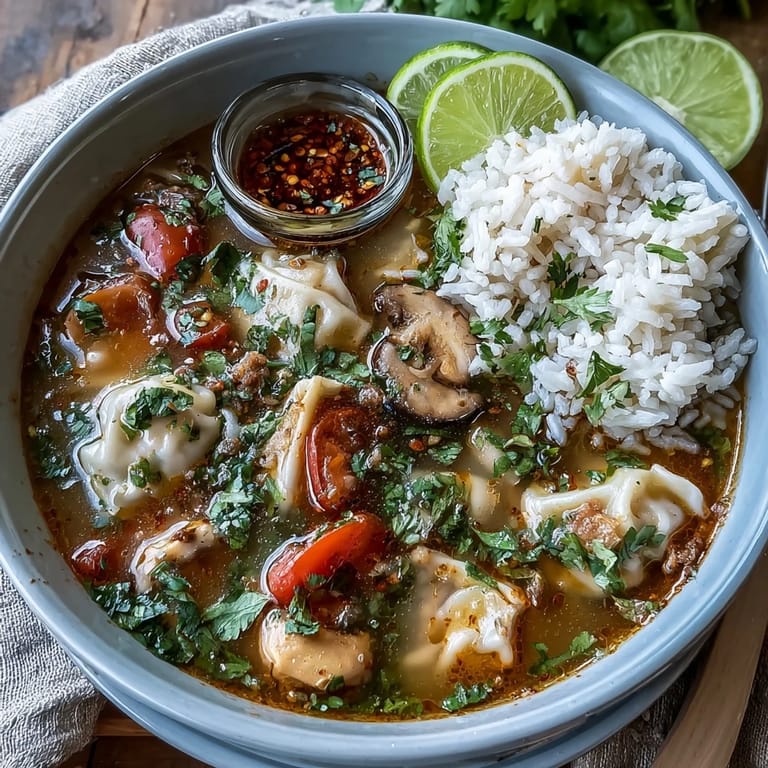
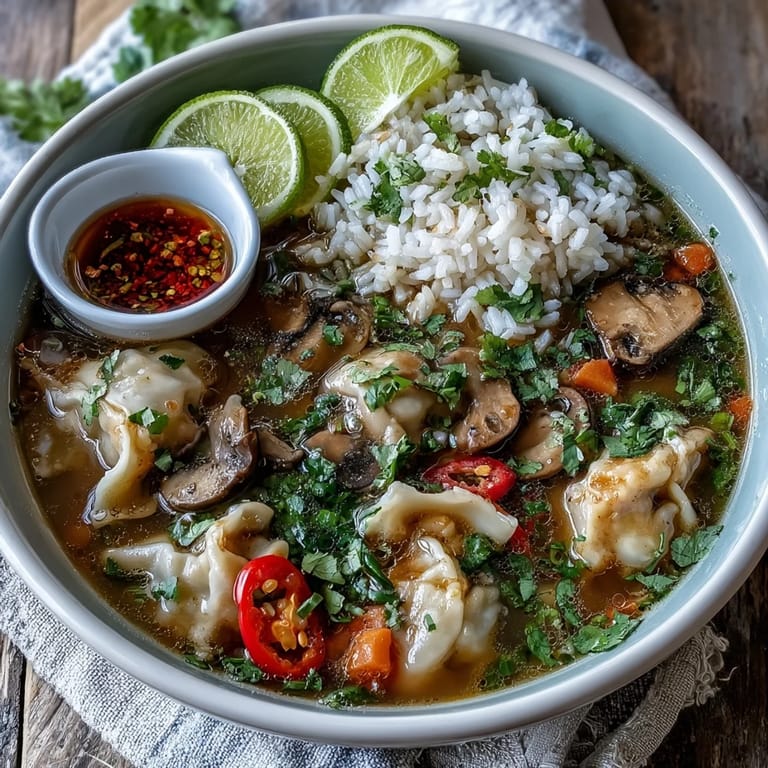
- Add the bok choy or spinach and let it wilt for just about a minute, then ladle the soup into bowls. Top each serving with fresh coriander, sliced spring onions, lime wedges, and a drizzle of chili oil if you like.
 Save
Save There's a moment near the end of cooking when you taste the broth and it suddenly clicks, when all those separate ingredients transform into something coherent and complex that makes you want to call someone and tell them to come over immediately. That's when you know you've got it right.
The Art of Folding Wontons
Wonton folding has a rhythm to it once you understand the motion, and I've found that the best way to learn is to just do a few and stop worrying about perfection. Your first wontons might look slightly wonky, but they'll cook just fine and taste just as good, and by the tenth one you'll have found your own style and speed. The key is keeping the wrappers from drying out and using just enough filling so nothing bursts during cooking.
Creating Authentic Tom Yum Aroma
Tom yum broth depends on releasing the essential oils from aromatics, which means taking time to smash the lemongrass, tear the lime leaves, and let them infuse in the hot stock. I learned this the hard way by skipping the smashing step once, and the broth tasted muted and flat compared to when I gave those stalks a proper whack with the side of my knife. That ten-minute infusion isn't optional, it's when your broth learns to sing.
Balancing Heat, Sour, Salt, and Sweet
Thai cooking lives in balance, which is why tom yum has all four taste components working together rather than one dominating. You adjust as you cook, tasting after the fish sauce goes in, then again after the lime, understanding that a pinch more sugar can round out aggressive heat, or more lime can brighten a broth that feels flat. Think of it as tuning an instrument rather than following a strict formula.
- Start with less of everything assertive and build up rather than dial down once you've overdone it.
- Lime juice added at the very end stays bright and fresh, while lime added early gets muted by heat.
- Fish sauce smells intense in the bottle but mellows into umami depth once it simmers in the broth.
 Save
Save This soup has a way of making people feel cared for, of saying without words that you took time and thought to create something aromatic and alive on their behalf. It's one of those recipes worth keeping close.
Recipe FAQ
- → What makes tom yum broth distinctive?
Tom yum broth gets its unique character from the holy trinity of Thai aromatics: lemongrass, kaffir lime leaves, and galangal. The combination creates a citrusy, floral, and slightly spicy base that's balanced with lime juice and fish sauce.
- → Can I make wontons ahead of time?
Absolutely. You can assemble uncooked wontons and freeze them in a single layer on a baking sheet. Once frozen, transfer to a bag. Cook them directly from frozen, adding 1-2 minutes to the cooking time.
- → How do I adjust the spice level?
Control the heat by varying the amount of fresh chilies added to the broth. Start with less, taste the broth before adding wontons, and add more if desired. You can also serve chili oil on the side for individual adjustment.
- → What's the best substitute for galangal?
Fresh ginger is the most accessible substitute, though it lacks galangal's piney, citrusy notes. Use slightly less ginger as it has a stronger bite. Some Thai markets carry frozen galangal, which works well.
- → Can I use store-bought wontons?
Yes, frozen pork or shrimp wontons from Asian grocers work beautifully in this broth. Add them directly to the simmering liquid and cook according to package directions, usually 3-5 minutes until they float.