 Save
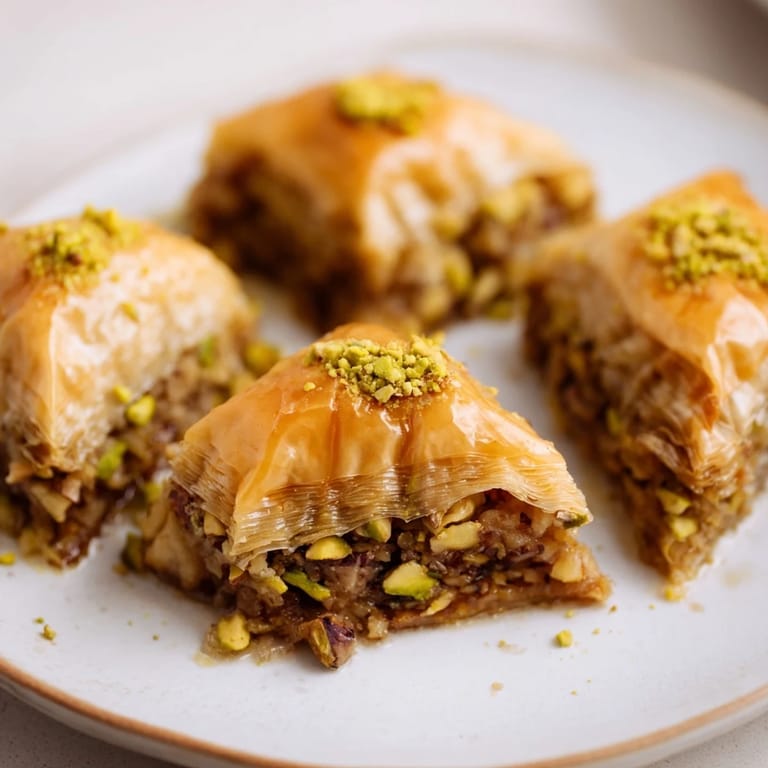
Save My first encounter with baklava wasn't in a kitchen, but at a small Istanbul café where the owner's grandmother was making it in the back. The sound of phyllo sheets being separated—this delicate, almost papery whisper—pulled me in more than the aroma. Years later, standing in my own kitchen with butter-soaked hands and phyllo sticking to everything, I finally understood why she smiled while making it. There's something about layering these impossibly thin sheets with crushed hazelnuts and pistachios that feels less like cooking and more like building something precious. When that first batch came out of the oven and I poured hot honey syrup over the golden pastry, I realized I wasn't just making a dessert—I was recreating a memory.
I made this for my sister's dinner party, and I'll never forget the moment she bit into a piece and just closed her eyes. No words, just a quiet exhale that told me everything. Her partner went back for three more pieces, and suddenly my nervousness about attempting Turkish baklava disappeared. That's when it clicked—this wasn't just a technical recipe to master, it was something that could make people genuinely happy in the simplest way.
Ingredients
- Phyllo dough (16 sheets): Buy it frozen and thaw properly—rushing this step leads to cracking and frustration. Keep unused sheets covered with a damp towel while working.
- Unsalted butter (150 g, melted): The butter is what gives phyllo its shattering quality, so don't skimp or substitute with oil. Brush generously on every layer.
- Hazelnuts (100 g, finely chopped): Chop them yourself if possible—pre-ground nuts lose their vibrant flavor. The coarser texture adds better texture than dust.
- Pistachios (100 g, finely chopped): This is where the flavor profile becomes unmistakably Turkish. The slight earthiness balances the honey beautifully.
- Granulated sugar (100 g, for filling): Prevents the filling from becoming too wet, and the small amount dissolves into the nuts rather than creating pockets of sweetness.
- Ground cinnamon (1 tsp, optional): Optional in name only—it elevates the entire dish by introducing warmth that complements both nuts and honey.
- Water (120 ml): This becomes part of your syrup base, so use good quality water if possible.
- Honey (150 g): The star of the final step; choose honey you actually enjoy eating, since it defines the entire flavor.
- Granulated sugar (100 g, for syrup): Sweetens the syrup and helps it coat the pastry evenly.
- Lemon juice (1 tsp): A small amount cuts through the sweetness and adds a subtle brightness that feels sophisticated.
Tired of Takeout? 🥡
Get 10 meals you can make faster than delivery arrives. Seriously.
One email. No spam. Unsubscribe anytime.
Instructions
- Prepare your workspace and butter the pan:
- Set the oven to 180°C (350°F) and brush your baking pan thoroughly with melted butter, paying special attention to the corners and edges. This prevents sticking and creates a slight crust on the bottom layer.
- Build the phyllo foundation:
- Carefully separate four sheets of phyllo and layer them into the pan, brushing each one generously with butter as you go. The first layers set the structure, so take your time and smooth out any big air pockets without tearing the pastry.
- Make your nut filling:
- Toss together the chopped hazelnuts, pistachios, sugar, and cinnamon in a bowl, breaking up any clumps. The sugar binds everything together slightly and prevents it from shifting around during baking.
- First layer of nuts:
- Sprinkle one-third of your nut mixture evenly across the phyllo, creating a mostly single layer rather than piling it high. Even distribution ensures every bite has that hazelnut-pistachio balance.
- Build the middle layers:
- Add four more phyllo sheets, buttering each one, then scatter another third of the nut mixture on top. Repeat this process one more time with the final four phyllo sheets and remaining nuts.
- Finish strong with the top layer:
- Place the last four phyllo sheets on top, buttering each one generously, including a final brush across the very top. This creates that beautiful golden sheen and shatteringly crisp exterior.
- Cut before baking:
- While the pastry is still pliable, use a sharp knife to cut the baklava into diamonds or squares, cutting all the way through to the bottom of the pan. This prevents ragged tearing once it bakes and sets.
- Bake until golden:
- Bake for 35–40 minutes until the top is deep golden and you can hear it crackling slightly if you lean close. The pastry should feel crisp to the touch, not soft.
- Prepare the honey syrup while baking:
- In a saucepan, combine water, honey, sugar, and lemon juice, then bring to a boil over medium heat. Reduce the heat and let it simmer gently for 10 minutes, allowing the flavors to meld.
- Pour the syrup immediately:
- The moment the baklava comes out of the oven, pour the hot syrup evenly over the hot pastry—this is the magic moment where everything comes together. The contrast between hot pastry and hot syrup allows the syrup to soak in rather than sit on top.
- Cool completely before serving:
- Resist the urge to eat it right away and let it cool to room temperature, at least 2–3 hours. This allows the syrup to fully soak into every layer and the pastry to firm up into that satisfying snap.
 Save
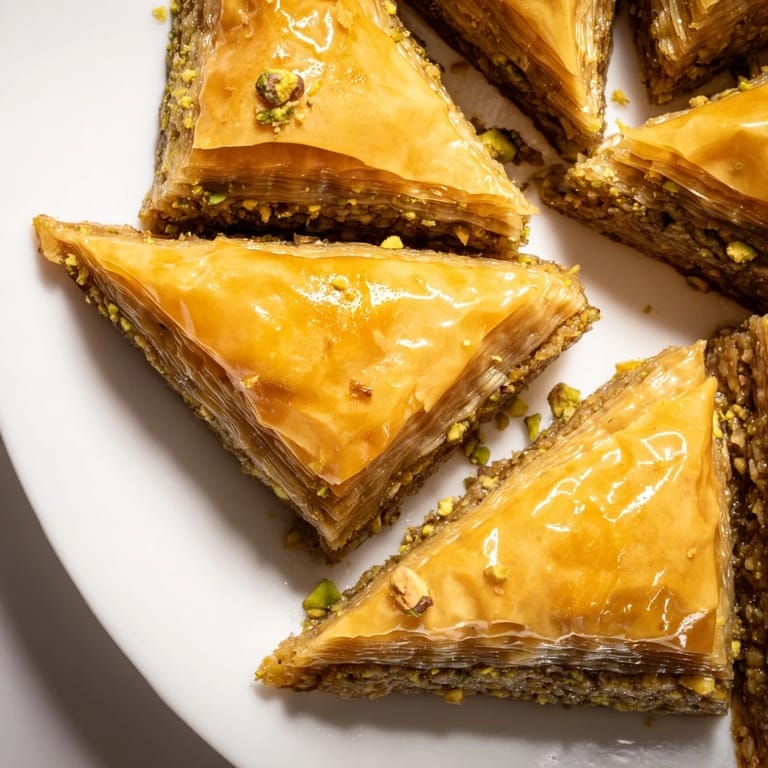
Save There's a quiet moment when you pull baklava from the oven and the entire kitchen transforms into this amber-scented space. That moment—before you even pour the syrup, before you taste it—is when it stops being a recipe and becomes something worth remembering. It's the kind of dessert that makes people linger at the table longer than they planned, conversation slowing down, piece after piece disappearing.
The Secret to Shatteringly Crisp Phyllo
Phyllo's reputation for being difficult comes from underbuttering, not the pastry itself. Every single sheet needs a generous brush of melted butter—not just a dab, but a real coating. I learned this the hard way after my first attempt came out chewy instead of crisp. The butter creates steam between layers, which is what gives baklava that distinctive shattering quality when you bite into it. Don't rush this step, and don't assume "a little butter" will stretch across multiple sheets. Your baklava will thank you with golden crispness.
Why Hazelnuts and Pistachios Together Matter
Using both nuts instead of just one creates a flavor profile that tastes elegant without being complicated. Hazelnuts bring a subtle earthiness and richness, while pistachios add a delicate sweetness and slight grassy note that feels distinctly Turkish. Together, they're more than the sum of their parts—more interesting than either one alone, but still humble enough not to overshadow the honey and cinnamon. If you only have one type available, the baklava will still be delicious, but you'll miss that sophisticated layering that makes people pause mid-conversation to compliment what you've made.
Storage and Serving Suggestions
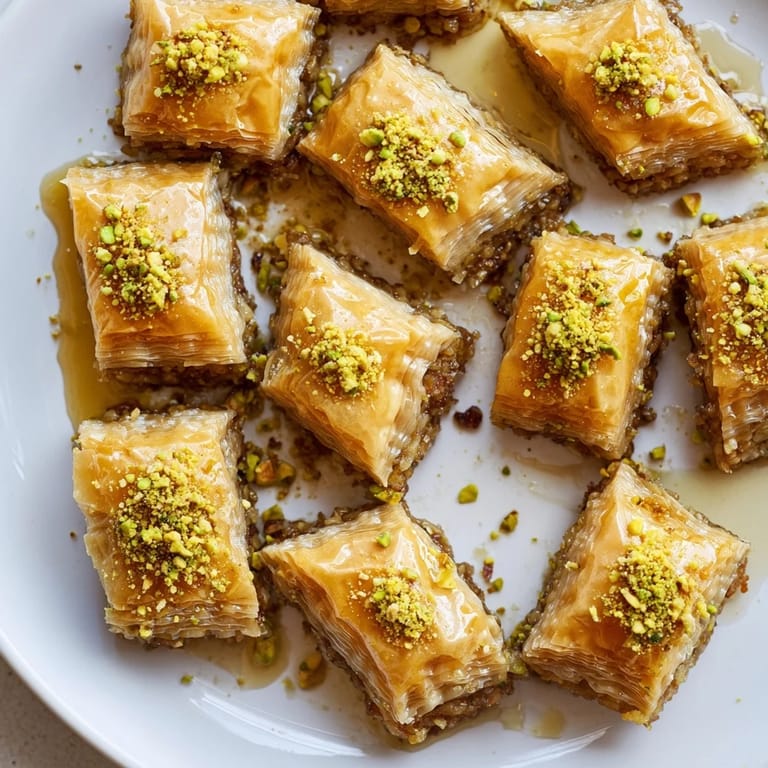
Baklava actually improves slightly over the first 24 hours as the syrup continues to permeate the layers, so don't stress if you make it ahead. Store it in an airtight container at room temperature for up to five days—the syrup acts as a natural preservative, so it lasts far longer than you'd expect. Serve it with strong Turkish coffee or tea, and watch how the ritual of eating it slowly transforms the entire experience into something almost meditative.
- Room temperature baklava tastes better than chilled—the flavors open up and the phyllo stays crisp.
- If you need to cut pieces before serving, a hot knife (dipped in hot water and dried quickly) creates cleaner edges than a room-temperature blade.
- Leftover baklava makes an excellent gift when wrapped carefully in parchment and placed in a small box, and it travels well if sealed properly.
 Save
Save Making baklava teaches you patience in the best way—every layer, every brush stroke, every quiet moment of waiting for it to cool is part of the gift. It's honest food that asks you to slow down and pay attention, and it repays that attention with layers of flavor and texture that linger long after the last piece is gone.
Recipe FAQ
- → What nuts are used in this dessert?
Hazelnuts and pistachios are combined to create a rich, aromatic filling.
- → How is the crisp texture achieved?
Brushing each phyllo layer generously with melted butter and baking until golden creates the signature crispiness.
- → What is the purpose of the honey syrup?
The warm honey syrup poured over hot pastry adds sweetness and moisture, soaking into the layers for depth of flavor.
- → Can walnuts be used instead of hazelnuts?
Yes, walnuts can be substituted to vary the nutty flavor profile according to preference.
- → How should the dessert be stored?
Keep it in an airtight container at room temperature for up to five days to maintain texture and freshness.
- → Is there a tip for easier slicing?
Chilling the dessert before cutting helps achieve cleaner, precise diamond or square pieces.