 Save
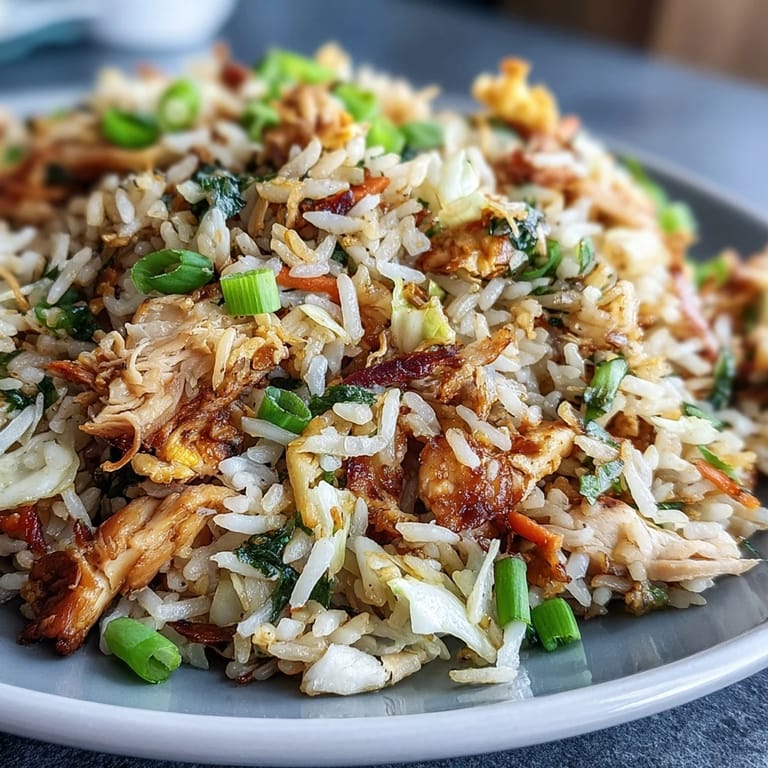
Save My sister called me in a panic one Tuesday evening—she had twenty minutes to get dinner on the table for her kids before soccer practice, and the pantry felt embarrassingly bare. I walked her through this dish over the phone, and what emerged from her kitchen was somehow both comforting and exciting, like someone had figured out how to bottle up the best parts of ordering takeout while actually cooking at home. The magic is in how the egg roll flavors sneak into every grain of rice, making it feel indulgent even though it's just chicken, vegetables, and eggs doing their thing together. Since that night, it's become my go-to when time is tight but the appetite is real.
I made this for my neighbor last spring after she mentioned feeling tired of the same old chicken-and-rice routine. When she took that first forkful, her eyes went wide in that particular way that tells you a dish has exceeded expectations. She asked for the recipe immediately, which was flattering, but the real victory came three days later when she knocked on my door to report that her teenage son had asked for it again. That's when I knew this wasn't just quick—it was genuinely crave-worthy.
Ingredients
- Cooked chicken breast, shredded or diced (2 cups): Use rotisserie chicken in a bind—it adds moisture and richness that dried-out chicken breast simply cannot match, and it cuts your prep time dramatically.
- Large eggs (3): These act as both binder and texture contrast, creating little pockets of creaminess throughout the rice.
- Coleslaw mix (2 cups): The combination of cabbage and carrots is the literal foundation of egg roll filling; buying it pre-shredded is not cheating, it's efficiency.
- Green onions, sliced (1/2 cup): These brighten everything at the end with their sharp, fresh bite—don't skip them or add them too early.
- Garlic, minced (2 cloves) and fresh ginger, grated (1 tablespoon): These two create that aromatic base that makes your kitchen smell like someone who actually knows what they're doing.
- Cooked jasmine or long-grain rice (3 cups): Day-old rice is non-negotiable here; fresh rice will clump and steam rather than fry into those desirable separated grains.
- Soy sauce (3 tablespoons): This is your salt backbone and umami anchor—taste as you go because soy sauce intensity varies by brand.
- Oyster sauce (1 tablespoon, optional): This ingredient whispers rather than shouts, adding a subtle sweetness that feels vaguely familiar but impossible to identify unless someone tells you.
- Toasted sesame oil (1 teaspoon): A little goes an enormous way; this finishes the dish with something that smells like a professional kitchen.
- Ground white pepper (1/2 teaspoon): White pepper has a sharper, slightly spicier character than black pepper, and it disappears into fried rice rather than showing up as visible specks.
- Sriracha or chili sauce (1 teaspoon, optional): Add this only if your household enjoys heat; it's a personal preference, not a requirement.
- Vegetable oil (2 tablespoons): High heat cooking demands an oil with a high smoke point—canola or sunflower work perfectly.
Tired of Takeout? 🥡
Get 10 meals you can make faster than delivery arrives. Seriously.
One email. No spam. Unsubscribe anytime.
Instructions
- Set yourself up for success:
- Gather every ingredient and have it prepped and positioned within arm's reach of your stove—this is mise en place, and it's the difference between cooking confidently and cooking in panic mode. Measure your sauces into a small bowl so you can pour them all at once without fumbling.
- Get your pan screaming hot:
- Heat 1 tablespoon of oil in a large wok or skillet over medium-high heat until it shimmers and moves around like liquid mercury. This is your signal that the pan is ready for the chicken.
- Warm the chicken through:
- Add the shredded or diced chicken and let it sit undisturbed for about a minute before stirring—this develops flavor through contact with the hot surface. Cook for about 2 minutes total, just until heated through, then push it to a clean plate and set it aside.
- Build the aromatics:
- Add the remaining tablespoon of oil to the same pan and immediately add the garlic and ginger, stirring constantly for about 30 seconds. Your kitchen should suddenly smell like you've unlocked something ancient and delicious.
- Soften the vegetables:
- Add the coleslaw mix and cook for 2-3 minutes, stirring frequently, until the cabbage has softened just slightly but still has a whisper of crunch. This balance between tender and crisp is what separates this from mushy takeout.
- Add eggs like you mean it:
- Push the vegetables to one side of the pan and crack the eggs into the empty space. Let them sit for just a moment, then scramble them gently with your spatula until they're mostly set but still a touch creamy, then mix them in with the vegetables.
- Combine everything and finish strong:
- Add the cooked rice, returned chicken, and all your sauces at once, stirring and tossing constantly for 3-4 minutes. Break up any stubborn clumps of rice against the side of the pan—these bits will eventually crisp up slightly and become your favorite part.
- Add the final flourish:
- Stir in the green onions and sriracha if using, cook for one more minute, then taste and adjust seasoning. Serve immediately while everything is still hot and fragrant.
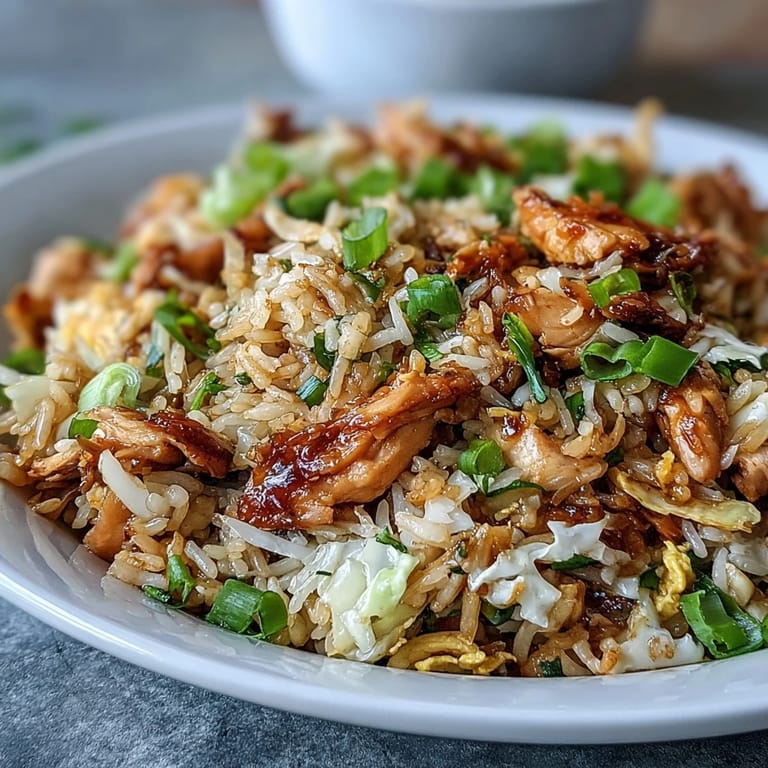 Save
Save There's a moment in every successful fried rice where everything comes together and the kitchen fills with this aroma that makes you stand up a little straighter. That's when you know you've nailed it, and it's the moment that reminds you why cooking at home, even on a hectic Tuesday, is worth the small effort it requires.
Why Day-Old Rice Changes Everything
Fresh rice contains too much moisture, and moisture is the enemy of fried rice. When you cook with fresh rice, the grains steam and clump together, creating a mushy texture that no amount of stirring can fix. Day-old rice has had time to dry out slightly, which allows each grain to stay separate and develop those lovely crispy edges when it hits the hot pan. I learned this the hard way after making fried rice with fresh rice exactly once and silently vowing never to repeat the mistake.
The Secret to Keeping Eggs Creamy
The timing of when you add the eggs matters more than you might think. If you scramble them too early and let them sit while you add other ingredients, they'll overcook and become rubbery. If you add the rice immediately after they're barely set, they'll stay soft and create these little creamy pockets throughout the dish. I've found that pushing the vegetables to the side, scrambling the eggs in that cleared space, and then gently folding everything together gives you the best of both worlds—cooked enough to hold together, but still tender enough to feel luxurious.
Customizing Without Losing the Plot
The egg roll flavor profile is remarkably forgiving, which is why this dish invites improvisation. Water chestnuts add a crunch that mimics the texture of a fried wrapper, bean sprouts bring a fresh vegetal note, and snap peas contribute both sweetness and substance. I've also tossed in diced mushrooms, bamboo shoots, and even leftover roasted broccoli without any regrets. The key is respecting the foundational flavors—the garlic, ginger, soy sauce, and sesame oil—and adding your additions without drowning them out.
- Keep the total vegetable volume around 3 cups so the rice remains the star rather than a supporting player.
- Add delicate ingredients like bean sprouts toward the very end so they stay crisp instead of wilting.
- If substituting chicken with tofu, press it gently to remove excess water before cooking so it browns rather than steams.
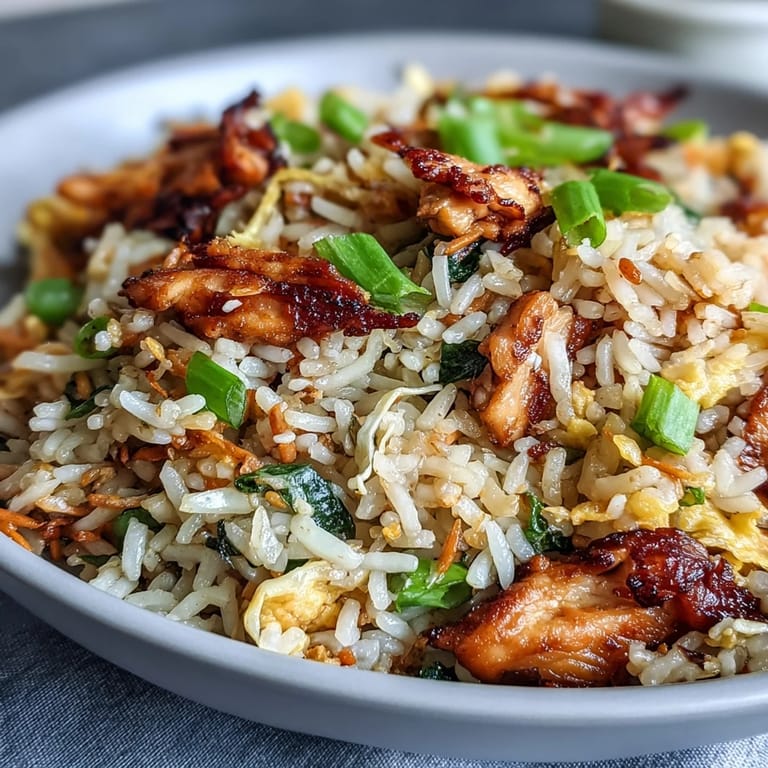 Save
Save This dish is proof that some of the most satisfying meals don't require hours of planning or a long list of exotic ingredients. It's the kind of recipe that deserves a permanent spot in your rotation, ready to rescue you on nights when time is short but your appetite is real.
Recipe FAQ
- → Can I use fresh rice instead of day-old?
Fresh rice works but tends to become mushy. For best results, spread cooked rice on a baking sheet and refrigerate uncovered for at least 4 hours to dry out slightly.
- → What's the best way to shred chicken for this dish?
Use two forks to pull apart cooked chicken breast, or dice it into bite-sized pieces. Rotisserie chicken works perfectly and saves time.
- → Can I make this vegetarian?
Absolutely. Substitute the chicken with firm tofu cubes or edamame. Use vegetarian oyster sauce to keep it meat-free while maintaining depth of flavor.
- → How do I prevent the rice from sticking to the pan?
Use a well-seasoned wok or nonstick skillet, and ensure your pan is properly heated before adding oil. Break up rice clumps with your hands before adding to the pan.
- → What other vegetables can I add?
Water chestnuts, bean sprouts, snap peas, or diced bell peppers all work beautifully. Just keep pieces uniform in size for even cooking.
- → Is this gluten-free?
Use tamari instead of regular soy sauce and check that your oyster sauce is gluten-free. The base ingredients are naturally gluten-free.