 Save
Save My neighbor handed me a steaming bowl of this soup on a gray December afternoon, and I watched the ginger steam curl up like tiny question marks. She didn't give me the recipe that day, just the bowl and a knowing smile, but I spent weeks reverse-engineering it in my kitchen, tasting and adjusting until I captured that exact warmth. Now it's become my go-to answer when someone needs comfort food that feels both adventurous and instantly familiar.
I made this for my sister when she was recovering from the flu, and she actually sat up in bed when she smelled it cooking. There's something about ginger-infused broth that signals to your body that you're being looked after, and she told me later that the warmth of it mattered more than any medicine.
Ingredients
- Low-sodium chicken or vegetable broth (6 cups): Start with good broth because it's doing most of the heavy lifting here, and skimping on this one ingredient will show in every spoonful.
- Fresh ginger, thinly sliced (1 tablespoon): Don't mince it yet, let these thin slices float and infuse the entire pot so you get those little bursts of warmth when you encounter them.
- Garlic, minced (2 cloves): Fresh is non-negotiable, and mince it right before adding so it releases all its fragrant oils into the broth.
- Soy sauce (1 tablespoon): This is your umami anchor, the thing that makes people lean back and say the flavor feels complete.
- Sesame oil (1 teaspoon): A little goes a long way, and this nutty warmth is what makes people ask what your secret ingredient is.
- Rice vinegar (1 teaspoon): The bright note that keeps the soup from feeling heavy, even though it's deeply comforting.
- Green onions, sliced (2, plus extra for garnish): Use the white and light green parts in the broth, then save the dark green tops for finishing so they stay fresh and vibrant.
- Baby bok choy (2 cups, halved lengthwise): Halving them lengthwise keeps them intact and gives you those pretty layers when they soften.
- Carrot, julienned (1 medium): Cut them thin so they cook quickly and add both sweetness and delicate texture without weighing anything down.
- Shiitake mushrooms, sliced (1/2 cup): Remove the tough stems first, and let the earthy flavor deepen the broth as they cook.
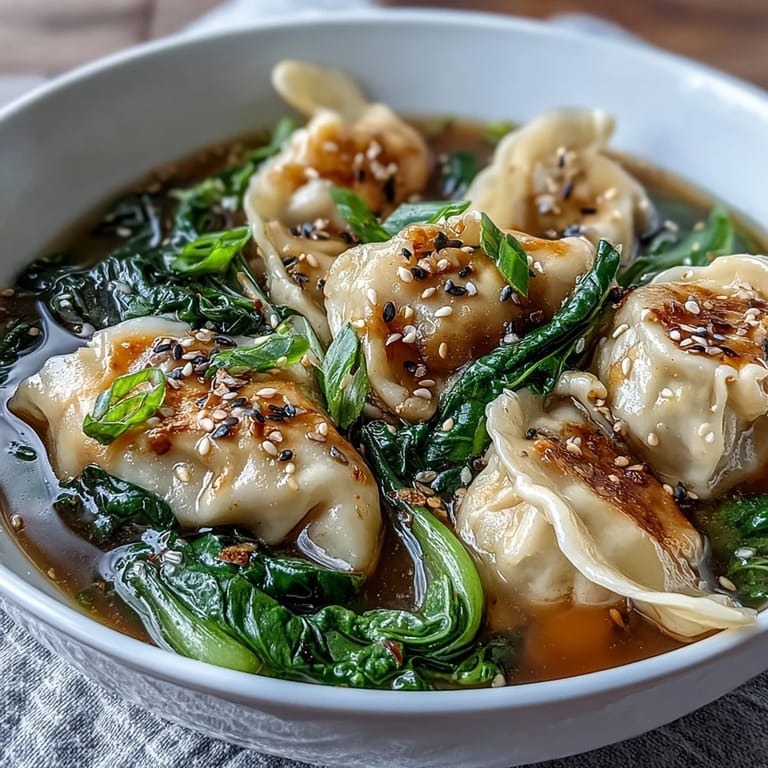
- Frozen or fresh Asian dumplings (16–20): Quality matters here, so read the label and pick ones that actually appeal to you rather than grabbing whatever's on sale.
- Cilantro, chili oil, sesame seeds (optional garnish): These aren't optional if you want the bowl to sing, they're just not essential to the actual soup.
Tired of Takeout? 🥡
Get 10 meals you can make faster than delivery arrives. Seriously.
One email. No spam. Unsubscribe anytime.
Instructions
- Build Your Flavor Foundation:
- Combine the broth, ginger slices, minced garlic, soy sauce, sesame oil, rice vinegar, and green onion whites in your pot and bring it to a gentle boil over medium-high heat. You'll know it's ready when you see small bubbles consistently breaking the surface, and the kitchen will smell unmistakably fragrant.
- Let It Whisper:
- Drop the heat to medium and simmer for 5 minutes while you finish prepping your vegetables, letting the ginger and garlic release their essence slowly. This gentle infusion is what separates a quick broth from one that tastes intentional.
- Build the Layers:
- Add your julienned carrots and sliced mushrooms, letting them simmer for exactly 3 minutes so they soften slightly but retain their shape and color. Set a timer so you don't forget and wander off.
- Welcome the Dumplings:
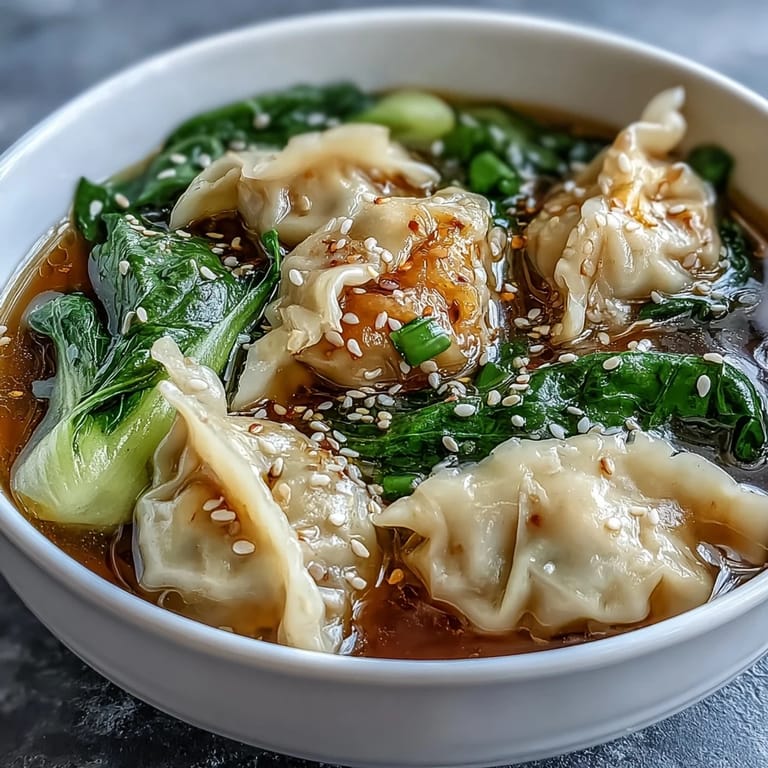
- Gently lower your dumplings into the simmering broth and cook according to package directions, which is usually around 5–7 minutes for frozen ones. You'll notice them rise to the surface when they're close to done, like little edible indicators that tell you they're ready.
- The Green Finale:
- Add your halved bok choy and let it cook for just 2–3 minutes until the leaves soften but the color stays that bright, almost electric green. Any longer and you'll lose that textural contrast that makes the soup feel fresh.
- Taste and Adjust:
- Before you ladle anything, take a spoonful and really taste it, adding extra soy sauce or rice vinegar if it needs more depth or brightness. Your palate is the final judge here.
- Finish with Care:
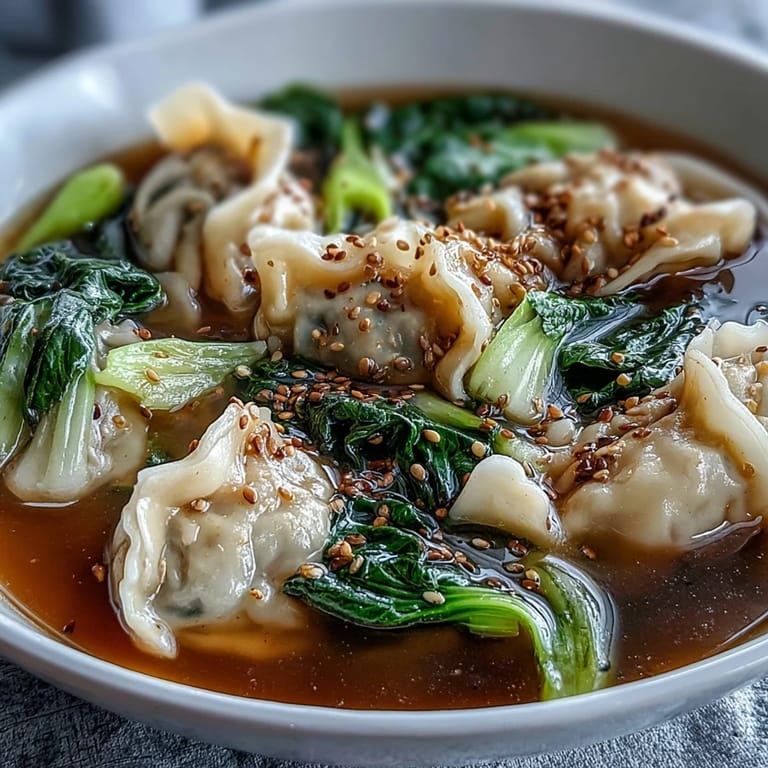
- Ladle the soup into bowls making sure each one gets dumplings and vegetables distributed evenly, then top with sliced green onion tops, fresh cilantro if you have it, a small drizzle of chili oil, and a few sesame seeds. The garnishes aren't decoration, they're flavor and texture that complete the experience.
 Save
Save There was a moment last winter when my daughter asked if the dumplings were hiding in the soup, and she spent the whole meal hunting for them with her spoon, celebrating each discovery like she'd won something. That's when I realized this soup does something beyond nourishment—it creates little moments of joy in ordinary weeknights.
The Magic of Ginger in Warm Broth
Ginger does something almost magical when it sits in simmering broth—it transforms from a sharp, peppery bite into something warm and almost sweet, like it's been soothed by the heat. I learned this the hard way by adding ginger too late in the cooking process and getting that harsh, raw flavor that made the whole soup feel unbalanced. Now I slice it thin and let it have time to do its work before anything else joins the pot.
Why Fresh Dumplings Make a Difference
There's a noticeable difference between frozen dumplings that have been in your freezer for six months and ones you bought fresh that week, and it shows up in the delicate wrapper and the way the filling stays moist instead of becoming rubbery. I'm not saying you need to make your own dumplings from scratch, but if you have access to a good Asian market with fresh dumplings, it's worth the trip. The soup will taste like you actually know what you're doing.
Customizing Without Losing the Soul
This soup is flexible enough to work with whatever vegetables you have on hand or whatever dietary preferences are sitting around your table. Spinach works beautifully if bok choy isn't available, and vegetable broth with vegetarian dumplings transforms it into something your plant-based friends will actually want to eat. A splash of fish sauce adds serious umami depth if you're not cooking for vegetarians, though honestly the soup works perfectly fine without it.
- Swap the mushrooms for snap peas or water chestnuts if you want more crunch.
- Add a splash of fish sauce for an umami boost that makes people stop mid-spoonful and ask what you did.
- Pair it with jasmine tea or a crisp Riesling if you're feeling fancy, or just serve it with warm bread if you want it to feel like a complete meal.
 Save
Save This soup has become my answer to nearly everything—when someone's sick, when someone needs comfort, when I want to feel like I'm taking care of people without spending hours in the kitchen. There's real power in a bowl of something this simple and this genuinely delicious.
Recipe FAQ
- → Can I use vegetable broth instead of chicken broth?
Yes, vegetable broth works well and keeps the dish suitable for vegetarian diets while maintaining rich flavors.
- → How do I prevent dumplings from sticking together while cooking?
Gently stir dumplings after adding them to simmering broth and avoid overcrowding the pot for best results.
- → What’s the best way to prepare bok choy for this dish?
Trim and halve or quarter baby bok choy lengthwise to ensure even cooking and maintain its crisp texture.
- → Can I freeze leftovers of this soup?
It's best to store dumplings separately before freezing, as they can become soft; freeze broth and vegetables alone for optimal texture.
- → What alternatives can I use if shiitake mushrooms aren’t available?
Other mushrooms like cremini or button mushrooms work well and offer similar earthy flavors.