 Save
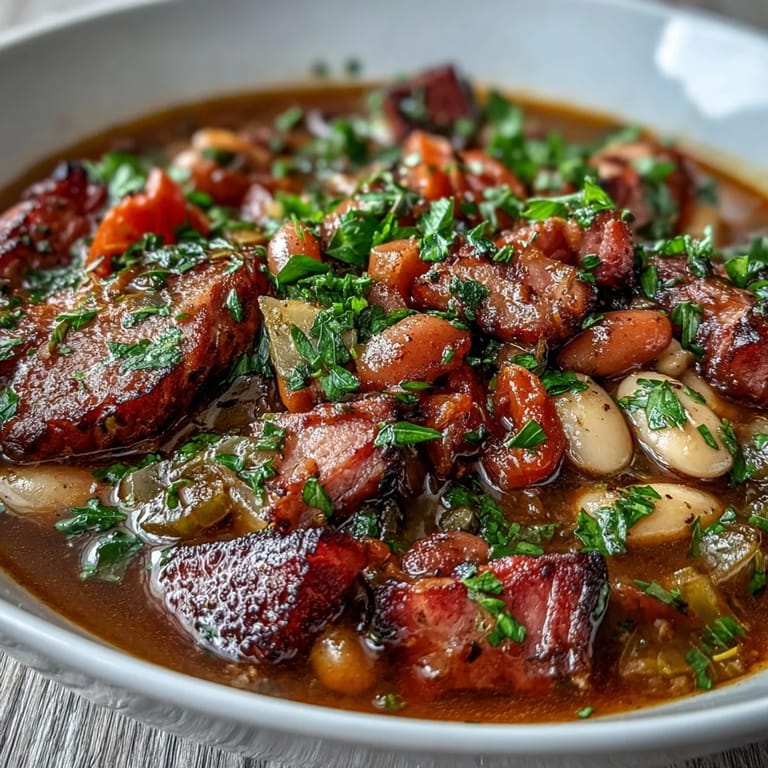
Save My neighbor Marco showed up on a freezing January afternoon with a pot of this stew, steam rising from the lid like a warm hug I didn't know I needed. He'd learned it from his nonna in Tuscany, he said, and watching him ladle it into bowls with such ease made me realize how a simple combination of ham, beans, and broth could taste like home even if it wasn't mine. That day, I decided to master it myself, and what started as comfort food became my go-to when someone needs feeding or when I'm just tired and hungry.
I made this for my sister when she was going through a rough patch, and I remember how she sat at my kitchen table with a bowl in both hands, just breathing in the steam before eating. She didn't say much, but the bowl came back empty, and that told me everything. That's when I knew this recipe was about more than just feeding people—it was about showing up for them.
Ingredients
- Cooked ham, 400 g diced: The soul of this stew, giving it a smoky saltiness that you can't replicate with anything else; look for quality ham at the deli counter, and don't skip it even if it costs a bit more.
- Cannellini beans, 2 cans drained and rinsed: These creamy white beans absorb the broth beautifully and add protein without heaviness; rinsing them removes excess sodium and starch.
- Carrots, 2 medium diced: They soften into sweet nuggets that add natural depth to the broth.
- Celery, 2 stalks diced: This is the quiet backbone of Italian cooking, adding an aromatic quality that rounds everything together.
- Onion, 1 large finely chopped: Start here because caramelizing it builds the flavor foundation for everything that follows.
- Garlic, 3 cloves minced: Added after the soffritto so it doesn't burn, giving you that essential pungent bite.
- Canned diced tomatoes, 400 g: Winter tomatoes in a can beat fresh ones any day; they're picked at peak ripeness and bring acidity that brightens the whole pot.
- Tomato paste, 2 tbsp: This concentrate of tomato flavor makes a difference—toast it briefly in the oil to wake up its deeper notes.
- Fresh spinach or kale, 2 handfuls chopped: Added at the very end to keep it vibrant green and full of nutrition, though optional if you prefer a simpler stew.
- Chicken or vegetable broth, 1 L low-sodium: Go low-sodium because you're adding salt consciously at the end, giving you control over the final taste.
- Bay leaf, 1: Essential for that subtle evergreen flavor that makes people ask what the secret ingredient is.
- Dried oregano, 1 tsp: This Mediterranean herb is non-negotiable for that Italian authenticity.
- Dried thyme, 1 tsp: It adds an earthiness that makes the stew feel grounded and sophisticated.
- Red pepper flakes, 1/2 tsp optional: For those of us who like a whisper of heat that builds slowly rather than slaps you in the face.
- Olive oil, 2 tbsp: Good olive oil here matters because it's not being cooked away, it's carrying flavor into the base of the stew.
- Fresh parsley and Parmesan cheese for garnish: These finish the dish with brightness and richness, making it feel restaurant-quality in your own kitchen.
Tired of Takeout? 🥡
Get 10 meals you can make faster than delivery arrives. Seriously.
One email. No spam. Unsubscribe anytime.
Instructions
- Build your flavor base:
- Heat the olive oil in your pot over medium heat, then add the onions, carrots, and celery—this trio is called soffritto, and you're aiming for them to turn soft and golden after about 8 minutes. You'll know it's working when the kitchen smells like an Italian grandmother just walked through.
- Toast the aromatics:
- Stir in the minced garlic, tomato paste, oregano, and thyme, letting them cook for just 1 minute until the paste darkens slightly and the spices release their oils. This step is easy to rush, but don't—it's where the magic starts.
- Add the ham:
- Toss in the diced ham and stir it around for 2 to 3 minutes, letting it warm through and release its salty, smoky flavor into the oil. Listen for the gentle sizzle as it touches the bottom of the pot.
- Bring it together:
- Pour in the canned tomatoes with their juices and the broth, then add the bay leaf, and crank the heat up until you see a rolling boil. This moment is satisfying—you're watching everything come alive.
- Let it simmer:
- Lower the heat, add the drained cannellini beans, and partially cover the pot so steam can escape but the liquid stays put. Let it bubble gently for about 50 minutes, stirring occasionally, until the flavors have melded into something that tastes like it took all day to make.
- Finish with greens:
- In the last 5 minutes, stir in the spinach or kale if you're using it, watching it wilt into the warm broth. Taste and adjust your salt, pepper, and red pepper flakes to your liking.
- Serve with intention:
- Fish out the bay leaf, ladle the stew into bowls, and top with a handful of fresh parsley and a scatter of Parmesan cheese if you like. This is the moment where your effort becomes someone's comfort.
 Save
Save I learned something important the first time my brother came home from college and asked if I could make that stew again—the one from last time. He'd been thinking about it for weeks, he said, and I realized then that cooking isn't about impressing people, it's about being someone they think of when they're far away and hungry for something that feels like belonging.
Why This Stew Works in Winter
There's something about the cold months that makes you crave stew the way you crave nothing else—it's the warmth spreading through your chest, the steam on your face, the sense that you're literally nourishing yourself from the inside out. This particular stew has the richness of ham to satisfy, the beans to fill you up without making you sluggish, and broth light enough that you can eat a big bowl and still feel energized. It's the kind of food that doesn't apologize for being simple, but makes you feel taken care of anyway.
The Ham Question: Fresh Versus Cured
I've tried this with different types of ham over the years, and here's what I've discovered: regular diced ham from the store works fine, but if you can find a ham bone or smoked ham hock at a butcher, that's where the real magic happens. You throw the bone in whole, let it simmer for the full hour, and then fish it out at the end—it releases a depth of flavor that regular ham just can't compete with. Even the best leftovers taste richer when you've gone this route, and your friends will swear you cooked all day.
Bread, Wine, and What Comes After
This stew is incomplete without crusty bread—not just for eating alongside it, but for soaking up the last of the broth at the bottom of your bowl. Pair it with a robust Italian red wine like Chianti if you're feeling fancy, but honestly, even a simple red wine works beautifully because the tannins cut through the richness of the ham.
- If you're serving this to a crowd, double the recipe and let it sit overnight in the fridge—the flavors meld and deepen, making day-two servings even better than the first.
- Leftovers freeze well for up to three months, so make extra when you're feeling generous with your future self.
- On a rainy day when motivation is low, this is the stew to make because it asks so little of you but gives back so much in comfort.
 Save
Save Every time I make this, I think about Marco and his pot, and how generosity tastes like ham and beans simmered low and slow. That's the recipe, really—ingredients are just the excuse.
Recipe FAQ
- → Can I use smoked ham instead of regular ham?
Yes, smoked ham or ham hock will add a deeper, smoky flavor to the stew. Just remove any bones before serving.
- → Are cannellini beans interchangeable with other beans?
Great northern or navy beans can be used as substitutes, though cannellini add a creamier texture.
- → What vegetables can be added or substituted?
Besides carrots, celery, and onions, adding kale or spinach near the end enhances the stew’s color and nutrition.
- → How long should the stew simmer for best flavor?
Simmering for about 50 minutes allows flavors to meld and beans to soften perfectly.
- → Can I prepare this stew ahead of time?
Yes, flavors deepen if made a day ahead. Reheat gently to preserve texture and taste.