 Save
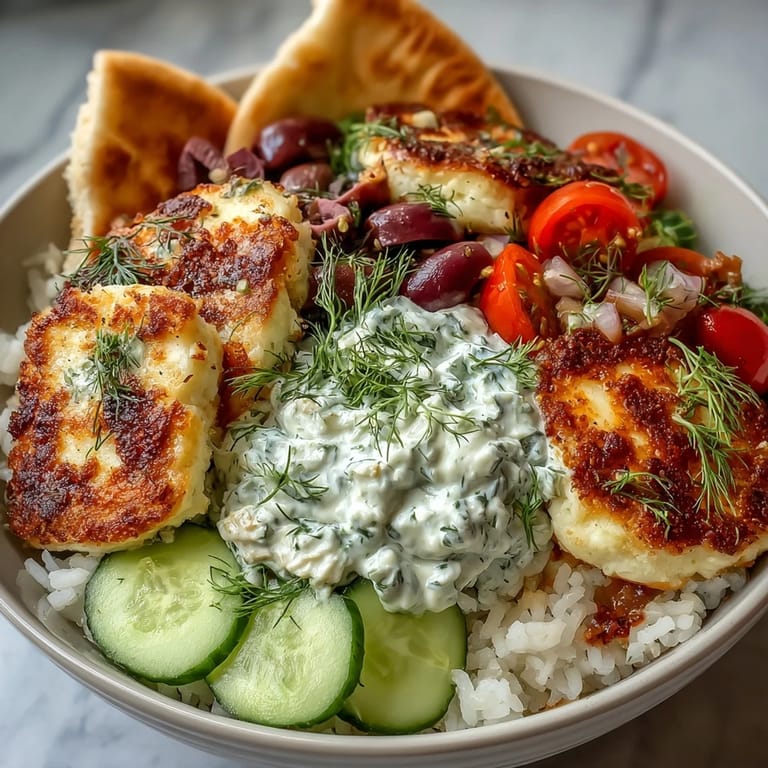
Save My first encounter with halloumi happened at a tiny Greek restaurant in London, where the waiter warned me about the squeaky texture before I even took a bite. That golden crust against the salty, tender interior completely changed how I thought about cheese in savory meals. Now this power bowl lives in my weekly dinner rotation, especially on nights when I want something that feels indulgent but still wholesome and vibrant.
Last summer, I made this for my sister who claimed she hated salty cheese, and she literally asked for the recipe before she even finished her bowl. The way the warm rice soaks up that tzatziki sauce while the halloumi stays perfectly seared is just magic. Since then, its become the meal I make when friends come over and I want to impress without spending hours in the kitchen.
Ingredients
- 1 block halloumi cheese: This Cypriot cheese is the star because it holds its shape when seared, developing that irresistible golden crust while staying creamy inside
- 2 cups cooked white rice: Warm rice acts as the perfect base, absorbing the flavors from the vegetables and sauce while providing a comforting foundation
- 1/2 English cucumber: English cucumbers are ideal because their thin skin and minimal seeds mean no prep work beyond simple slicing
- 1 cup cherry tomatoes: Mixed colors make the bowl visually stunning, and their sweetness balances the salty cheese beautifully
- 1/4 small red onion: Thinly sliced red onion adds just the right amount of sharp bite and vibrant color contrast
- 1/4 cup Kalamata olives: These briny, deep purple olives bring that authentic Greek flavor punch throughout the bowl
- 1 tablespoon fresh dill: Fresh dill is non-negotiable here because its bright, grassy flavor ties all the Mediterranean elements together
- 1/2 cup tzatziki sauce: This creamy, garlicky cucumber sauce creates a cooling element that complements the warm, salty halloumi perfectly
- 2 pita breads: Warm pita wedges are essential for scooping up every last bite and adding that satisfying carb element
- 2 tablespoons olive oil: A good quality olive oil helps achieve that perfect golden sear on the halloumi without burning
Tired of Takeout? 🥡
Get 10 meals you can make faster than delivery arrives. Seriously.
One email. No spam. Unsubscribe anytime.
Instructions
- Prep your fresh vegetables:
- Thinly slice your cucumber and red onion, halve those beautiful cherry tomatoes, and check your olives for pits. Do all this first so you can focus entirely on the halloumi when its time to cook.
- Warm the pita bread:
- Give your pita a quick warm-up in a dry skillet or microwave until soft and pliable. Cut into wedges and set aside, keeping them warm if possible.
- Prep the halloumi for searing:
- Slice your halloumi into generous 1/2-inch thick pieces, then pat each slice completely dry with paper towels. This step is crucial because any moisture will prevent proper browning.
- Get your pan screaming hot:
- Heat a large non-stick or well-seasoned cast iron skillet over medium-high heat. Add your olive oil and wait until it shimmers but do not let it smoke.
- Sear to golden perfection:
- Lay halloumi slices in a single layer, working in batches if your pan is crowded. Let them cook undisturbed for 2 to 3 minutes until deep golden-brown forms, then flip and repeat.
- Build your masterpiece:
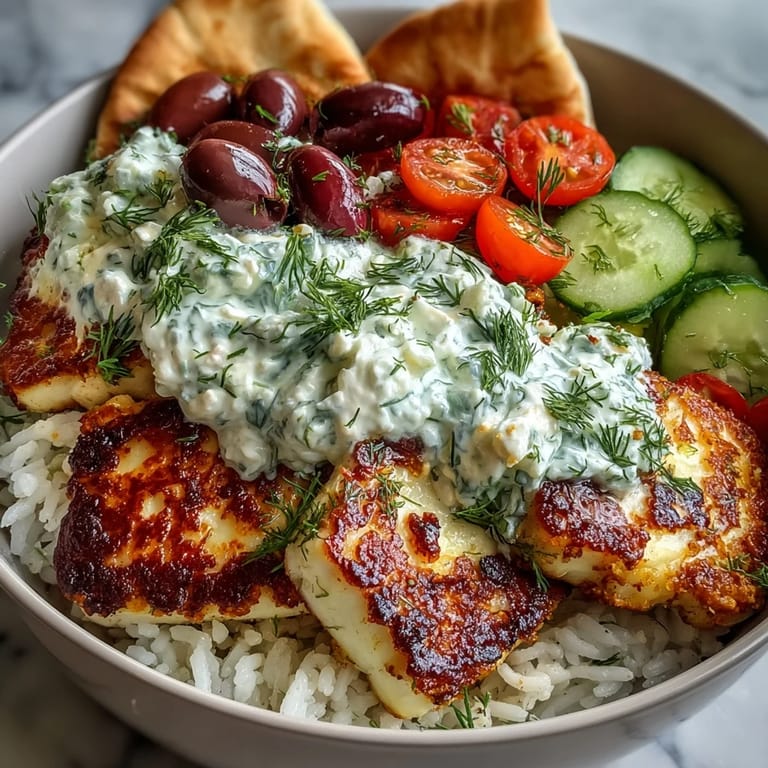
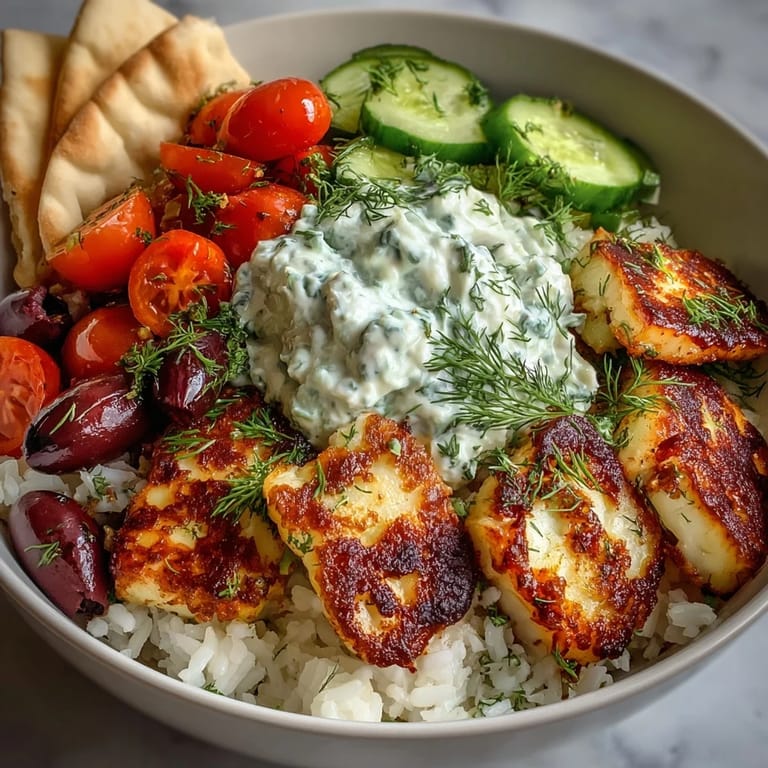
- Divide warm rice between two large bowls, then arrange your seared halloumi, vegetables, and olives over the top. Finish with tzatziki, fresh dill, salt, pepper, and those warm pita wedges.
 Save
Save This recipe became my go-to after a particularly stressful week at work when I needed something comforting but still felt nourishing. The ritual of arranging all those colorful components in the bowl became almost therapeutic, and that first bite of salty, warm halloumi against cool tzatziki was exactly what I needed.
Making It Your Own
Once you master the basic bowl, try swapping white rice for nutty farro or protein-packed quinoa. I have discovered that roasted red peppers or grilled zucchini work beautifully alongside the halloumi when I want to add more vegetables to the mix.
Perfect Pairings
A crisp white wine cuts through the rich halloumi and complements the fresh vegetables perfectly. This bowl also pairs beautifully with a simple side of hummus and extra warm pita if you are feeding a crowd or want to stretch the meal further.
Make-Ahead Magic
You can slice all your vegetables and cook your rice up to a day in advance, storing them separately in the refrigerator. The halloumi is best cooked fresh, but having all the prep work done makes this an achievable weeknight dinner even on busy nights.
- Warm your rice slightly before assembling because room temperature rice creates a better contrast with the hot halloumi
- Keep your tzatziki sauce cold until the very last moment to maintain that refreshing temperature difference
- Season your vegetables with a tiny pinch of salt before arranging them to wake up all their natural flavors
 Save
Save There is something deeply satisfying about a meal that looks this beautiful and comes together this quickly. I hope this bowl brings as much joy to your table as it has to mine.
Recipe FAQ
- → How do I prevent halloumi from sticking to the pan?
Pat each halloumi slice thoroughly dry with paper towels before cooking. Use a well-seasoned cast iron skillet or non-stick pan with hot olive oil. Let the cheese develop a crust before flipping—this naturally releases from the pan.
- → Can I make this bowl ahead of time?
Prepare vegetables and rice in advance, but sear the halloumi just before serving for the best texture. Store components separately and assemble when ready. The halloumi loses its signature crisp exterior if reheated.
- → What can I substitute for halloumi?
Paneer or firm feta work well, though they won't have the same squeaky texture. For a vegan option, try pan-fried extra-firm tofu seasoned with salt. Grilled eggplant slices also complement the Mediterranean flavors.
- → How do I store leftovers?
Store components separately in airtight containers. The halloumi is best eaten fresh but can be refrigerated up to 2 days. Reheat gently in a dry skillet to restore some crispness. Vegetables and rice keep for 3-4 days.
- → What other grains work in this bowl?
Brown rice, quinoa, farro, or bulgur all make excellent bases. Quinoa cooks faster and adds extra protein. Bulgur offers a traditional Mediterranean touch and requires minimal cooking time.
- → Can I make this gluten-free?
Use gluten-free pita or serve with gluten-free flatbread. Replace regular soy sauce if using any in your tzatziki. The remaining ingredients—halloumi, vegetables, and rice—are naturally gluten-free.