 Save
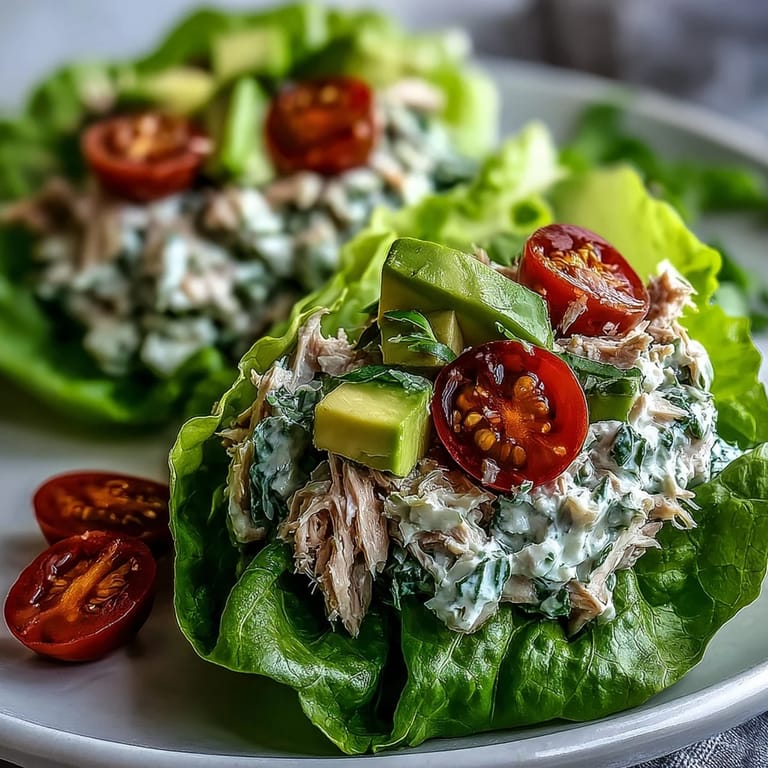
Save There's something about a lunch that doesn't require heating anything up—no microwave beeping, no stovetop chaos—that felt revolutionary when I first discovered tuna salad lettuce cups. I was standing in my kitchen on a Tuesday afternoon, staring at a can of tuna and some wilted lettuce, thinking there had to be something better than my usual sandwich routine. That first bite, with the cool crunch of butter lettuce giving way to creamy, lemony tuna, changed how I thought about eating light without feeling deprived.
I packed these for a hiking trip last summer, and my friend couldn't believe how filling something so light could be. We ate them sitting on a rock overlooking the valley, and she asked for the recipe before we'd even finished—that's when I knew this wasn't just another salad, it was something people actually wanted to make again.
Ingredients
- Tuna in water, drained: The foundation of everything—look for solid or chunk varieties depending on your texture preference, and always drain it well or your salad becomes a soggy mess.
- Greek yogurt: This is your secret weapon for creaminess without heaviness; the tanginess plays beautifully against the lemon and mustard.
- Light mayonnaise: A modest tablespoon gives richness without overwhelming the cleaner flavors you're building.
- Dijon mustard: One teaspoon is enough to brighten everything and add sophistication that plain mayo never could.
- Celery and red onion: The crunch and bite here are non-negotiable; don't skip the dicing—small pieces mean the flavors distribute evenly in every bite.
- Fresh parsley: This keeps the salad from tasting canned and old; dried herbs won't give you the same fresh snap.
- Lemon juice: The final magic that prevents the mixture from tasting flat or fishy.
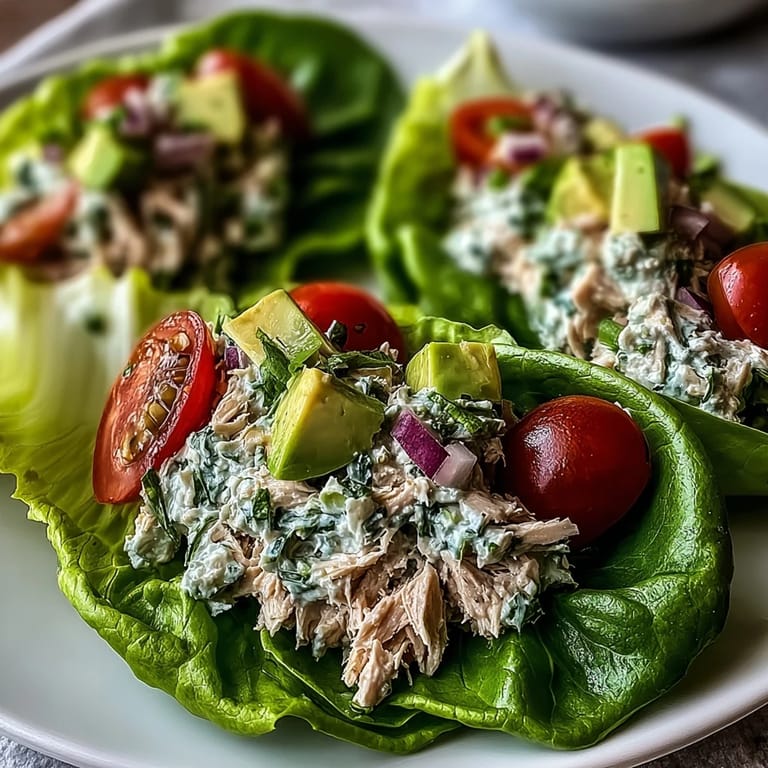
- Butter lettuce or romaine leaves: Butter lettuce is more delicate and elegant, but romaine holds the filling without tearing if you're less gentle with assembly.
- Avocado, tomatoes, and carrots: These toppings are where you add color, texture, and the nutrition that makes this feel like a complete meal instead of just protein.
Tired of Takeout? 🥡
Get 10 meals you can make faster than delivery arrives. Seriously.
One email. No spam. Unsubscribe anytime.
Instructions
- Combine the tuna base:
- In a medium bowl, mix your drained tuna with the Greek yogurt, mayonnaise, and Dijon mustard first—this creates your creamy foundation. Then fold in the celery, red onion, and parsley, stirring gently so everything stays mixed but the vegetables don't get crushed into mush.
- Balance the seasoning:
- Squeeze that lemon juice in and taste as you go, adding salt and pepper until it tastes bright and alive. Trust your palate here—you might need less salt if your mustard and yogurt are already salty enough.
- Prepare your lettuce canvas:
- Lay out your lettuce leaves on a clean plate or cutting board, making sure they're completely dry so they stay crisp. If they're wet, the tuna salad will soften them faster than you'd like.
- Build with intention:
- Spoon a generous portion of tuna salad into each leaf, leaving a little room at the edges so you can still pick them up without everything spilling out. This is where it stops being just ingredients and becomes something you actually want to eat.
- Crown with freshness:
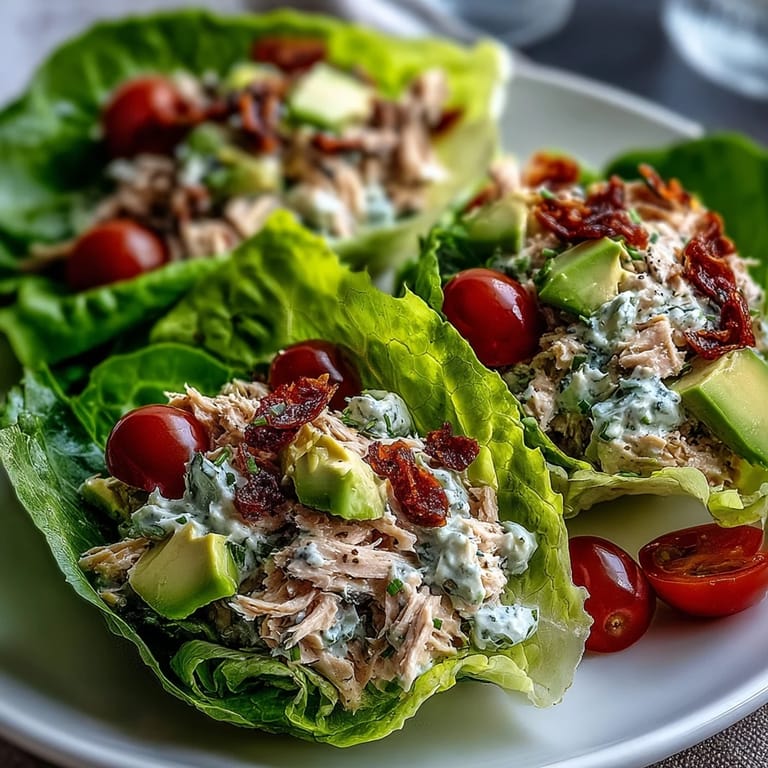
- Arrange avocado slices, cherry tomato halves, and shredded carrots on top of each cup, pressing them gently into the salad so they stay put. The color and texture here matter—they're not just garnish, they're essential to every bite.
- Serve right away:
- These are best eaten immediately while everything is still cold and crisp, though you can keep the tuna salad separate from the lettuce for a few hours if you're meal prepping.
 Save
Save My mom tried this once thinking it was too simple to be good, then made it twice the next week. There's something about meals this straightforward and honest that remind you that fancy doesn't always mean better.
How to Make It Your Own
I've learned that this salad is almost impossible to mess up once you understand the basic formula. The tuna stays the same, but everything else is up for interpretation based on what you have and what sounds good that day. Some mornings I add crispy bacon bits, other times I'll throw in capers or a tiny bit of pickle relish for briny richness.
Why This Works as a Weight Loss Meal
The protein in the tuna and Greek yogurt keeps you full for hours, which is the real secret to any successful light meal—satiation, not deprivation. The lettuce cups give you volume and crunch without calories, and the healthy fats from avocado actually help you absorb nutrients and stay satisfied between meals.
Storage and Make-Ahead Tips
I keep the tuna salad in a glass container in the fridge for up to three days, which means you can eat this three days in a row if you want. Just remember to pack the lettuce leaves separately if you're bringing this to work, or they'll turn into sad, wet paper by lunchtime.
- Store the tuna salad in an airtight container and prep fresh lettuce cups right before eating for maximum crunch.
- If you want to meal prep these, keep all components separate and assemble each one fresh when you're ready to eat.
- The avocado is best added just before eating since it browns quickly, but the rest of the salad holds up beautifully for days.
 Save
Save This is the kind of meal that becomes a habit without feeling like a sacrifice, which is exactly when you know you've found something worth keeping. Make it once, and you'll find yourself craving it on afternoons when you need something that tastes good and makes you feel strong.
Recipe FAQ
- → Can I make this ahead of time?
Yes, prepare the tuna mixture up to 24 hours in advance and store refrigerated. Fill lettuce cups just before serving to prevent wilting.
- → What lettuce works best for cups?
Butter lettuce, Boston bibb, or romaine leaves work perfectly. Choose large, pliable leaves that form natural cups without tearing.
- → Is this suitable for meal prep?
Absolutely. Store tuna salad and lettuce separately in airtight containers. Assemble when ready to eat for best texture and freshness.
- → Can I use canned tuna in oil?
Tuna packed in water keeps this lighter, but oil-packed tuna adds richness. Drain well and reduce mayo slightly if using oil-packed variety.
- → How do I make it dairy-free?
Replace Greek yogurt with additional light mayonnaise or dairy-free yogurt alternative. The texture remains creamy without dairy.
- → What other toppings work well?
Cucumber slices, radishes, chopped hard-boiled eggs, crumbled feta, or sliced jalapeños add flavor and texture contrast.