 Save
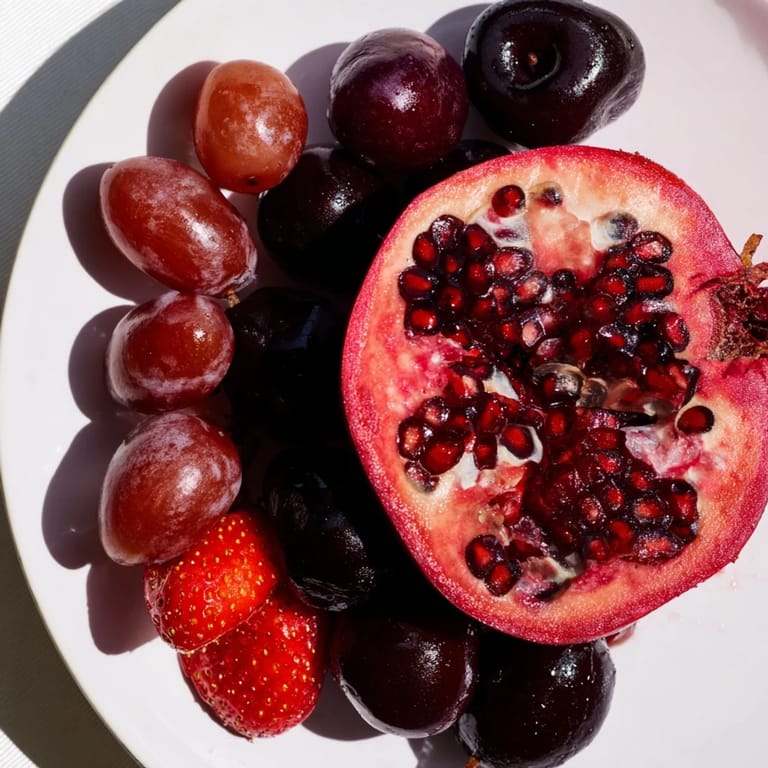
Save I was hosting a dinner party and wanted something that would make people actually pause before eating—something worth photographing. That's when I realized a pomegranate, split open and gleaming, could be the heart of an entire fruit arrangement. The moment I placed it on the platter and started building outward with deeper reds bleeding into softies pinks, I understood: this wasn't just fruit. This was edible architecture, a conversation starter that somehow felt both effortless and intentional.
My sister came early that evening, skeptical as always, and watched me arrange the fruits in silence. When I stepped back and she saw the full spectrum—deep wine reds melting into coral, then pale pink, then almost white—she said, "That's beautiful enough to frame." She ate five strawberries standing in front of it before anyone else arrived. That's when I knew I'd created something special.
Ingredients
- 1 large pomegranate, halved: This is your bold centerpiece, so pick one that's heavy for its size and has deep, unblemished skin—those are the juiciest ones hiding inside.
- Deep red fruits (cherries, red grapes, strawberries): These create your first ring of color and should be the darkest, almost wine-colored if you can find them, because that's where the eye lands first.
- Pink fruits (raspberries, watermelon, pink grapefruit): This middle layer is your transition zone, so don't overthink it—just let the colors speak for themselves as they shift lighter.
- Pale pink and white fruits (dragon fruit, apple, pear): These outer edges need to be cut just before serving if you're being fussy, or tossed with a tiny bit of lime juice if you're prepping ahead and want zero brown spots.
- Fresh mint and edible rose petals (optional): These aren't just pretty—mint adds a whisper of freshness and rose petals make people feel like they're at somewhere fancy, even if your kitchen is chaotic.
Tired of Takeout? 🥡
Get 10 meals you can make faster than delivery arrives. Seriously.
One email. No spam. Unsubscribe anytime.
Instructions
- Set your stage:
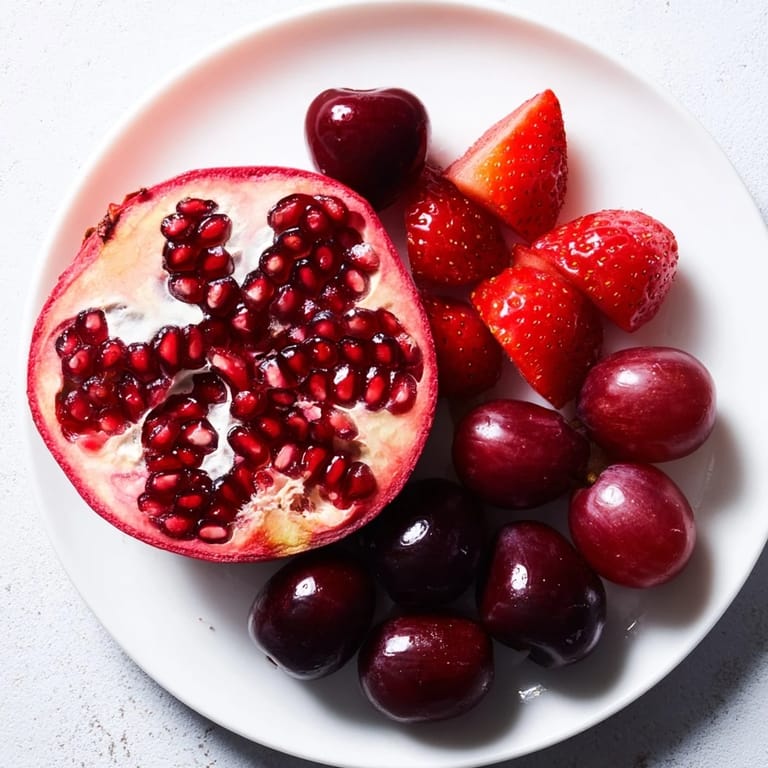
- Place that pomegranate halves cut-side up dead center of your platter—this is your anchor, so make sure it's stable and commanding the space like it should.
- Build your deepest reds:
- Arrange your dark cherries, red grapes, and strawberries in a loose crescent around the pomegranate, letting them cluster naturally rather than in perfect rows—imperfection reads as intentional.
- Transition into pink:
- Add your raspberries, watermelon cubes, and grapefruit segments in the next ring out, letting some pieces overlap so the eye follows a smooth gradient rather than harsh lines.
- Reach the pale edges:
- Place your dragon fruit, apple slices, and pear slices around the outer rim, creating that final soft landing where everything melts into almost-white.
- Finish with grace:
- Scatter mint leaves and rose petals across the whole thing if you're using them, tucking them into gaps where they feel organic, not forced.
- Serve or hold:
- This is best eaten within a few hours, but if you need to get ahead, cover it loosely and refrigerate—it won't hurt a bit, and the cold actually makes the flavors taste brighter.
 Save
Save Later that evening, someone asked if I'd studied color theory, and I laughed because really, I'd just been playing. But standing back and watching people naturally slow down, actually looking at food instead of just grabbing it, felt like I'd accidentally stumbled onto something true about eating together.
Choosing Your Fruits Strategically
The magic here isn't in exotic ingredients—it's in *choosing* with intention. Walk through the market and actually look at what's available in deep reds and soft pinks right now. Pomegranates stay gorgeous and red, but everything else changes by season. Winter means more citrus tones, spring brings berries, summer is your watermelon moment. Instead of forcing the same platter year-round, let the seasons guide you toward whatever looks most alive that day.
The Psychology of Color on a Plate
There's something about a gradient that makes people trust you in the kitchen, even though technically you've done nothing complicated. A chaotic pile of fruit is fine. A deliberate spectrum reads like expertise. This isn't a trick or a cheat—it's just understanding that how we *see* food shapes how we *taste* it. When you move through colors intentionally, each bite feels like it's part of something larger.
Timing and Temperature
This platter is one of the few dishes where timing is mostly about you, not the food. You can prep everything hours ahead and assemble it in twenty minutes, or make it all at once and eat immediately—there's no wrong move. The only real rule is that cold fruit tastes better than warm fruit, so if you're serving this at a gathering, keep it chilled until the last possible moment.
- Prep your fruits in small bowls ahead of time and arrange just before guests arrive for maximum visual impact.
- If humidity is high or you're in a warm kitchen, refrigerate the assembled platter for fifteen minutes before service to keep everything crisp and bright.
- Lime juice on apples and pears should go on no more than two hours before serving, or they'll start to look tired.
 Save
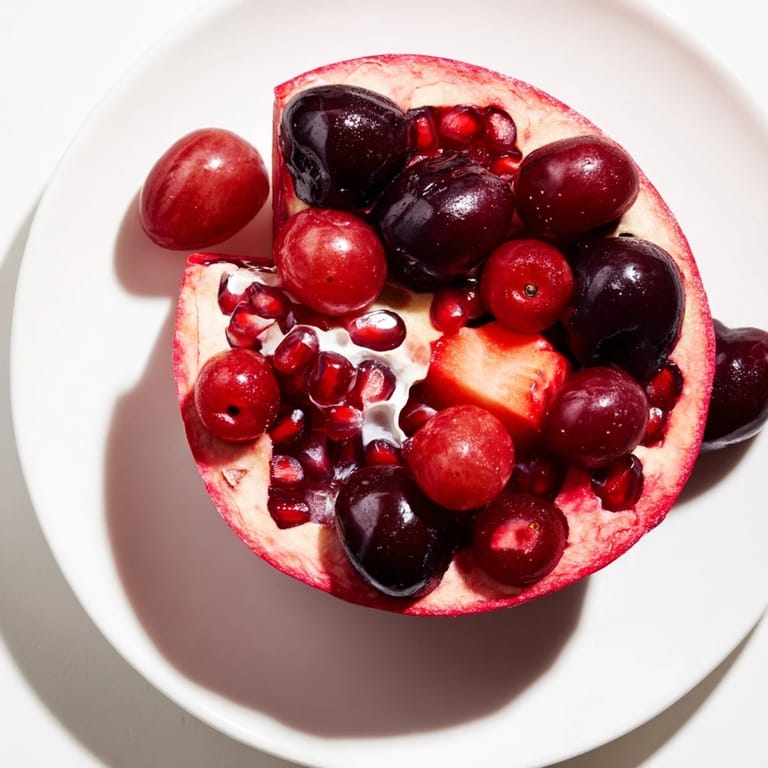
Save This platter taught me that sometimes the simplest pleasures come from paying attention—to colors, to seasons, to the quiet joy of arranging something beautiful before sharing it. It's fruit, yes, but it's also an invitation to slow down.
Recipe FAQ
- → What fruits create the color gradient?
The gradient transitions from deep red fruits like cherries and strawberries to pink fruits such as raspberries and watermelon, finishing with pale pink and white fruits like dragon fruit and apple slices.
- → How is the centerpiece arranged?
A large pomegranate is halved and placed cut side up in the center as the visual focal point.
- → Are there any optional garnishes?
Fresh mint leaves and edible rose petals can be added to enhance aroma and color.
- → How to maintain fruit freshness and prevent browning?
Drizzling lime juice over apples and pears can help prevent browning during serving.
- → Can fruits be substituted seasonally?
Yes, alternatives like red currants, pomegranate seeds, lychees, or peaches can replace certain fruits based on availability.